
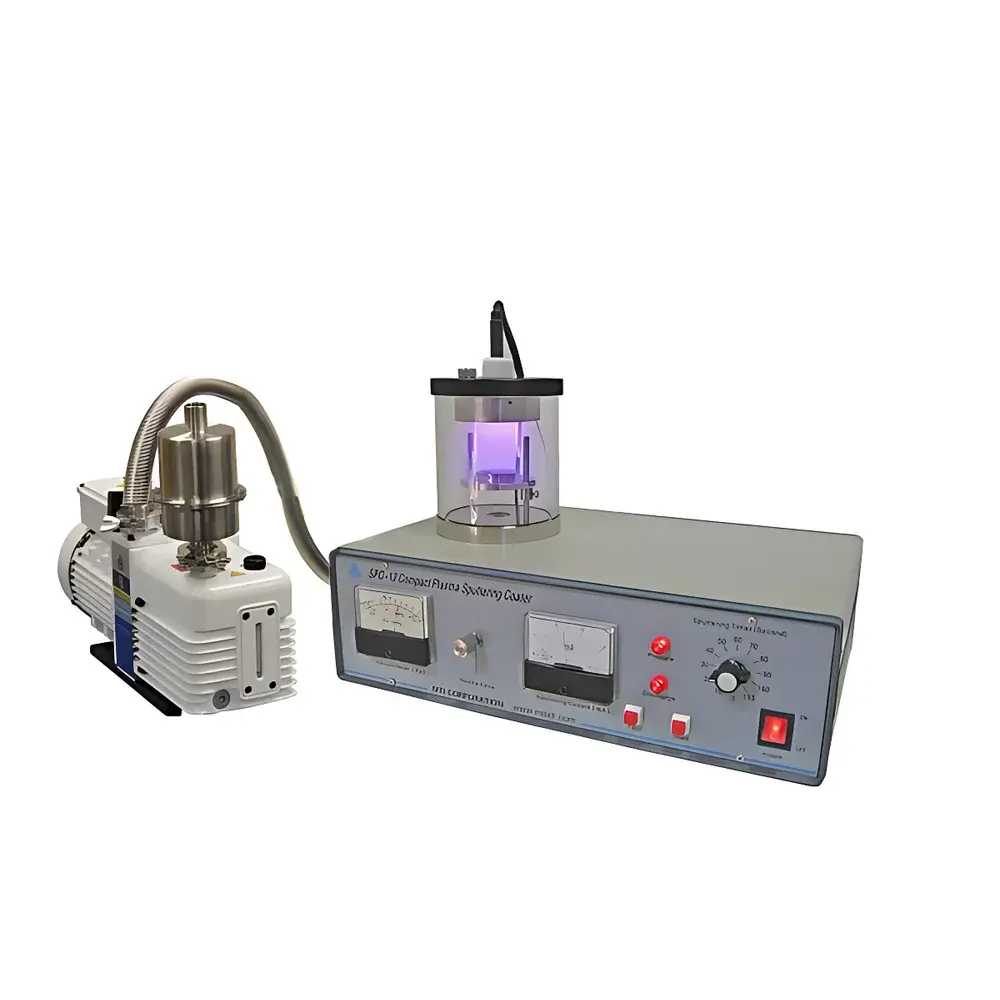
KJ GROUP GSL-1100X-SPC-12 Plasma Sputter Coater
| Brand | KJ GROUP |
|---|---|
| Origin | Liaoning, China |
| Manufacturer Type | Authorized Distributor |
| Country of Origin | China |
| Model | GSL-1100X-SPC-12 |
| Power Input | 208–240 V AC, 50/60 Hz |
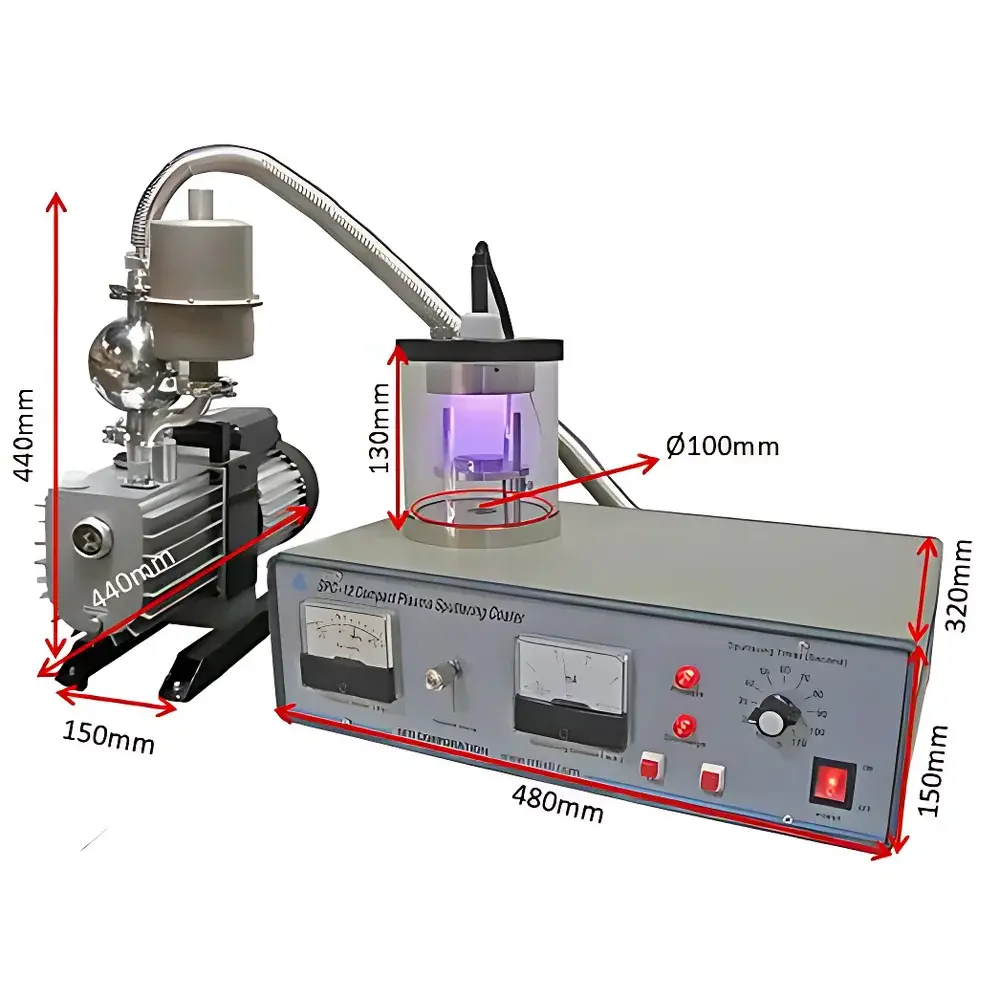
| Chamber Dimensions | Ø100 mm × 130 mm |
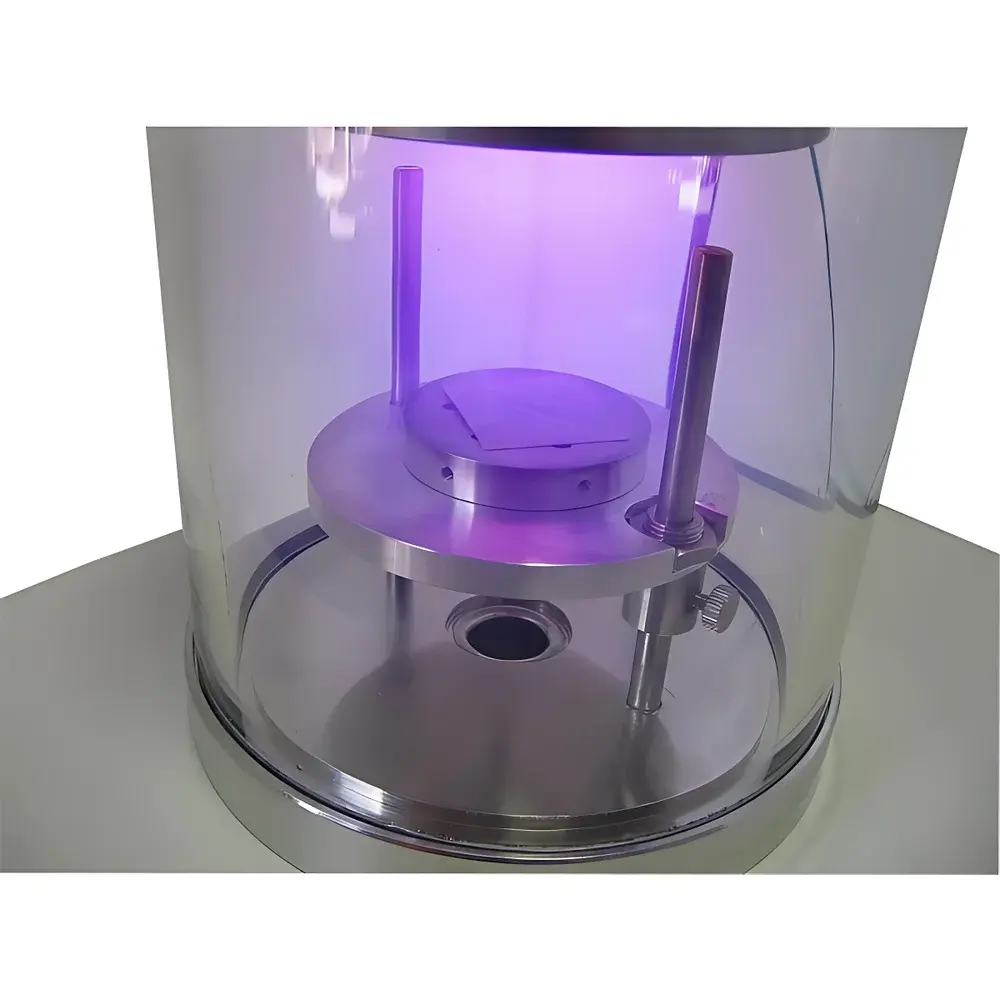
| Sample Stage | Ø60 mm, height-adjustable |
| Maximum Sample Diameter | 40 mm |
| Sputtering Target | Au (Ø57 mm × 0.12 mm, 99.99% purity) |
| Process Gas | High-purity Argon (≥99.99%) |
| Footprint | 480 mm × 320 mm × 150 mm |
| Weight | 20 kg |
Overview
The KJ GROUP GSL-1100X-SPC-12 Plasma Sputter Coater is a compact, benchtop DC magnetron sputtering system engineered for high-reproducibility thin-film deposition of conductive metal layers—primarily gold, platinum, silver, and indium—onto non-conductive or semi-conductive substrates. Operating on the principle of glow-discharge plasma generation in low-pressure argon atmosphere, the instrument enables controlled ion bombardment of a solid target material, resulting in atomic-scale ejection and subsequent condensation onto a nearby substrate. This physical vapor deposition (PVD) process delivers uniform, nanoscale-thick metallic coatings with minimal thermal load and excellent adhesion—making it especially suited for preparing electron microscopy specimens requiring stable, low-resistivity surface conduction prior to SEM imaging. The system features a quartz vacuum chamber, adjustable sample stage, and integrated gas inlet with precision valve control, supporting both routine metallization and exploratory thin-film development in academic labs, materials characterization centers, and quality control environments.
Key Features
- DC magnetron sputtering architecture optimized for noble metal deposition (Au, Pt, Ag, In) with high film density and low surface roughness
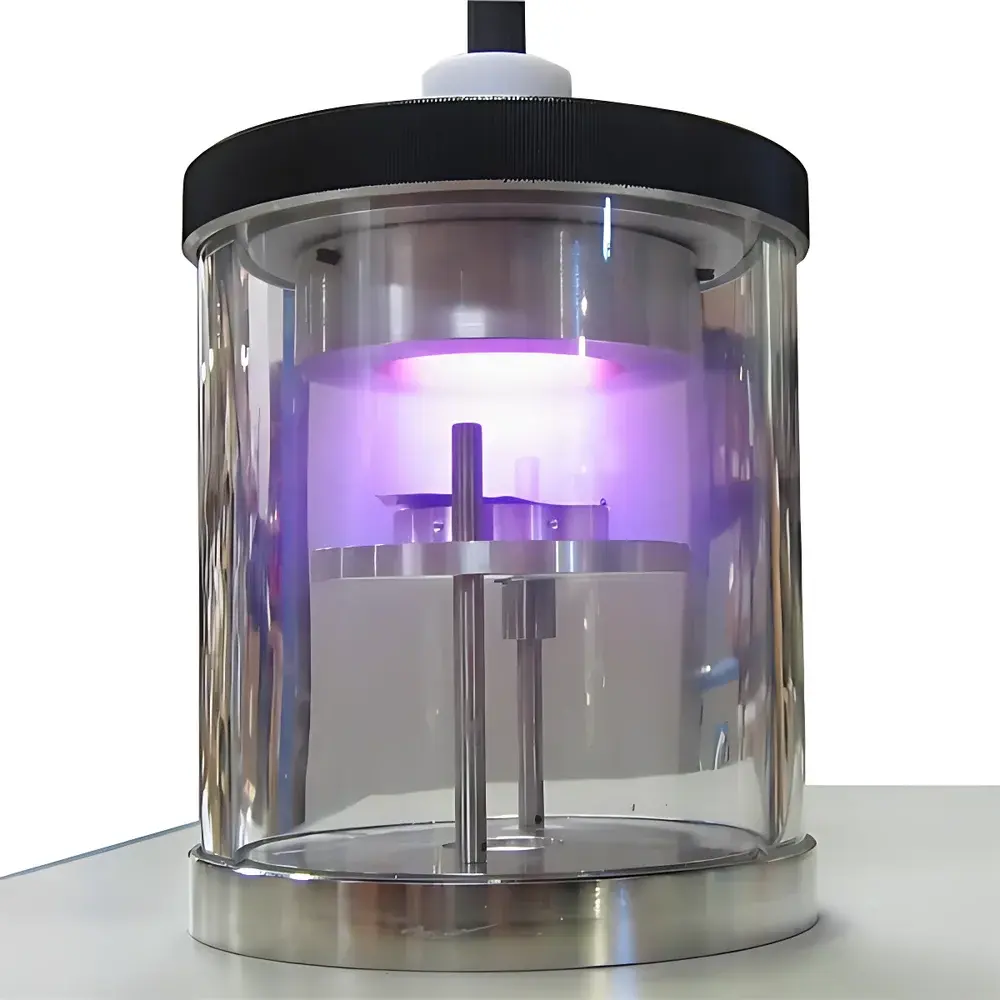
- Quartz chamber (Ø100 mm × 130 mm) offering optical transparency for real-time process observation and resistance to plasma erosion
- Adjustable-height sample stage (Ø60 mm) accommodating substrates up to Ø40 mm with precise positioning relative to the target
- Integrated argon gas inlet with fine-control needle valve enabling stable pressure regulation during sputtering
- Programmable current adjustment and time-based sputtering duration control (0–300 s typical range) for repeatable thickness control
- CE-certified electrical safety compliance; designed for operation under standard laboratory conditions (25 ± 15 °C, 55 ± 10 %RH, <1000 m altitude)
- Benchtop footprint (480 × 320 × 150 mm) and lightweight construction (20 kg) facilitating integration into shared instrumentation suites or fume-hood-contained workflows
Sample Compatibility & Compliance
The GSL-1100X-SPC-12 accepts rigid, flat substrates including silicon wafers, glass slides, ceramic chips, polymer films, and biological tissue mounts—provided they fit within the Ø40 mm maximum diameter limit and remain thermally stable under brief plasma exposure. No water cooling or external vacuum pumps are required; the system operates with a built-in two-stage rotary vane pump (not included) and achieves base pressures ≤5 × 10⁻² mbar prior to argon backfilling. All electrical components conform to IEC 61000-6-3 (EMI emission) and IEC 61000-6-2 (immunity) standards. While not GLP/GMP-validated out-of-the-box, the unit supports traceable process documentation when paired with external logging tools, and its CE marking confirms conformity with EU Machinery Directive 2006/42/EC and Low Voltage Directive 2014/35/EU.
Software & Data Management
This model operates via manual front-panel controls—no embedded microprocessor or proprietary software interface is present. Sputtering parameters (current setpoint, duration) are entered directly using tactile dials and digital timers. For laboratories requiring audit-ready records, users may integrate external data loggers or time-lapse imaging systems to capture operational timestamps, chamber pressure trends (via optional Pirani gauge), and process video. While native FDA 21 CFR Part 11 compliance is not implemented, the absence of network connectivity or user-accessible firmware reduces cybersecurity risk and simplifies validation pathways under ISO/IEC 17025 or internal QC protocols.
Applications
- SEM sample preparation: Uniform Au or Pt coating (typically 5–20 nm) to prevent charging artifacts during high-vacuum imaging
- TEM grid enhancement: Conductive layer deposition on carbon-coated grids to improve electron beam stability
- Materials science prototyping: Rapid screening of metal–substrate interfacial behavior under controlled PVD conditions
- Geological and paleontological specimen metallization: Non-destructive conductive layer application for fragile fossil or mineral surfaces
- Microelectrode fabrication: Seed-layer deposition for subsequent electroplating or lithographic patterning steps
- Teaching laboratories: Hands-on demonstration of plasma physics, thin-film growth kinetics, and vacuum technology fundamentals
FAQ
What vacuum level is required before initiating sputtering?
A base pressure of ≤5 × 10⁻² mbar must be achieved using an external two-stage rotary vane pump prior to argon introduction.
Is a vacuum pump included with the system?
No—the GSL-1100X-SPC-12 requires a separately procured vacuum pump compatible with oil-sealed or dry scroll technology.
Can multiple target materials be installed simultaneously?
No—this is a single-target DC sputter coater; target replacement requires venting the chamber and mechanical reinstallation.
What argon purity is recommended for optimal film quality?
Argon with ≥99.99% purity (4N grade) is specified to minimize oxide inclusion and ensure stable plasma ignition.
Does the system support reactive sputtering (e.g., with O2 or N2)?
Yes—the gas inlet accommodates auxiliary gases; however, reactive processes require careful optimization of pressure, power, and flow rates to avoid arcing or target poisoning.



