
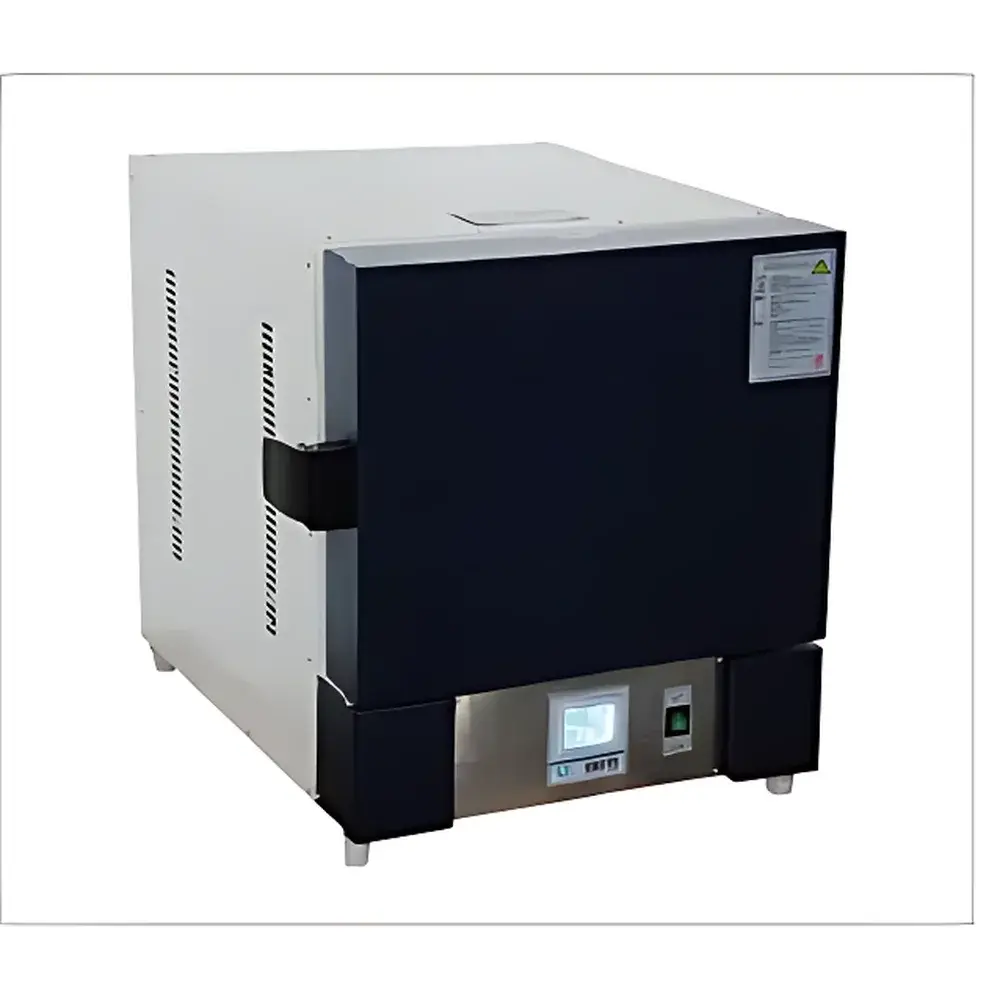
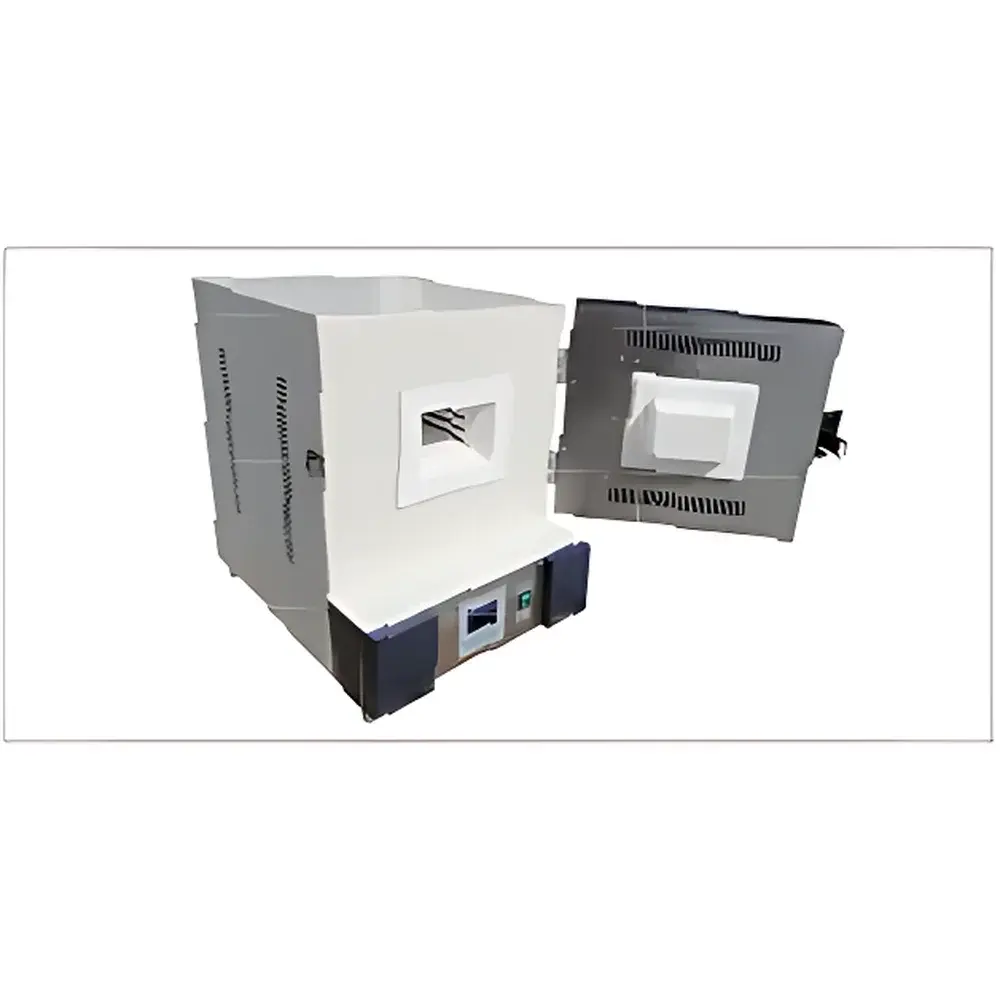
Truelab 2.5-10T/TP Ceramic Fiber Box-Type Muffle Furnace
| Brand | Truelab |
|---|---|
| Origin | Shanghai, China |
| Type | Box-Type Muffle Furnace |
| Model | 2.5-10T/TP |
| Maximum Temperature | 1200 °C |
| Temperature Control Accuracy | ±5 °C |
| Heating Element | Resistance Wire |
| Internal Chamber Dimensions | 300 × 200 × 120 mm |
| Rated Power | 2.5 kW |
| Ramp Time to 1200 °C | ≤30 min |
| Insulation Material | High-Purity Ceramic Fiber |
| External Surface Temperature at 1000 °C Hold | ≤50 °C |
| Compliance | Designed for ASTM E1112, ISO 8573-1 (thermal stability class), GLP-compliant operation |
Overview
The Truelab 2.5-10T/TP is a compact, high-efficiency ceramic fiber box-type muffle furnace engineered for precise thermal processing in analytical, metallurgical, and materials science laboratories. It operates on resistive heating principles, utilizing high-stability resistance wire elements embedded within a low-thermal-mass ceramic fiber insulation matrix. This architecture enables rapid thermal response, minimal energy loss, and exceptional temperature uniformity across the working chamber—critical for ashing, calcination, sintering, annealing, and fusion sample preparation per standardized methods including ASTM D3174 (ash content), ISO 1171 (determination of ash), and USP <231> (heavy metals testing). The furnace integrates a fully enclosed, air-gap insulated outer casing that limits surface temperature rise during prolonged high-temperature operation—ensuring safe benchtop deployment without auxiliary cooling or dedicated ventilation.
Key Features
- One-piece integrated design with large-backlit LCD interface displaying real-time temperature, setpoint, ramp rate, hold time, and program step—enabling simultaneous multi-parameter monitoring.
- Intelligent PID temperature controller with adaptive tuning algorithms, delivering stable setpoint maintenance (±5 °C accuracy) and <±1 °C fluctuation during soak phases.
- High-purity alumina-silica ceramic fiber insulation (density: ~128 kg/m³, service temperature up to 1260 °C) providing thermal conductivity 65% versus traditional brick-lined furnaces.
- Optimized air-gap thermal barrier between chamber and outer shell maintains external surface temperature ≤50 °C even after 60 min at 1000 °C—meeting IEC 61000-3-2 harmonic emission and EN 60519-2 safety requirements for laboratory equipment.
- Programmable multi-step controller (P-type) supporting up to 30 segments with user-defined ramp rates (0.1–30 °C/min), dwell times (0–9999 min), and automatic end-cycle cooling protocols.
Sample Compatibility & Compliance
The 300 × 200 × 120 mm internal chamber accommodates standard crucibles (Pt, Al₂O₃, SiC, graphite), ceramic boats, and refractory sample holders up to 7.2 L volume. The furnace supports both open- and closed-atmosphere applications—including inert gas purging via optional 1/8″ Swagelok inlet/outlet ports. All electrical and thermal performance parameters comply with GLP documentation standards: full audit trail logging (via optional RS485/Modbus RTU interface), programmable calibration offset adjustment, and traceable sensor validation (Type K thermocouple, Class 1 tolerance per IEC 60584-2). Device construction meets UL 61010-1 and CE Machinery Directive 2006/42/EC requirements for laboratory thermal equipment.
Software & Data Management
When paired with Truelab’s optional PC-based control software (v3.2+), the 2.5-10T/TP supports FDA 21 CFR Part 11–compliant data acquisition—including electronic signatures, role-based access control, and immutable event logs for temperature profiles, alarms, and operator actions. Raw data exports as CSV or XML with timestamped metadata (ISO 8601 format), enabling direct import into LIMS platforms (e.g., LabWare, Thermo Fisher SampleManager) or statistical process control tools (Minitab, JMP). Firmware updates are performed via USB flash drive with SHA-256 signature verification to ensure integrity.
Applications
- Gravimetric analysis: quantitative ash residue determination in food, feed, pharmaceuticals, and environmental samples (EPA Method 200.7, AOAC 942.05).
- Metallurgical pre-treatment: flux-assisted fusion of silicates, oxides, and geological matrices prior to XRF or ICP-OES analysis.
- Materials research: controlled oxidation of metal powders, thermal aging of polymers, and binder burnout in ceramic green bodies.
- Quality control: heat treatment validation for ASTM A956 (cast steel hardness correlation) and ISO 6508-1 (Rockwell hardness reference blocks).
- Regulatory compliance: residual solvent removal per ICH Q5C, moisture content validation per USP <921>, and extractables/leachables sample conditioning.
FAQ
What is the maximum continuous operating temperature of the 2.5-10T/TP?
The furnace is rated for continuous operation at 1200 °C, with short-term excursions up to 1250 °C permitted for ≤30 minutes per cycle.
Can this furnace be used under inert or reducing atmospheres?
Yes—optional gas inlet/outlet fittings enable nitrogen, argon, or forming gas (5% H₂/95% N₂) purging; however, reduction below 900 °C requires compatible crucible material selection (e.g., Mo, W, or SiC instead of alumina).
Is temperature uniformity validated across the chamber?
Per internal factory qualification (per ISO/IEC 17025 procedures), temperature deviation is ≤±5 °C at three defined points (center, front-top corner, rear-bottom corner) when stabilized at 1000 °C for 30 minutes.
Does the unit include calibration documentation?
Each shipment includes a Certificate of Conformance and a NIST-traceable thermocouple calibration report (as-tested at 300 °C, 600 °C, and 1000 °C) with uncertainty values stated per GUM guidelines.
What maintenance is required for long-term reliability?
Annual inspection of heating element continuity, ceramic fiber integrity (visual check for cracking/delamination), and thermocouple junction integrity is recommended; no routine lubrication or consumable replacement is necessary under normal usage conditions.



