
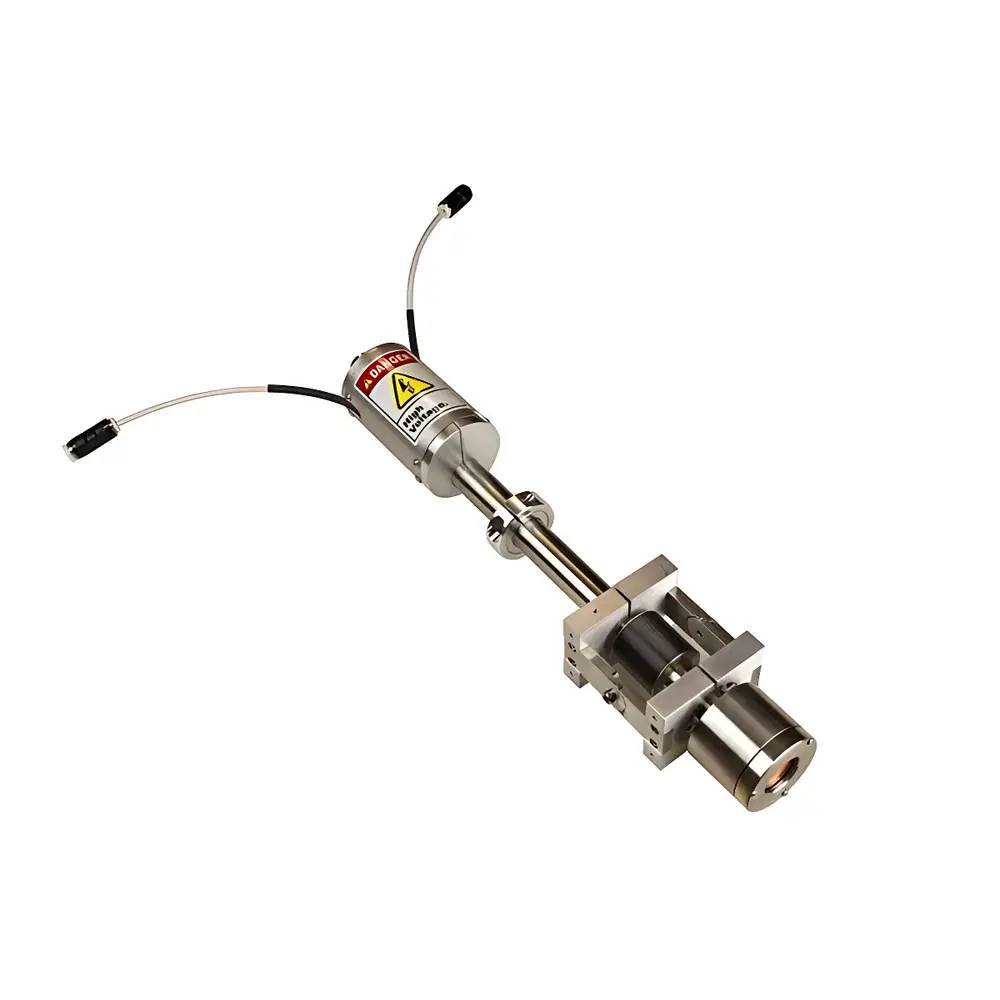
KJ GROUP HVMSS-SPC-1-LD 1-Inch High-Vacuum Magnetron Sputtering Cathode
| Brand | KJ GROUP |
|---|---|
| Origin | Liaoning, China |
| Manufacturer Type | Authorized Distributor |
| Country of Origin | China |
| Model | HVMSS-SPC-1-LD |
| Target Diameter | 1" (25.4 mm ± 0.02") |
| Max Target Thickness | 3 mm |
| Cathode Body Material | Stainless Steel & High-Purity Alumina Ceramic |
| Magnet Assembly | NdFeB Rare-Earth Permanent Magnets (FEM-Optimized Field Distribution) |
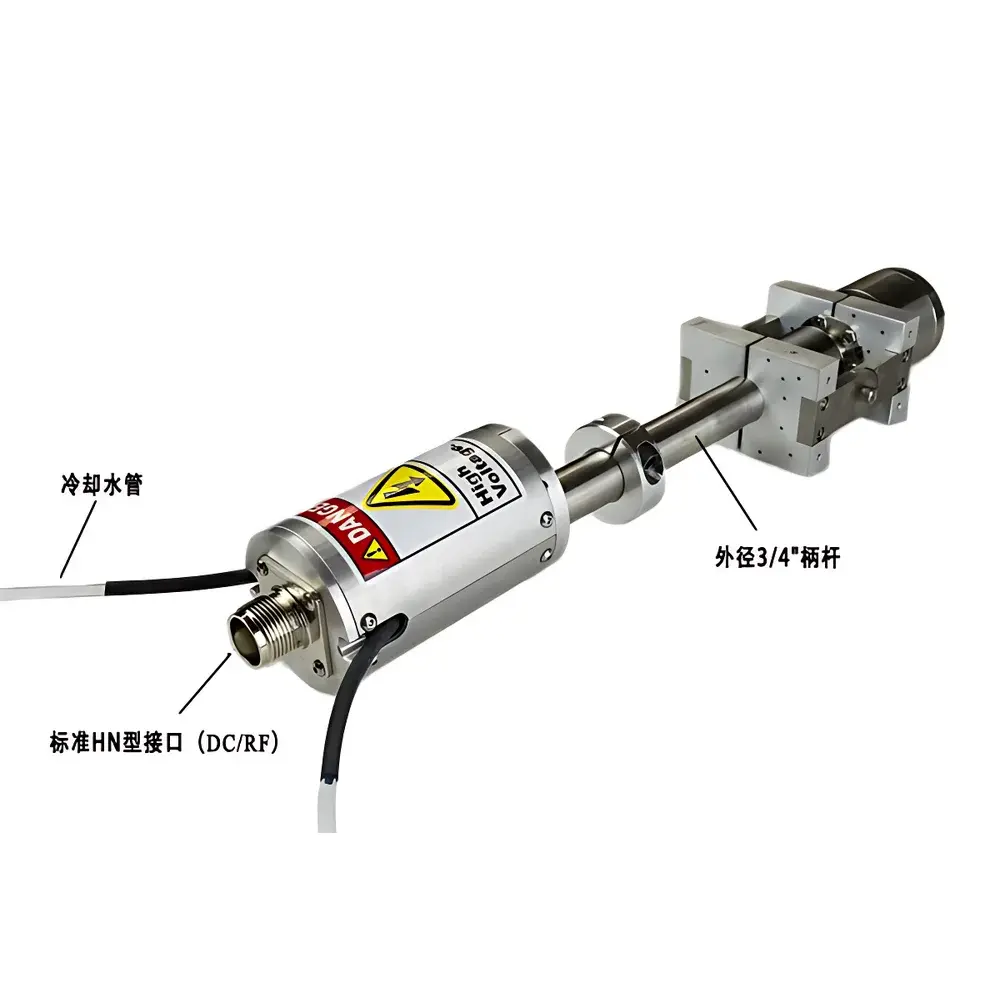
| Stem OD | 19.05 mm (3/4") |
| Electrical Interface | Standard HN-Type RF/DC Feedthrough |
| Max DC Power | 250 W |
| Max RF Power | 100 W |
| Cathode Current Limit | 3 A |
| Operating Voltage Range | 200–1000 V |
| Process Pressure Range | 1 mTorr – 1 Torr |
| Cooling | Quick-Connect 6.35 mm (0.25") OD Water Inlet |
| Minimum Flow Rate | 0.5 GPM (1.89 L/min) |
| Max Inlet Water Temp | <20 °C |
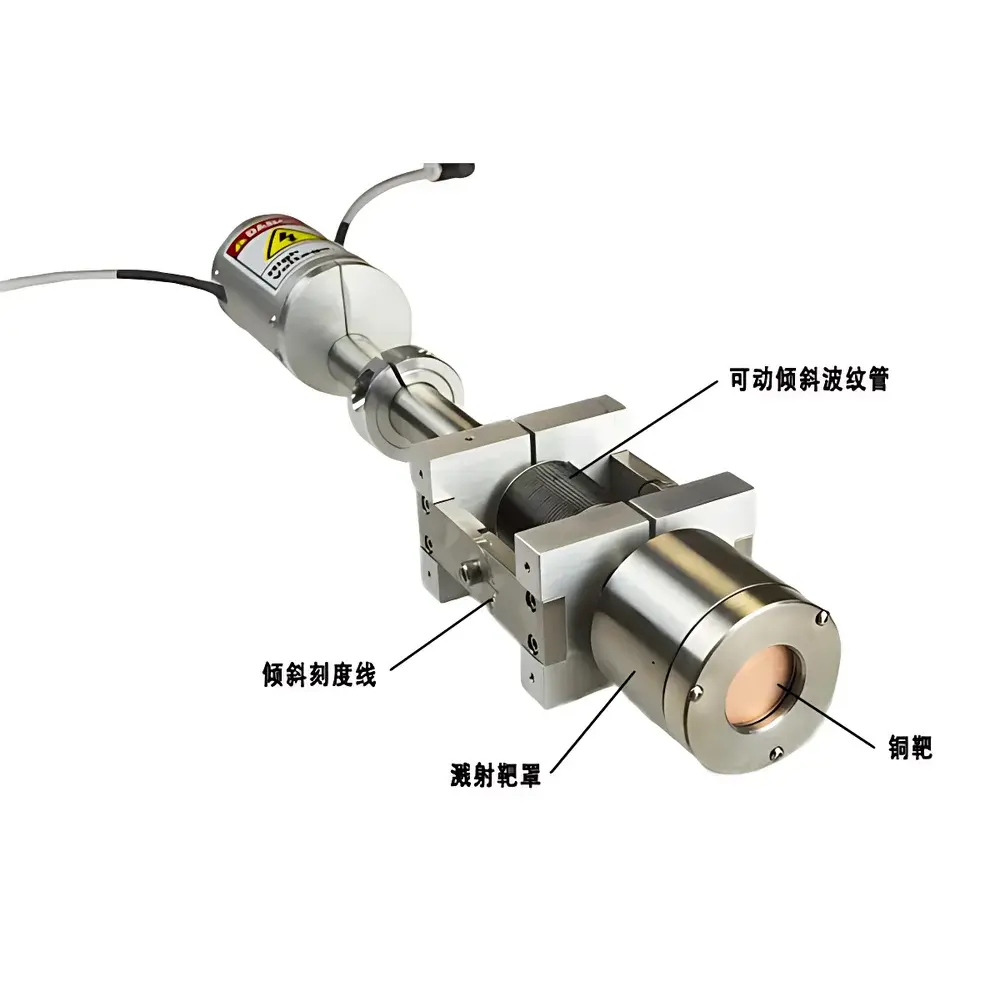
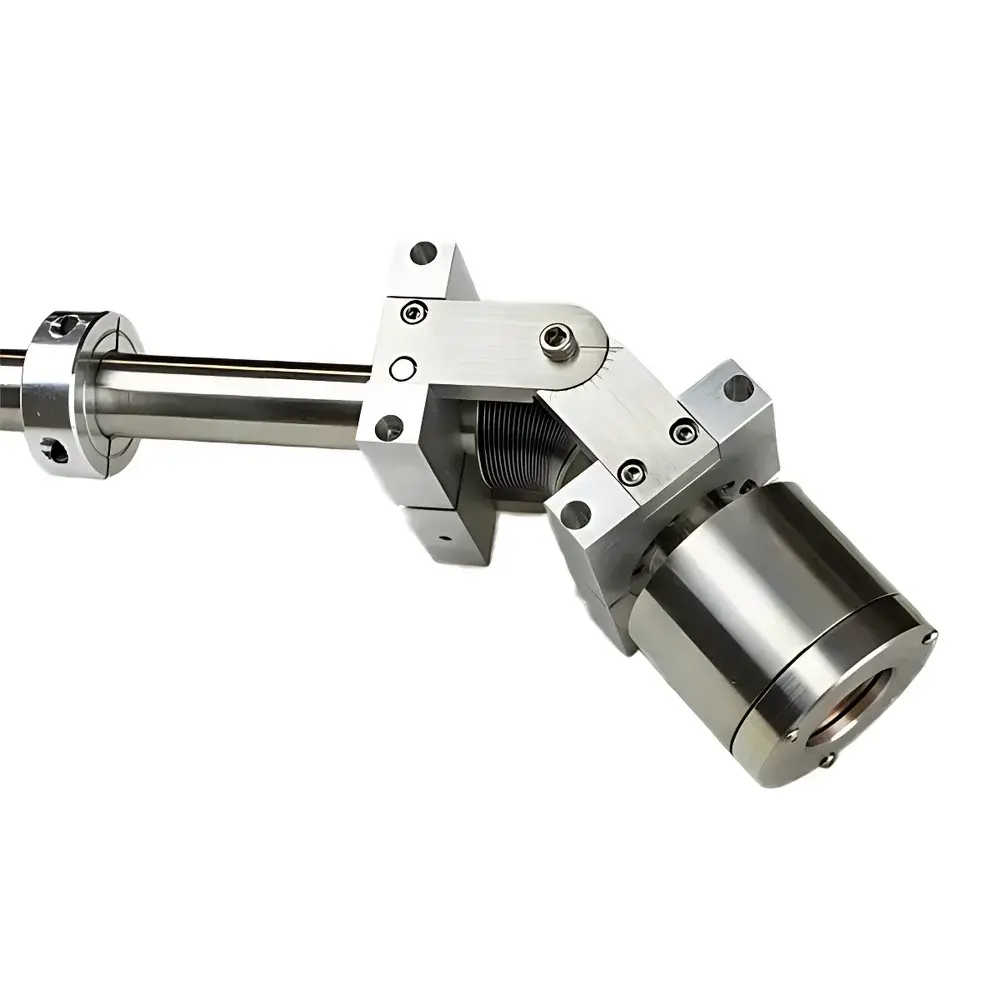
| Tilt Adjustment | ±45° with Angular Scale |
| Vacuum Interface | 19.05 mm (0.75") ID Fast-Connect Flange (Included) |
| Weight | 1.36 kg |
| Overall Length | 355.6 mm (14") |
Overview
The KJ GROUP HVMSS-SPC-1-LD is a precision-engineered 1-inch high-vacuum magnetron sputtering cathode designed for integration into custom or commercial vacuum deposition systems. It operates on the principle of magnetron sputtering—where a plasma is confined near the target surface by a closed-loop magnetic field, enhancing ionization efficiency and enabling stable, low-pressure (<10 mTorr) thin-film deposition. The cathode’s optimized permanent magnet array—designed using finite-element magnetic modeling—generates a highly uniform and intense magnetic trap over the erosion zone, improving target utilization and film thickness uniformity. Its all-metal-and-ceramic construction ensures ultra-high vacuum (UHV)-compatible performance, minimizing outgassing and particulate generation during extended operation. The unit is fully compatible with DC, pulsed DC, and 13.56 MHz RF power supplies via its standardized HN-type feedthrough, supporting conductive, semiconductive, and insulating targets—including metals (e.g., Cu, Al, Ti), oxides (e.g., ITO, SiO₂), nitrides (e.g., TiN), and magnetic alloys (e.g., CoFeB).
Key Features
- UHV-rated stainless steel body and high-purity alumina ceramic insulators ensure minimal contamination and long-term dimensional stability under thermal cycling.
- FEM-optimized NdFeB permanent magnet configuration delivers enhanced magnetic flux density (>800 Gauss at target surface) and radial symmetry, critical for consistent plasma confinement and reduced arcing.
- Magnet surfaces are coated with electrophoretically deposited epoxy barrier layers to prevent galvanic corrosion from deionized cooling water.
- Standard HN-type electrical feedthrough enables direct connection to commercially available DC and RF power supplies without adapter modification.
- Modular vacuum interface includes a 19.05 mm (0.75″) ID quick-connect flange—supplied as standard—for rapid mounting onto chamber ports with 25.4 mm (1″) bore diameter and wall thickness ≤25.4 mm (1″).
- Tilt mechanism allows precise angular adjustment of ±45° relative to the stem axis, with engraved scale for repeatable off-normal deposition geometry—essential for stress control and anisotropic film growth.
- Tool-free target replacement: No recalibration or height repositioning required after swapping 1″ targets, reducing system downtime and operator dependency.
Sample Compatibility & Compliance
The HVMSS-SPC-1-LD supports a broad spectrum of sputterable materials, including elemental metals (Cu, Au, Pt, Cr), refractory metals (W, Mo, Ta), dielectrics (Al₂O₃, MgO, Y₂O₃), ferromagnetic targets (NiFe, CoPt), and compound ceramics (ZnO, LiCoO₂). Its design complies with ISO 27402:2017 (vacuum equipment—mechanical interfaces) and meets mechanical interface requirements for ASTM F2008-22 (standard guide for vacuum system component qualification). While not certified to a specific regulatory framework, the cathode’s material traceability (316L SS, 96% Al₂O₃ ceramic), absence of adhesives or organics in the plasma zone, and documented outgassing rates (<1×10⁻⁹ Pa·m³/s·cm² at 120°C per ASTM E1557) support use in GLP/GMP-adjacent R&D environments where process reproducibility and material purity are auditable priorities.
Software & Data Management
As a passive hardware component, the HVMSS-SPC-1-LD does not incorporate embedded firmware or onboard controllers. It functions as a calibrated physical interface between external power supplies and the vacuum chamber environment. Integration with process automation systems (e.g., LabVIEW, EPICS, or PLC-based controllers) is achieved via analog voltage/current monitoring ports on compatible DC/RF generators. For full traceability in regulated settings, users may log operational parameters—including forward/reflected power, chamber pressure (via capacitance manometer), substrate temperature, and coolant flow rate—using third-party data acquisition platforms compliant with FDA 21 CFR Part 11 (electronic records and signatures) when paired with appropriate audit-trail-enabled software.
Applications
- Semiconductor fabrication: Seed layers (Ti, TaN), barrier films, and metallization stacks for CMOS and MEMS devices.
- Quantum device research: Epitaxial superconducting thin films (Nb, NbN, MoGe) and topological insulator heterostructures (Bi₂Se₃/Sb₂Te₃).
- Optical coatings: Anti-reflective, high-reflection, and tunable interference filters on fused silica and CaF₂ substrates.
- Biosensor development: Functionalized metal oxide films (WO₃, SnO₂) for electrochemical and resistive gas sensing.
- Nanomaterial synthesis: Reactive sputtering of nitride/carbide nanocomposites and granular magnetic films for spintronic memory elements.
- Combinatorial materials science: Multi-target arrays for high-throughput composition screening of battery cathodes (e.g., NMC variants) and thermoelectric alloys.
FAQ
What vacuum compatibility level does the HVMSS-SPC-1-LD support?
It is rated for continuous operation down to 1×10⁻⁷ Torr base pressure when properly baked and leak-checked; outgassing is minimized by UHV-grade surface finishes and ceramic-metal brazed joints.
Can this cathode be used with reactive sputtering gases (e.g., O₂, N₂)?
Yes—its corrosion-resistant construction and sealed magnet assembly permit stable operation in reactive atmospheres up to 10% partial pressure of reactive gas, provided appropriate process control (e.g., plasma impedance matching, pressure stabilization) is implemented externally.
Is the included copper target suitable for quantitative calibration?
The supplied 1″ Cu target (99.99% purity, 3 mm thick) is intended for functional validation and preliminary process development—not certified reference material—but meets ASTM B117 purity and dimensional tolerances for routine sputter rate benchmarking.
What cooling water specifications are mandatory for safe operation?
Deionized water (resistivity ≥1 MΩ·cm), flow rate ≥0.5 GPM (1.89 L/min), inlet temperature ≤20°C, and maximum delta-T across the cathode <10°C are required to maintain thermal equilibrium and avoid magnet demagnetization.
Does the tilt mechanism affect plasma uniformity?
At angles beyond ±15°, azimuthal asymmetry in the magnetic trap increases; users should validate film uniformity empirically for each tilt setting using witness wafers and profilometry—especially for sub-50 nm thickness applications.



