
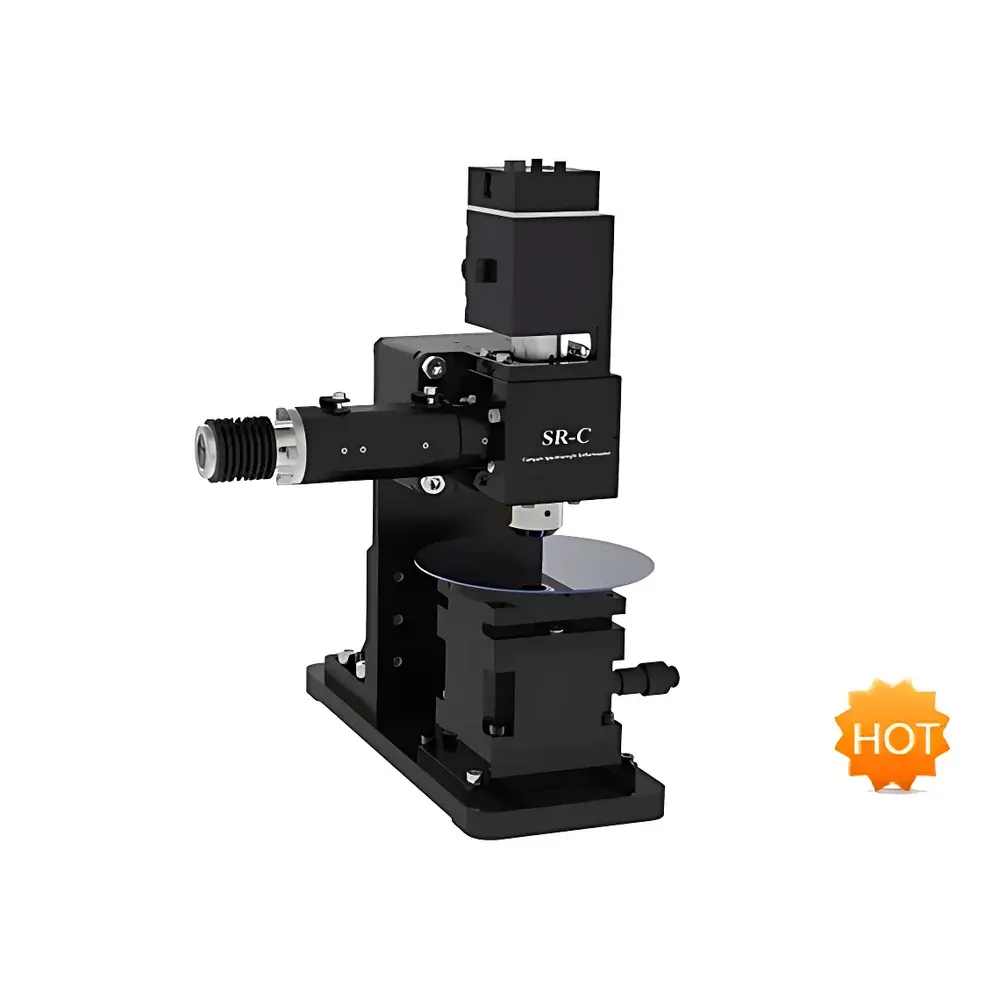
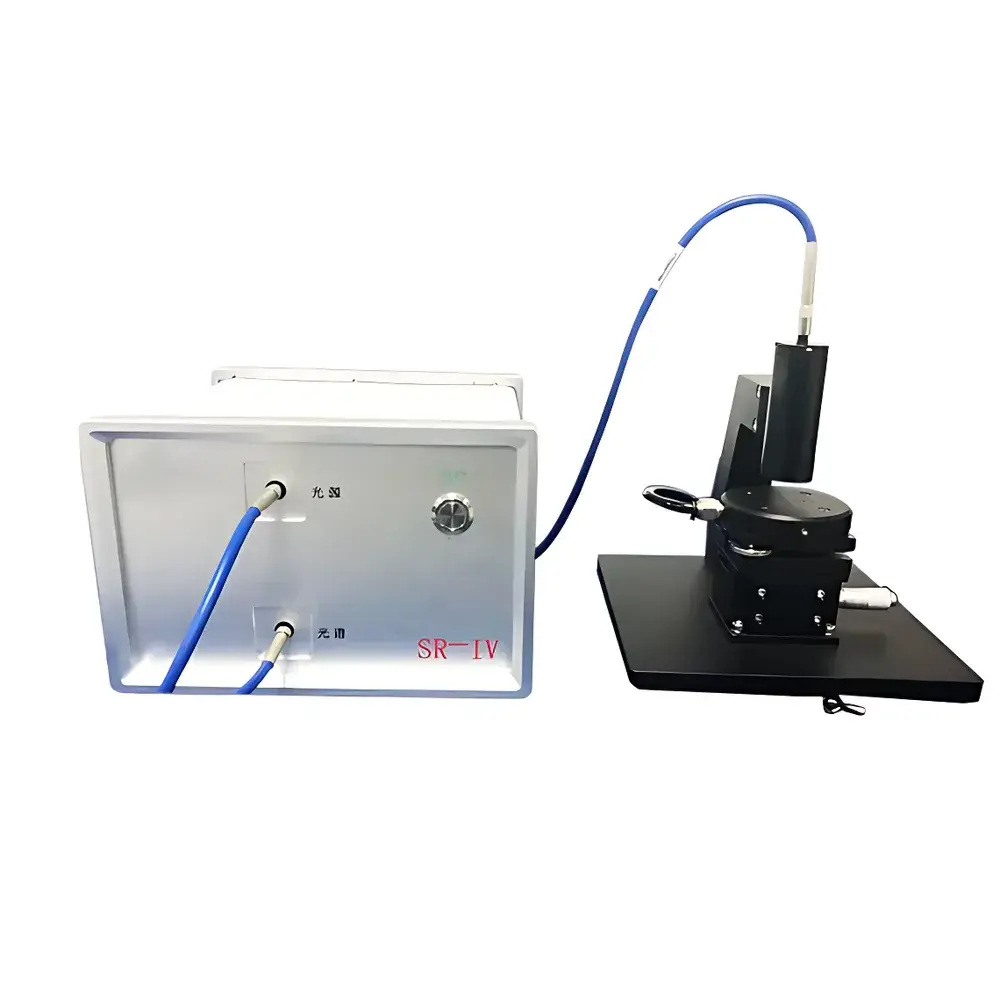
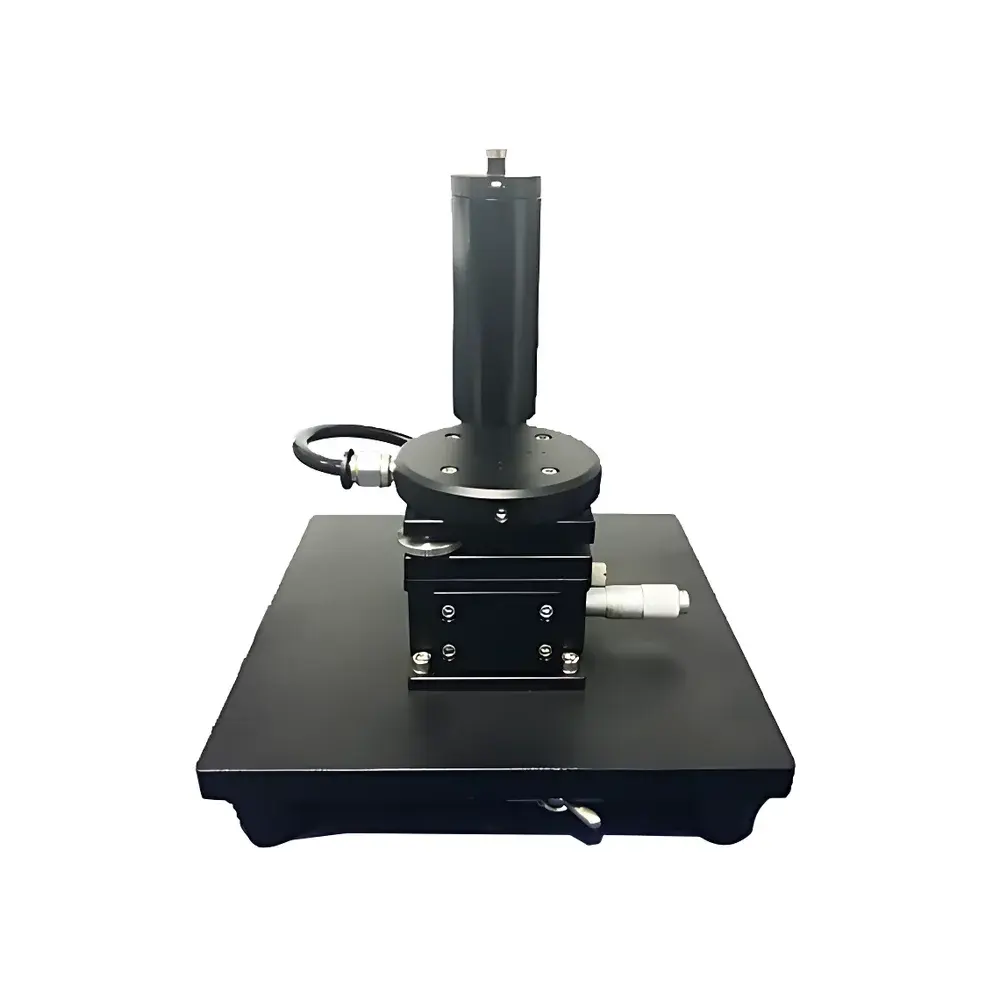
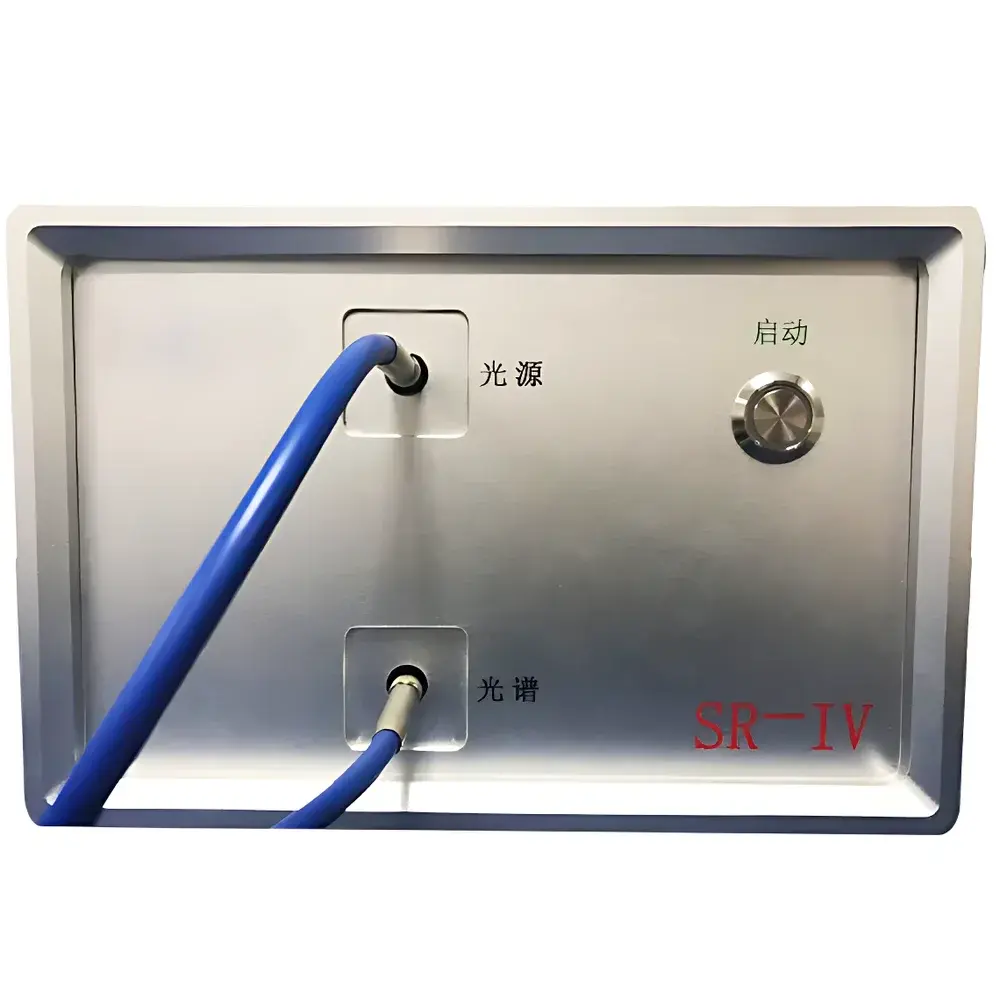
KJ GROUP SR-C Series Compact High-Precision Reflectance Thin-Film Thickness Metrology System
| Brand | KJ GROUP |
|---|---|
| Model | SR-C Series |
| Origin | Anhui, China |
| Manufacturer Type | Authorized Distributor |
| Product Category | Domestic (China-Made) |
| Light Source | High-Intensity Halogen Lamp |
| Spectral Range | SR-CV: 380–800 nm |
| SR-CN | 650–1100 nm |
| Thickness Measurement Range | SR-CV: 50 nm – 20 µm |
| SR-CN | 100 nm – 200 µm |
| Measurement Time | <1 s |
| Spot Size | 0.5–3 mm |
| Repeatability | 0.1 nm (on 100 nm SiO₂/Si reference) |
| Absolute Accuracy | ±1 nm or 0.5% |
| Incidence Geometry | Normal Incidence (0°) |
| Key Algorithms | FFT-based thick-film analysis |
Overview
The KJ GROUP SR-C Series Compact High-Precision Reflectance Thin-Film Thickness Metrology System is an engineered solution for non-contact, non-destructive characterization of thin-film optical properties based on white-light reflectance interferometry. It operates by illuminating the sample with broadband halogen light and analyzing the spectral interference pattern generated between reflections from the film’s top surface and its interface with the substrate. This physically grounded approach enables quantitative determination of film thickness, refractive index (n), and extinction coefficient (k) — collectively referred to as optical constants — without physical contact or sample preparation. Designed for integration into R&D laboratories, QC environments, and pilot-scale coating lines, the SR-C platform delivers laboratory-grade metrology in a benchtop footprint. Its core architecture conforms to fundamental principles of thin-film optics as defined in ISO 9276-6 (representation of particle size distributions) and supports traceable calibration protocols aligned with NIST-traceable standards for spectral radiance and reflectance.
Key Features
- Optically integrated metrology engine combining high-stability halogen illumination, precision collimation optics, and fiber-coupled spectrometer detection
- Two spectral configurations: SR-CV (380–800 nm) optimized for transparent dielectrics (e.g., SiO₂, SiNₓ, polymers) and SR-CN (650–1100 nm) suited for thicker or absorbing layers (e.g., metal oxides, semiconductor films)
- Sub-nanometer repeatability (0.1 nm on standardized SiO₂/Si wafers) validated per ASTM E2584-21 (Standard Practice for Determining Thickness of Transparent Films Using Spectroscopic Reflectometry)
- Vertical-incidence optical path eliminates angular alignment sensitivity and ensures compatibility with flat, rigid substrates including silicon wafers, glass slides, and metal foils
- Modular mechanical design enabling rapid reconfiguration for temperature-controlled measurements, spatial mapping, or vacuum-compatible operation
- Firmware-embedded analytical routines including fast Fourier transform (FFT) for rapid estimation of thickness in opaque or highly scattering films, and iterative Levenberg-Marquardt curve fitting for full n/k/t parameter extraction in transparent multilayer stacks
Sample Compatibility & Compliance
The SR-C system accommodates single-layer and multilayer thin-film structures on rigid planar substrates up to 150 mm in diameter. Compatible material systems include inorganic dielectrics (SiO₂, TiO₂, Al₂O₃), organic polymers (PMMA, PI, photoresists), metallic films (Al, Cr, NiCr), and functional coatings (anti-reflective, conductive, barrier). All measurement workflows support GLP-compliant documentation through timestamped raw spectra, fit residuals, and parameter uncertainty reporting. The instrument meets electromagnetic compatibility requirements per IEC 61326-1 and operates within Class II laser safety guidelines (IEC 60825-1), as no laser source is employed. Optional accessories — including Peltier-based thermal stages (±0.1 °C stability), automated XY mapping modules (100 × 100 mm travel, 5 µm step resolution), and vacuum chambers (<10⁻² mbar) — extend compliance to ISO 14644 cleanroom environments and ASTM F1507 for thin-film process control.
Software & Data Management
The SR-C is operated via KJ MetroSuite™ — a Windows-based application supporting both real-time acquisition and offline spectral analysis. The software implements audit-trail functionality compliant with FDA 21 CFR Part 11 requirements, including user authentication, electronic signatures, and immutable record retention for all measurement sessions. Raw spectral data are stored in HDF5 format with embedded metadata (wavelength calibration, integration time, spot position, environmental conditions). Batch processing enables statistical evaluation across wafer maps or lot-level datasets, exporting results to CSV or Excel with configurable uncertainty propagation. Custom scripting interfaces (Python API) allow integration with MES or LIMS platforms for automated reporting in GMP-regulated manufacturing settings.
Applications
- Process development and endpoint detection in PVD, CVD, ALD, and spin-coating deposition lines
- Quality assurance of anti-reflective, low-emissivity, and hard-coat optical films on lenses and displays
- Characterization of gate dielectrics, passivation layers, and interlayer dielectrics in semiconductor packaging
- R&D of flexible electronics, including transparent conductive oxides (ITO, AZO) on PET substrates
- Corrosion-inhibiting coating thickness verification on aerospace alloys and medical device components
FAQ
Does the SR-C require reference standards for calibration?
Yes — factory calibration uses NIST-traceable SiO₂-on-Si reference wafers. Users may perform periodic verification using certified thickness standards; no daily recalibration is required under stable lab conditions.
Can the SR-C measure films on curved or rough surfaces?
It is optimized for flat, optically smooth substrates. Surface roughness > λ/10 or radius of curvature < 50 mm significantly degrades spectral contrast and fitting convergence; alternative techniques (e.g., ellipsometry or profilometry) are recommended.
Is vacuum operation supported out-of-the-box?
Vacuum compatibility requires the optional vacuum pump module and chamber adapter; the base system operates at ambient pressure.
How is measurement uncertainty quantified?
Uncertainty is calculated per GUM (JCGM 100:2008) using combined contributions from spectral noise, wavelength calibration drift, model parameter correlation, and reference standard uncertainty — reported alongside each result.
What file formats are supported for data export?
HDF5 (primary), CSV, TXT, and XLSX; spectral plots may be exported as SVG or PNG with embedded scale bars and metadata.



