
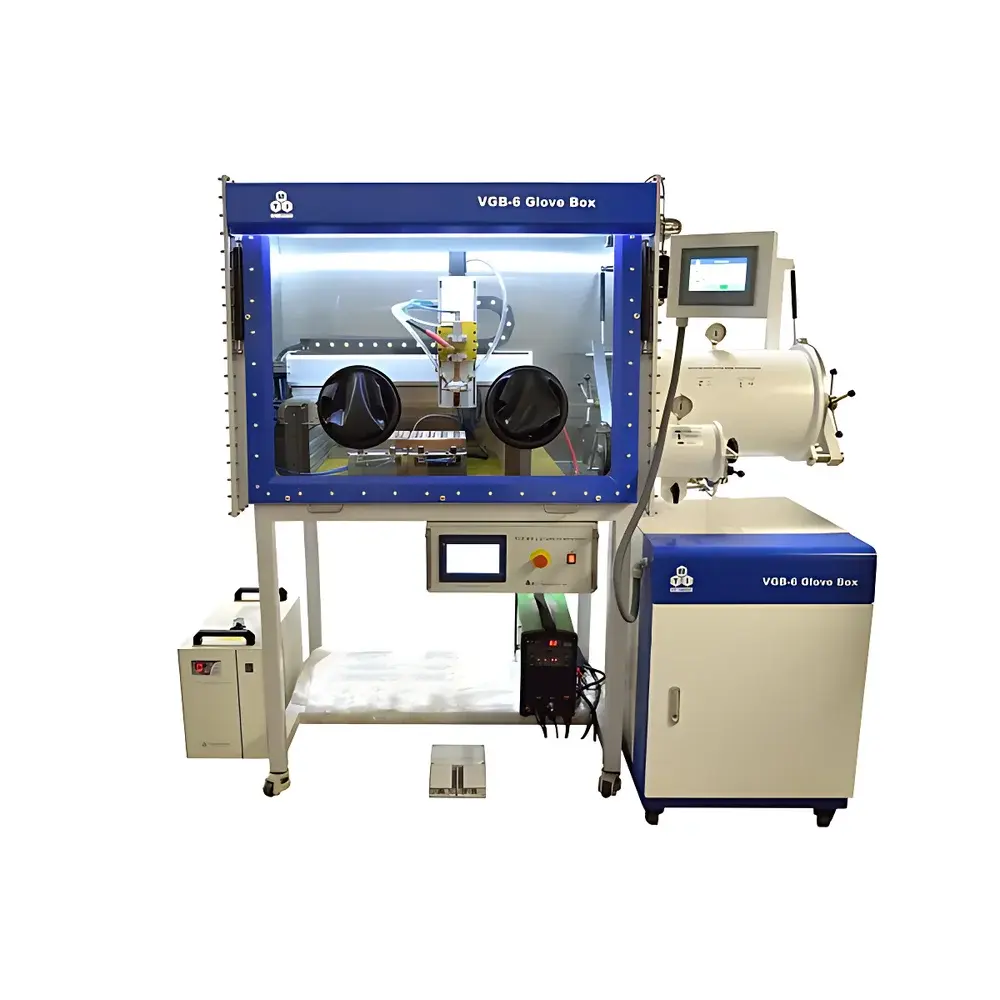
KJ GROUP XRF-S32 High-Throughput 32-Position X-Ray Fluorescence Analyzer
| Brand | KJ GROUP |
|---|---|
| Origin | Liaoning, China |
| Manufacturer Type | Authorized Distributor |
| Country of Origin | China |
| Model | XRF-S32 |
| Price | Upon Request |
| Power Supply | 220 V AC, 50/60 Hz, Single Phase |
| Dimensions (W×D×H) | 1000 × 800 × 1000 mm |
| Weight | 120 kg |
| Safety Certifications | CE, WEEE, EMC, RoHS (China), FCC (USA), ICES-001 (Canada) |
| Sample Capacity | 32 positions |
| Elemental Range | Ne (Z=10) to Pu (Z=94) |
| Detection Limit | Sub-ppm to ppm level (matrix-dependent) |
| Analysis Modes | Manual, Sequential Auto-Scan, Repetitive Batch |
| X-ray Source Interface | USB-connected handheld XRF spectrometer |
| Motion Control | Dual-axis (X-Y) precision stage with touchscreen HMI |
| Sample Form | Solid blocks or thin films |
| Atmospheric Correction | Real-time air attenuation & absorption compensation |
| Software | Integrated X-ray source control, detector acquisition, and spectral analysis suite supporting qualitative & quantitative analysis |
| Safety Features | Lead-glass viewing window, interlocked front door, status indicator lamp, remote operation capability |
Overview
The KJ GROUP XRF-S32 High-Throughput 32-Position X-Ray Fluorescence Analyzer is an automated benchtop elemental analysis system engineered for rapid, non-destructive compositional screening of solid materials. It operates on the principle of energy-dispersive X-ray fluorescence (ED-XRF), where primary X-rays excite characteristic secondary (fluorescent) X-rays from elements present in the sample. These emitted photons are resolved by a silicon drift detector (SDD) and quantified via spectral deconvolution algorithms. Unlike conventional single-sample ED-XRF instruments, the XRF-S32 integrates a motorized dual-axis translation stage and a fixed 32-position sample carousel, enabling unattended sequential analysis of up to 32 specimens per batch—significantly reducing per-sample dwell time and accelerating high-throughput workflows in materials discovery and quality assurance laboratories.
Key Features
- Automated 32-position sample handling with programmable X-Y motion stage and intuitive touchscreen HMI interface
- USB-integrated handheld ED-XRF spectrometer with built-in safety interlocks, lead-glass observation window, and status-indicating X-ray emission lamp
- Remote operation capability: full instrument control—including source activation, acquisition timing, and stage positioning—from a dedicated notebook PC located outside the primary radiation zone
- Comprehensive atmospheric correction algorithm compensating for air path attenuation and absorption effects, ensuring reproducible quantification across diverse ambient conditions
- Pre-installed software suite comprising X-ray generator control module, real-time SDD data acquisition engine, and advanced spectral processing library supporting peak identification, background subtraction, matrix correction (e.g., Fundamental Parameters method), and calibration-free semi-quantitative analysis
- CE-marked mechanical enclosure compliant with IEC 61010-1 for electrical safety and IEC 62495 for X-ray equipment—fully aligned with EU Machinery Directive 2006/42/EC and Radiation Protection requirements
Sample Compatibility & Compliance
The XRF-S32 accepts flat, stable solid samples—including metal alloys, sintered ceramics, pressed pellets, and thin-film substrates—with maximum dimensions of Ø30 mm × 10 mm (diameter × thickness). Sample geometry and surface homogeneity directly influence measurement precision; therefore, standardized sample preparation protocols (e.g., polishing, pelletizing with binder) are recommended for quantitative work. The system supports compliance-critical workflows: spectral data files include embedded metadata (timestamp, operator ID, instrument configuration, calibration reference), satisfying GLP/GMP audit trail requirements under FDA 21 CFR Part 11 when deployed with validated software configurations. All firmware and analysis modules adhere to ISO 8258 (Shewhart control charts), ISO 11843 (critical detection limit estimation), and ASTM E1621–23 (standard guide for ED-XRF elemental analysis of metals).
Software & Data Management
Control and analysis are executed through a Windows-based application environment featuring three tightly coupled modules: (1) Motion Controller for defining scan paths, dwell times (adjustable from 1–300 s per position), acceleration profiles, and end-point logic; (2) XRF Acquisition Engine synchronizing X-ray tube pulsing, detector live-time gating, and dead-time correction; and (3) Spectral Analysis Workbench supporting library-driven element identification (55 elements from Ne to Pu), standardless quantification using fundamental parameters, and user-defined calibrations with CRM traceability (e.g., NIST SRM 2781, 2782, 2783). Export formats include CSV, TXT, and CDF (Common Data Format), compatible with LIMS integration and third-party statistical platforms (e.g., JMP, Python Pandas). Audit logs record all parameter changes, measurement events, and software updates with SHA-256 hashing for integrity verification.
Applications
This system is routinely deployed in academic and industrial R&D settings for accelerated compositional mapping of multi-principal element systems—particularly high-entropy alloys (HEAs), rare-earth-doped magnetic oxides, Li-ion battery cathode precursors, and oxide-based solid electrolytes (e.g., LLZO, LATP). Its throughput advantage enables statistically robust sampling across combinatorial libraries, phase diagram validation, and batch-to-batch consistency checks in metallurgical QC labs. In regulatory contexts, it supports incoming raw material verification per ASTM E1086 (analysis of stainless steels) and ISO 17025-compliant uncertainty budgeting when paired with certified reference materials and documented measurement procedures.
FAQ
What safety standards does the XRF-S32 comply with?
The system meets CE marking requirements under the EU Electromagnetic Compatibility (2014/30/EU) and Low Voltage (2014/35/EU) Directives, as well as RoHS 2011/65/EU, WEEE 2012/19/EU, FCC Part 15B (USA), and ICES-001 (Canada). Mechanical shielding—including 3 mm lead-equivalent glass viewport and door interlock circuitry—conforms to IEC 62495:2010 for analytical X-ray equipment.
Can the system analyze light elements below sodium (Na)?
Yes—detection of neon (Ne, Z=10) is supported under helium purge or vacuum conditions; however, routine air-path operation reliably covers elements from sodium (Na, Z=11) onward. Light element sensitivity is enhanced using ultra-thin polymer windows and optimized low-energy X-ray tube settings.
Is method transfer possible between different XRF-S32 units?
Yes—calibration models, acquisition protocols, and spectral libraries are exportable/importable via encrypted project files. Inter-unit reproducibility is maintained within ±5% RSD for major elements (≥1 wt%) when using identical CRM-based calibrations and standardized sample presentation.
Does the software support automated reporting?
Yes—the reporting module generates customizable PDF/Excel reports containing spectra overlays, elemental concentration tables, pass/fail flags against specification limits, and operator-auditable revision history—all compliant with ISO/IEC 17025 clause 7.8.2.
What maintenance is required for long-term stability?
Annual verification of X-ray output stability, detector resolution (Mn Kα FWHM ≤ 145 eV), and stage positional repeatability (±5 µm) is recommended. Detector cooling system integrity and X-ray tube filament life (typically >10,000 h) should be monitored via built-in diagnostics.



