
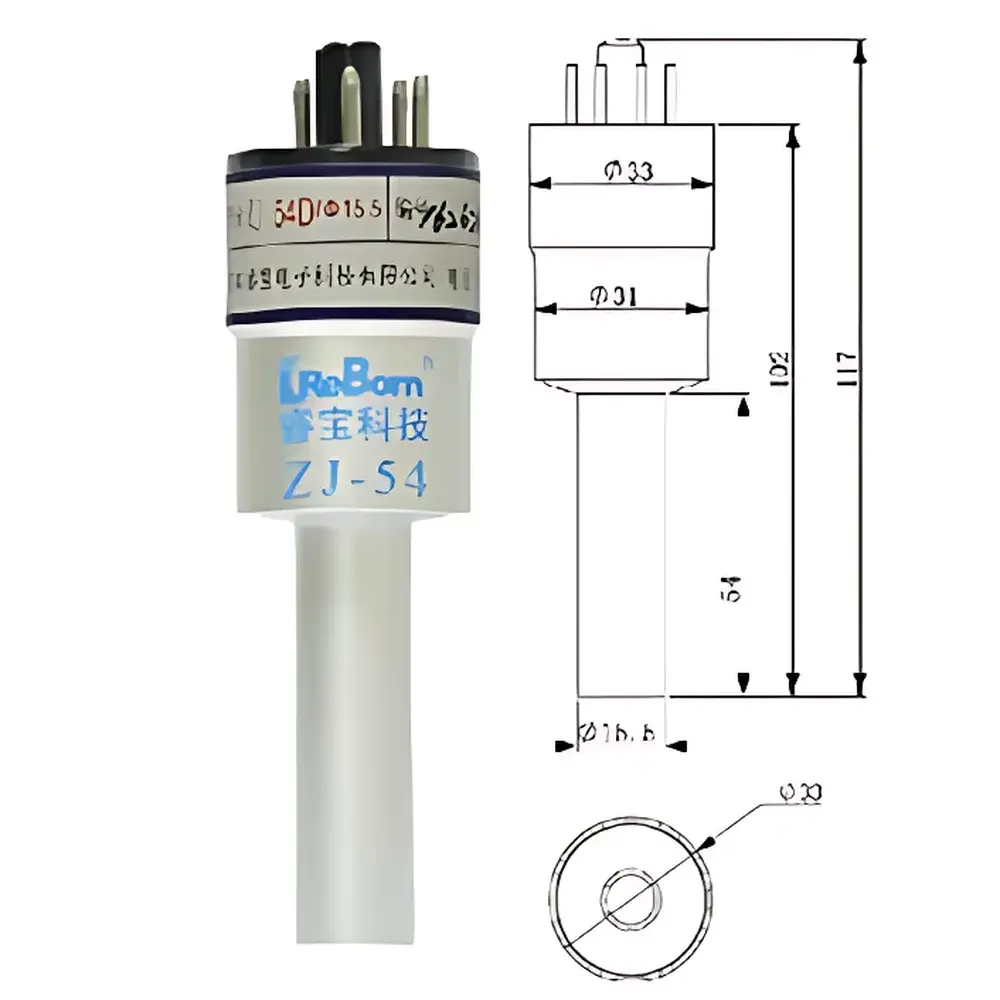
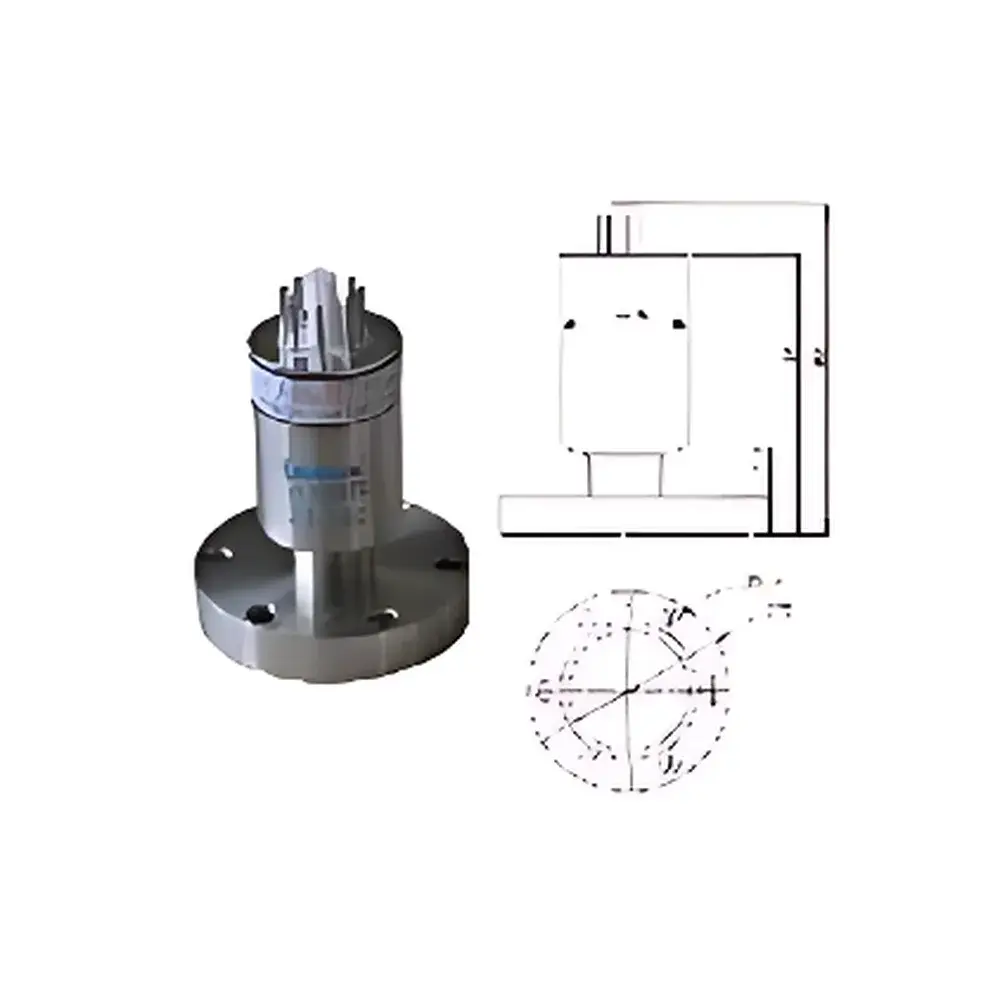
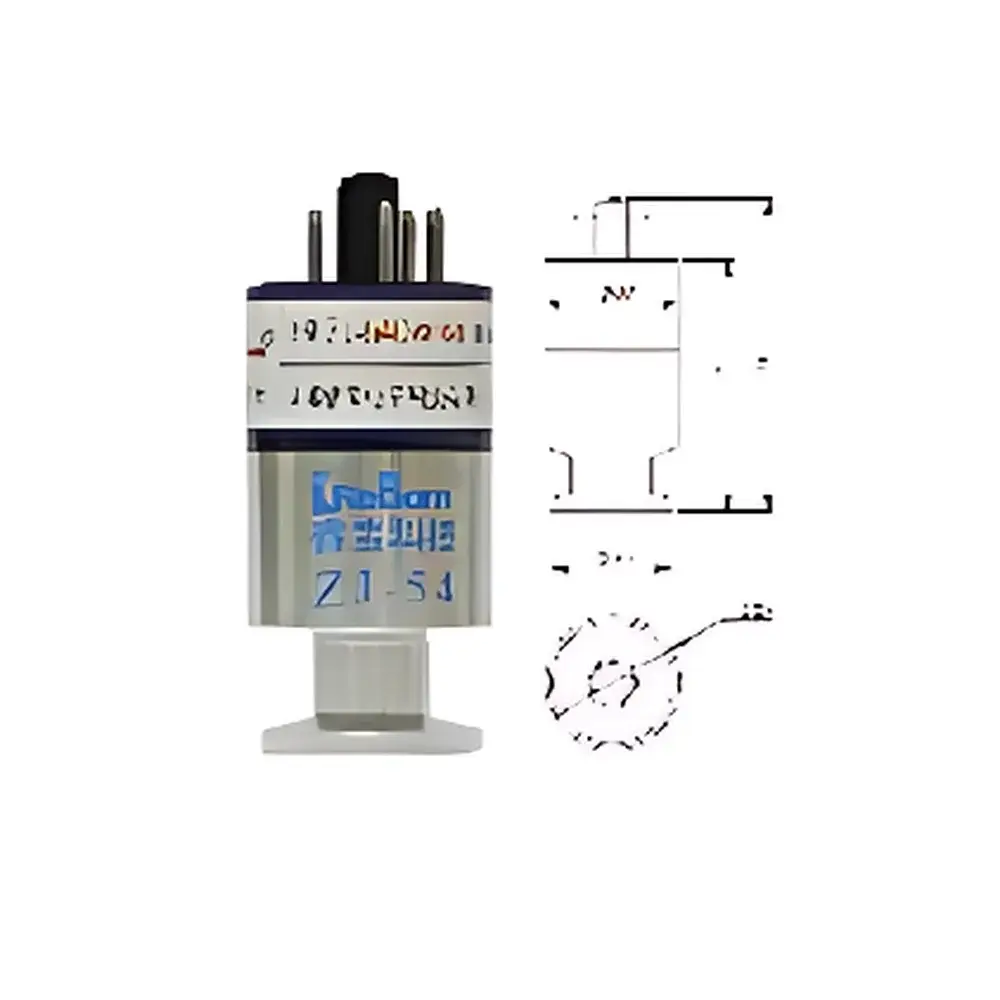
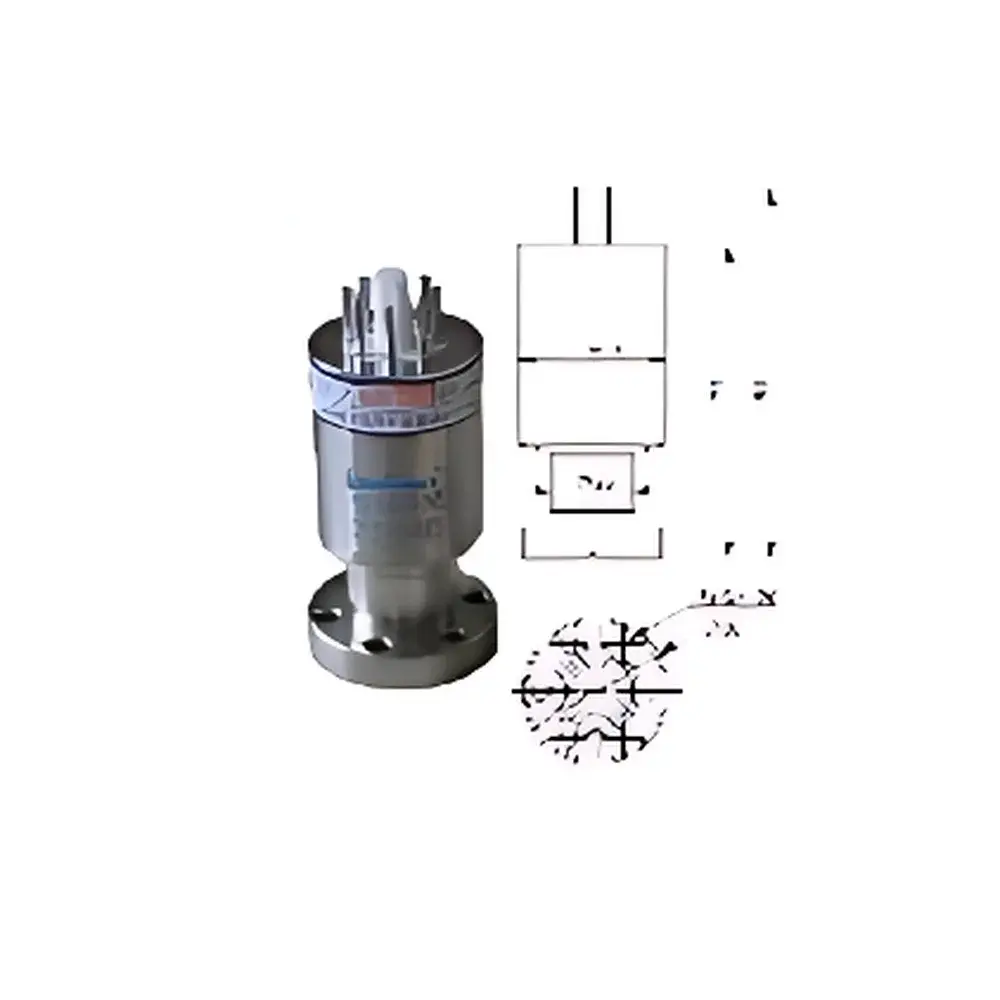
KJ GROUP ZJ-54D Thermocouple Vacuum Gauge
| Brand | KJ GROUP |
|---|---|
| Origin | Liaoning, China |
| Manufacturer Type | Authorized Distributor |
| Country of Origin | China |
| Model | ZJ-54D |
| Pricing | Available Upon Request |
| Measurement Range | 3×10²–1×10⁻¹ Pa |
| Heating Current | 28 ± 1.5 mA |
| Cold Filament Resistance | 9.5 ± 1 Ω at 23 ± 3 °C |
| Filament Operating Temperature | 40–150 °C |
| Output Scatter (Zero Drift) | ≤ ±20 % |
| Vacuum Flange Options | Φ15±0.1 mm Metal Seal (Max Bakeout: 80 °C) |
| KF10–KF40 Quick-Release Flanges (Max Bakeout | 80 °C) |
| CF16–CF35 Conflat Flanges (Max Bakeout | 450 °C) |
Overview
The KJ GROUP ZJ-54D Thermocouple Vacuum Gauge is a robust, analog-type low-vacuum measurement sensor engineered for stable and repeatable pressure monitoring in the range of 3×10² Pa down to 1×10⁻¹ Pa. Based on the thermocouple principle, it operates by measuring the temperature-dependent voltage generated at the junction of dissimilar metals—specifically, a stabilized nickel-chromium/nickel-copper (Chromel-Constantan) thermocouple pair—when heated by a controlled current passing through an integrated filament. The thermal conductivity of the surrounding gas medium governs heat loss from the filament; thus, the thermoelectric output voltage correlates directly with ambient gas pressure under fixed heating conditions. This gauge is designed for integration into vacuum systems where cost-effective, maintenance-light, and chemically tolerant pressure indication is required—particularly in diffusion pump backing lines, rotary vane pump inlets, vacuum furnaces, freeze dryers, and plasma sputtering pre-chambers.
Key Features
- Stabilized Chromel-Constantan thermocouple filament with low thermal mass for improved response time and reduced thermal hysteresis
- Integrated ambient temperature compensation circuitry to minimize drift across laboratory or industrial operating environments (20–35 °C)
- Dust-resistant housing design with optimized thermal shielding to mitigate particulate-induced signal noise
- High oxidation resistance due to inert filament alloy composition and protective ceramic insulation
- Low long-term zero drift (< ±20 % full-scale deviation after 1,000 hours of continuous operation under nominal conditions)
- Interchangeable with ZJ-53B thermocouple gauges—identical pinout, mounting footprint, and calibration reference curve
- Multiple flange compatibility supporting both standard KF and ultra-high-vacuum CF configurations with appropriate bakeout ratings
Sample Compatibility & Compliance
The ZJ-54D is compatible with non-corrosive gases including nitrogen, argon, helium, oxygen, and air. It is not recommended for use with halogenated compounds, strong oxidizers (e.g., Cl₂, F₂), or reactive vapors (e.g., NH₃, H₂S) without prior validation. Its construction complies with general industrial safety standards for electrical instrumentation (IEC 61000-6-2/6-3 EMC immunity/emission). While not certified to specific ISO or ASTM vacuum metrology standards (e.g., ISO 3567, ASTM E575), its performance characteristics align with typical requirements for Class II vacuum gauges per IEC 60068-2 environmental testing protocols. For GLP/GMP-regulated applications, users must implement documented calibration intervals (recommended annually or per 2,000 operational hours) traceable to national metrology institutes.
Software & Data Management
As a passive analog sensor, the ZJ-54D outputs a millivolt-level DC signal proportional to pressure (typically 0–10 mV or 0–1 V via external amplifier). It interfaces seamlessly with third-party vacuum controllers (e.g., INFICON Transmitter Series, MKS 900 series), PLC-based monitoring systems, or custom DAQ hardware using standard 0–10 V or 4–20 mA signal conditioning modules. No proprietary software or drivers are required. When integrated into regulated environments, data acquisition systems should support audit-trail logging and electronic signature functionality to satisfy FDA 21 CFR Part 11 compliance requirements for electronic records.
Applications
- Monitoring rough vacuum stages in semiconductor load-lock chambers and etch tool forelines
- Process pressure control in industrial vacuum drying and impregnation systems
- Backstreaming detection and pump-down verification in high-vacuum diffusion and turbomolecular pump systems
- Education and training labs requiring durable, repairable, and pedagogically transparent vacuum sensors
- Quality assurance stations for vacuum packaging equipment and medical device sterilization autoclaves
- Research-grade vacuum system commissioning where repeatability and cross-calibration with Pirani or capacitance manometers is performed
FAQ
Can the ZJ-54D be baked out in situ?
Yes—only when equipped with CF-series Conflat flanges (CF16/CF25/CF35), which support up to 450 °C bakeout. KF and Φ15 metal-seal variants are rated for max 80 °C.
Is calibration traceable to NIST or other NMIs?
The gauge itself is not supplied with NIST-traceable calibration; however, KJ GROUP provides factory calibration reports referenced to primary standards. End-users must perform periodic recalibration using certified transfer standards.
What is the typical service life under continuous operation?
With proper thermal cycling management and avoidance of overpressure events (>1 kPa), mean time between failures exceeds 5 years (≥40,000 operating hours) based on field reliability data from industrial OEM installations.
Does it require external power beyond the heater supply?
No—the only electrical requirement is a stable DC current source (28 ± 1.5 mA) for the filament; thermocouple output is self-powered and requires no additional excitation.
Can it be used in corrosive process environments?
Not without protective isolation (e.g., inline cold trap, inert gas purge, or ceramic barrier filter); direct exposure to aggressive vapors will degrade thermocouple junction integrity and accelerate zero drift.



