
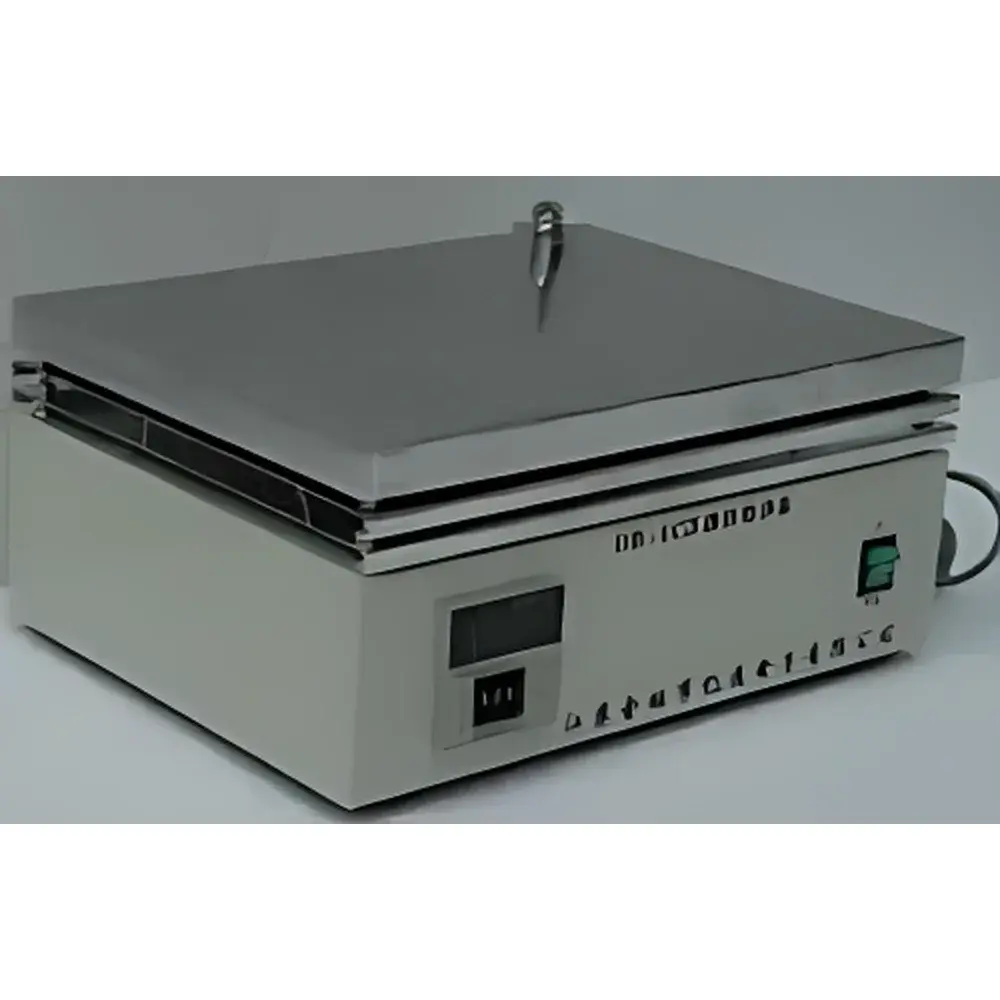
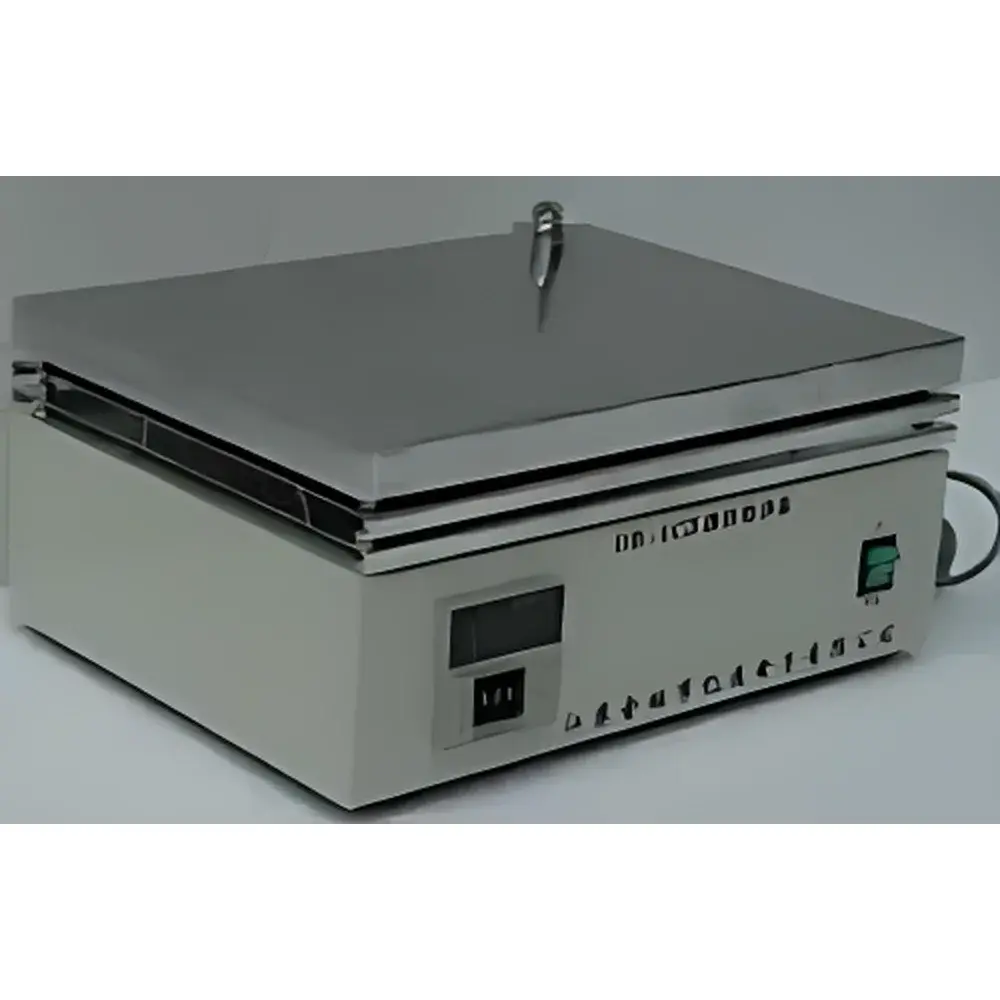
Truelab DB-1A/2A/3A/1B/2B/3B Stainless Steel Electric Heating Plate
| Brand | Truelab |
|---|---|
| Origin | Shanghai, China |
| Model | DB-1A / DB-2A / DB-3A / DB-1B / DB-2B / DB-3B |
| Heating Power | 600 W / 800 W / 1000 W (model-dependent) |
| Max. Operating Temperature | 250 °C |
| Temperature Uniformity | ±2 °C |
| Heating Surface Area | 300 cm² / 600 cm² / 770 cm² |
| Dimensions (L×W×H) | 200×150×100 mm / 300×200×100 mm / 350×220×100 mm |
| Control Type | Analog (A-series) or Digital LED (B-series) |
| Panel Material | 304 Stainless Steel |
| Display | LED (B-series), Mechanical Dial (A-series) |
Overview
The Truelab DB Series Stainless Steel Electric Heating Plates are precision-engineered benchtop thermal platforms designed for consistent, reliable heating in analytical, biological, environmental, and educational laboratories. Based on resistive heating principles, these plates deliver stable surface temperatures up to 250 °C with minimal thermal gradient across the working zone—enabling reproducible sample preparation, evaporation, digestion, drying, and pre-heating applications. Constructed with a seamless 304 stainless steel top plate, the DB Series resists corrosion from acidic reagents, solvents, and aqueous residues commonly encountered during wet chemistry workflows. The series comprises six configurations—DB-1A/1B, DB-2A/2B, and DB-3A/3B—distinguished by heating power (600 W, 800 W, or 1000 W), active surface area (300 cm², 600 cm², or 770 cm²), and temperature control architecture (analog dial vs. digital LED interface). All models comply with IEC 61010-1 safety standards for laboratory electrical equipment and incorporate over-temperature protection circuitry to prevent thermal runaway.
Key Features
- Corrosion-resistant 304 stainless steel heating surface engineered for long-term chemical exposure and easy decontamination
- High thermal mass aluminum core with embedded Ni-Cr resistance wire ensures rapid heat-up (<15 min to 200 °C) and excellent temperature stability (±2 °C uniformity across full surface)
- Dual control options: DB-A models feature robust analog thermostatic dials with mechanical feedback; DB-B models integrate microprocessor-based PID control with 1 °C resolution LED display and setpoint memory
- Three scalable platform sizes accommodate diverse vessel formats—from 50 mL centrifuge tubes and digestion vessels to 1 L beakers and multi-well trays
- Integrated safety features include automatic cut-off at 270 °C (independent of main controller), non-slip rubber feet, and IP20-rated enclosure for dust resistance
- Low-profile, compact chassis (≤100 mm height) enables integration beneath fume hoods or within confined benchtop workspaces
Sample Compatibility & Compliance
The DB Series accommodates standard laboratory glassware (e.g., borosilicate beakers, digestion tubes, Petri dishes) and PTFE-coated containers without risk of panel warping or surface degradation. Its flat, non-porous surface supports even contact heating critical for gravimetric analysis, Kjeldahl digestion prep, and EPA Method 3010A/3050B sample drying protocols. Units meet CE marking requirements under the Low Voltage Directive (2014/35/EU) and Electromagnetic Compatibility Directive (2014/30/EU). While not certified for GLP/GMP environments out-of-the-box, the DB-B digital variants support audit-ready operation when paired with external calibration logs and routine thermocouple verification per ISO/IEC 17025 guidelines. No hazardous substances (RoHS-compliant) are used in construction.
Software & Data Management
The DB-A analog models operate without software dependency and require no firmware updates or driver installation. DB-B digital variants feature a standalone front-panel interface with no USB, Bluetooth, or Ethernet connectivity—intentionally designed for simplicity, reliability, and reduced cybersecurity surface in regulated lab settings. Temperature setpoints and real-time readings are displayed locally; no data logging, export, or remote monitoring is provided. For labs requiring electronic records, third-party thermocouple data loggers (e.g., Omega OM-DAQPRO-5300) may be used alongside the unit to capture time-stamped surface temperature profiles compliant with FDA 21 CFR Part 11 when validated per organizational SOPs.
Applications
- Controlled evaporation of solvents in trace metal analysis (e.g., acid digestates prior to ICP-MS)
- Drying of filter papers, soil samples, or precipitates per ASTM D2234 and ISO 11464
- Pre-heating of reagents and standards in QC/QA workflows for HPLC and titration labs
- Support heating for hotplate stirrers in synthesis and buffer preparation
- Classroom demonstrations of thermal kinetics, phase transitions, and reaction rate dependence on temperature
- Stabilized warming of enzymatic assay plates in molecular biology labs (non-stirring mode)
FAQ
What is the maximum recommended continuous operating temperature?
The rated maximum surface temperature is 250 °C. Sustained operation above 220 °C for >4 hours may accelerate oxidation of the stainless steel surface; periodic visual inspection is advised.
Can the DB Series be used under a fume hood?
Yes—its low profile (≤100 mm height), absence of moving parts, and sealed electronics make it suitable for fume hood placement. Ensure adequate clearance (≥50 mm) around all sides for convection cooling.
Is calibration traceable to national standards?
The unit does not include built-in calibration certification. Users must perform external calibration using NIST-traceable thermocouples (e.g., Type K) placed directly on the heated surface per ISO 17025 Clause 6.5.
How does temperature uniformity vary across different models?
All models maintain ±2 °C uniformity at setpoints between 50–200 °C, verified at five points (center + four quadrants) using calibrated surface probes per ASTM E220.
Are replacement heating elements available?
Yes—Truelab supplies OEM-matched heating assemblies (P/N: DB-HEAT-KIT) with pre-installed thermal cutoffs, compatible across all DB-A/B variants. Field replacement requires basic soldering tools and adherence to IEC 60335-1 disassembly procedures.



