
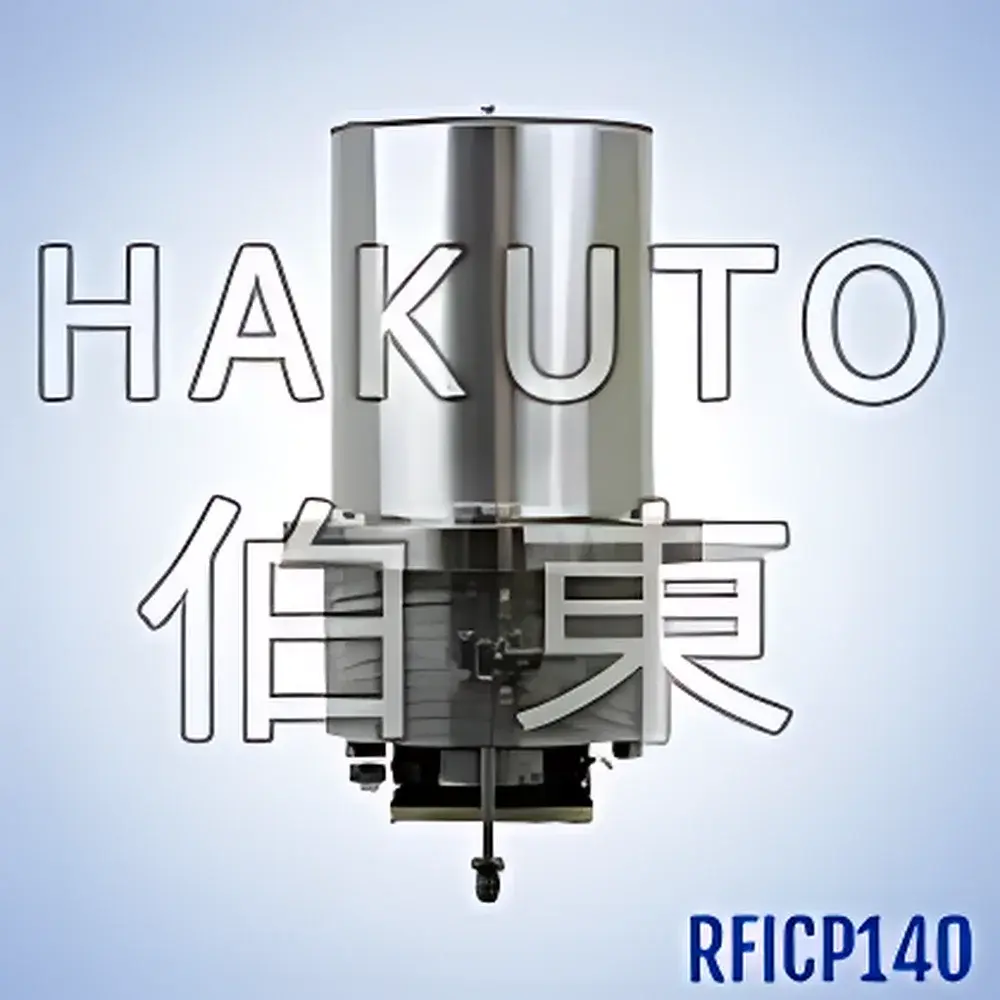
KRI RFICP 140 Radiofrequency Ion Source (Imported from USA, Distributed by Shanghai Bodo)
| Brand | KRI (Kaufman & Robinson, Inc.) |
|---|---|
| Origin | USA |
| Model | RFICP 140 |
| Anode RF Power | 1 kW @ 1.8 MHz |
| Max. Beam Current | >500 mA |
| Acceleration Voltage Range | 100–1200 V |
| Ion Energy Range | 100–1200 eV |
| Beam Aperture Diameter | 14 cm |
| Grid Material | Molybdenum or Graphite |
| Gas Compatibility | Ar, O₂, N₂, and other process gases |
| Gas Flow Rate | 5–40 sccm |
| Operating Pressure | < 0.5 mTorr |
| Neutralizer | LFN 2000 |
| Dimensions (H × D) | 25.1 cm × 24.6 cm |
| Flange | 12″ Conflat (CF) |
Overview
The KRI RFICP 140 is a compact, grid-type radiofrequency inductively coupled plasma (RF-ICP) ion source engineered for high-reproducibility ion beam processing in ultra-high vacuum (UHV) environments. Developed by Kaufman & Robinson, Inc.—a U.S.-based pioneer in ion source technology since 1978—the RFICP 140 utilizes a 1.8 MHz RF-driven anode coil to generate dense, stable plasma without internal electrodes, eliminating contamination risks associated with cathode erosion. Ions are extracted and accelerated through a precision-machined 14 cm diameter molybdenum or graphite grid assembly, enabling precise control over beam divergence, focus, and angular distribution. The source operates across a wide acceleration voltage range (100–1200 V), delivering ion energies tunable from 100 eV to 1200 eV—ideal for applications requiring fine-tuned surface interaction, such as low-damage ion beam etching (IBE), controlled pre-sputter cleaning, and energy-resolved ion beam-assisted deposition (IBAD). Its integrated OptiBeam™ self-aligning ion optics ensure long-term beam stability and minimal maintenance, while the LFN 2000 low-energy electron neutralizer maintains space-charge compensation under varying beam current conditions (up to >500 mA).
Key Features
- RF-driven inductively coupled plasma generation (1.8 MHz, up to 1 kW anode power) ensures electrode-free, contamination-free plasma operation
- 14 cm diameter extraction grid fabricated from high-purity molybdenum or graphite for thermal stability and sputter resistance
- OptiBeam™ self-aligning ion optical system enables rapid beam configuration switching between parallel, focused, and scattered modes without manual realignment
- Wide operational ion energy range (100–1200 eV) with fine voltage resolution for process optimization across material systems
- Compatible with multiple process gases—including Ar, O₂, N₂—and supports gas flow rates from 5 to 40 sccm under pressures below 0.5 mTorr
- Compact form factor (25.1 cm height × 24.6 cm diameter) with standard 12″ Conflat (CF) flange for seamless integration into existing UHV deposition or etch platforms
- Integrated LFN 2000 neutralizer provides robust electron emission for charge compensation during high-current beam operation
Sample Compatibility & Compliance
The RFICP 140 is compatible with substrates ranging from silicon wafers and optical glasses to metallic alloys and polymer films. Its adjustable ion energy and beam profile support both soft (e.g., monolayer removal at ≤200 eV) and aggressive (e.g., stoichiometric etching at ≥800 eV) surface interactions. The source meets mechanical and electrical safety requirements per UL 61010-1 and CE directives. While not inherently certified, its design aligns with key industry standards governing thin-film manufacturing—including ASTM F1529 (for ion beam cleaning verification), ISO 14644-1 (cleanroom compatibility), and SEMI E10 (equipment reliability metrics). When integrated into GMP-compliant coating lines, the RFICP 140 supports audit-ready documentation of beam parameters, gas flows, and operating history when paired with compliant PLC-based controllers.
Software & Data Management
The RFICP 140 operates via analog and digital I/O interfaces (0–10 V, RS-232/485) compatible with third-party vacuum system controllers (e.g., MKS, Pfeiffer, INFICON). Optional KRI-provided LabVIEW-compatible drivers enable full remote parameterization—including RF forward/reflected power monitoring, grid voltage ramping, neutralizer bias control, and real-time beam current feedback. All operational setpoints and sensor readings can be logged with timestamped metadata, supporting GLP/GMP traceability requirements. For FDA-regulated environments, integration with 21 CFR Part 11–compliant SCADA systems allows electronic signature enforcement, audit trail generation, and user access tiering.
Applications
- Ion beam-assisted deposition (IBAD) for enhanced adhesion and density in optical coatings (e.g., TiO₂/SiO₂ multilayers)
- Precision pre-cleaning of substrates prior to evaporation or sputtering to remove hydrocarbons and native oxides
- Low-k dielectric etching with minimized sidewall damage in microelectronics R&D
- Surface functionalization of biomedical implants (e.g., Ti-6Al-4V) via controlled ion-induced topography modification
- Ion beam sputter deposition (IBSD) of ultra-pure, stoichiometric compound films (e.g., AlN, YBCO) without target poisoning
- In-situ ion beam polishing of X-ray mirror substrates requiring sub-nanometer surface roughness
FAQ
What vacuum level is required for stable RFICP 140 operation?
The source requires base pressure ≤5×10⁻⁷ Torr and operating pressure <0.5 mTorr during gas flow to sustain stable plasma ignition and minimize charge-exchange losses.
Can the RFICP 140 be used with reactive gases such as oxygen or nitrogen?
Yes—its molybdenum or graphite grid construction and RF plasma coupling make it fully compatible with O₂, N₂, and other reactive gases for oxidation-assisted etching or nitride film synthesis.
Is beam current calibration traceable to NIST standards?
While the source itself does not include built-in NIST-traceable calibration, KRI provides factory-measured beam current vs. voltage curves; users may perform secondary calibration using Faraday cup assemblies certified to NIST-traceable protocols.
How often does the grid require replacement under typical IBAD conditions?
Under continuous operation at 500 eV and 300 mA Ar beam current, grid lifetime exceeds 2,000 hours; lifetime scales inversely with ion energy and reactive gas usage.
Does the RFICP 140 support automated recipe-based operation?
Yes—when interfaced with programmable vacuum controllers or PLCs, all critical parameters (RF power, grid voltage, gas flow, neutralizer bias) can be sequenced and repeated with ≤0.5% setpoint repeatability.




