
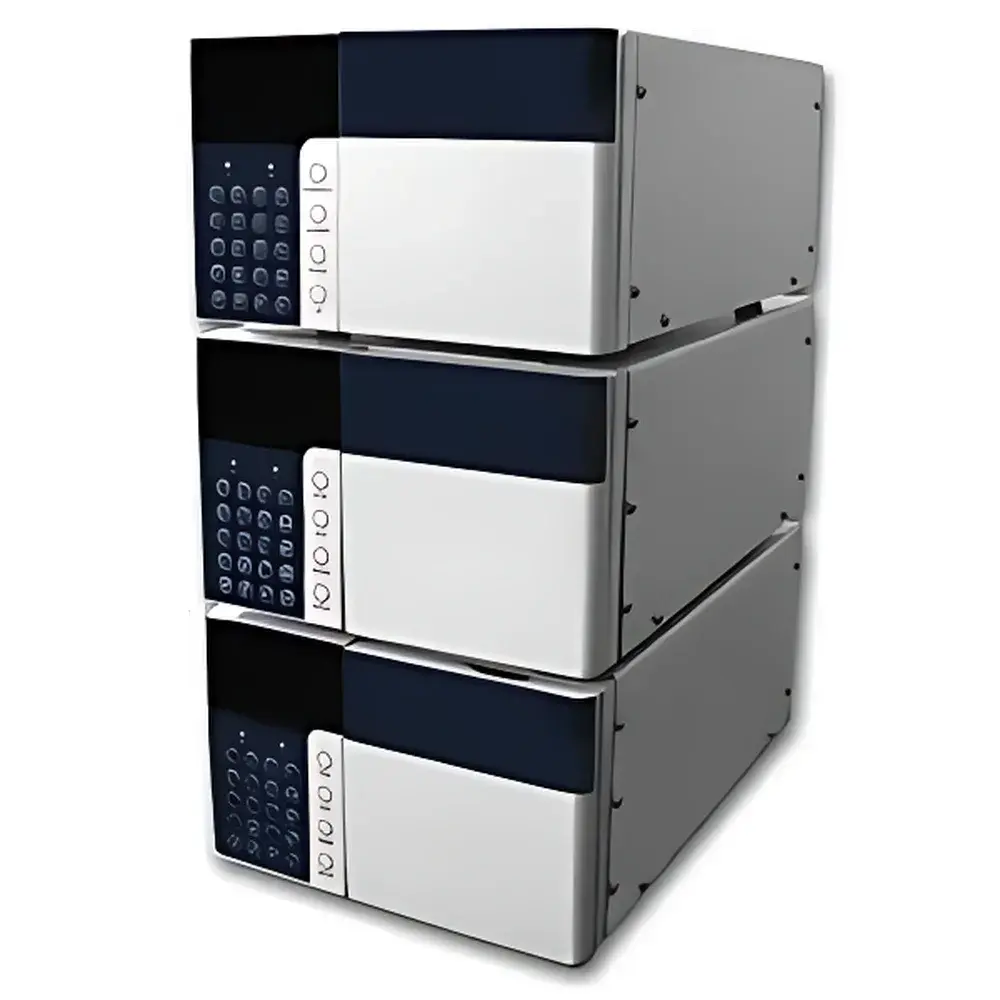
Kyocera AA-510D/A-510P Dedicated Amino Acid Analyzer System
| Brand | Kyocera |
|---|---|
| Origin | Beijing, China |
| Manufacturer Type | Authorized Distributor |
| Regional Classification | Domestic (PRC) |
| Model | AA-510D/A-510P |
| Pricing | Upon Request |
Overview
The Kyocera AA-510D/A-510P Dedicated Amino Acid Analyzer System is a purpose-built high-performance liquid chromatography (HPLC) platform engineered specifically for quantitative and qualitative analysis of free and hydrolyzed amino acids in complex biological, agricultural, and food matrices. Unlike generic HPLC systems, this integrated solution employs post-column derivatization with ortho-phthalaldehyde (OPA) and ninhydrin reagents—fully compliant with AOAC 982.30, ISO 13878:2019, and USP methodologies—to deliver selective, reproducible, and chromatographically resolved separation of all 20 proteinogenic amino acids plus common non-proteinogenic variants (e.g., taurine, γ-aminobutyric acid). The system operates on classical ion-exchange chromatography principles, utilizing specialized cation-exchange columns with lithium-based mobile phase gradients and precisely temperature-controlled reaction coils to ensure stoichiometric derivatization kinetics and minimal peak broadening. Its architecture is optimized for routine laboratory environments where regulatory traceability, method robustness, and operator independence are critical—particularly in QC/QA labs supporting feed formulation, dairy processing, infant formula certification, and veterinary diagnostics.
Key Features
- Dedicated dual-channel detection: AA-510D digital absorbance detector with dual-wavelength capability (190–700 nm), factory-calibrated at 254 nm and 440 nm for OPA and ninhydrin derivatives respectively
- Low-noise optical design: Integrated high-stability deuterium lamp (German-sourced), precision-aligned flow cell, and real-time digital filtering yielding baseline noise ≤ 2 × 10⁻⁵ AU and drift ≤ 4 × 10⁻⁵ AU/h (methanol, 1.0 mL/min)
- AA-510P binary high-pressure pump: Dual-piston reciprocating design with floating seal technology, delivering 0.001–10.000 mL/min flow accuracy ±0.2% RSD, pressure stability < 5 PSI ripple at 6000 PSI max
- Automated fluidic management: Built-in auto-purge, auto-wash, and solvent-switching protocols reduce manual intervention and cross-contamination risk between sample batches
- Embedded diagnostics: Onboard self-test routines, lamp life monitoring, pressure fault logging, and OLED interface with multilingual menu support (English, Spanish, Chinese)
- Regulatory-ready firmware: Audit trail logging, user-access levels, and electronic signature support aligned with FDA 21 CFR Part 11 Annex 11 expectations for GLP/GMP environments
Sample Compatibility & Compliance
The AA-510 system accepts aqueous hydrolysates (6M HCl, 110°C, 22–24 h), enzymatic digests, cell culture supernatants, plasma/serum extracts (deproteinized via sulfosalicylic acid or ultrafiltration), and fermented food slurries. Sample introduction is compatible with standard 100–500 µL loop injectors and autosamplers meeting ANSI/SCTE standards. All hardware components—including column oven (ambient to 90°C, ±0.2°C stability), reaction coil heater (130°C, ±1°C), and reagent delivery manifolds—conform to IEC 61010-1 safety requirements. Method validation documentation supports compliance with ISO/IEC 17025:2017 clause 7.2.2 for measurement uncertainty estimation and meets the instrumental performance criteria outlined in AOAC Official Method 982.30 for total amino acid profiling.
Software & Data Management
Kyocera AA-Link v3.2 workstation software provides full instrument control, real-time chromatogram visualization, peak integration using tangent skim and valley-to-valley algorithms, and customizable calibration curve generation (linear, quadratic, or weighted least-squares). Raw data files (.kda) are stored with embedded metadata (operator ID, timestamp, method version, instrument serial number) and support export to CSV, PDF, and CDF formats for LIMS integration. The software includes built-in compliance tools: electronic logbook with immutable timestamps, change history tracking for method parameters, and role-based access controls (Admin, Analyst, Reviewer). Data integrity safeguards include automatic backup to network drives and optional encryption per NIST SP 800-111 guidelines.
Applications
- Feed & agriculture: Quantification of lysine, methionine, threonine, and tryptophan in soybean meal, fishmeal, and premix formulations per EU Regulation No. 152/2009
- Food & nutrition: Verification of amino acid profiles in infant formulas, sports nutrition products, and plant-based proteins against Codex Alimentarius STAN 72-1981
- Clinical research: Monitoring branched-chain amino acid (BCAA) ratios in serum for metabolic disorder screening (e.g., maple syrup urine disease)
- Pharmaceutical development: Release testing of amino acid-based APIs and excipients per ICH Q2(R2) validation parameters
- Biotechnology: Monitoring amino acid consumption/production kinetics in CHO and E. coli bioreactor runs
FAQ
Does the AA-510 system support pre-column derivatization methods such as AccQ-Tag or PITC?
Yes—while optimized for post-column OPA/ninhydrin chemistry, the AA-510P pump and AA-510D detector are fully compatible with reversed-phase C18 columns and pre-column derivatization workflows when configured with appropriate mixing tees and low-dead-volume connections.
Is column oven temperature programmable during gradient runs?
Yes—the column compartment supports stepwise or linear temperature ramps (0.1°C increments) synchronized with gradient events via AA-Link software, enabling retention time locking for multi-day method reproducibility.
Can the system be integrated into a central LIMS via HL7 or ASTM E1384?
Native ASTM E1384-07 (Clinical Laboratory Data Interchange) messaging is supported; HL7 v2.x integration requires middleware configuration through Kyocera’s certified IT partners.
What maintenance intervals are recommended for the derivatization manifold?
Reagent lines and reaction coils require flushing with 10% nitric acid every 200 injections; full manifold inspection and O-ring replacement are advised every 6 months or 1,500 analytical cycles, whichever occurs first.
Is method transfer support available from Kyocera for legacy amino acid analyzers?
Kyocera provides documented migration pathways—including column equivalency tables, gradient translation calculators, and comparative system suitability test reports—for transitioning from Hitachi L-8900, Biochrom 30+, or Jeol JLC-500V platforms.





