
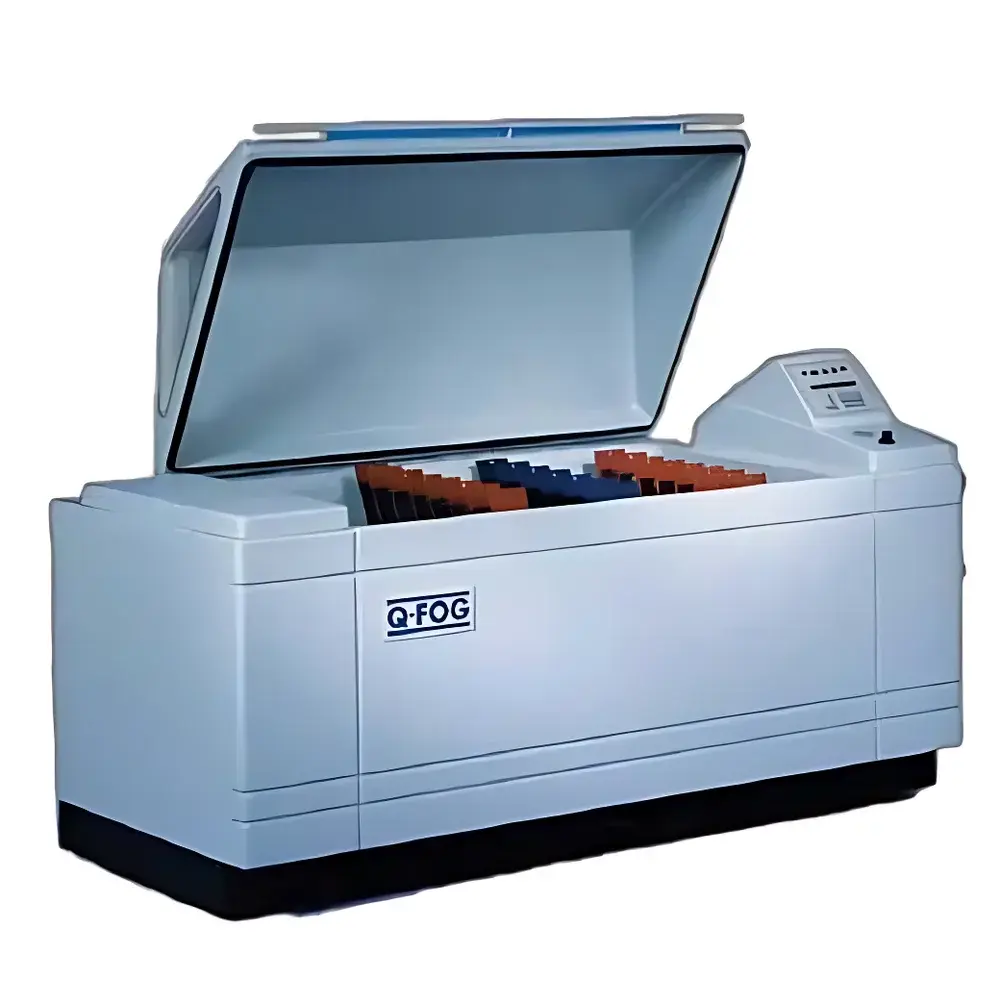
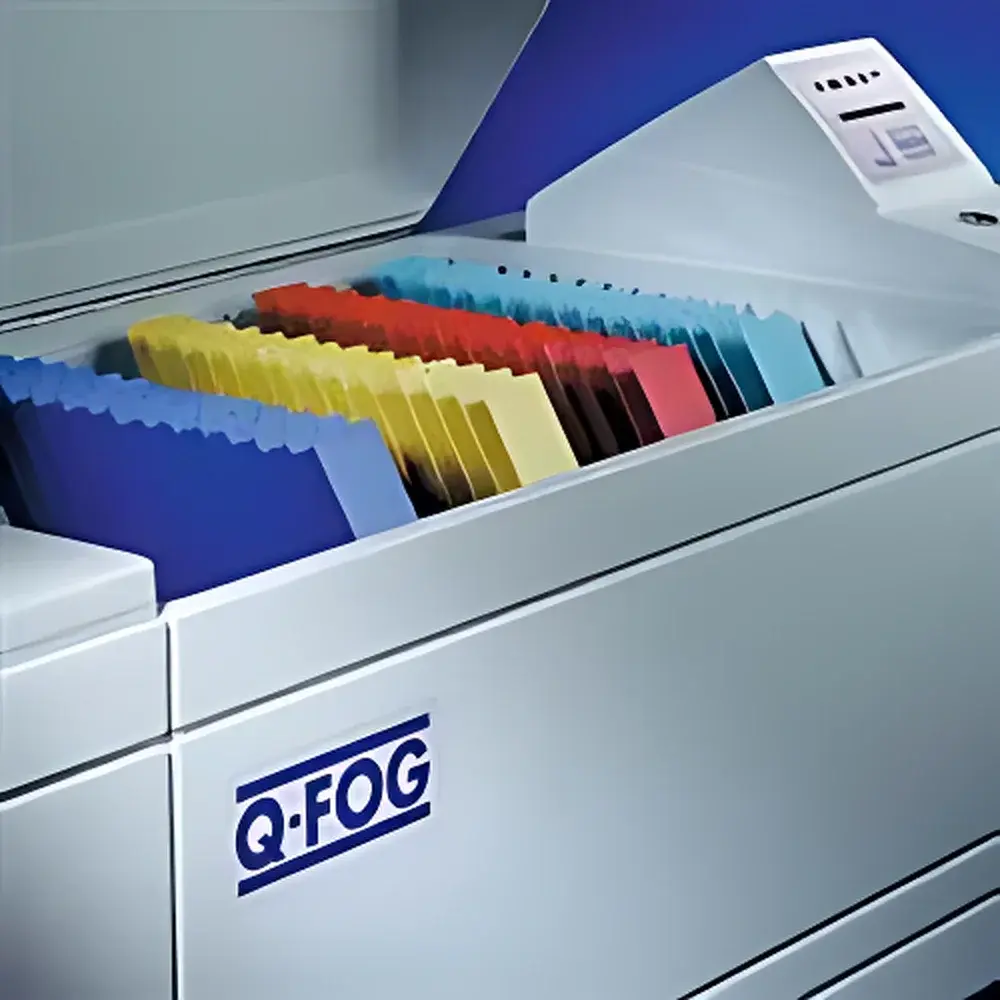
Q-LAB CCT-600 Cyclic Corrosion Test Chamber
| Brand | Q-LAB |
|---|---|
| Origin | USA |
| Model | CCT-600 |
| Chamber Capacity | 640 L |
| Cycle Modes | Salt Spray, Dry, 100% RH Humidity, and Hold (Static) |
| Compliance | ASTM B117, ISO 9227, ASTM G85 Annex A5 (Prohesion), SAE J2334, GMW 14872, Ford APGE, VW PV1210, Renault D17 2028 |
| Water Requirement | Deionized or purified water only |
| Internal Solution Reservoir | 120 L with level sensor and saltwater filter |
| Controller | Integrated microprocessor-based system with self-diagnostic functions, service alerts, and safety shutdown |
Overview
The Q-LAB CCT-600 Cyclic Corrosion Test Chamber is an engineered solution for accelerated corrosion evaluation under rigorously controlled, multi-phase environmental conditions. Unlike conventional continuous-salt-spray systems operating solely at 35 °C per ASTM B117, the CCT-600 implements programmable cyclic exposure sequences that replicate key elements of real-world atmospheric corrosion—namely, alternating salt fog, drying, high-humidity condensation, and ambient hold phases. This capability addresses the well-documented limitation of single-mode salt spray testing: its poor correlation with field performance due to the absence of wet/dry transitions and humidity-driven electrochemical activity. The chamber leverages Couette-flow nozzle technology and precision-controlled air pressure regulation to ensure uniform, reproducible salt deposition across test specimens—critical for inter-laboratory comparability and regulatory audit readiness.
Key Features
- Four distinct exposure modes: Salt Spray (ASTM B117-compliant), Dry (forced-air convection), 100% Relative Humidity (condensation-capable), and Hold (static ambient)
- Microprocessor-based controller with intuitive touchscreen interface, preloaded test methods (e.g., Prohesion, SAE J2334), and customizable cycle programming
- Integrated 120 L internal reservoir with built-in saltwater filtration and low-level audible/visual alarm
- Observation window with interior LED lighting for non-intrusive visual monitoring during active cycles
- Self-diagnostic firmware providing real-time fault logging, scheduled maintenance prompts, and automatic safety shutdown on critical parameter deviation
- Robust stainless-steel construction with corrosion-resistant internal components and sealed electrical enclosures
- No external plumbing required—designed for operation with deionized or purified water only (conductivity ≤ 1 µS/cm)
Sample Compatibility & Compliance
The CCT-600 accommodates a broad range of metallic and coated substrates—including automotive body panels, fasteners, electronic housings, aerospace alloys, and galvanized steel—without requiring manual transfer between chambers. Its standardized chamber geometry ensures consistent airflow, temperature uniformity (±2 °C per IEC 60068-2-14), and salt deposition rate (typically 1–2 mL/80 cm²/h, adjustable via pump speed and air pressure). The system complies with internationally recognized corrosion testing standards including ASTM B117, ISO 9227, ASTM G85 Annex A5 (Prohesion), SAE J2334, GMW 14872, Ford APGE, VW PV1210, and Renault D17 2028. All operational parameters—including cycle timing, temperature setpoints, humidity ramp rates, and spray duration—are logged with timestamped, tamper-resistant records—supporting GLP/GMP traceability and FDA 21 CFR Part 11 compliance when paired with validated software configurations.
Software & Data Management
Control and data acquisition are managed through Q-LAB’s proprietary Windows-based Q-FOG Software Suite (v5.0+), which supports remote monitoring, automated report generation (PDF/CSV), and full-cycle parameter archiving. Each test run generates a comprehensive audit trail containing start/stop timestamps, real-time chamber conditions, user login credentials, and controller event logs. Data export conforms to ASTM E2913 and ISO/IEC 17025 requirements for accredited laboratories. Optional integration with LIMS platforms is available via OPC UA or RESTful API endpoints. Firmware updates are delivered digitally and verified via cryptographic checksums to maintain configuration integrity throughout instrument lifetime.
Applications
- Automotive OEM validation of paint systems, zinc-nickel coatings, and brake caliper finishes per GMW 14872 and Ford CETP
- Corrosion resistance qualification of aerospace fasteners and aluminum alloy structures under MIL-STD-810H Method 509.6
- QC/QA screening of marine-grade stainless steels and duplex alloys per ASTM A923
- Accelerated aging studies for photovoltaic module frames and junction boxes in coastal environments
- R&D of novel corrosion inhibitors and self-healing polymer coatings under multi-stress cycling
- Third-party certification testing for ISO 12944 C5-I and C5-M corrosivity categories
FAQ
What distinguishes the CCT-600 from traditional salt spray chambers?
The CCT-600 enables fully automated, multi-stage cyclic testing—including salt fog, dry-off, high-humidity condensation, and static hold—whereas standard chambers support only continuous salt spray per ASTM B117.
Is purified water mandatory for operation?
Yes. Only deionized or distilled water with conductivity ≤ 1 µS/cm may be used to prevent nozzle clogging, heater scaling, and inconsistent spray morphology.
Can the CCT-600 replicate OEM-specific automotive test protocols?
Yes. Preconfigured methods for GMW 14872, Ford APGE, and VW PV1210 are included; custom cycles can be defined using time-temperature-humidity-spray logic trees.
How is temperature and humidity uniformity verified?
Uniformity is validated per IEC 60068-2-14 using NIST-traceable sensors placed at nine standardized locations within the working volume.
What maintenance intervals are recommended?
Daily visual inspection of nozzles and reservoir level; monthly cleaning of air filters and salt collection trays; annual calibration of temperature/humidity sensors by authorized Q-LAB service engineers.



