
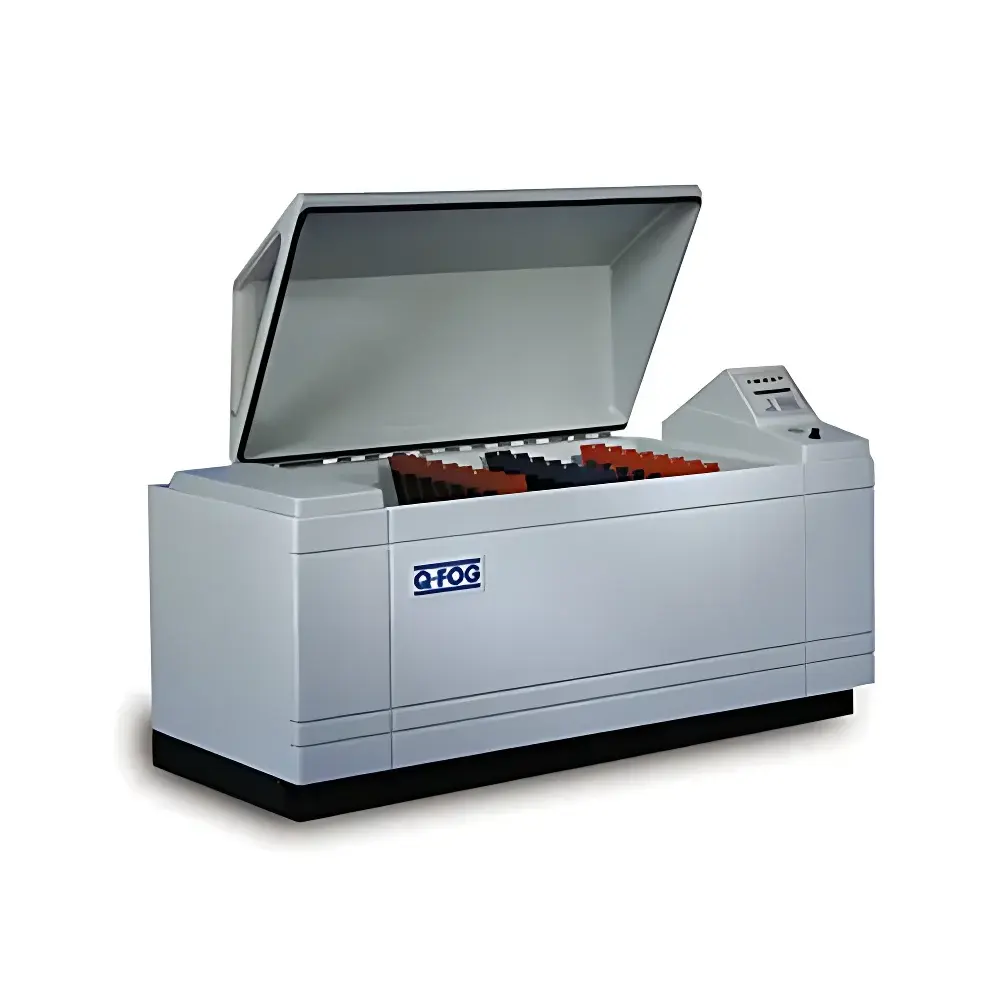
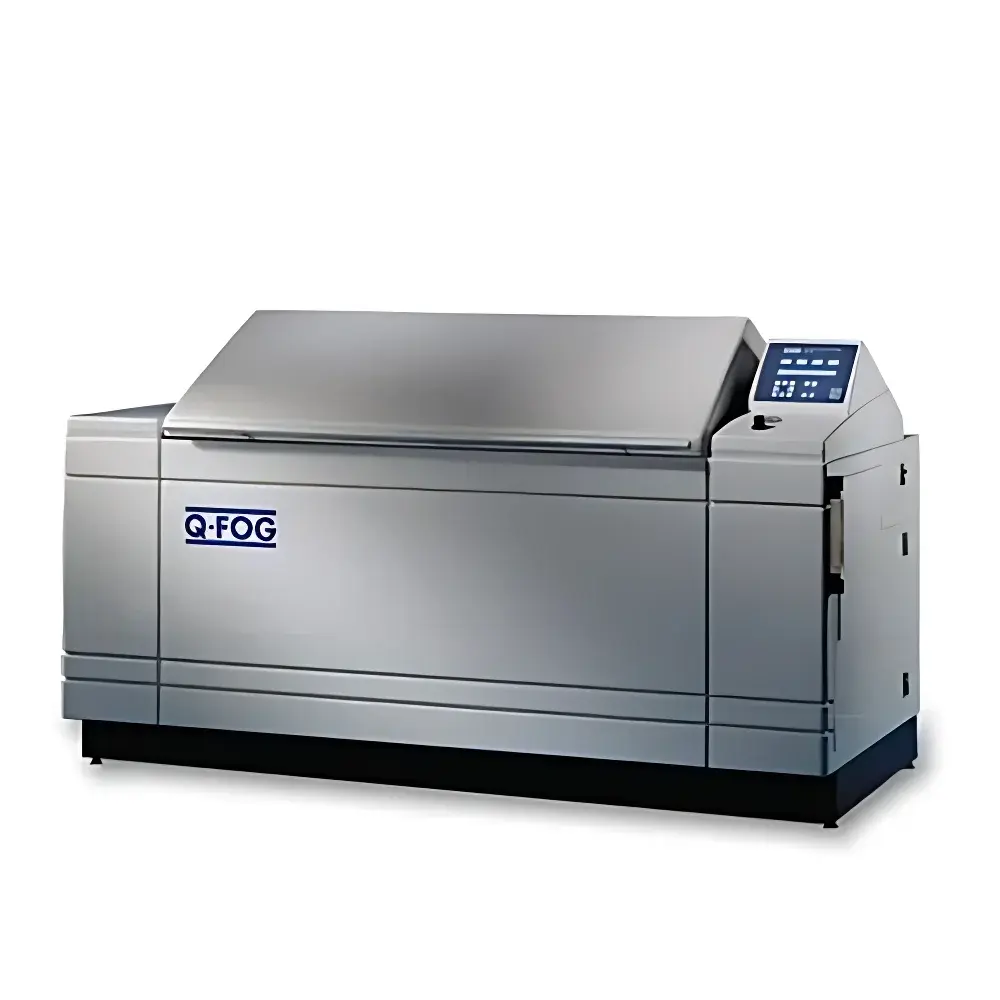
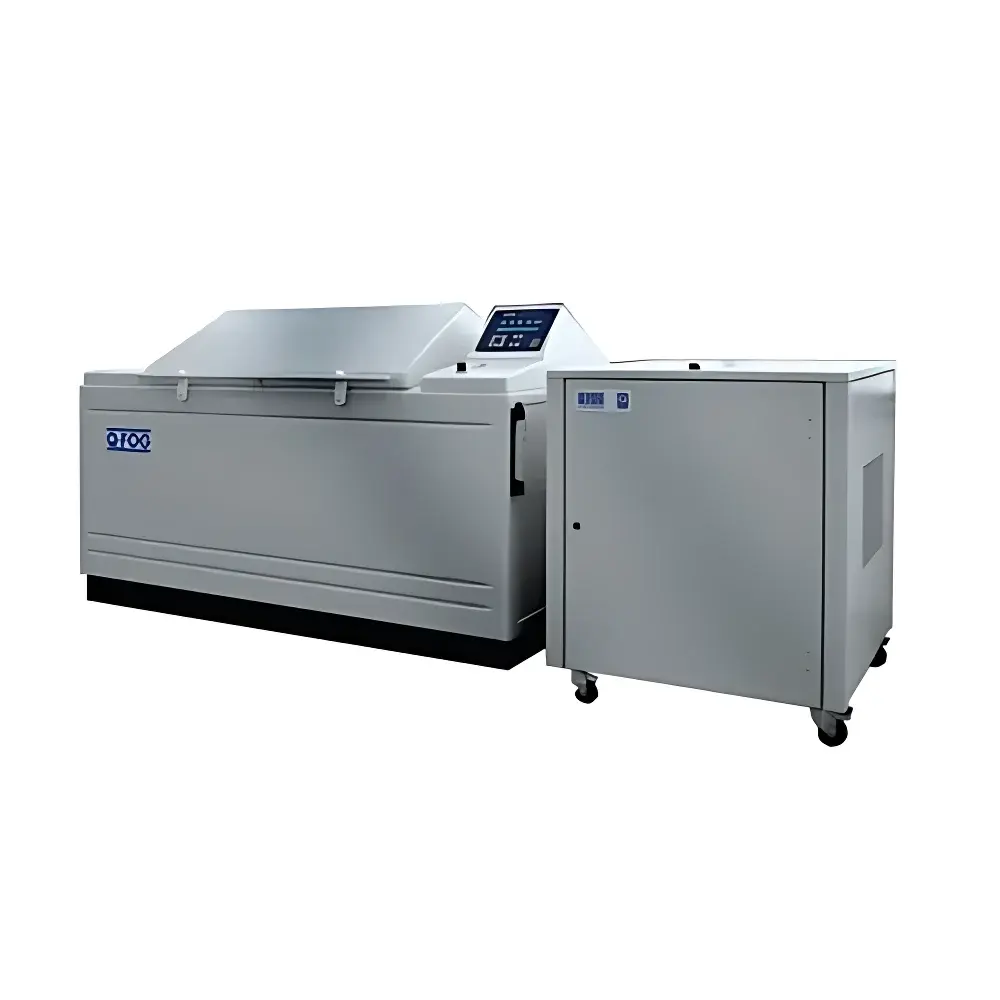
Q-LAB Q-FOG CRH600 Salt Spray Corrosion Test Chamber
| Brand | Q-LAB |
|---|---|
| Origin | USA |
| Model | Q-FOG CRH600 |
| Spray Mode | Continuous Atomization |
| Spray Rate | 1–5 L/h per 180 cm² |
| Nozzle Pressure | 0.7–1 kg/cm² |
| Fog Removal Method | Air-Driven Exhaust |
| Salt Fog Deposition Rate | 1–2 mL / 80 cm²·h |
| Temperature Range | 10–80 °C |
Overview
The Q-LAB Q-FOG CRH600 is a high-performance, programmable corrosion test chamber engineered for precision evaluation of material resistance to salt spray, cyclic humidity, and controlled condensation environments. Unlike conventional salt fog chambers limited to static ASTM B117 or ISO 9227 operation, the CRH600 integrates advanced air pre-conditioning technology—comprising a dedicated humidification module, variable-speed blower, and temperature-regulated saturation tower—to deliver fully independent control of relative humidity (RH) and chamber temperature across wide operational ranges (10–80 °C; RH up to 95% at 40 °C). This enables full compliance with complex automotive and industrial cyclic corrosion testing (CCT) standards including GMW 14872, SAE J2334, Ford CETP 00.00-L-467, VW PV1210, Renault D17 2029, Volvo STD 515-0001, and ISO 16701. The system operates on deionized water supply for stable RH generation and features dual corrosion exposure modes: atomized salt fog (via compressed-air-driven nozzle) and programmable liquid spray (for targeted surface wetting per OEM specifications). Its 640 L internal volume accommodates standardized test panels, 3D components, and multi-tier sample configurations under reproducible environmental conditions traceable to NIST-traceable calibration protocols.
Key Features
- Full-spectrum cyclic corrosion testing capability compliant with major global OEM and ISO standards
- Independent, software-controlled regulation of temperature (10–80 °C) and relative humidity (up to 95% RH at 40 °C) via integrated air pre-conditioner and saturation tower
- Dual exposure modes: continuous salt fog atomization (1–5 L/h per 180 cm²) and programmable liquid spray (adjustable flow, duration, and duty cycle)
- Self-cleaning nozzle design with automated purge sequence to prevent crystalline salt blockage during extended testing
- Robust stainless-steel construction with double-wall insulation, PID-controlled heating, and corrosion-resistant internal chamber lining
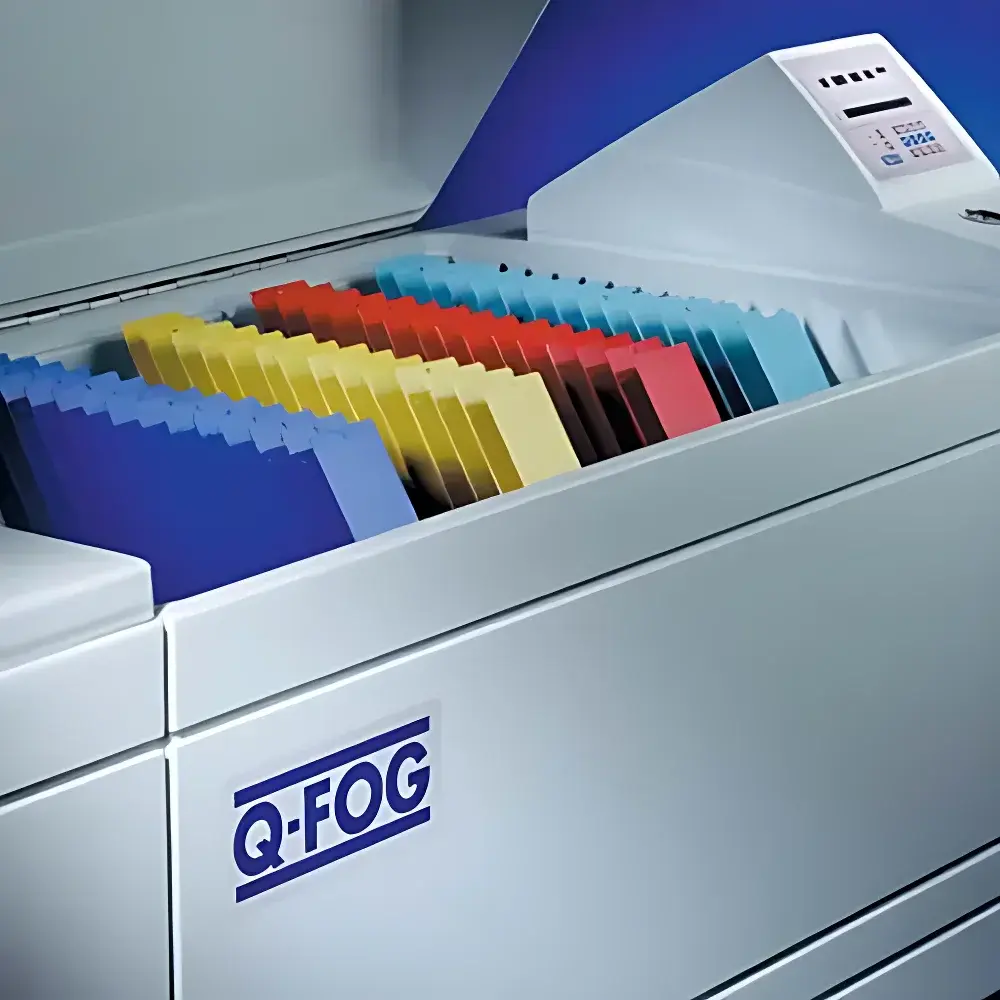
- Modular accessory support including angled test panel racks (15° tilt), 20 mm diameter hanging rods (F-9017-K), and standardized mounting kits (F-9011-K)
- Compressed-air humidification path ensures consistent fog droplet size distribution and uniform deposition (1–2 mL/80 cm²·h, measured per ASTM B117)
Sample Compatibility & Compliance
The CRH600 supports diverse sample geometries—from flat coated panels (max 102 × 304 mm on SSP-1100 rack, 38 mm center spacing) to irregular 3D parts mounted on 20 mm diameter rods. Its large 640 L working volume allows simultaneous evaluation of multiple material systems under identical environmental profiles. All operational parameters—including temperature ramp rates, RH dwell times, spray frequency, and condensation cycles—are programmable and auditable in accordance with GLP/GMP requirements. The system meets the hardware and functional criteria specified in ISO/IEC 17025-accredited laboratories and supports validation documentation for FDA 21 CFR Part 11-compliant data integrity when paired with Q-LAB’s optional BlueControl software suite.
Software & Data Management
Operation is managed through Q-LAB’s BlueControl™ software (Windows-based, USB/Ethernet interface), which provides intuitive graphical programming of multi-step test cycles, real-time monitoring of chamber conditions (temperature, RH, spray status), and automatic logging of all setpoints and actual values at user-defined intervals. Data export is supported in CSV and PDF formats, with built-in audit trail functionality meeting FDA 21 CFR Part 11 requirements—including electronic signatures, user access levels, and immutable event logs. Calibration records, maintenance history, and sensor verification reports are stored within the software database and can be exported for internal quality audits or third-party accreditation reviews.
Applications
The Q-FOG CRH600 serves as a core platform for corrosion R&D, QC/QA validation, and supplier qualification across automotive, aerospace, marine, and electronics sectors. Typical use cases include accelerated evaluation of electroplated coatings (Zn/Ni, Cr, Sn), organic paint systems, galvanized steel substrates, aluminum alloys, and polymer encapsulants under realistic field-relevant stress combinations. Its ability to replicate dew formation, drying transitions, and electrolyte concentration gradients makes it especially valuable for investigating underfilm corrosion, crevice attack, and intergranular degradation mechanisms. Laboratories routinely deploy it for comparative studies supporting ISO 12944 C5-M/C5-I classification, ASTM G85 Annex A5 (Prohesion), and proprietary OEM CCT protocols requiring precise RH modulation.
FAQ
What standards does the Q-FOG CRH600 fully support?
It complies with GMW 14872, SAE J2334, Ford CETP 00.00-L-467, VW PV1210, ISO 16701, ISO 9227, ASTM B117, ASTM G85 Annex A5, and numerous other OEM-specific cyclic corrosion test methods.
Does the CRH600 require deionized water for RH control?
Yes—deionized water (resistivity ≥ 1 MΩ·cm) is mandatory for stable and repeatable humidity generation via the air saturation tower.
Can the spray and humidity functions operate simultaneously?
No—spray and RH/temperature conditioning are mutually exclusive phases within a programmed cycle to maintain measurement integrity and avoid uncontrolled condensation interference.
Is remote monitoring and control available?
Yes, via BlueControl software over Ethernet or USB; optional integration with enterprise LIMS or SCADA systems is supported through OPC UA or Modbus TCP interfaces.
What maintenance is required for long-term reliability?
Scheduled quarterly verification of temperature/RH sensors, annual calibration of pressure transducers and flow meters, and routine cleaning of nozzles and saturation tower internals using Q-LAB-recommended citric acid solution.



