
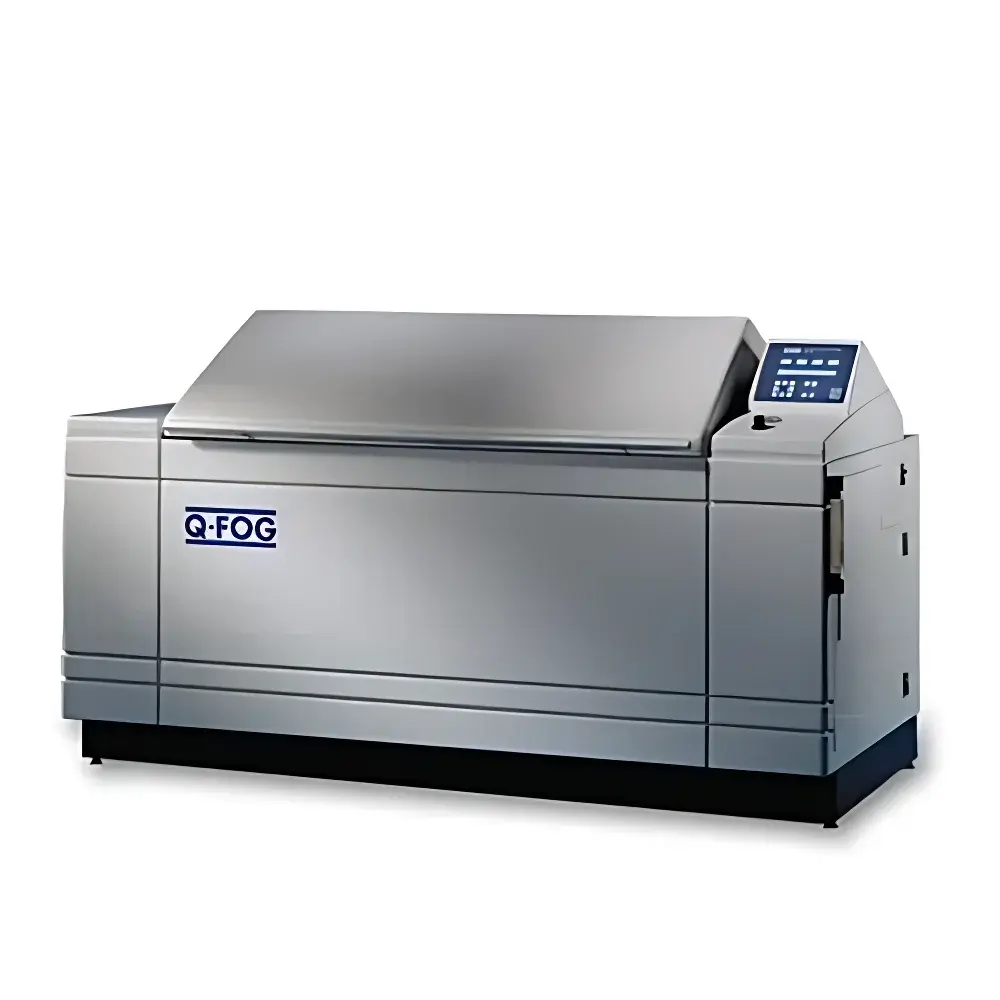
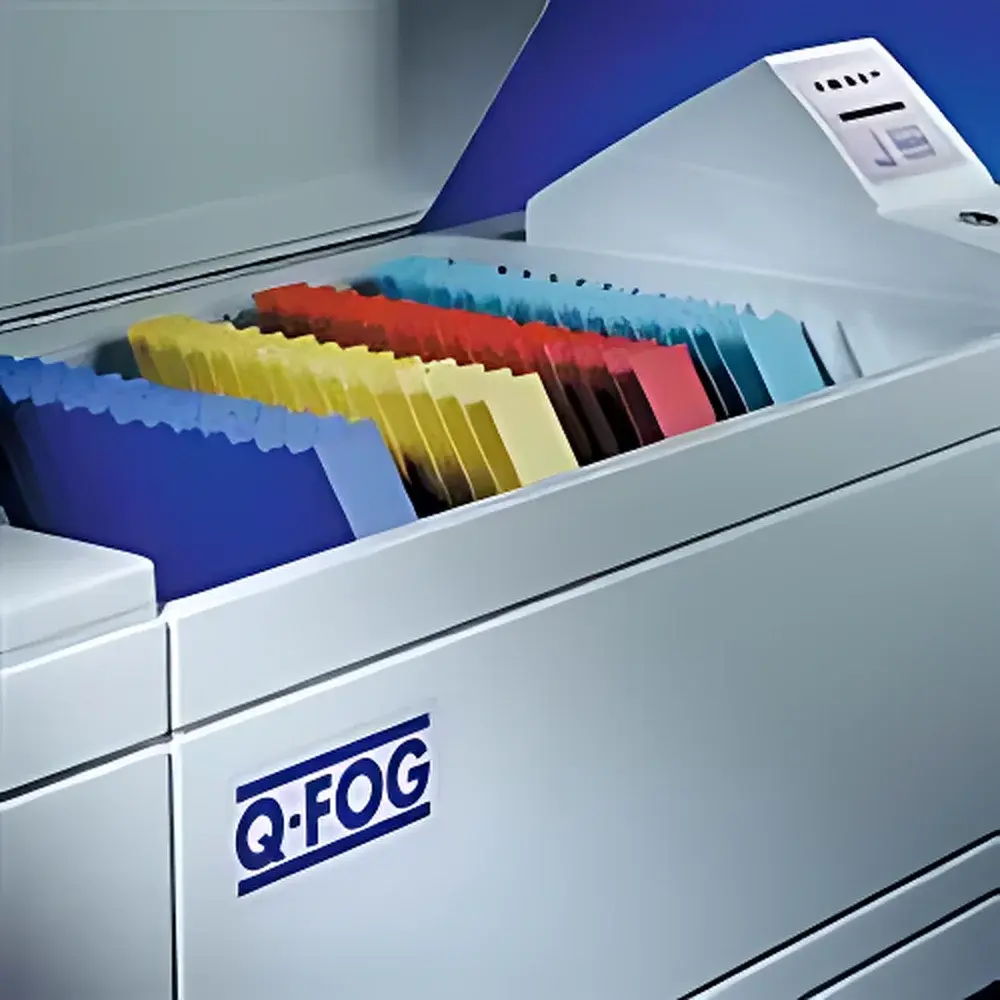
Q-LAB Q-FOG Cyclic Corrosion Test Chamber
| Brand | Q-LAB |
|---|---|
| Origin | USA |
| Model | Q-LAB Q-FOG SSP-600 / SSP-1100 / CCT-600 / CCT-1100 |
| Spray Mode | Continuous Atomization |
| Spray Rate | 1–5 L/h per 180 cm² |
| Nozzle Pressure | 0.7–1.0 kg/cm² |
| Fog Removal Method | Air-Pressure-Assisted Exhaust |
| Salt Fog Deposition Rate | 1–2 mL per 80 cm²·h |
| Temperature Range | 10–80 °C |
| Chamber Capacities | 640 L (SSP-600/CCT-600), 1103 L (SSP-1100/CCT-1100) |
| Sample Capacity | 160 specimens (75 mm × 150 mm) for 600-series |
| Humidity Control | Up to 100% RH (CCT models only) |
| Integrated Solution Reservoir | 120 L with built-in saltwater filter and low-level alarm |
| Heating/Cooling System | Internal resistive heaters + high-capacity forced-air cooling/drying fan |
| Controller | Microprocessor-based with self-diagnostic functions, cycle programming, service reminders, and safety shutdown |
Overview
The Q-LAB Q-FOG Cyclic Corrosion Test Chamber is an engineered solution for accelerated laboratory simulation of atmospheric corrosion mechanisms observed in real-world outdoor exposure. Unlike conventional steady-state salt spray testing (e.g., ASTM B117), which maintains continuous 35 °C saline fog without environmental cycling, the Q-FOG implements programmable multi-phase exposure sequences—including salt fog, dry-off, high-humidity condensation (CCT models), and ambient rest periods—to replicate the wet-dry, thermal, and hygric transients that govern electrochemical degradation kinetics. This cyclic methodology has been empirically validated across decades of field correlation studies, demonstrating improved fidelity in reproducing corrosion morphology, pit initiation patterns, coating delamination behavior, and relative material ranking—particularly for automotive coatings, aerospace alloys, galvanized steels, and electronic enclosures.
Key Features
- Programmable multi-environment cycling: supports up to four distinct exposure phases—salt fog, hot dry, 100% RH condensation (CCT models only), and ambient rest—each independently controllable for duration, temperature, and humidity.
- Precision雾 dispersion system: independent regulation of solution flow (via variable-speed peristaltic pump) and atomization distance (via adjustable air pressure regulator), enabling consistent and repeatable salt deposition rates within 1–2 mL/80 cm²·h per ASTM D1654 and ISO 9227 requirements.
- High thermal responsiveness: internal resistive heating elements combined with a high-CFM forced-air drying/fan-cooling system enable rapid transitions between test conditions—critical for simulating diurnal thermal gradients and minimizing dwell-time artifacts.
- Integrated 120 L solution reservoir with inline saltwater filtration and automated low-level detection, supporting uninterrupted operation for ≥7 days under typical test cycles.
- Ergonomic sample access: front-loading chamber design with low-profile entry threshold and wide-opening lid; optional viewing window and interior LED lighting (CCT models) facilitate non-intrusive visual monitoring during active exposure.
- Microprocessor-based controller with intuitive menu navigation, preloaded standard test profiles (ASTM G85 Annexes A1–A5, SAE J2334, GMW 14872, Ford CETP 00.00-L-467), user-defined cycle editing, real-time status display, and embedded diagnostics including predictive maintenance alerts and automatic safety shutdown.
Sample Compatibility & Compliance
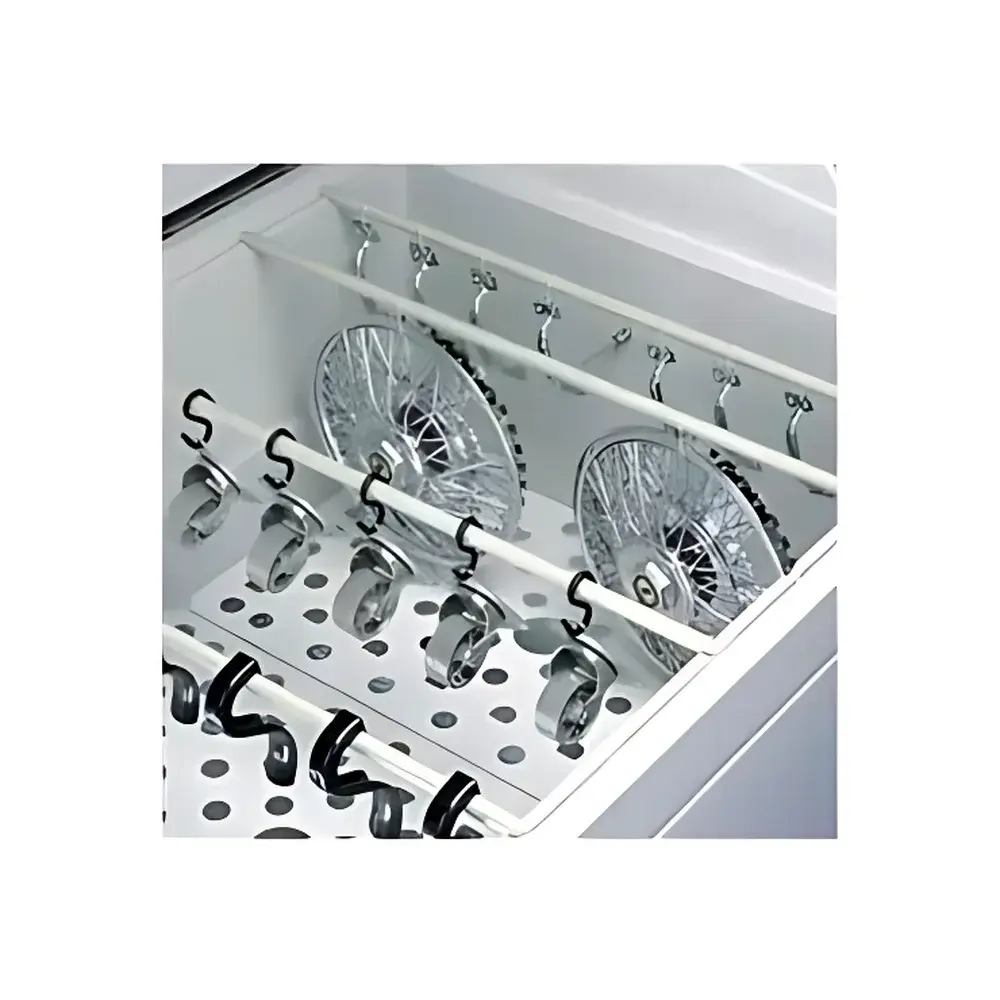
The Q-FOG accommodates standardized test panels (75 mm × 150 mm) at capacities of 160 (600-series) or 240 (1100-series) per cycle. Its modular chamber architecture complies with dimensional and operational requirements of major international corrosion standards, including ASTM B117 (continuous salt spray), ASTM G85 (Prohesion and cyclic variants), ISO 9227, DIN 50021, BS EN ISO 7253, and SAE J1211. CCT models further satisfy automotive OEM specifications requiring full-spectrum cycling—such as Volkswagen PV1210, BMW GS 95024, and Renault D17 2027—that mandate alternating salt fog, high-humidity soak, low-humidity drying, and storage phases within a single chamber. All Q-FOG systems are designed and manufactured in the USA to meet UL 61010-1 and IEC 61000-6-3 electromagnetic compatibility requirements.
Software & Data Management
The embedded controller logs timestamped environmental parameters (chamber temperature, solution temperature, elapsed phase time, fog deposition status) with non-volatile memory retention. While no external PC interface is required for basic operation, optional Ethernet connectivity enables remote monitoring via Q-Lab’s proprietary Q-FOG Control Software (v5.x), supporting CSV export, trend graphing, and audit-trail generation compliant with GLP and GMP documentation practices. Cycle definitions adhere to 21 CFR Part 11 principles through password-protected user roles, electronic signature capture for method validation, and immutable record integrity—facilitating regulatory submissions and internal quality audits.
Applications
The Q-FOG serves R&D laboratories, QC departments, and third-party testing facilities engaged in comparative corrosion resistance evaluation of metallic substrates, organic coatings (epoxy, polyurethane, zinc-rich primers), electroplated finishes, adhesives, and encapsulated electronics. It is widely deployed in automotive Tier-1 supplier validation labs for evaluating body panel coatings under GMW 14872 or Ford APQP protocols; in aerospace MRO facilities assessing corrosion inhibition on aluminum-lithium alloys per ASTM D1654; and in defense contractors qualifying naval hardware per MIL-STD-810H Method 509.5. Its reproducibility and inter-laboratory consistency make it suitable for ASTM Interlaboratory Study (ILS) participation and ISO/IEC 17025-accredited test reporting.
FAQ
What distinguishes Q-FOG SSP from CCT models?
SSP models support salt fog and Prohesion-type cycling (fog + dry); CCT models add full 100% RH condensation capability, enabling complete automotive cyclic protocols requiring humidity soak phases.
Is purified water mandatory for operation?
Yes. Deionized or distilled water (conductivity ≤1 µS/cm) must be used to prevent nozzle clogging, scaling, and inconsistent fog chemistry—critical for maintaining compliance with ASTM and ISO deposition tolerances.
Can the Q-FOG perform ASTM B117 testing?
Yes. All Q-FOG models fully comply with ASTM B117 requirements for temperature control (35 ± 2 °C), pH (6.5–7.2), and fog deposition rate when configured in continuous salt spray mode.
What maintenance intervals are recommended?
Daily: visual inspection of nozzles and solution level; weekly: cleaning of air pressure regulator and saltwater filter; quarterly: calibration verification of temperature sensors and deposition collector cups per Q-Lab Service Bulletin SB-002.
Are replacement parts and technical support available globally?
Q-Lab maintains authorized service centers in North America, EMEA, and Asia-Pacific; all critical components—including controllers, pumps, and humidity sensors—are stocked and supported under Q-Lab’s global warranty and extended service agreement program.



