
Q-LAB Q-FOG SSP and CCT Cyclic Corrosion Test Chambers
| Brand | Q-LAB |
|---|---|
| Origin | USA |
| Manufacturer Type | Original Equipment Manufacturer (OEM) |
| Product Origin | Imported |
| Model | Q-FOG SSP and CCT |
| Spray Method | Multiple (including continuous salt spray, Prohesion™, and cyclic humidity/dry phases) |
| Nozzle Pressure | 0.7–1.4 bar |
| Salt Solution Deposition Rate | 1.0–2.0 mL per 80 cm² per hour |
| Temperature Range | 35–70 °C |
Overview
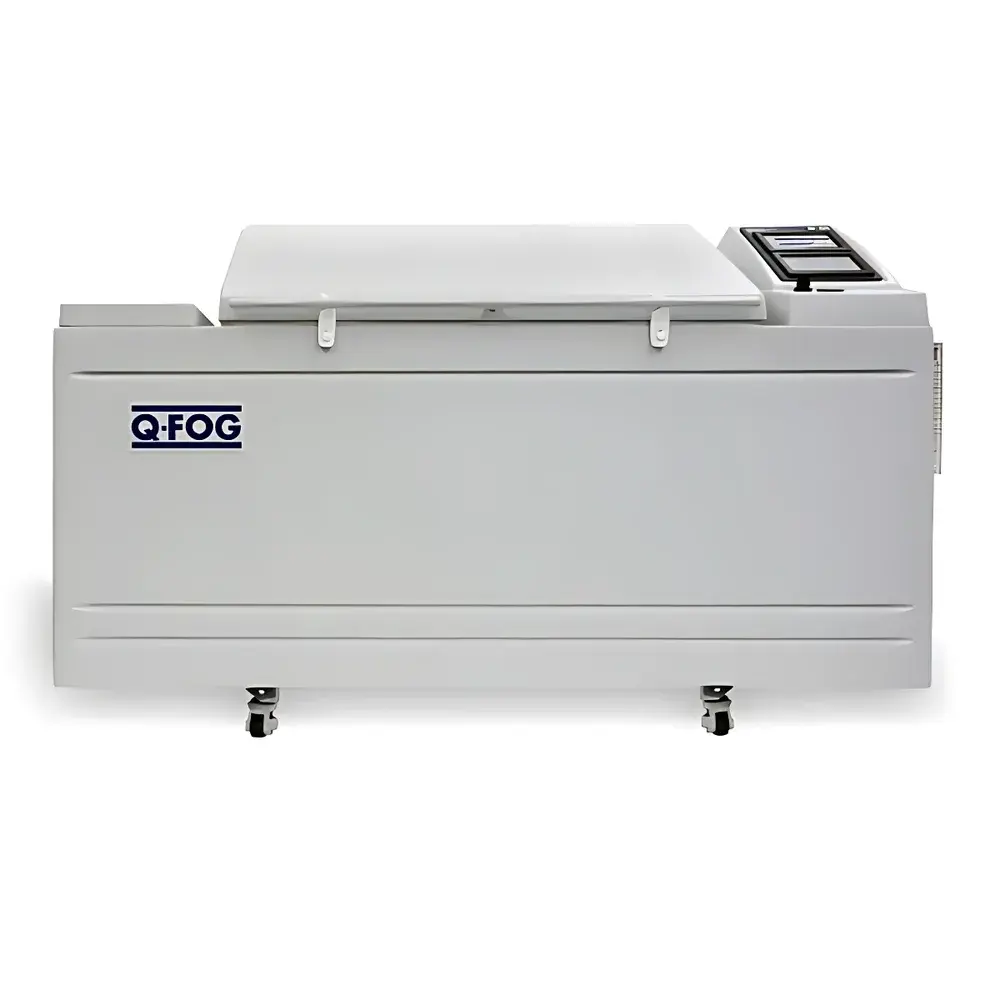
The Q-LAB Q-FOG SSP and CCT Cyclic Corrosion Test Chambers are engineered for precision simulation of atmospheric corrosion mechanisms under controlled laboratory conditions. Based on decades of field correlation research, these chambers replicate the multi-stage degradation processes observed in real-world exposure—particularly the synergistic effects of chloride deposition, humidity cycling, drying, and ambient temperature fluctuations. Unlike conventional static salt spray (e.g., ASTM B117), the Q-FOG platforms implement programmable cyclic protocols that emulate natural environmental sequences: salt fog application followed by humid soak, dry-off, and controlled recovery periods. This approach yields corrosion morphologies—including blistering, undercutting, crevice attack, and white rust—that correlate strongly with outdoor exposure data from marine, industrial, and automotive service environments. The SSP model supports standard salt spray and Prohesion™ testing (ASTM G85 Annex A5), while the CCT variant adds saturated humidity conditioning and fully automated dry/wet cycling—enabling compliance with ISO 14993, ASTM G147, SAE J2334, and GMW 14872 test standards.
Key Features
- Robust stainless-steel chamber construction with double-wall insulation and heated lid to prevent condensation interference during humidity phases
- Independent control of solution delivery, air saturation, chamber temperature, and relative humidity—each calibrated and traceable to NIST standards
- Dual-spray system architecture supporting both compressed-air atomization (for fine mist generation) and gravity-fed nozzles (for uniform coverage across large sample arrays)
- Integrated solution preheating and temperature-stabilized reservoirs to ensure consistent spray chemistry and deposition rate stability
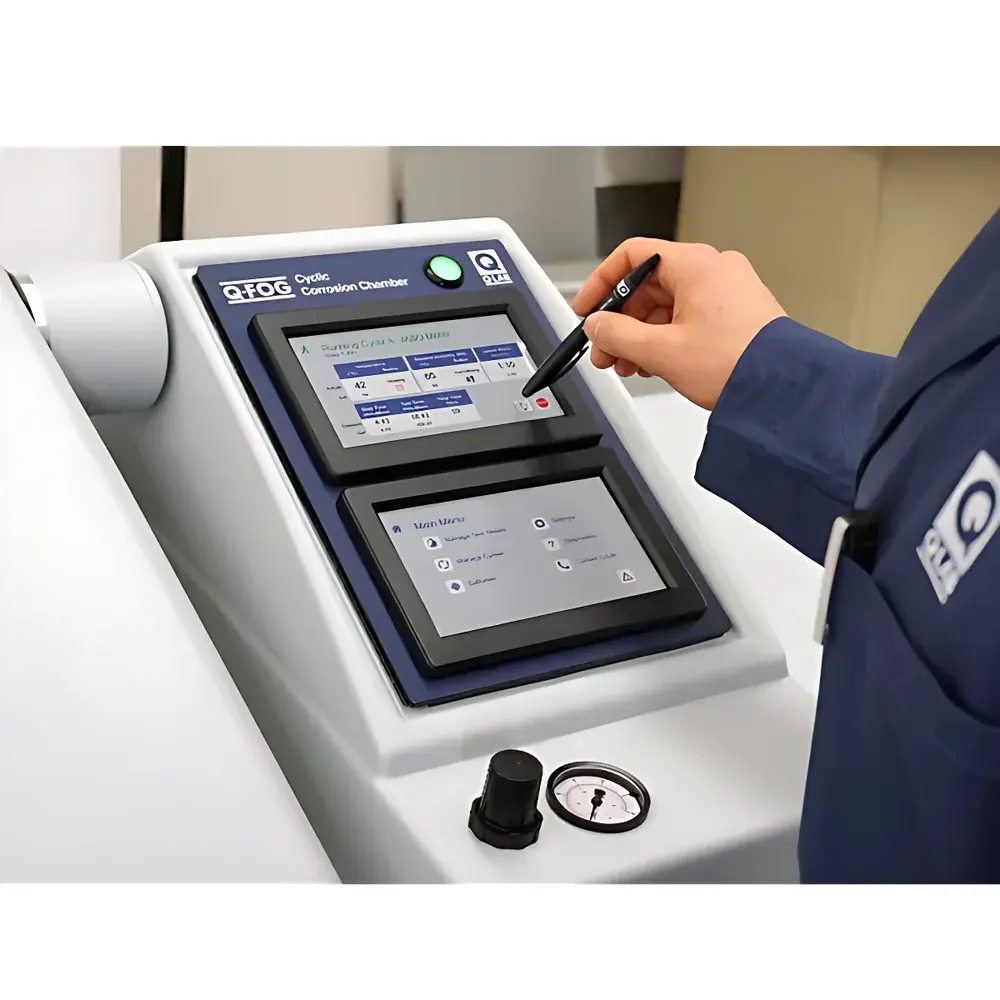
- Programmable controller with password-protected user profiles, event logging, and real-time parameter monitoring via Ethernet or USB interface
- Optional integrated pH and conductivity sensors for automated solution quality verification prior to each test cycle
Sample Compatibility & Compliance
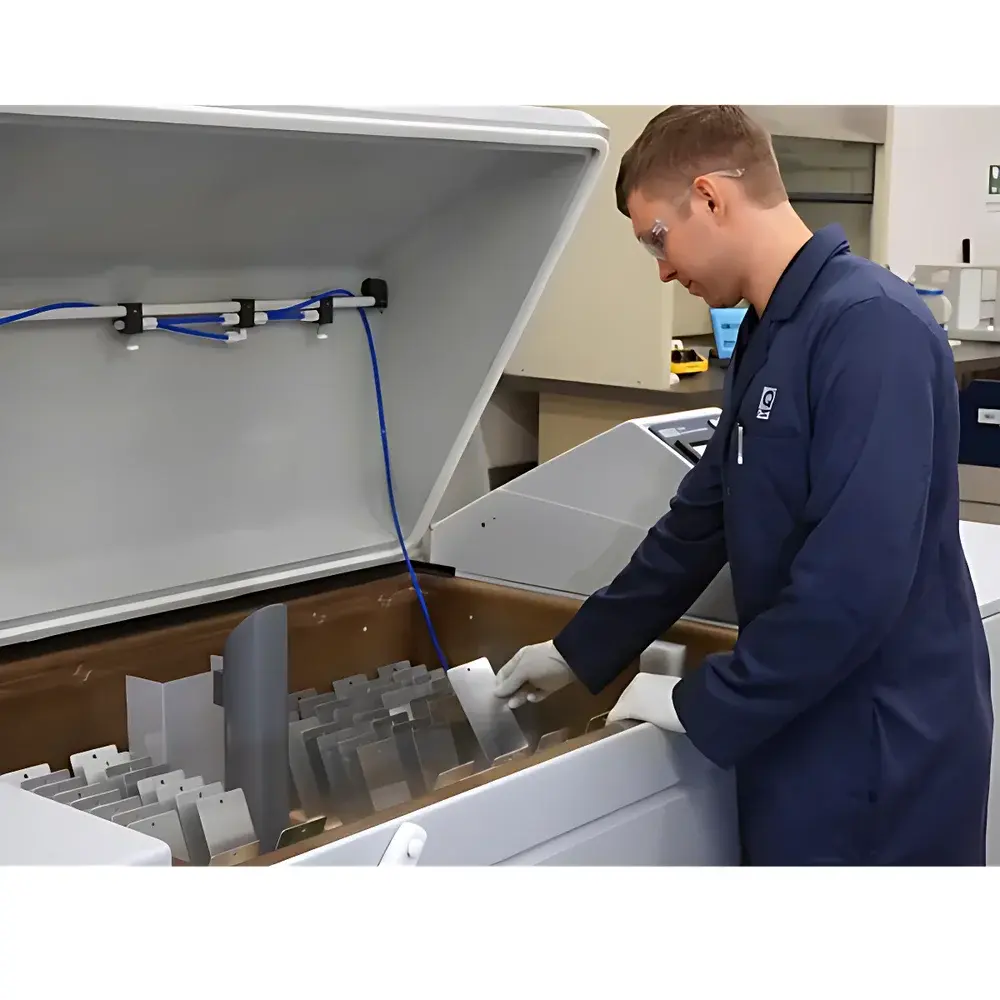
The Q-FOG chambers accommodate flat-panel specimens up to 610 mm × 914 mm (SSP-600) or 914 mm × 1220 mm (CCT-1100), with adjustable rack spacing for three-dimensional components including fasteners, brackets, and coated assemblies. Fixtures are non-reactive (PVC-coated steel or polypropylene) to eliminate galvanic interference. All models comply with ISO/IEC 17025 requirements for test equipment qualification and support IQ/OQ documentation packages. Software logs meet FDA 21 CFR Part 11 audit-trail requirements when used with optional Q-LAB’s CRONOS software. Test reports generated are suitable for GLP/GMP submissions and third-party certification bodies such as TÜV, UL, and SGS.
Software & Data Management
Q-LAB’s proprietary CRONOS software provides full-cycle programming, remote monitoring, and automated report generation. Users define multi-step sequences—including ramp rates, dwell times, solution type switching (NaCl, CuCl₂-accelerated, acidified salt), and humidity setpoints—with up to 999 steps per program. Data is timestamped and stored locally with redundant backup options. Export formats include CSV, PDF, and XML for integration into LIMS or enterprise QA systems. Audit trails record operator ID, parameter changes, alarm events, and calibration interventions—ensuring full traceability required for ISO 9001 and IATF 16949 quality management systems.
Applications
- Automotive OEMs validating corrosion resistance of painted body panels, zinc-coated steels, and aluminum alloy trim
- Aerospace suppliers qualifying chromate-free conversion coatings and primer systems per AMS 2400 series
- Electronics manufacturers assessing solder joint integrity and conformal coating performance under mixed-flow environments
- Construction material developers evaluating galvanized rebar, stainless fasteners, and architectural cladding systems
- Academic and government labs conducting fundamental studies on electrochemical corrosion kinetics and inhibitor efficacy
FAQ
What distinguishes the Q-FOG CCT from the SSP model?
The CCT adds saturated humidity control (up to 100% RH at elevated temperatures) and fully programmable dry/wet cycling—enabling ISO 14993-compliant tests. The SSP supports only salt spray and Prohesion™.
Can the Q-FOG perform ASTM B117 testing?
Yes—the SSP model is fully compliant with ASTM B117 when configured with continuous salt spray mode and calibrated deposition rate.
Is solution temperature independently controlled?
Yes—both reservoir and spray line temperatures are regulated separately to maintain thermal stability during long-duration cycles.
How is calibration verified?
Each unit ships with a factory calibration certificate; users may perform routine verification using NIST-traceable thermistors, hygrometers, and volumetric deposition collectors.
Does Q-LAB provide validation support for regulated industries?
Yes—IQ/OQ protocols, 21 CFR Part 11-compliant software modules, and on-site installation qualification services are available upon request.



