
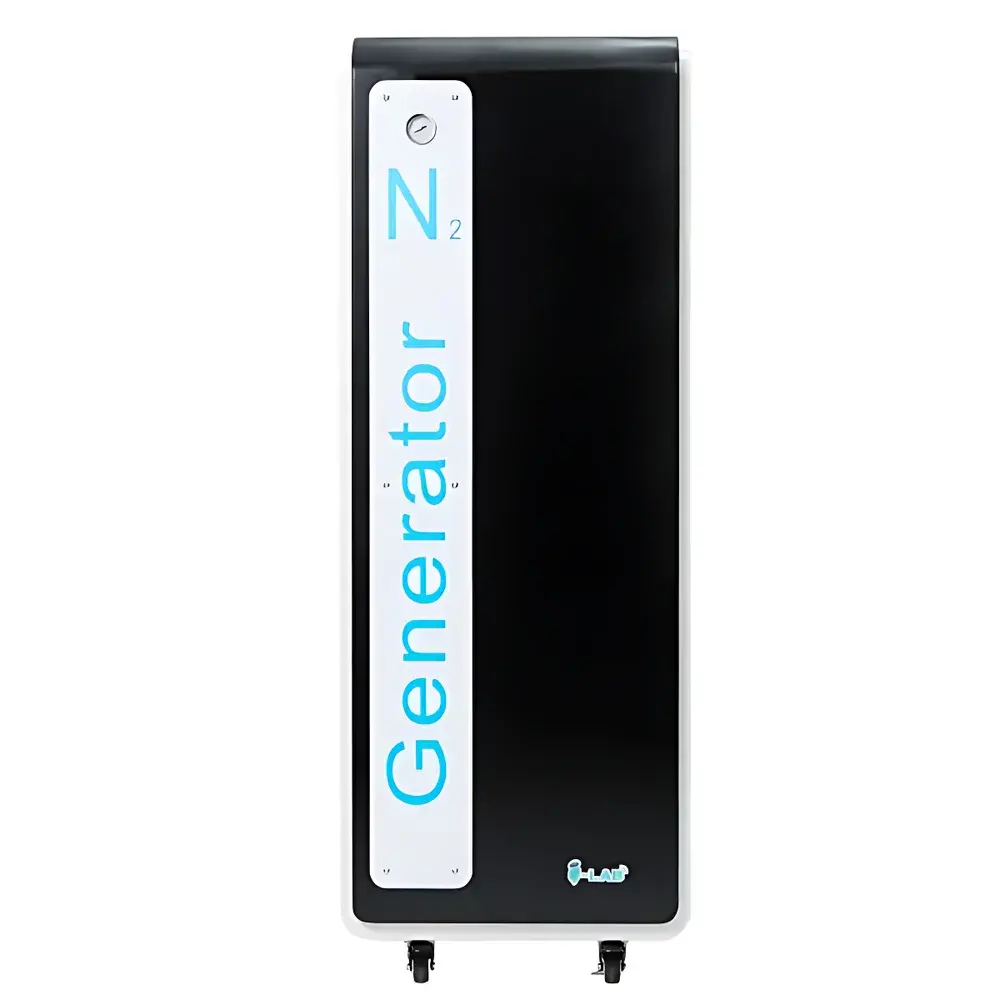
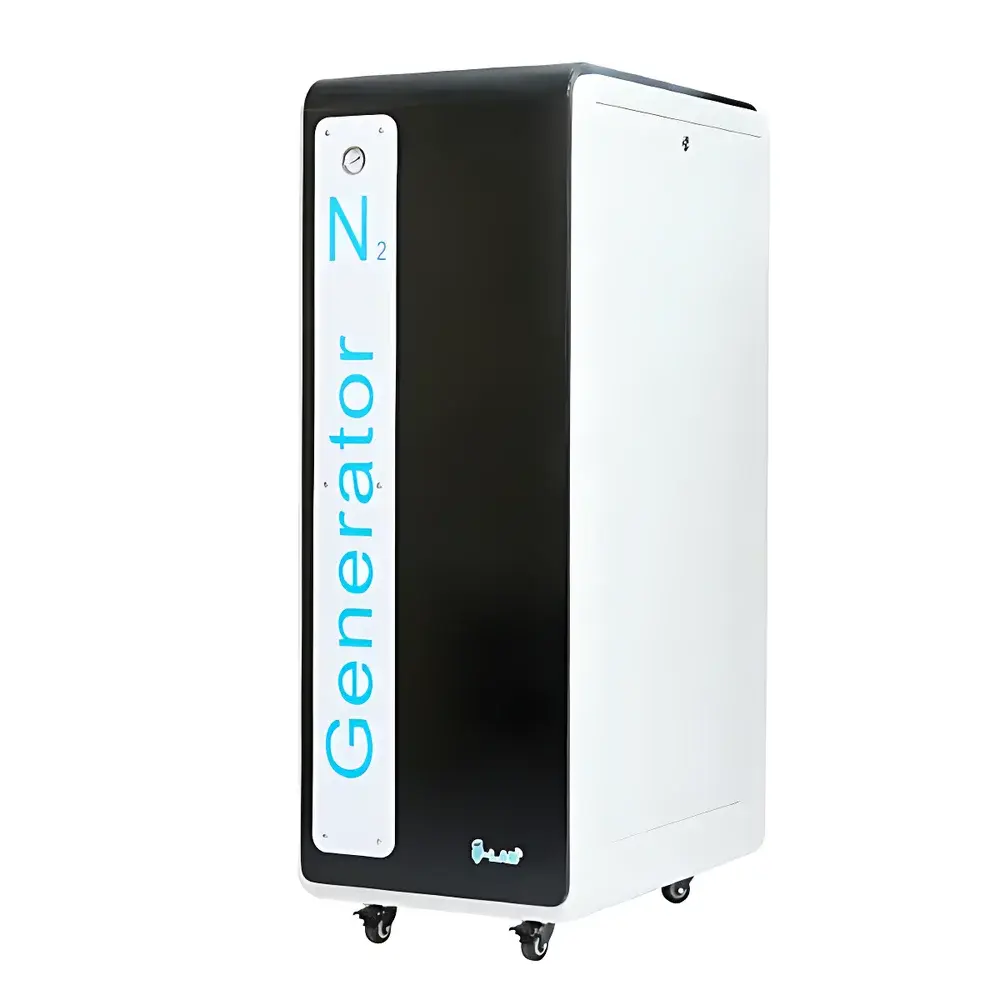
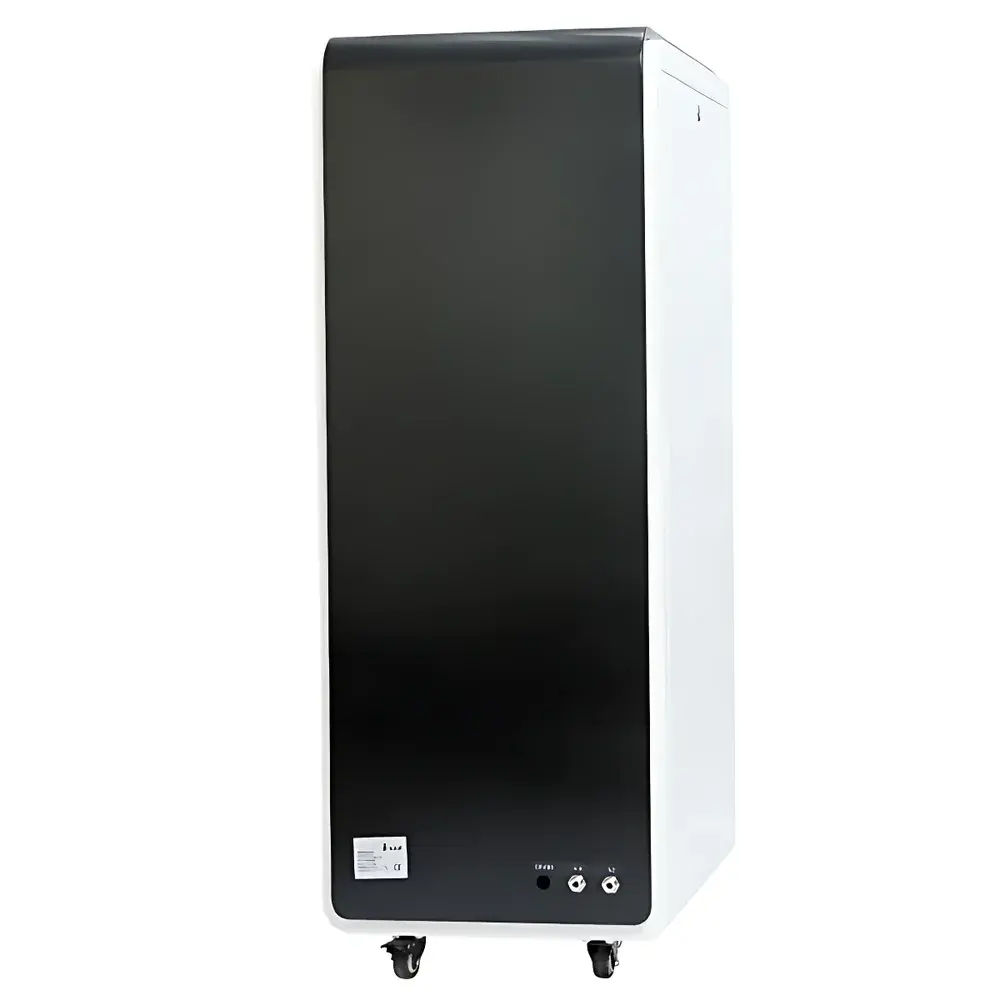
i-Lab KL160-0 Nitrogen Generator
| Brand | i-Lab |
|---|---|
| Origin | Shanghai, China |
| Manufacturer Type | Direct Manufacturer |
| Region of Origin | Domestic (China) |
| Model | KL160-0 |
| Instrument Type | Nitrogen Generator |
| Nitrogen Generation Principle | Hollow Fiber Membrane Separation |
| Output Flow Rate | 160 L/min |
| Output Pressure Range | 0–7 bar |
| Nitrogen Purity | ≥99.9% |
| Filtration Precision | 0.01 µm |
| Safety Features | Overpressure Alarm, Leak Detection with Auto-Shutdown |
| Power Supply | Standard 220 V AC, 50 Hz |
| Dimensions (L×W×H) | Compact Modular Footprint — Configurable for Integrated or Remote Installation |
| Compliance | Designed to Support GLP/GMP Environments |
| Compatible with ASTM D6349 and ISO 8573-1 Class 2 | 2:2 Air Quality Requirements for Instrument Gas |
Overview
The i-Lab KL160-0 Nitrogen Generator is an engineered solution for continuous, on-demand high-purity nitrogen supply in analytical laboratories, pharmaceutical production facilities, and industrial process environments. It utilizes hollow fiber membrane separation technology—a pressure-driven physical separation method—to extract nitrogen from compressed ambient air. In this process, compressed air passes through a bundle of semi-permeable polymeric membranes; oxygen, water vapor, and other trace gases permeate faster than nitrogen, resulting in a nitrogen-enriched stream with consistent purity ≥99.9% at rated flow. Unlike PSA-based systems, the KL160-0 requires no adsorbent regeneration cycles, offers instantaneous start-up, and delivers stable output pressure and composition without periodic purity drift—making it especially suitable for time-critical applications such as LC-MS/MS operation, where gas interruption or compositional fluctuation can compromise data integrity.
Key Features
- Modular Scalability: Base configuration delivers 160 L/min; system architecture supports seamless expansion to 1000 L/min via parallel module integration—ideal for multi-instrument labs or GMP manufacturing lines requiring centralized gas distribution.
- Multi-Stage Filtration: Integrated pre-filtration includes coalescing, activated carbon (hydrocarbon removal), and ultrafine particulate filtration down to 0.01 µm—ensuring compliance with ISO 8573-1 Class 2:2:2 specifications for instrument-grade nitrogen.
- Intelligent Pressure Management: Dual-stage pressure regulation combined with an internal buffer tank minimizes pressure ripple, reduces compressor cycling frequency by up to 40%, extends service life of upstream air compressors, and lowers acoustic emissions (<62 dB(A) at 1 m).
- Energy-Efficient Operation: Adaptive standby mode engages automatically when system pressure reaches setpoint, reducing power consumption by approximately 30% during low-demand periods without compromising readiness or response time.
- Fail-Safe Protection: Real-time monitoring of outlet pressure, membrane differential pressure, and leak detection triggers audible/visual alarms and automatic shutdown to prevent equipment damage or hazardous conditions.
Sample Compatibility & Compliance
The KL160-0 is compatible with all major nitrogen-dependent instrumentation—including triple-quadrupole and high-resolution mass spectrometers (e.g., Thermo Scientific Q Exactive, Waters Xevo TQ-S), GC-MS systems, elemental analyzers, and inert-atmosphere glove boxes. Its output meets the gas quality requirements for USP , EP 2.5.27, and FDA 21 CFR Part 11–aligned environments when deployed with appropriate audit-trail-capable control software (see Software & Data Management). The generator’s design adheres to IEC 61000-6-2 (EMC immunity) and IEC 61000-6-4 (EMC emission) standards, and its electrical enclosure conforms to IP20 rating per IEC 60529.
Software & Data Management
While the KL160-0 operates autonomously via embedded logic controllers, optional RS485/Modbus RTU or Ethernet/IP interfaces enable integration into centralized facility monitoring systems (e.g., LabVantage, Siemens Desigo, or custom SCADA platforms). Logged parameters—including runtime hours, cumulative flow volume, pressure trends, and alarm history—are timestamped and exportable in CSV format. When paired with validated third-party LIMS or MES platforms, the system supports full electronic record retention, user-access controls, and 21 CFR Part 11–compliant audit trails for regulated operations.
Applications
- LC-MS/MS & GC-MS Clusters: Provides uninterrupted, high-flow nitrogen for nebulization, desolvation, collision gas, and source cooling across multiple instruments simultaneously.
- Pharmaceutical Manufacturing: Supplies inert blanket gas for lyophilization chambers, reactor headspace purging, and API crystallization under GMP-compliant conditions.
- Food Packaging Lines: Delivers food-grade nitrogen for modified atmosphere packaging (MAP), extending shelf life while meeting FDA 21 CFR 170–186 and EC 1935/2004 regulatory frameworks.
- Chemical Synthesis & Materials Processing: Enables safe purging of reactors, transfer lines, and storage vessels prior to handling air-sensitive reagents or catalysts.
FAQ
What is the expected service life of the hollow fiber membrane module?
Under typical operating conditions (inlet air dew point ≤ −40 °C, oil-free feed air), the membrane stack is rated for ≥20,000 operational hours with minimal performance degradation.
Can the KL160-0 be used without an external air compressor?
No—it requires a clean, dry, oil-free compressed air source (minimum 7 bar, ISO 8573-1 Class 1:2:1) supplied externally; integrated air drying or compression is not included.
Is nitrogen purity affected by ambient temperature or altitude?
Purity remains stable within ±0.1% across operating ambient temperatures of 5–40 °C and elevations up to 2000 m ASL, provided inlet air quality and pressure meet specification.
Does the system require routine calibration?
No scheduled calibration is required; however, annual verification using a certified electrochemical oxygen analyzer (e.g., Michell XZR400) is recommended to validate purity performance.
How is maintenance access structured?
All critical components—including filters, pressure regulators, and membrane housings—are front-accessible with tool-free panel removal, enabling field service without system disassembly or downtime exceeding 30 minutes.
Related Products



