
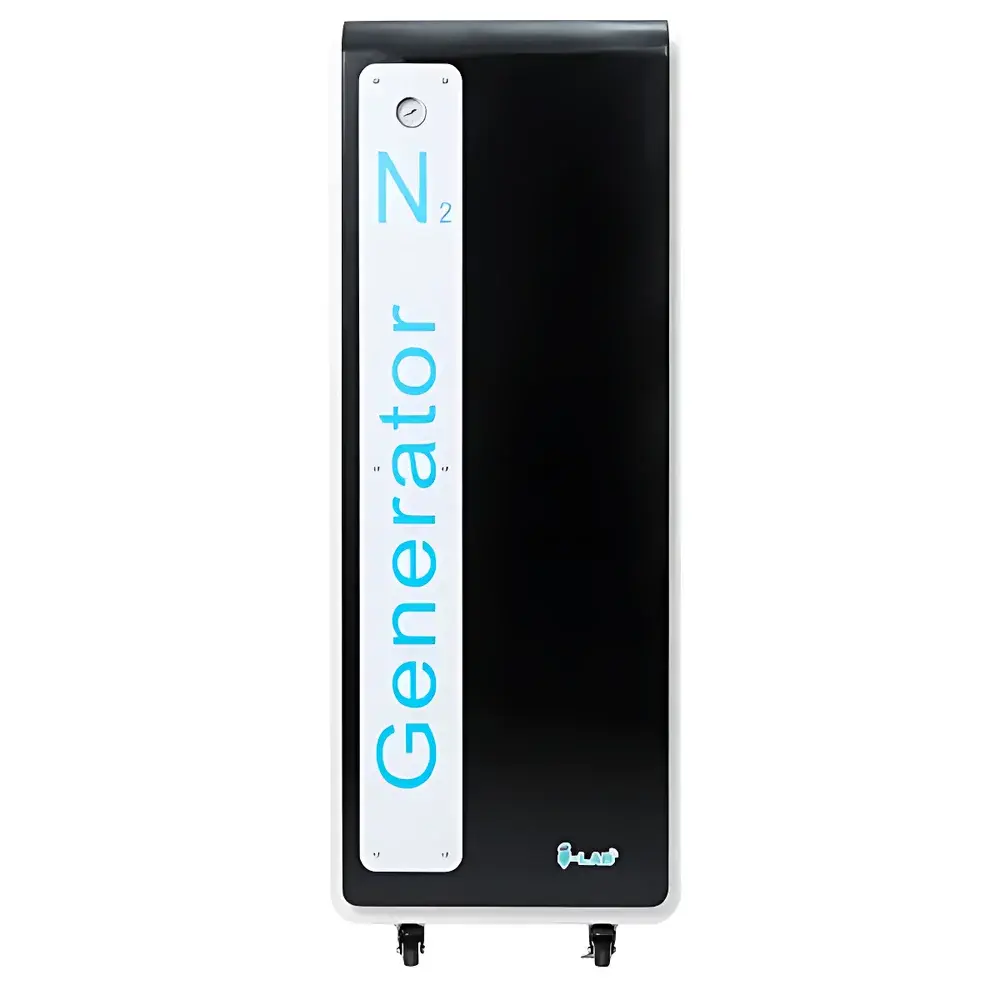
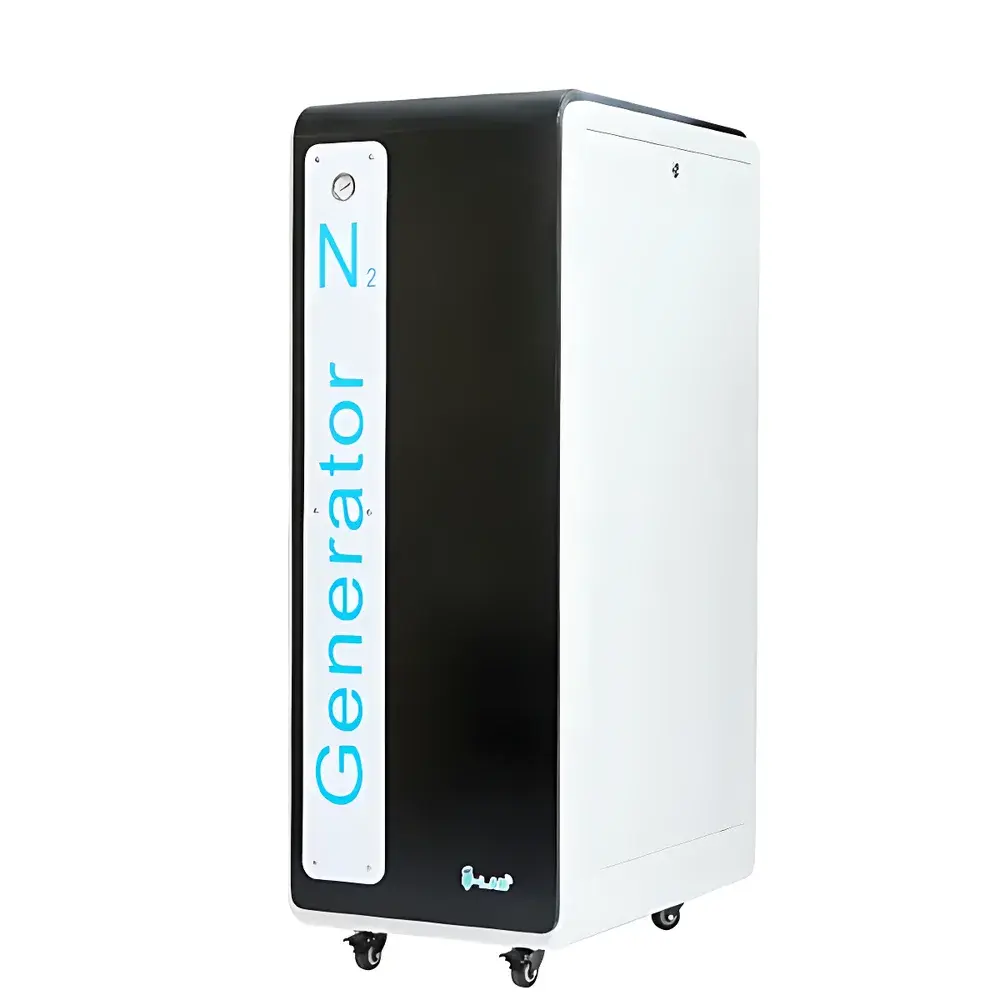
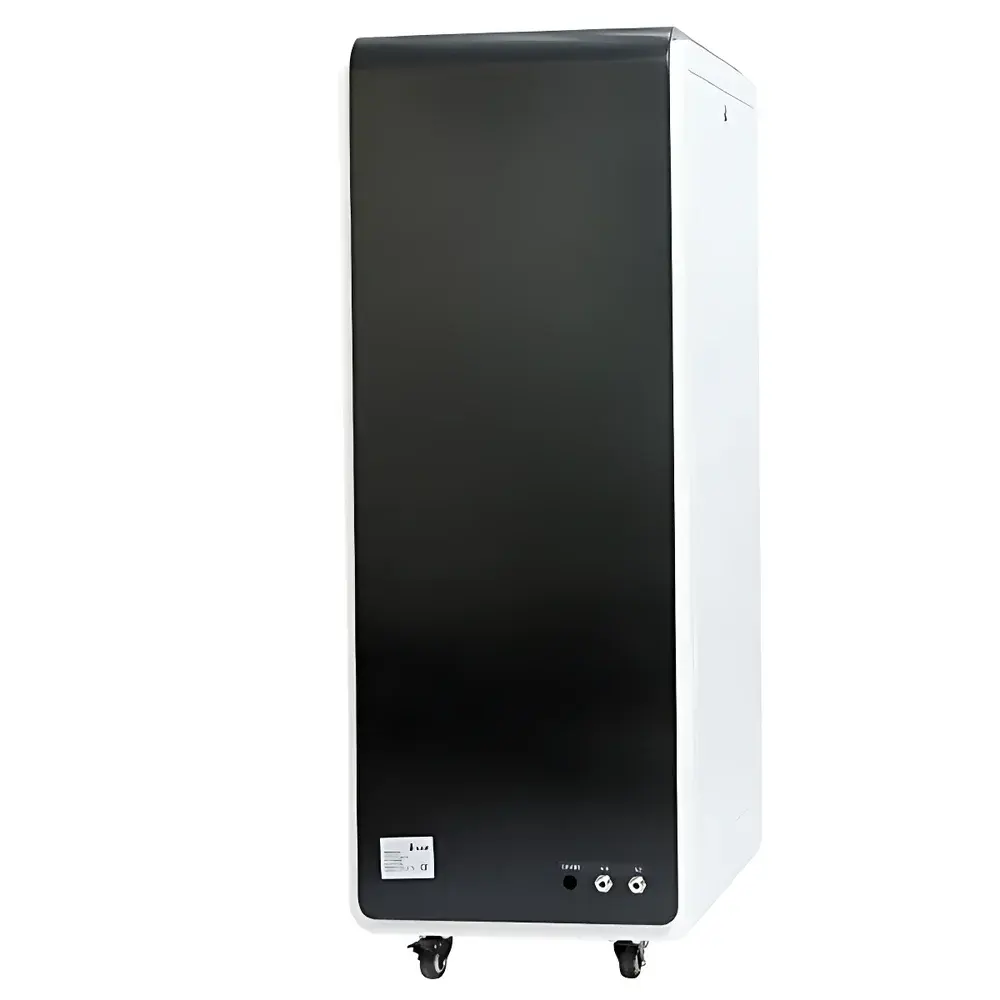
i-Lab KL320-0 Nitrogen Generator
| Brand | i-Lab |
|---|---|
| Origin | Shanghai, China |
| Manufacturer Type | Direct Manufacturer |
| Region of Origin | Domestic (China) |
| Model | KL320-0 |
| Instrument Type | Nitrogen Generator |
| Nitrogen Generation Principle | Hollow Fiber Membrane Separation |
| Output Flow Rate | 320 L/min |
| Output Pressure Range | 0–7 bar |
| Nitrogen Purity | ≥99.9% |
| Filtration Precision | 0.01 µm |
| Safety Features | Overpressure Alarm, Leak Detection with Auto-Shutdown |
| Power-Saving Mode | Enabled (30% Energy Reduction in Standby) |
| Modular Scalability | Up to 1000 L/min via Parallel Configuration |
| Compliance | Designed for GLP/GMP-aligned environments |
| compatible with ASTM D6866 (gas purity verification), ISO 8573-1 Class 2 | 2:2 (compressed air quality), and FDA 21 CFR Part 11-ready data logging when integrated with optional software |
Overview
The i-Lab KL320-0 Nitrogen Generator is an engineered solution for continuous, on-demand high-purity nitrogen supply in analytical laboratories, pharmaceutical manufacturing facilities, and industrial process environments. It utilizes hollow fiber membrane separation technology — a pressure-driven physical separation method that exploits the differential permeability of oxygen, water vapor, and nitrogen through asymmetric polymeric membranes. Under controlled feed air pressure (typically 7–10 bar), oxygen and moisture diffuse preferentially through the membrane wall, while nitrogen — exhibiting lower permeability — remains in the retentate stream. This principle enables stable, catalyst-free nitrogen generation without consumables, chemical regeneration, or cryogenic infrastructure. The KL320-0 delivers 320 L/min at ≥99.9% purity (v/v), with output pressure adjustable from 0 to 7 bar, making it suitable for LC-MS/MS source gas, GC carrier gas, inert blanketing, and process purging where consistent dew point (<−40 °C), hydrocarbon content (<0.1 ppm), and particulate-free delivery are critical.
Key Features
- Hollow fiber membrane core: Imported high-flux, large-diameter membrane modules ensure long-term stability and resistance to oil carryover and humidity fluctuations.
- Multi-stage purification train: Integrated coalescing pre-filter, refrigerated dryer, activated carbon adsorber, and 0.01 µm absolute-rated final particulate filter eliminate water, oil aerosols, hydrocarbons, and sub-micron contaminants.
- Intelligent pressure management: Dual-stage pressure regulation with built-in buffer tank minimizes pressure ripple and reduces compressor cycling frequency by up to 40%, extending service life and lowering acoustic emissions (<62 dB(A) at 1 m).
- Fail-safe architecture: Real-time leak detection, overpressure cutoff valve, thermal overload protection, and automatic shutdown upon filter saturation or membrane integrity loss.
- Modular scalability: Standard KL320-0 units support parallel integration (up to four units) for seamless expansion to 1000 L/min total flow — ideal for multi-instrument labs or GMP production lines.
- Eco-mode operation: Automatic transition to low-power standby when system pressure reaches setpoint, reducing average power consumption by 30% during non-peak demand periods.
Sample Compatibility & Compliance
The KL320-0 is validated for use with sensitive instrumentation requiring ultra-clean nitrogen, including triple-quadrupole and high-resolution mass spectrometers (e.g., Thermo Scientific Q Exactive, Waters Xevo TQ-S), gas chromatographs (Agilent 8890, Shimadzu GC-2030), and lyophilization systems. Its purified output meets ISO 8573-1:2010 Class 2:2:2 specifications for compressed air quality (equivalent for nitrogen after purification), with verified dew point ≤−40 °C and total hydrocarbon content <0.1 ppm. While not intrinsically certified for hazardous locations, its design supports integration into ISO 13485 and EU Annex 1-compliant cleanroom utility systems. Optional audit-trail-enabled data logging modules provide 21 CFR Part 11-compliant event records for GxP-regulated operations.
Software & Data Management
The KL320-0 operates via embedded PLC-based control logic with local HMI (7″ color touchscreen). Optional Ethernet/IP or Modbus TCP interface enables remote monitoring and alarm forwarding via LabVantage, STARLIMS, or custom SCADA platforms. All operational parameters — flow rate, outlet pressure, membrane inlet temperature, filter differential pressure, and runtime hours — are timestamped and exportable as CSV. When paired with i-Lab’s optional NGenius™ Suite, users gain access to predictive maintenance alerts, calibration history tracking, and electronic logbooks compliant with ALCOA+ principles (Attributable, Legible, Contemporaneous, Original, Accurate, Complete, Consistent, Enduring, Available).
Applications
- Analytical Laboratories: Centralized nitrogen supply for LC-MS/MS, GC-MS, and elemental analyzers; eliminates cylinder logistics and pressure variability.
- Pharmaceutical Manufacturing: Inert atmosphere generation for lyophilizers, reactor headspace blanketing, and API synthesis under cGMP conditions.
- Food & Beverage Packaging: On-site nitrogen for modified atmosphere packaging (MAP), extending shelf life without reliance on bulk liquid nitrogen deliveries.
- Chemical & Materials Processing: Pipeline purging, catalyst passivation, and glovebox replenishment with trace-oxygen-controlled gas.
- Electronics Manufacturing: Soldering atmosphere control and wafer handling in nitrogen-enriched cleanrooms (ISO Class 5–7).
FAQ
What is the expected membrane lifetime under continuous operation?
With proper upstream air treatment (oil-free feed air meeting ISO 8573-1 Class 1:2:2), the hollow fiber membrane stack is rated for ≥15,000 hours of operation before performance degradation exceeds 5% — equivalent to ~1.7 years of 24/7 use.
Can the KL320-0 be integrated with an existing compressed air system?
Yes — it requires a clean, oil-free, dried compressed air feed at 7–10 bar and ≤−20 °C dew point. Integration kits include ASME B31.1-compliant stainless steel piping, pressure regulators, and condensate traps.
Is nitrogen purity affected by ambient temperature or altitude?
No — the membrane separation process is thermodynamically robust across 5–40 °C ambient range and elevations up to 2500 m ASL. Purity remains ≥99.9% provided feed air quality and pressure remain within specification.
Does the unit require periodic calibration?
No routine calibration is required for nitrogen purity or flow measurement; however, annual verification using a certified paramagnetic O2 analyzer and thermal mass flow meter is recommended per ISO/IEC 17025 guidelines.
What maintenance intervals are specified?
Pre-filters: Replace every 2000 operating hours or 6 months (whichever occurs first). Final 0.01 µm filter: Replace every 4000 hours. Membrane module: Inspect annually; replace only if purity drops below 99.9% after verifying feed air quality.



