
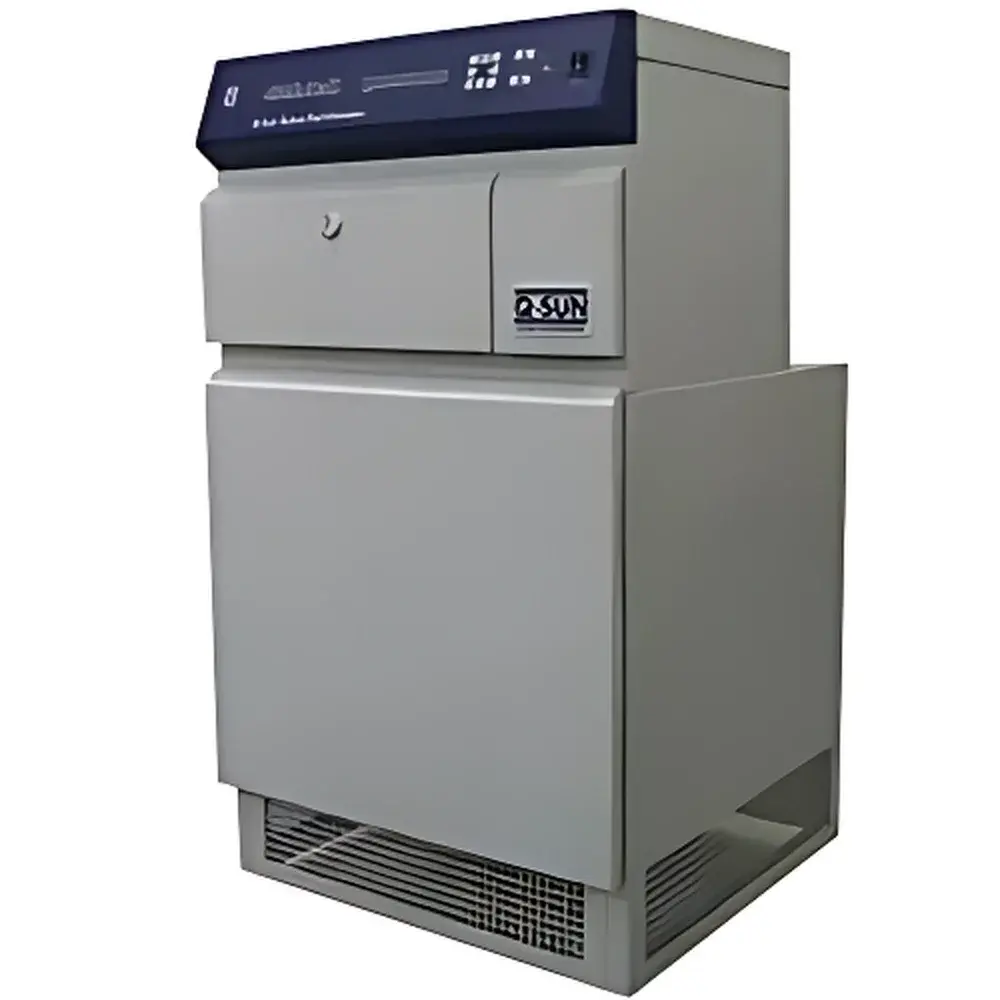
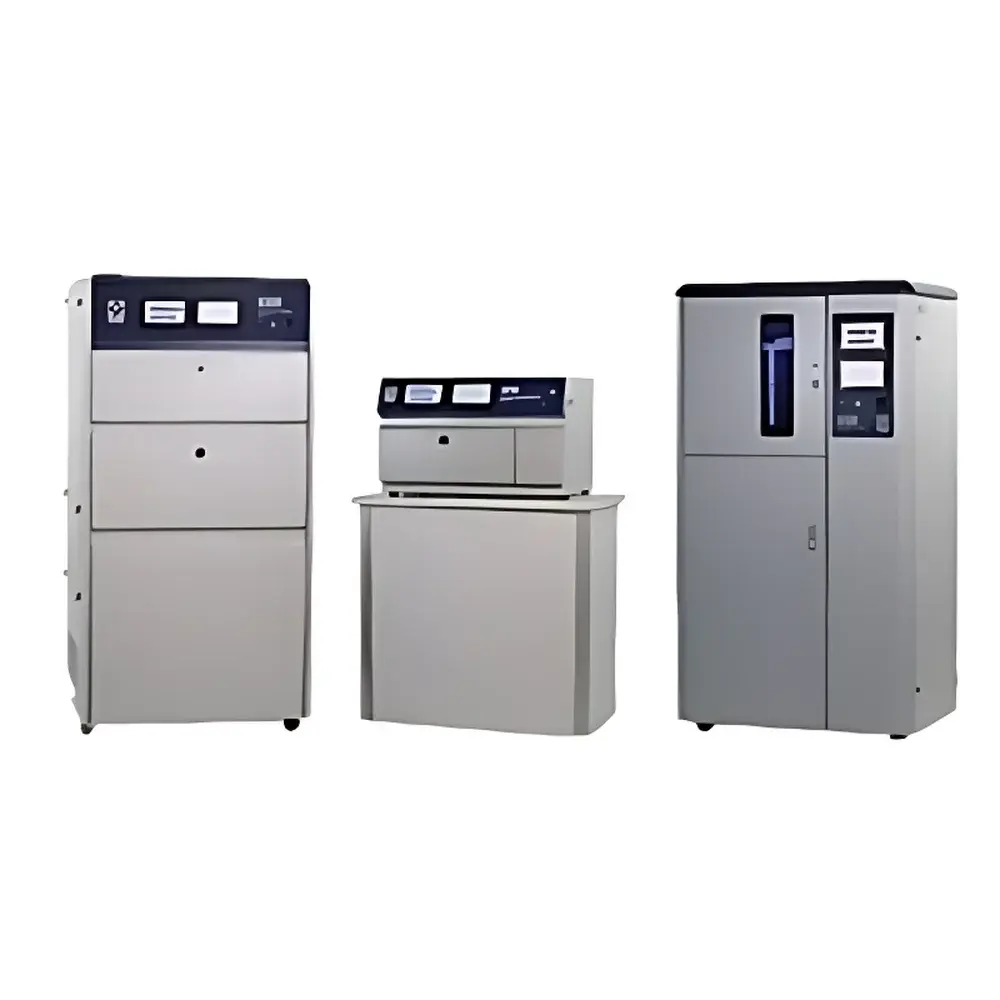
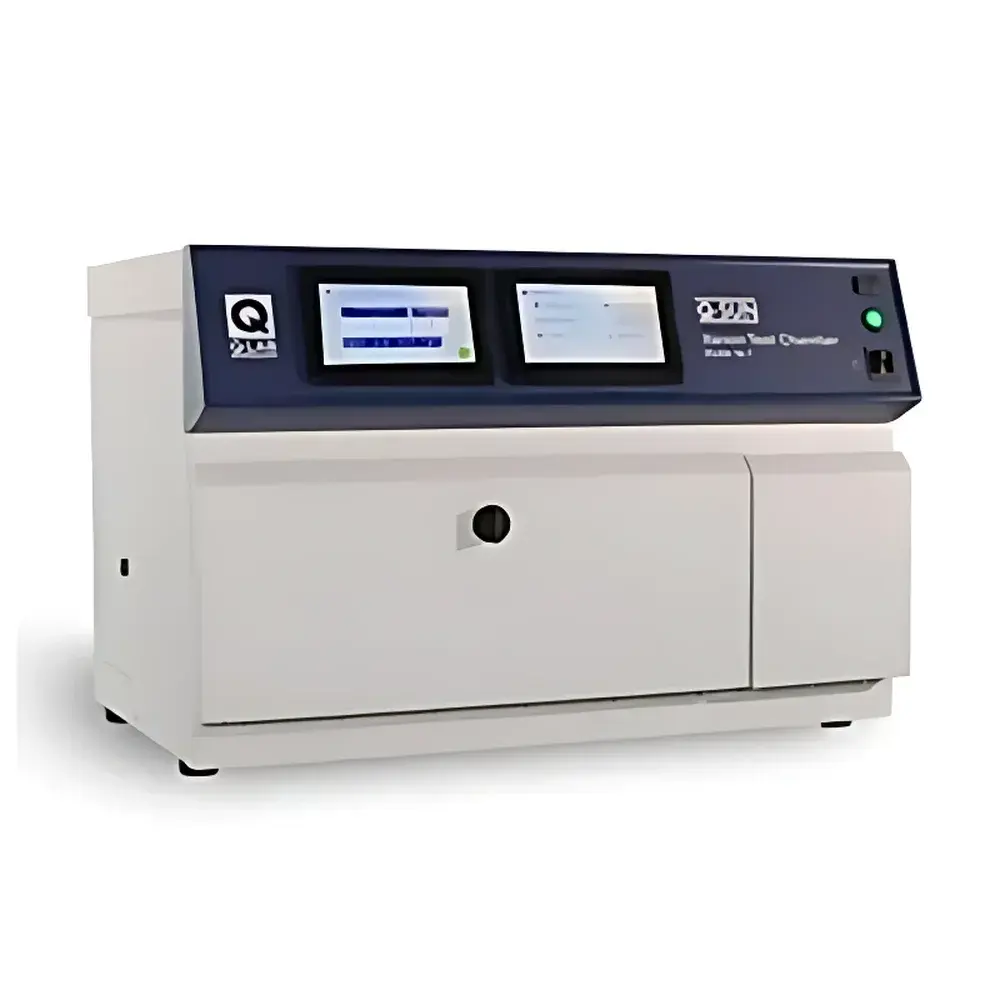
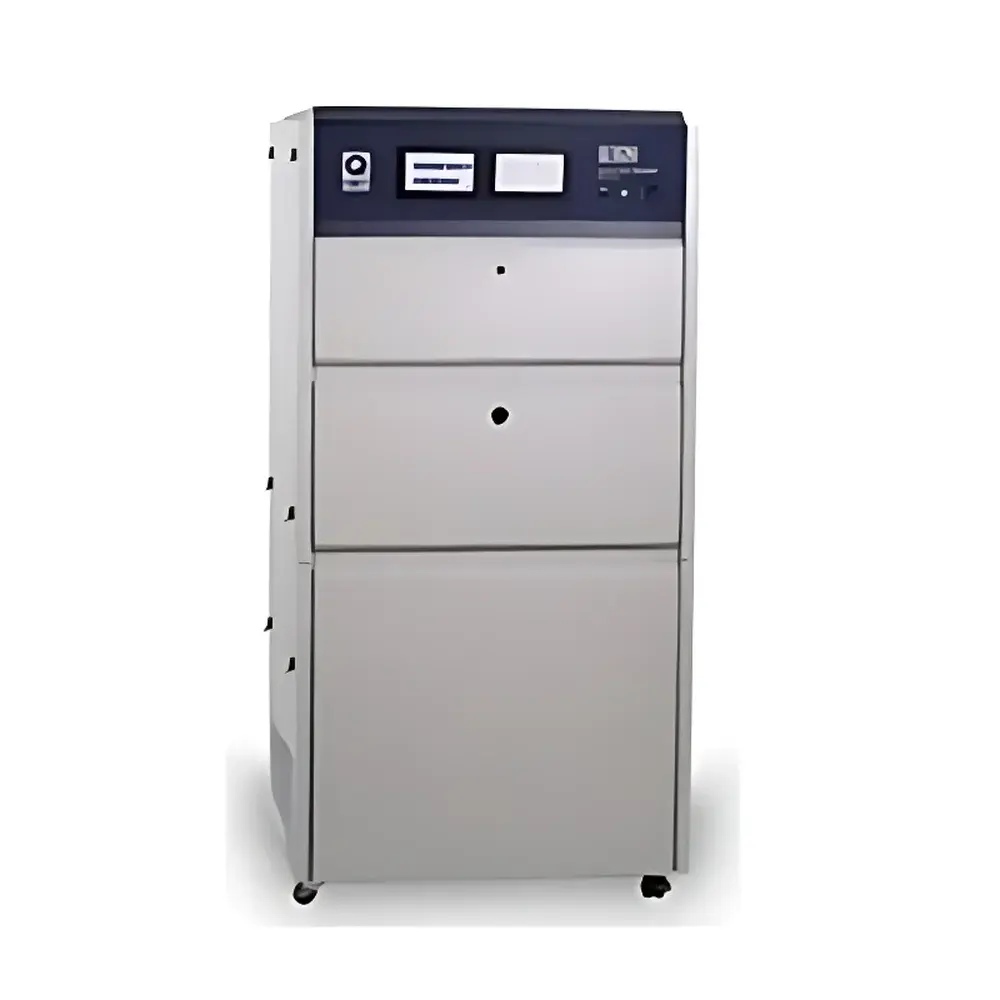
Q-LAB Q-Sun Xe-1-BC Xenon Arc Weathering Test Chamber
| Brand | Q-LAB |
|---|---|
| Origin | USA |
| Model | Q-Sun Xe-1-BC |
| Xenon Lamp Power | 1800 W |
| Irradiance Range | ≤1800 W/m² |
| Light Exposure Duration | 1–9999 h (continuously adjustable) |
| Humidity Range | up to 95% RH |
| Sample Capacity | 17 specimens (51 × 102 mm each) |
| Lamp Life | ~1500 hours |
| Operating Temperature Range | 19–103 °C (with refrigeration unit) |
| Backside Spray Function | Yes |
| Cooling System | Integrated refrigeration unit |
| Lamp Type | Air-cooled single xenon arc lamp |
Overview
The Q-LAB Q-Sun Xe-1-BC Xenon Arc Weathering Test Chamber is an ISO-compliant, air-cooled benchtop weathering instrument engineered for precision simulation of full-spectrum solar radiation—including ultraviolet (UV), visible (VIS), and near-infrared (NIR) wavelengths—under controlled environmental conditions. Based on the fundamental principle of xenon arc irradiation, the system replicates natural sunlight using a stabilized 1800 W air-cooled xenon lamp, spectrally filtered through calibrated optical filters (e.g., Daylight-Q, Window Glass-Q, or Extended UV-Q) to match relevant exposure standards such as ISO 4892-2, ASTM G155, SAE J2527, and IEC 60068-2-9. Unlike water-cooled systems, the Xe-1-BC employs a compact, low-maintenance air-cooling architecture, enabling stable irradiance output with minimal infrastructure requirements. Its integrated refrigeration unit allows precise control of black standard temperature (BST) or black panel temperature (BPT) across a broad operational range (19–103 °C), making it uniquely suited for evaluating thermally sensitive materials—including pharmaceuticals, cosmetics, inks, and indoor-use polymers—where excessive thermal load must be avoided to prevent non-photochemical degradation pathways.
Key Features
- Air-cooled 1800 W xenon arc lamp with typical service life of 1500 hours—reducing consumable cost and maintenance frequency versus water-cooled alternatives
- Integrated refrigeration system enabling precise thermal management; supports BST/BPT control from 19 °C to 103 °C depending on filter type, irradiance setpoint, ambient conditions, and sensor configuration
- Backside spray function delivering deionized water to specimen reverse surfaces—critical for compliance with SAE J2527 and other automotive weathering protocols requiring cyclic wetting
- Flat-bed sample tray accommodating up to 17 specimens (51 × 102 mm) at a slight incline for uniform drainage and consistent exposure geometry
- Optimized reflector system mounted in ceiling and side walls to maximize irradiance uniformity across the test plane (±15% per ISO 4892-2 requirements)
- Automated, unattended operation with programmable exposure duration (1–9999 hours), real-time irradiance monitoring, and built-in safety interlocks
- “Slide-out” specimen tray design facilitating rapid loading, visual inspection, and post-test evaluation without tooling or disassembly
Sample Compatibility & Compliance
The Q-Sun Xe-1-BC is validated for testing rigid and flexible flat-panel specimens—including coatings, plastics, textiles, adhesives, packaging films, and medical device components—within defined dimensional constraints (max. 51 × 102 mm per specimen). Its spectral fidelity and environmental control meet the technical requirements of major international standards: ASTM D4329 (plastics), ASTM D4459 (interior plastics), ISO 11341 (paints and varnishes), ISO 105-B02 (textiles), and FDA-relevant stability protocols under ICH Q1A(R2). The chamber’s irradiance uniformity, temperature stability, and humidity repeatability are traceable to NIST-certified reference instruments. All calibration procedures adhere to ISO/IEC 17025-accredited practices via Q-Lab’s A2LA-certified laboratories (Certificate Nos. 2382-01, 2383-02, 2383-03), ensuring metrological continuity for GLP and GMP-regulated applications.
Software & Data Management
The Xe-1-BC operates via embedded firmware with intuitive front-panel interface—no external PC required. Irradiance is continuously monitored using a calibrated “SunEye” broadband or narrowband (340 nm, 420 nm, or 300–400 nm TUV) sensor. Users perform field calibration using the CR20 handheld radiometer, which must match the spectral response of the installed sensor and filter combination. Annual recalibration of the CR20 is performed at Q-Lab’s ISO/IEC 17025 laboratory, with full traceability to NIST. While the base model does not include network connectivity or electronic audit trail functionality, its operational logs (start time, total exposure hours, peak irradiance, BST/BPT history) are retained internally and exportable via USB for integration into LIMS or quality documentation systems compliant with 21 CFR Part 11 when paired with appropriate procedural controls.
Applications
This chamber serves critical roles in R&D, QC, and regulatory submission workflows across multiple sectors. In the automotive industry, it validates dashboard materials, exterior trim, and headlamp lenses per SAE J2527 and GMW14124. In pharmaceuticals and cosmetics, its low-temperature capability enables photostability testing of active ingredients and packaging per ICH Q5C and Q1B guidelines. Coating manufacturers use it to assess chalk resistance, gloss retention, and color shift in architectural and industrial finishes. Electronics suppliers evaluate conformal coating durability and printed circuit board solder mask stability under cyclic UV/humidity stress. Academic and government research labs apply it for polymer degradation kinetics studies, accelerated lifetime modeling, and climate-resilience benchmarking of sustainable materials.
FAQ
What spectral filters are compatible with the Q-Sun Xe-1-BC?
The system supports interchangeable Daylight-Q, Window Glass-Q, and Extended UV-Q filters—each optimized for specific exposure conditions and aligned with ASTM, ISO, and SAE standard requirements.
Is the backside spray function optional or standard?
Backside spray is a standard feature on the Xe-1-BC model and cannot be disabled; it delivers deionized water via gravity-fed nozzles positioned beneath the specimen tray.
How often must the xenon lamp be replaced?
Lamp replacement is recommended after approximately 1500 hours of operation, though actual service life depends on irradiance setpoint, cooling efficiency, and power supply stability.
Does the Xe-1-BC support humidity control during dark cycles?
No—the Xe-1-BC does not provide active humidity control during dark periods; relative humidity is only maintained during irradiation phases via ambient air conditioning and condensation management.
Can the Xe-1-BC be used for outdoor exposure correlation studies?
Yes—when operated with Daylight-Q filtration and calibrated irradiance (e.g., 0.35 W/m² @ 340 nm), its acceleration factor relative to real-world Florida or Arizona exposure is empirically established and documented in Q-Lab technical bulletins.



