
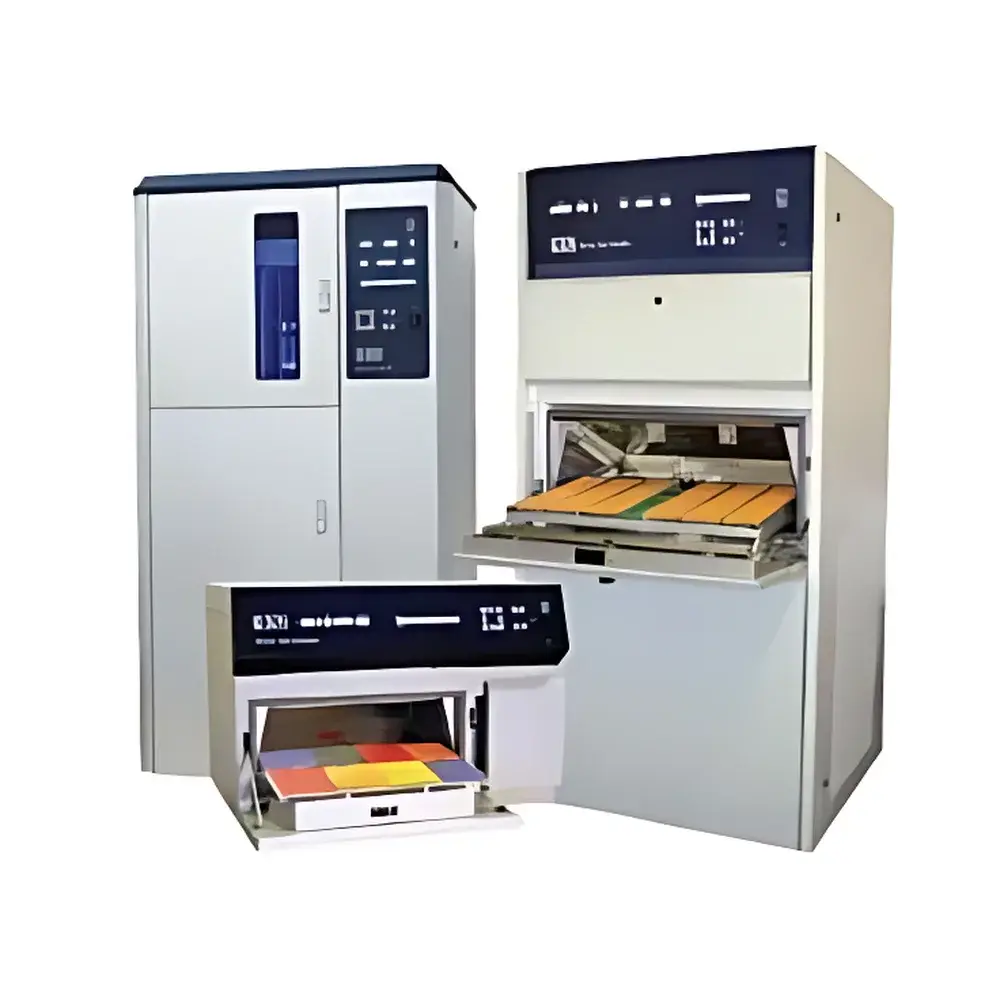
Q-LAB Q-SUN Xe-1 Benchtop Xenon Arc Weathering Test Chamber
| Brand | Q-LAB |
|---|---|
| Origin | USA |
| Model | Q-SUN Xe-1 |
| Lamp Power | 1800 W |
| Light Source | Single Air-Cooled Xenon Arc Lamp |
| Lamp Life | ~1500 hours |
| Irradiance Control | SOLAR EYE® Spectral Sensor (340 nm, 420 nm or TUV) |
| Filter Options | Daylight, Window Glass, Extended UV |
| Sample Tray Dimensions | 251 mm × 457 mm |
| Black Panel Temperature Range | 35–103 °C |
| Optional Accessories | Water Spray System, Refrigerated Cooling Unit |
| Compliance | ASTM G155, ISO 4892-2, AATCC TM16, SAE J2527, DIN 75220, BS EN ISO 11341, ANSI Z79.1 |
Overview
The Q-LAB Q-SUN Xe-1 is a compact, benchtop xenon arc weathering test chamber engineered for precise simulation of full-spectrum solar radiation—including ultraviolet (UV), visible, and near-infrared (NIR) wavelengths—to accelerate material degradation under controlled environmental conditions. Based on the fundamental principle of xenon arc irradiation, the system reproduces natural sunlight with high spectral fidelity using a single air-cooled 1800 W xenon lamp and interchangeable optical filters. Unlike UV fluorescent or metal halide sources, xenon arc technology provides continuous spectral output closely matching terrestrial solar irradiance (AM1.5), making it the reference method for photostability, colorfastness, and weathering evaluation per international standards. The Xe-1 is designed for laboratories requiring rigorous, repeatable exposure testing without the footprint or operational complexity of floor-standing systems. Its horizontal sample orientation, integrated black panel temperature control, and optional water spray or refrigerated cooling enable realistic simulation of outdoor and indoor service environments—particularly critical for polymers, coatings, textiles, automotive interiors, pharmaceutical packaging, and cosmetic formulations.
Key Features
- Single air-cooled xenon arc lamp (1800 W) with typical service life of 1500 hours—reducing maintenance frequency and eliminating water-cooling infrastructure
- SOLAR EYE® irradiance feedback control system with selectable monitoring at 340 nm (UV-B critical for polymer degradation), 420 nm (broadband visible/UV-A), or total UV (TUV) band
- Three standard filter options: Daylight (direct sun simulation), Window Glass (indoor exposure through architectural glazing), and Extended UV (enhanced short-wavelength output for accelerated testing)
- Black panel temperature control (35–103 °C) as standard; optional air temperature sensor for ambient-controlled applications
- Horizontal sample tray (251 mm × 457 mm) accommodating up to fifteen 51 mm × 102 mm specimens or irregular 3D parts via customizable fixtures
- Patented AUTOCAL™ system enabling rapid, user-performed calibration of irradiance and temperature sensors without external tools
- Built-in Ethernet interface supporting remote monitoring, automated data logging, and integration into LIMS or enterprise QA/QC workflows
- Self-diagnostic firmware with real-time alerts for lamp aging, filter degradation, temperature deviation, and system faults
Sample Compatibility & Compliance
The Q-SUN Xe-1 accommodates flat, rigid, and low-profile 3D samples across diverse material classes—including thermoplastics, elastomers, pigmented films, textile swatches, painted panels, and laminated packaging substrates. Its horizontal exposure geometry ensures uniform irradiance distribution and eliminates shadowing artifacts common in vertical configurations. The system complies with over 50 internationally recognized test standards, including ASTM G155 (practice for xenon arc exposure), ISO 4892-2 (plastics—methods of exposure to laboratory light sources), AATCC TM16 (colorfastness to light), SAE J2527 (automotive interior materials), DIN 75220 (automotive exterior components), and BS EN ISO 11341 (paints and varnishes). All Q-LAB calibration services are traceable to NIST and performed in ISO/IEC 17025-accredited laboratories (A2LA and UKAS), ensuring metrological validity for GLP, GMP, and FDA 21 CFR Part 11–compliant validation protocols.
Software & Data Management
The Xe-1 operates via an embedded touchscreen interface with intuitive menu navigation and preloaded test profiles aligned with major industry standards. All exposure parameters—including irradiance setpoint, temperature target, cycle timing (light/dark), spray duration/frequency, and cooling activation—are programmable and stored with timestamped audit trails. Real-time sensor data (irradiance, black panel temperature, chamber humidity, lamp voltage/current) is streamed continuously over Ethernet to local or cloud-based data repositories. The system supports CSV export and integrates with third-party SCADA platforms via Modbus TCP. For regulated environments, optional software modules provide electronic signatures, user access controls, and 21 CFR Part 11–compliant electronic records—including immutable change logs and calibration history.
Applications
The Q-SUN Xe-1 serves as a primary tool for predictive durability assessment in R&D, quality assurance, and regulatory submission support. It is routinely deployed for evaluating UV-induced embrittlement in polyolefins, chalking resistance in architectural coatings, yellowing kinetics in polycarbonate lenses, photostability of active pharmaceutical ingredients (APIs) in blister packs, and color retention in automotive interior trims. Its ability to maintain stable irradiance below 40 °C—when equipped with the refrigerated cooling option—makes it suitable for thermally sensitive formulations such as topical creams, ophthalmic solutions, and biodegradable medical device polymers. The water spray function replicates dew formation and thermal shock effects critical for validating moisture barrier performance in flexible packaging and corrosion inhibition in metallic substrates.
FAQ
What is the difference between air-cooled and water-cooled xenon lamps?
Air-cooled lamps eliminate plumbing, deionized water supply, and heat exchanger maintenance—reducing total cost of ownership and increasing operational uptime. While water-cooled systems offer higher irradiance density, the Xe-1’s air-cooled design delivers sufficient flux for most qualification-level testing with improved long-term stability.
How often must the xenon lamp be replaced?
Lamp replacement is recommended after approximately 1500 hours of operation. Degradation is monitored automatically via the SOLAR EYE® system, which triggers alerts when output falls outside ±5% of setpoint.
Are filter replacements required during normal use?
Daylight and Window Glass filters are engineered for indefinite service life under standard operating conditions. Only the Extended UV filter requires periodic replacement—typically every 1,200–1,800 hours—due to accelerated photochemical aging of its quartz substrate.
Can the Xe-1 meet ASTM G155 Cycle 1 (light only) and Cycle 3 (light + spray)?
Yes. The base Xe-1-B supports Cycle 1; adding the water spray option (Xe-1-S or Xe-1-SC) enables full compliance with Cycle 3, including programmable spray intervals during dark phases.
Is third-party calibration documentation available for audit purposes?
Yes. Q-LAB provides NIST-traceable calibration certificates for all sensors, issued by A2LA-accredited laboratories. Certificates include measurement uncertainty budgets and are valid for 12 months from date of issue.



