
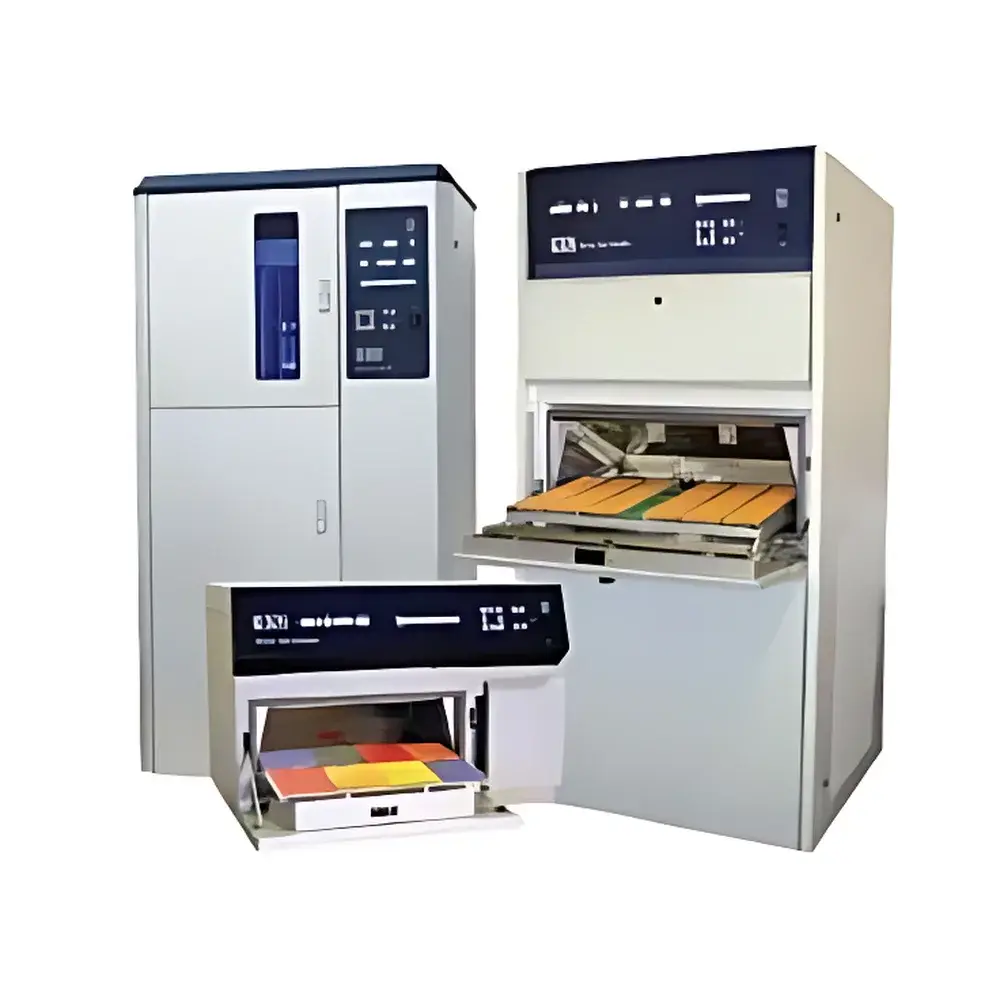
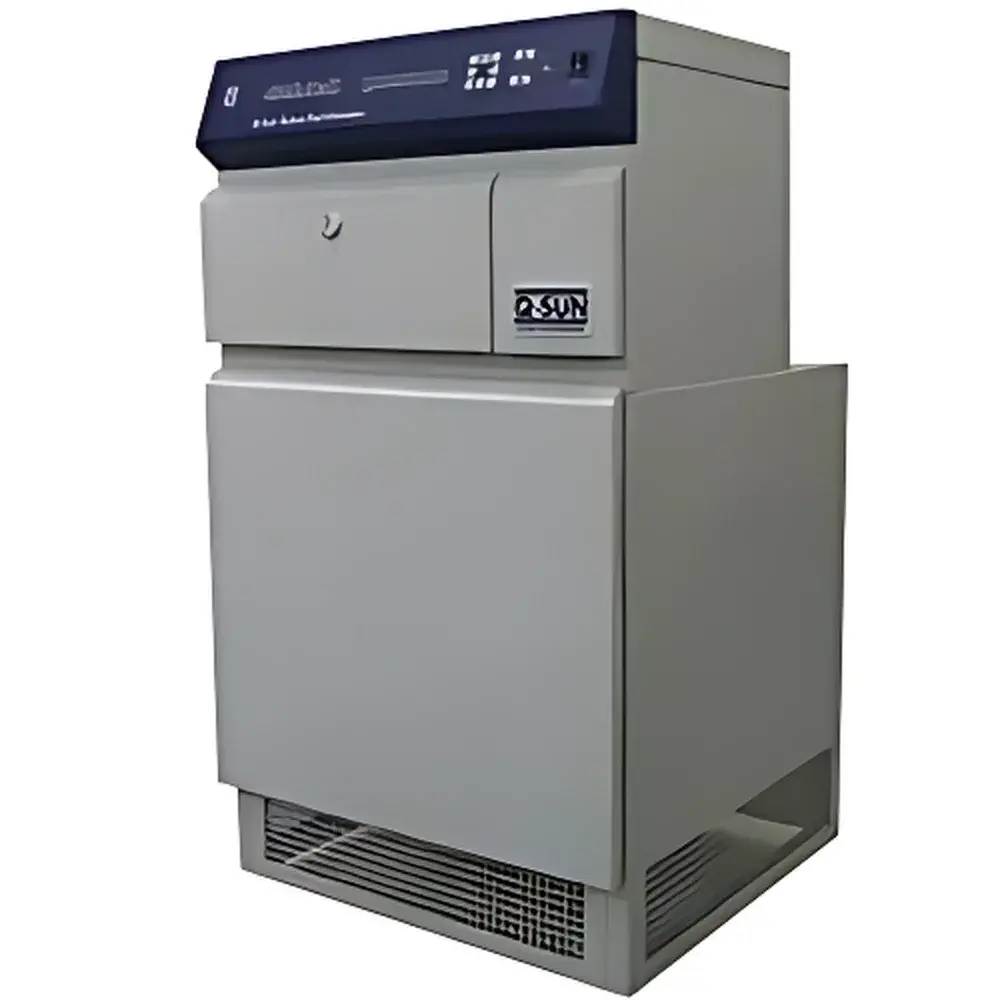
Q-LAB Q-Sun Xe-1 Benchtop Xenon Arc Weathering Test Chamber
| Brand | Q-LAB |
|---|---|
| Origin | USA |
| Model | Q-Sun Xe-1 |
| Lamp Power | 1800 W |
| Cooling Method | Air-Cooled |
| Lamp Life | ~1500 hours |
| Filter Options | Daylight, Window Glass, Extended UV |
| Compliance | ASTM G155, ISO 4892-2, SAE J2527, AATCC TM16, ISO 11341, IEC 60068-2-9 |
| Sample Capacity | Adjustable slide-out tray for 3D specimens |
| Control System | Touchscreen interface with programmable irradiance, temperature & humidity profiles |
| Irradiance Range | 0.35–0.65 W/m² @ 340 nm (adjustable) |
| Temperature Range | 10–90 °C (operational, dependent on filter and irradiance setting) |
| Humidity Range | 10–95% RH (non-condensing, controlled via water reservoir and chamber air circulation) |
Overview
The Q-LAB Q-Sun Xe-1 Benchtop Xenon Arc Weathering Test Chamber is an engineered solution for accelerated light stability and weathering evaluation of polymeric, coating, textile, and composite materials. It utilizes a single 1800 W air-cooled xenon arc lamp to replicate the full solar spectrum—spanning ultraviolet (UV), visible, and near-infrared (NIR) radiation—with spectral fidelity unmatched by fluorescent or metal halide sources. Unlike UV-only testers, the Q-Sun Xe-1 delivers photodegradation mechanisms that closely mirror real-world outdoor exposure, including photooxidation, chalking, gloss loss, color shift, and embrittlement driven by synergistic UV/visible/NIR energy absorption. Its optical architecture incorporates precision quartz envelope lamps and interchangeable borosilicate or fused silica filters—enabling simulation of terrestrial sunlight (Daylight), indoor daylight through window glass (Window Glass), or enhanced UV stress (Extended UV). This spectral flexibility ensures compliance with internationally recognized exposure protocols across industries where material durability under solar radiation is mission-critical.
Key Features
- Air-cooled 1800 W xenon arc lamp system—eliminates external chillers, reduces footprint, and lowers total cost of ownership
- Three standardized optical filter configurations (Daylight, Window Glass, Extended UV) calibrated to meet ASTM G155 and ISO 4892-2 spectral requirements
- Slide-out sample tray designed for rapid loading/unloading of flat and three-dimensional specimens up to 12 mm thick
- Integrated touchscreen controller with preloaded test standards, user-defined irradiance setpoints (0.35–0.65 W/m² @ 340 nm), and real-time monitoring of chamber temperature and relative humidity
- Lamp life expectancy of approximately 1500 hours; lamp replacement requires no recalibration and does not interrupt ongoing test cycles
- Robust stainless-steel chamber construction with corrosion-resistant interior and sealed optical path to maintain spectral integrity over time
- Compliance-ready architecture supporting audit trails, password-protected method storage, and data export in CSV format for GLP/GMP environments
Sample Compatibility & Compliance
The Q-Sun Xe-1 accommodates diverse specimen geometries—including coated panels, molded plastic parts, textile swatches, adhesive tapes, and cosmetic formulations—without requiring custom fixtures. Its uniform irradiance distribution (±15% across 100 × 100 mm test area per ASTM G155 Annex A2) ensures reproducible degradation kinetics across replicates. The system is validated for conformance with key international weathering standards: ASTM G155 (practice for operating xenon arc exposure apparatus), ISO 4892-2 (plastics—methods of exposure to laboratory light sources), SAE J2527 (automotive interior materials), AATCC TM16 (textile colorfastness), and ISO 11341 (paints and varnishes). All filter-lamp combinations are traceable to NIST-calibrated reference spectroradiometers, and spectral output data sheets are provided with each lamp/filter set to support regulatory submissions and internal quality audits.
Software & Data Management
While the Q-Sun Xe-1 operates via an embedded standalone controller, its data logging engine captures timestamped values for irradiance (W/m² @ 340 nm), black panel temperature (°C), chamber air temperature (°C), and relative humidity (% RH) at user-defined intervals (1–60 min). Exported logs include instrument serial number, lamp hours, filter ID, and active test profile name—facilitating traceability in FDA 21 CFR Part 11–aligned workflows when paired with secure networked storage. Optional Q-Lab’s SunTest™ software (sold separately) enables remote monitoring, multi-chamber fleet management, statistical trend analysis, and automated report generation compliant with ISO/IEC 17025 documentation requirements.
Applications
This chamber serves as a primary tool for R&D laboratories evaluating photostability of automotive clearcoats, architectural sealants, medical device polymers, packaging films, and personal care product containers. It supports formulation screening during early-stage development, QC release testing against aging specifications, and root-cause analysis of field failures linked to UV-induced chain scission or pigment fading. In electronics manufacturing, it validates conformal coating integrity under prolonged solar exposure; in aerospace, it assesses composite matrix resistance to NIR thermal cycling. Its ability to reproduce both photolytic and thermally mediated degradation pathways makes it indispensable for predicting service life under combined light/heat/humidity stress.
FAQ
What standards does the Q-Sun Xe-1 comply with?
ASTM G155, ISO 4892-2, SAE J2527, AATCC TM16, ISO 11341, and IEC 60068-2-9.
Can the Q-Sun Xe-1 simulate indoor window-filtered sunlight?
Yes—the optional Window Glass filter replicates the UV cutoff (~320 nm) and visible transmission profile of standard float glass.
Is humidity control available on this model?
Yes—relative humidity is maintained between 10–95% RH using a passive water reservoir and chamber air circulation; precise control requires optional RH sensor and feedback loop upgrade.
How often must the xenon lamp be replaced?
Typically every ~1500 hours of operation; lamp life is monitored automatically and displayed on the controller interface.
Does the system require external cooling water or chilled air?
No—the air-cooled design eliminates dependency on facility-supplied coolant, enabling plug-and-play installation in standard lab environments.



