
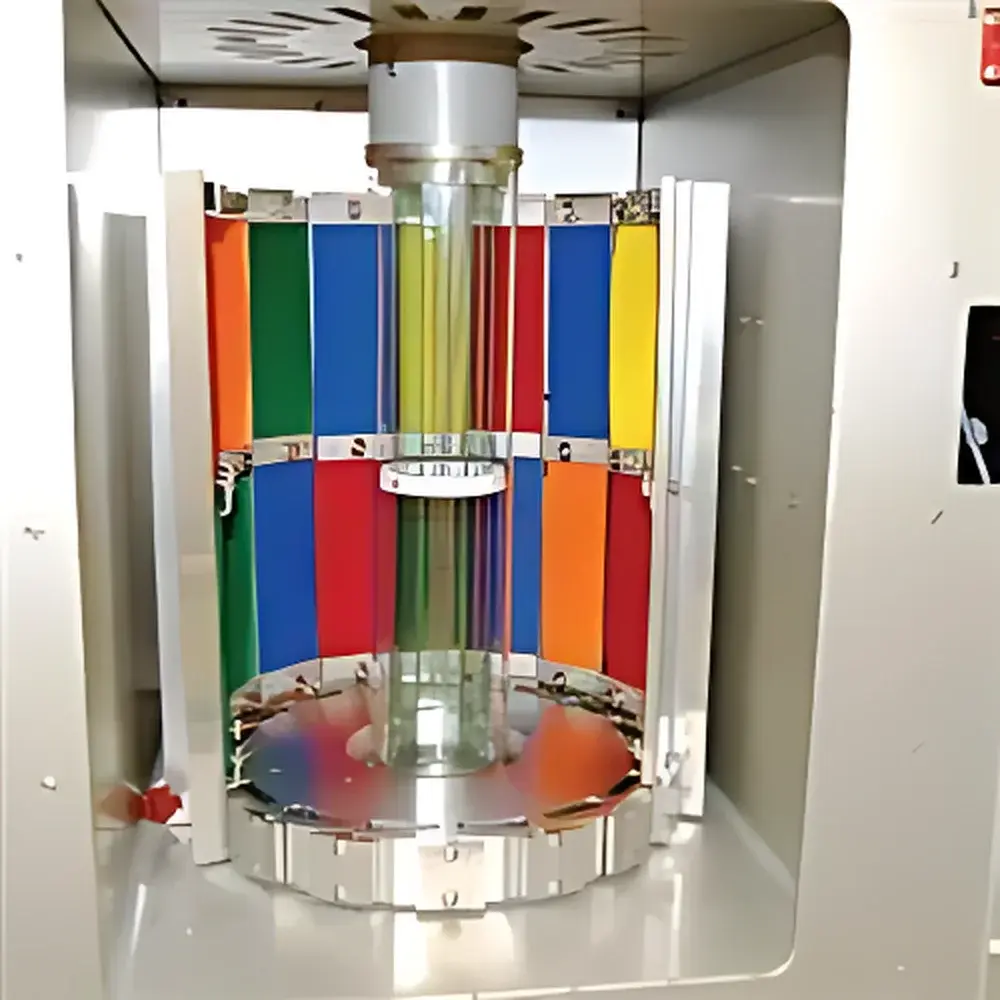
Q-LAB Q-SUN Xe-2 Xenon Arc Weathering Test Chamber
| Brand | Q-LAB |
|---|---|
| Origin | USA |
| Model | Q-SUN Xe-2 |
| Xenon Lamp Power | 1800 W (air-cooled) |
| Lamp Life | ~1500 hours |
| Control Parameters | Black Panel Temperature, Chamber Air Temperature, Relative Humidity |
| Optional Features | Water Spray Cycle, AUTO-CAL Calibration System |
| Compliance | ASTM G155, ISO 4892-2, AATCC TM16, SAE J2527, ISO 11341, GB/T 16422.2 |
Overview
The Q-LAB Q-SUN Xe-2 Xenon Arc Weathering Test Chamber is an entry-level, air-cooled xenon arc exposure system engineered for reproducible simulation of full-spectrum solar radiation—including ultraviolet (UV), visible, and near-infrared (NIR) wavelengths—under controlled environmental conditions. Based on the fundamental principle of xenon arc irradiation, the chamber employs a single 1800 W air-cooled xenon lamp to generate spectral output closely matching terrestrial sunlight, with spectral fidelity adjustable via interchangeable optical filter assemblies. This enables accurate acceleration of photodegradation, color fading, chalking, cracking, and gloss loss in materials exposed to outdoor or indoor daylight environments. Unlike water-cooled systems, the Xe-2’s air-cooled architecture reduces infrastructure requirements, operational complexity, and long-term maintenance overhead while maintaining compliance with internationally recognized weathering test standards.
Key Features
- Single 1800 W air-cooled xenon lamp with typical service life of approximately 1500 hours under standard operating conditions
- Modular optical lantern design incorporating outer borosilicate or fused quartz cylindrical envelope plus dual internal filter sets—enabling precise spectral tailoring per test method (e.g., Daylight, Window Glass, Extended UV)
- Independent, closed-loop control of black panel temperature (BPT), chamber air temperature, and relative humidity (RH), each monitored and regulated in real time
- Optional programmable water spray cycle for simulating dew condensation and rain-induced erosion effects
- AUTO-CAL integrated calibration system supporting rapid, user-performed irradiance verification without external instrumentation
- Intuitive touchscreen interface with multilingual support (English, French, Spanish, Italian, German) and built-in Ethernet connectivity for remote monitoring and data logging
- Front-access lamp replacement mechanism: lamp exchange completed from the top of the unit via hinged access door, quick-release fasteners, and tool-free lamp carrier—typically under 10 minutes
- Robust stainless-steel chamber construction with insulated double-wall housing for thermal stability and energy efficiency
Sample Compatibility & Compliance
The Q-SUN Xe-2 accommodates flat, rigid, or semi-flexible specimens up to 127 mm × 127 mm (5 in × 5 in) per position on its rotating sample tray (standard capacity: 48 positions). It supports both horizontal and vertical mounting configurations depending on material geometry and test protocol requirements. The system is validated for conformance with key international weathering standards including ASTM G155 (Standard Practice for Operating Xenon Arc Light Apparatus for Exposure of Non-Metallic Materials), ISO 4892-2 (Plastics — Methods of Exposure to Laboratory Light Sources — Part 2: Xenon-Arc Lamps), AATCC TM16 (Colorfastness to Light), SAE J2527 (Automotive Interior Materials), and ISO 11341 (Paints and Varnishes). Its spectral flexibility ensures traceability to regulatory frameworks requiring GLP-compliant testing documentation and audit-ready data integrity.
Software & Data Management
The embedded controller firmware provides real-time display of irradiance (W/m² @ 340 nm or 420 nm), BPT, chamber temperature, RH, elapsed exposure time, and lamp operating hours. All parameters are timestamped and stored internally with configurable export options (CSV via USB or network transfer). The system supports optional Q-LAB’s SunSpectra™ software for advanced test scheduling, multi-chamber fleet management, trend analysis, and automated report generation compliant with FDA 21 CFR Part 11 requirements—including electronic signatures, audit trails, and data immutability controls. Firmware updates are delivered via secure HTTPS download and installed through the onboard Ethernet interface.
Applications
The Q-SUN Xe-2 serves as a critical tool in quality assurance and R&D laboratories across industries where light-induced degradation directly impacts product lifecycle performance. Typical applications include evaluating color stability and photostability of textile dyes and pigments; assessing UV resistance of automotive interior trim, dashboards, and seat fabrics; validating weatherability of architectural coatings, plastics, and elastomers; screening packaging materials for pharmaceutical and food-grade light protection; and conducting comparative aging studies for solar reflectors, photovoltaic encapsulants, and outdoor signage substrates. Its cost-effective entry point makes it especially suitable for academic institutions, tier-2 suppliers, and regional testing labs requiring ISO/ASTM-aligned xenon exposure capability without high capital investment.
FAQ
What spectral filters are available for the Q-SUN Xe-2, and how do they affect test outcomes?
The Xe-2 supports multiple filter combinations—such as Daylight-Q/B, Window Glass-Q/B, and Extended UV—to replicate direct sunlight, filtered sunlight through architectural glass, or enhanced UV stress. Filter selection directly influences spectral power distribution, thereby altering degradation kinetics and failure mode representation.
Is the Q-SUN Xe-2 suitable for continuous unattended operation?
Yes—the system is rated for 24/7 operation with built-in safety interlocks, thermal cutoffs, and self-diagnostic routines that trigger audible/visual alerts and log fault events prior to shutdown.
How does the AUTO-CAL system simplify irradiance calibration?
AUTO-CAL uses an integrated reference sensor and factory-traceable algorithm to verify irradiance output against target setpoints (e.g., 0.35 W/m² @ 340 nm), eliminating the need for third-party radiometers during routine qualification.
Can humidity be controlled independently of temperature?
Yes—relative humidity is regulated via dedicated steam generator and condensate management subsystem, decoupled from air temperature control loops to enable precise RH ramping and dwell profiles.
Does the Xe-2 meet FDA 21 CFR Part 11 requirements for electronic records?
When paired with SunSpectra™ software and configured with user authentication, audit trail logging, and electronic signature modules, the system supports Part 11 compliance for regulated pharmaceutical and medical device testing environments.



