
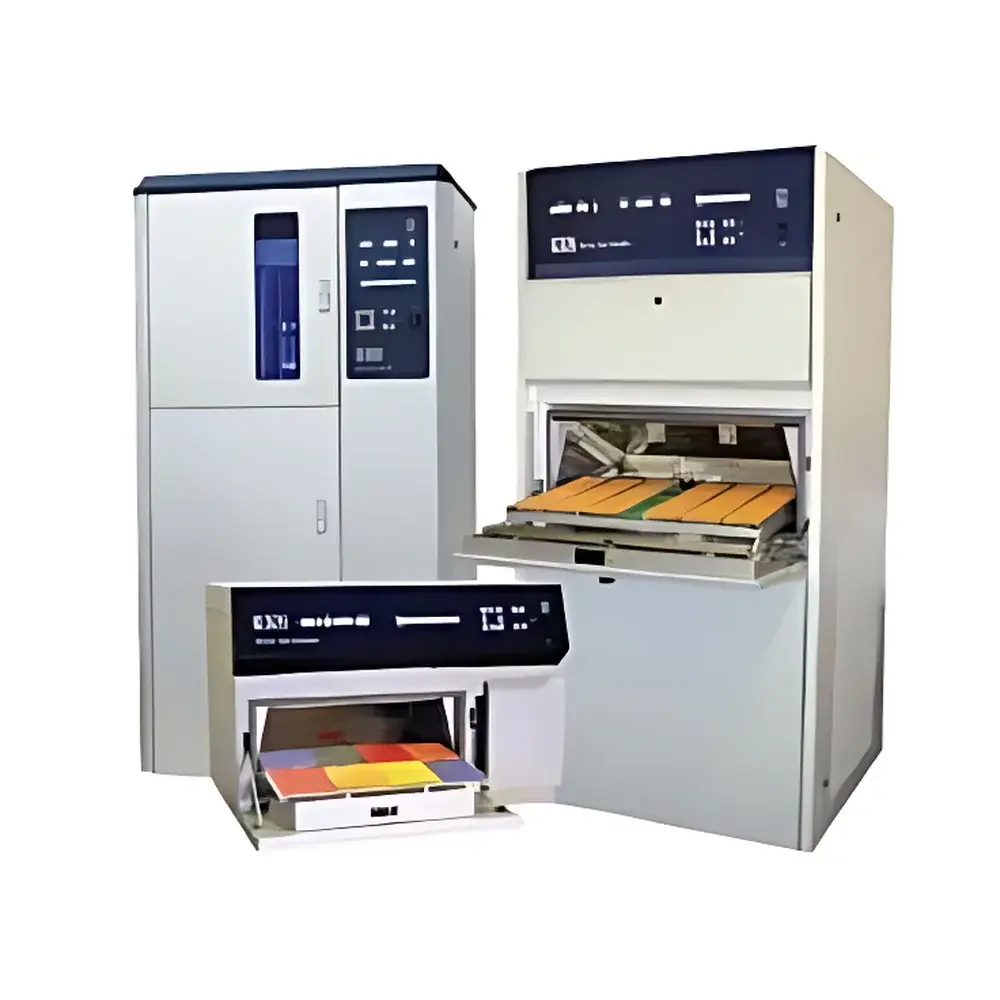
Q-Lab Q-SUN Xe-3-HBS Xenon Arc Weathering Test Chamber
| Brand | Q-Lab |
|---|---|
| Origin | USA |
| Model | Q-SUN Xe-3-HBS |
| Xenon Lamp Power | 1800 W |
| Sample Exposure Area | 3250 cm² |
| Lamp Life | ≥1500 h |
| Irradiance Control | SOLAR EYE® at 340 nm, 420 nm, or TUV |
| Humidity Control | Standard |
| Spray Function | Optional |
| Compliance | ASTM G151, ASTM G155, ISO 4892-2, ISO 105-B02, AATCC TM16, SAE J2527, IEC 60068-2-5, GB/T 8427, and over 40 additional international standards |
Overview
The Q-LAB Q-SUN Xe-3-HBS Xenon Arc Weathering Test Chamber is a full-spectrum, benchtop-to-floor-standing accelerated weathering instrument engineered for high-fidelity simulation of solar radiation, temperature, and moisture stress on polymeric, textile, automotive, architectural, and coating materials. It operates on the principle of xenon arc irradiation—using three independently controlled 1800 W xenon lamps to replicate the spectral power distribution (SPD) of natural sunlight across UV, visible, and near-infrared wavelengths (290–800 nm). Unlike narrowband UV fluorescent systems, the Xe-3-HBS delivers continuous full-spectrum output, enabling accurate prediction of photodegradation mechanisms including yellowing, chalking, gloss loss, cracking, and color shift—particularly critical for colorfastness (AATCC TM16, ISO 105-B02), light stability (ISO 4892-2), and automotive exterior durability (SAE J2527, GMW 14867). Its robust thermal management system maintains precise black panel temperature control, while integrated humidity regulation and optional water spray cycles simulate realistic wet/dry cycling conditions essential for evaluating hydrolytic degradation and surface erosion.
Key Features
- Three 1800 W air-cooled xenon arc lamps with ≥1500-hour service life—reducing lamp replacement frequency and long-term operational cost
- SOLAR EYE® irradiance feedback control system maintaining stable spectral irradiance at user-selectable monitoring bands: 340 nm (UV-A), 420 nm (visible), or TUV (total UV)
- Standard relative humidity control (10–95% RH, ±3% RH accuracy) with programmable ramping and dwell profiles
- Optional water spray function delivering uniform, low-pressure aqueous exposure during dark or light cycles—simulating dew, rain, or wash-off effects per ASTM G155 Cycle 1–7
- Large-format exposure plane (451 mm × 718 mm) supporting up to 55 standard specimen holders; total exposure area: 3250 cm²
- Horizontal sample orientation ensures realistic gravitational drainage and surface water retention—critical for automotive coatings, roofing membranes, and outdoor signage
- Calibration-traceable optical filters (Daylight-Q/B, Window-Q/B, Extended UV) compliant with ISO 4892-2 and ASTM G155 filter requirements
- Intelligent safety interlocks, lamp cooling monitoring, and real-time fault diagnostics per UL 61010-1 and IEC 61000-6-3 EMC standards
Sample Compatibility & Compliance
The Xe-3-HBS accommodates rigid and flexible specimens up to 50 mm in thickness—including painted panels, plastic extrusions, textile swatches, rubber compounds, and composite laminates—without requiring custom fixtures. Its horizontal tray design supports three-dimensional objects (e.g., headlamp lenses, trim components, molded parts) via adjustable clamping rails and universal mounting brackets. All operational parameters are fully traceable to NIST-calibrated reference instruments and validated against ASTM E2497 (Standard Guide for Calibration of Xenon Arc Lamps). The chamber meets regulatory requirements for GLP-compliant testing environments, with audit-ready data logging aligned to FDA 21 CFR Part 11 electronic record controls when paired with Q-Lab’s Q-Sun Software Suite. It satisfies test method prerequisites for ISO/IEC 17025-accredited laboratories performing accredited weathering evaluations.
Software & Data Management
Control and monitoring are executed via Q-Lab’s proprietary Q-Sun Software (v6.2+), running on Windows-based host PCs. The software provides full-cycle programming—including irradiance setpoints, temperature ramps, humidity profiles, spray timing, and dark/light sequencing—with up to 100 stored test protocols. Real-time graphical displays show irradiance drift, chamber temperature/humidity deviation, lamp voltage/current, and cumulative radiant exposure (kJ/m²). All data points are timestamped, digitally signed, and exportable in CSV, PDF, or XML formats. Audit trails record operator login/logout events, parameter modifications, calibration actions, and alarm acknowledgments—ensuring compliance with ISO/IEC 17025 clause 7.7 and FDA 21 CFR Part 11 Subpart B requirements for electronic records and signatures.
Applications
- Automotive OEM validation: Exterior paint systems (PPG, BASF, Axalta), headlamp polycarbonate, sealants, and under-hood thermoplastics per SAE J2412/J2527 and PV 1303
- Textile colorfastness: Dyed cotton, polyester blends, and technical fabrics tested per AATCC TM16, ISO 105-B04, and Marks & Spencer C9/C9A
- Architectural coatings: Acrylic stucco, elastomeric wall coatings, and roofing membranes per ASTM D4355 and ISO 11341
- Electronics enclosures: UV-resistant polycarbonate housings, LED lens materials, and conformal coatings per IEC 60068-2-5 and JIS L0843
- Plastic additives screening: HALS, UV absorbers, and antioxidant performance evaluation under controlled spectral stress
- Regulatory submission support: Data generated meets evidentiary thresholds for EPA Safer Choice, EU REACH Annex XVII, and China GB/T 14576 certification
FAQ
What spectral filters are included with the Xe-3-HBS, and how are they selected?
The system ships with Daylight-Q/B and Window-Q/B filters as standard. Filter selection is determined by test standard requirements: Daylight-Q/B replicates unfiltered terrestrial sunlight; Window-Q/B simulates indoor exposure through glass. Extended UV and IR-suppressing variants are available as options.
Is black panel temperature (BPT) or black standard temperature (BST) measured?
The Xe-3-HBS uses a calibrated black panel sensor mounted adjacent to the exposure plane, meeting ISO 4892-2 Annex B and ASTM G151 Section 7.3 specifications for BPT measurement.
Can the Xe-3-HBS be integrated into an existing LIMS or MES platform?
Yes—via OPC UA or Modbus TCP interfaces, raw sensor data and cycle status can be streamed to enterprise systems. Q-Sun Software also supports ODBC-compliant database exports for direct LIMS ingestion.
What maintenance intervals are recommended for lamp calibration and filter replacement?
Lamp irradiance calibration is advised every 500 hours; filters require inspection every 1,000 hours and replacement after 2,000 hours of operation or upon visible discoloration/cracking.
Does the system support multi-user access with role-based permissions?
Yes—Q-Sun Software implements Windows Active Directory integration, allowing administrator-defined roles (e.g., Operator, Supervisor, QA Auditor) with granular permissions for protocol editing, data export, and calibration execution.



