
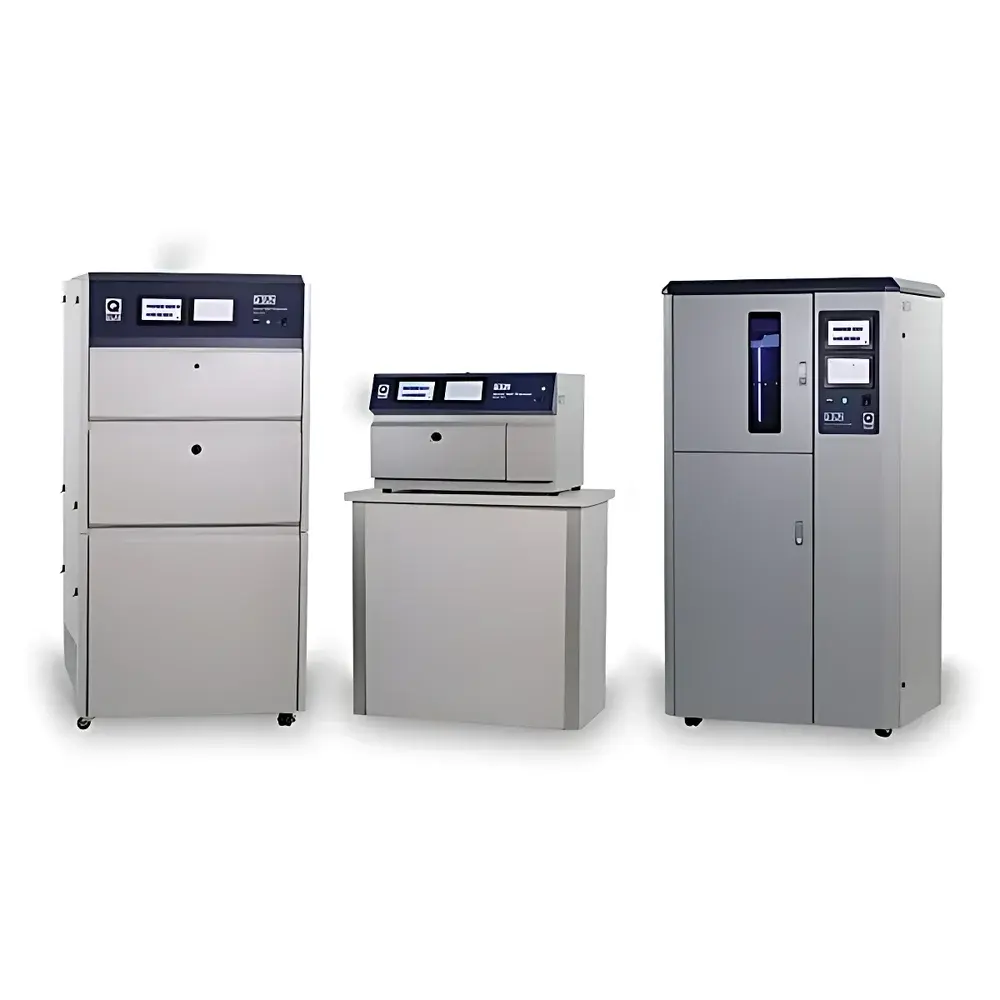
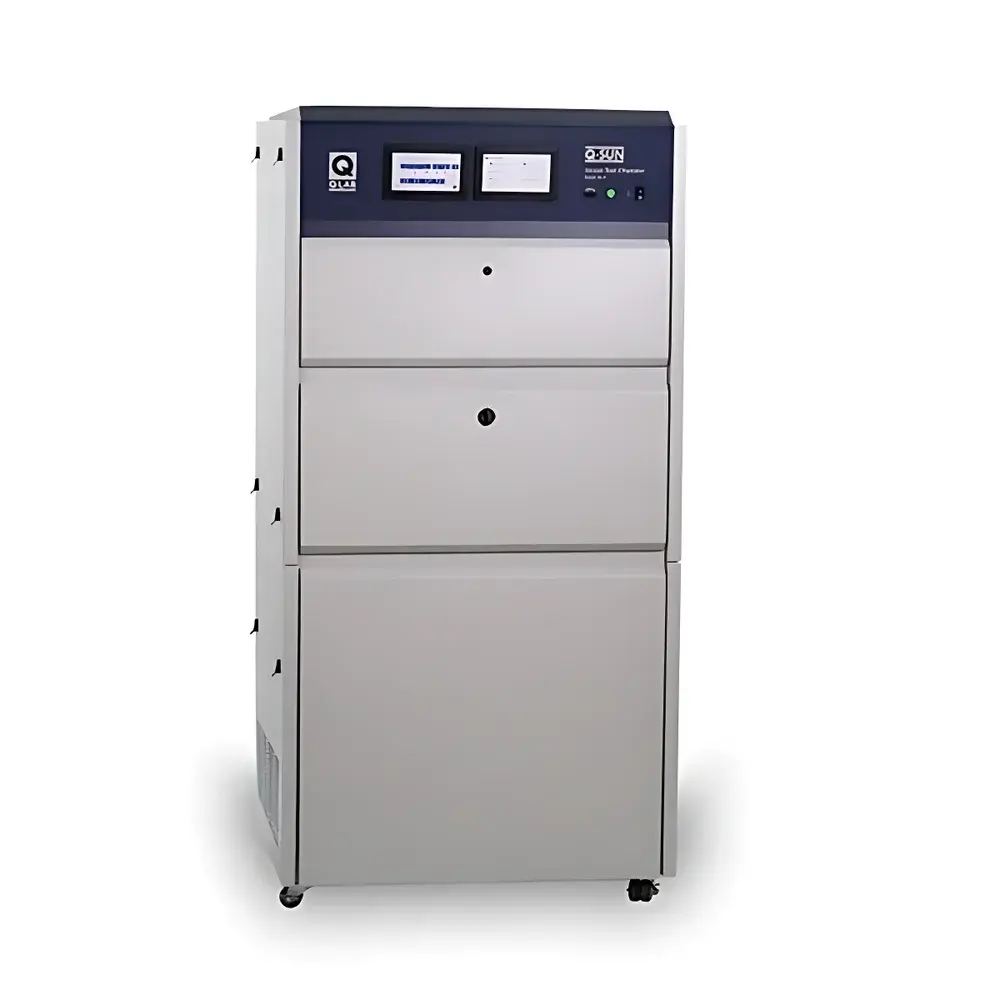
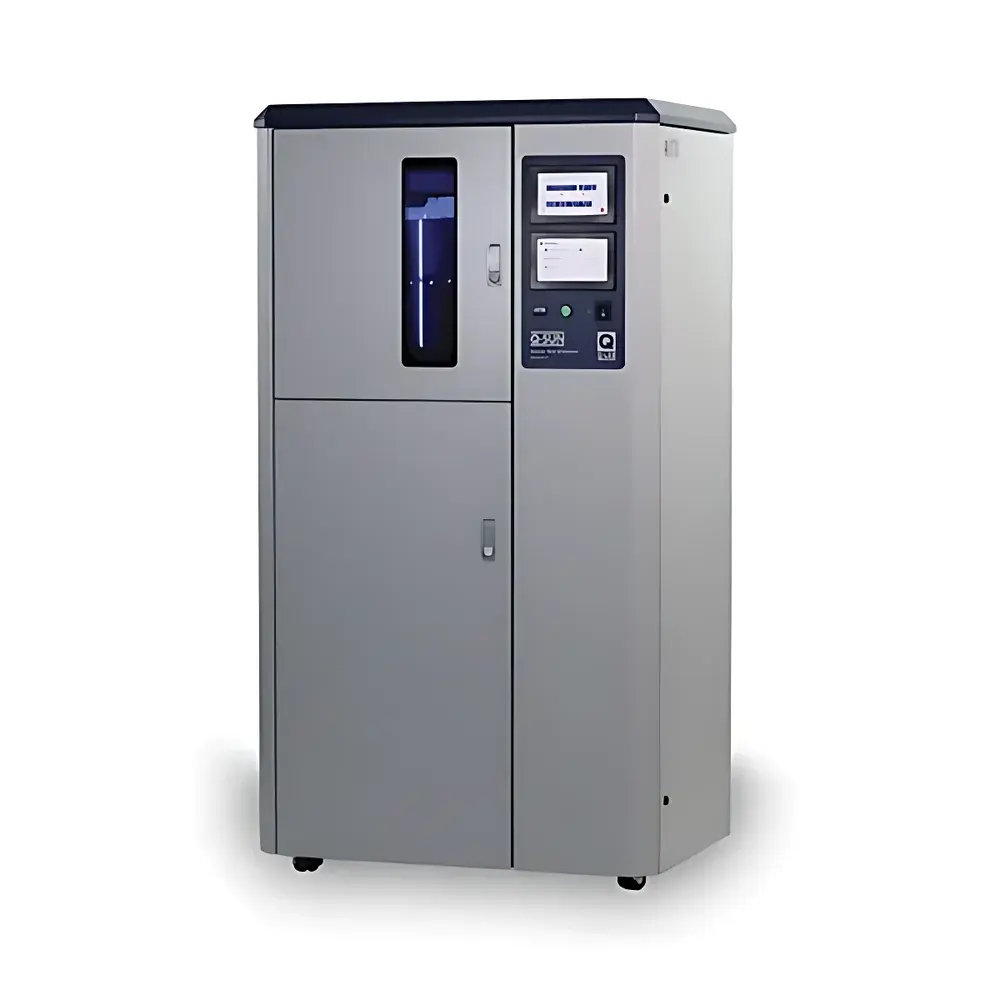
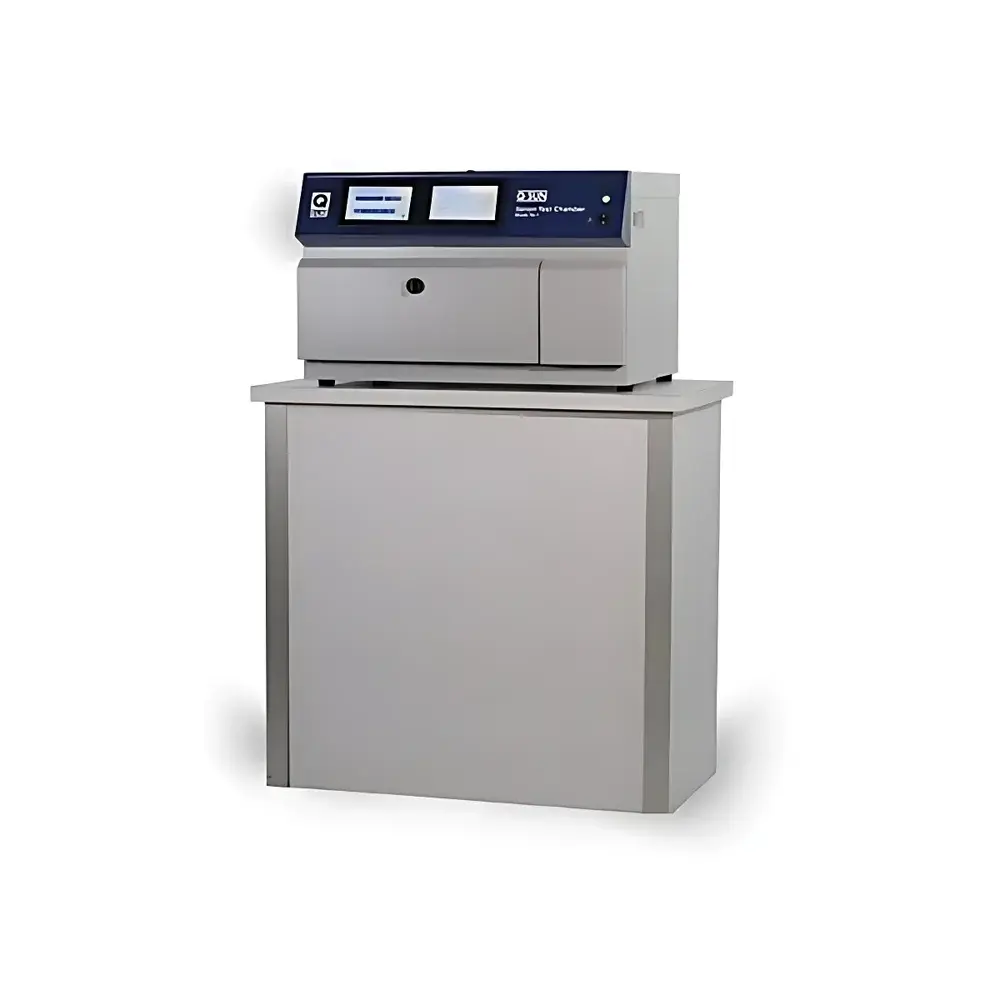
Q-LAB Q-SUN Xe-3-HS Xenon Arc Weathering Test Chamber
| Brand | Q-LAB |
|---|---|
| Origin | USA |
| Model | Q-SUN Xe-3-HS |
| Xenon Lamp Power | 1800 W |
| Irradiance | 42 W/m² (at 340 nm) |
| Light Exposure Cycle | Up to 1500 h |
| Humidity Range | 25–60 % RH |
| Temperature Range | Ambient to 60 °C (Black Panel Temperature) |
| Sample Tray Dimensions | 45 × 72 cm |
| Max. Sample Capacity | 55 specimens (51 × 102 mm each) |
| Water Spray Function | Yes (dual nozzles, programmable in light/dark cycles) |
| Humidity Control | Yes (via purified water reservoir and RH sensor) |
| Filter Options | Daylight, Window Glass, Extended UV |
Overview
The Q-LAB Q-SUN Xe-3-HS Xenon Arc Weathering Test Chamber is an ISO 4892-2 and ASTM G155-compliant accelerated weathering instrument engineered for high-fidelity simulation of full-spectrum solar radiation—including ultraviolet (UV), visible, and near-infrared (NIR) wavelengths—under controlled temperature, humidity, and water spray conditions. Unlike narrowband UV fluorescent systems, the xenon arc lamp delivers a continuous spectral output closely matching terrestrial sunlight at sea level (AM1.5), enabling physically representative photodegradation kinetics for polymers, coatings, textiles, automotive interiors, and architectural materials. The “HS” designation indicates integrated Humidity Simulation and Water Spray functionality—critical for replicating real-world moisture-driven degradation mechanisms such as hydrolysis, blistering, and corrosion initiation. The chamber operates with a calibrated 1800 W air-cooled xenon lamp, delivering stable irradiance up to 42 W/m² at 340 nm (equivalent to peak summer noon sun intensity), with optional spectral filtering to emulate daylight, window-filtered exposure, or extended UV spectra per IEC 60068-2-5 and SAE J2527.
Key Features
- Full-spectrum xenon arc illumination with spectral fidelity validated against CIE 85:2014 reference solar data
- Programmable humidity control (25–60 % RH) via precision capacitive RH sensor and purified water reservoir system
- Automated water spray function with dual top-mounted nozzles; spray timing configurable independently within light/dark cycles per ISO 20671-1
- Large-format sample tray (45 × 72 cm) supporting up to 55 standard 51 × 102 mm specimens or heterogeneous 3D objects (e.g., bottles, cosmetic containers, automotive trim)
- Independent monitoring and control of black panel temperature (BPT), chamber air temperature, and relative humidity—essential for ASTM D4329 and ISO 4892-2 compliance
- User-calibratable sensors: CT202-compatible black panel temperature sensor (insulated or non-insulated variants) and CR20-compatible SOLAR EYE irradiance sensor (340 nm, 420 nm, or TUV 300–400 nm options)
- Robust stainless-steel construction with forced-air convection cooling and laminar airflow design to minimize thermal gradients across the exposure plane
Sample Compatibility & Compliance
The Q-SUN Xe-3-HS accommodates flat, curved, and three-dimensional specimens without requiring custom fixtures—enabling direct evaluation of real-world product geometries. Its open-tray architecture supports industry-standard substrate formats including ASTM D660, ISO 11341 painted panels, AATCC TM16 textile swatches, and SAE J2412 automotive component assemblies. All operational parameters adhere to internationally recognized test standards, including but not limited to: ASTM G155 (xenon-arc exposure apparatus), ISO 4892-2 (plastics—methods of exposure to laboratory light sources), IEC 60068-2-5 (environmental testing—radiation, solar), and GB/T 16422.2 (Chinese national standard for plastics exposure). Humidity and spray functions are fully traceable to NIST-traceable RH and flow calibration protocols. For regulated environments, the system supports audit-ready documentation when paired with Q-LAB’s optional Q-Lab Software Suite (compliant with FDA 21 CFR Part 11 requirements for electronic records and signatures).
Software & Data Management
While the Q-SUN Xe-3-HS operates via intuitive front-panel controls, integration with Q-LAB’s proprietary Q-Lab Software enables comprehensive test method programming, real-time parameter logging (irradiance, BPT, RH, chamber temp), and automated report generation in PDF/CSV format. The software includes preloaded test methods aligned with ASTM D4329 (plastics), ISO 11341 (paints), and AATCC TM16 (textiles), with customizable ramp profiles, cycle sequencing, and alarm thresholds. All sensor readings are timestamped and stored with metadata (operator ID, calibration date, filter type, lamp hours), satisfying GLP/GMP data integrity requirements. Optional Ethernet connectivity allows remote monitoring and centralized fleet management across multi-chamber laboratories.
Applications
This chamber is routinely deployed in R&D, quality assurance, and regulatory submission workflows across sectors where long-term outdoor durability is mission-critical. Key use cases include: color shift and gloss retention analysis of automotive clearcoats per SAE J2527; UV resistance validation of PV module encapsulants (IEC 61215); hydrolytic stability assessment of polyurethane elastomers; fade resistance testing of interior textiles under simulated dashboard conditions; and accelerated aging of medical device polymer housings per ISO 10993-12. Its ability to decouple UV dose from thermal stress—via independent control of irradiance and black panel temperature—makes it uniquely suited for failure mode isolation in root cause analysis.
FAQ
What type of water must be used for humidity and spray functions?
Deionized or distilled water with conductivity ≤ 5 µS/cm is mandatory to prevent mineral buildup on sensors, nozzles, and optical components.
How often should the black panel temperature sensor be calibrated?
Q-LAB recommends quarterly calibration using the CT202 calibrator; annual replacement of the RH/air temperature sensor is required per maintenance guidelines.
Can the Q-SUN Xe-3-HS replicate window-glass filtered sunlight?
Yes—using the optional Daylight-Q/B or Window Glass filters, the system meets spectral requirements of ISO 4892-2 Method A (direct sunlight) and Method B (through glass).
Is the irradiance sensor user-calibratable?
Yes—the SOLAR EYE sensor is field-calibrated in under 5 minutes using the CR20 calibrator, with sensor wavelength selection (340 nm, 420 nm, or TUV) matching the installed filter configuration.
Does the system support unattended operation for extended cycles?
Yes—programmable 1500-hour exposure cycles are supported with automatic lamp hour tracking, end-of-test alerts, and safety interlocks for lamp overtemperature or low-water conditions.



