
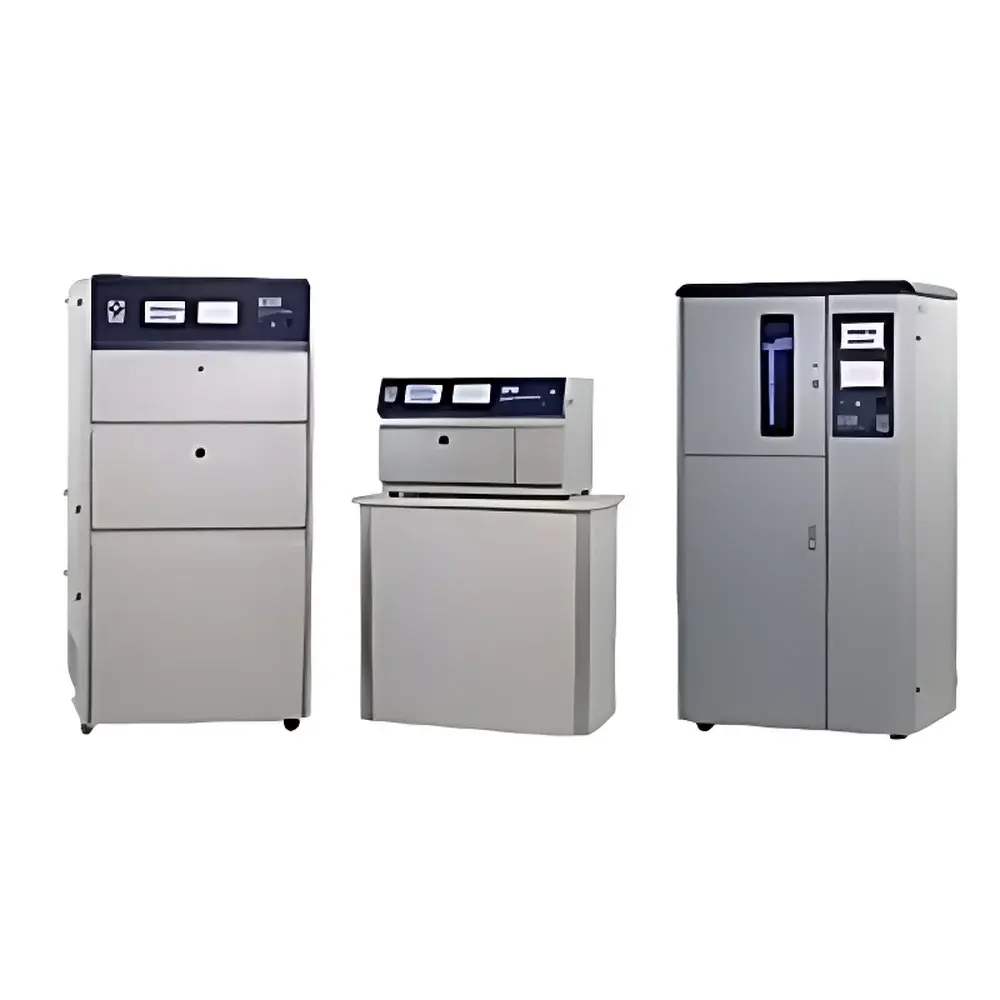
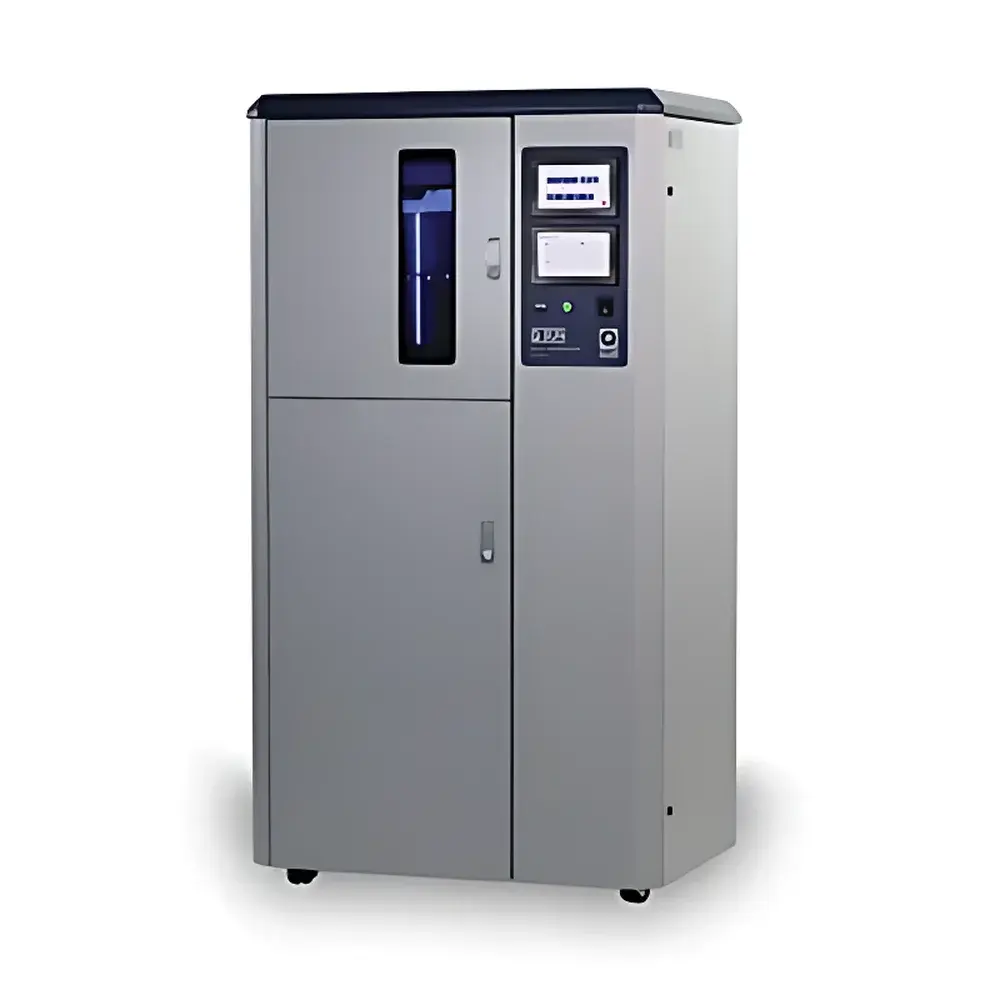
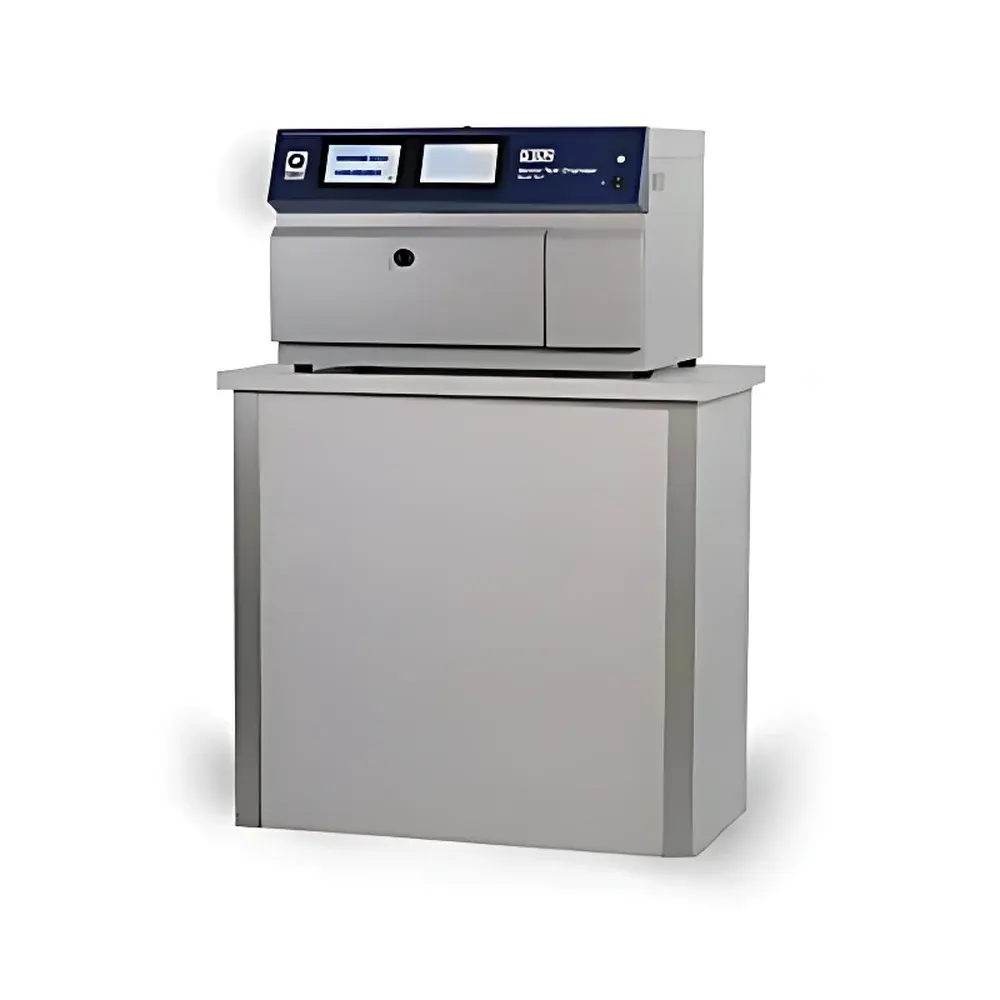
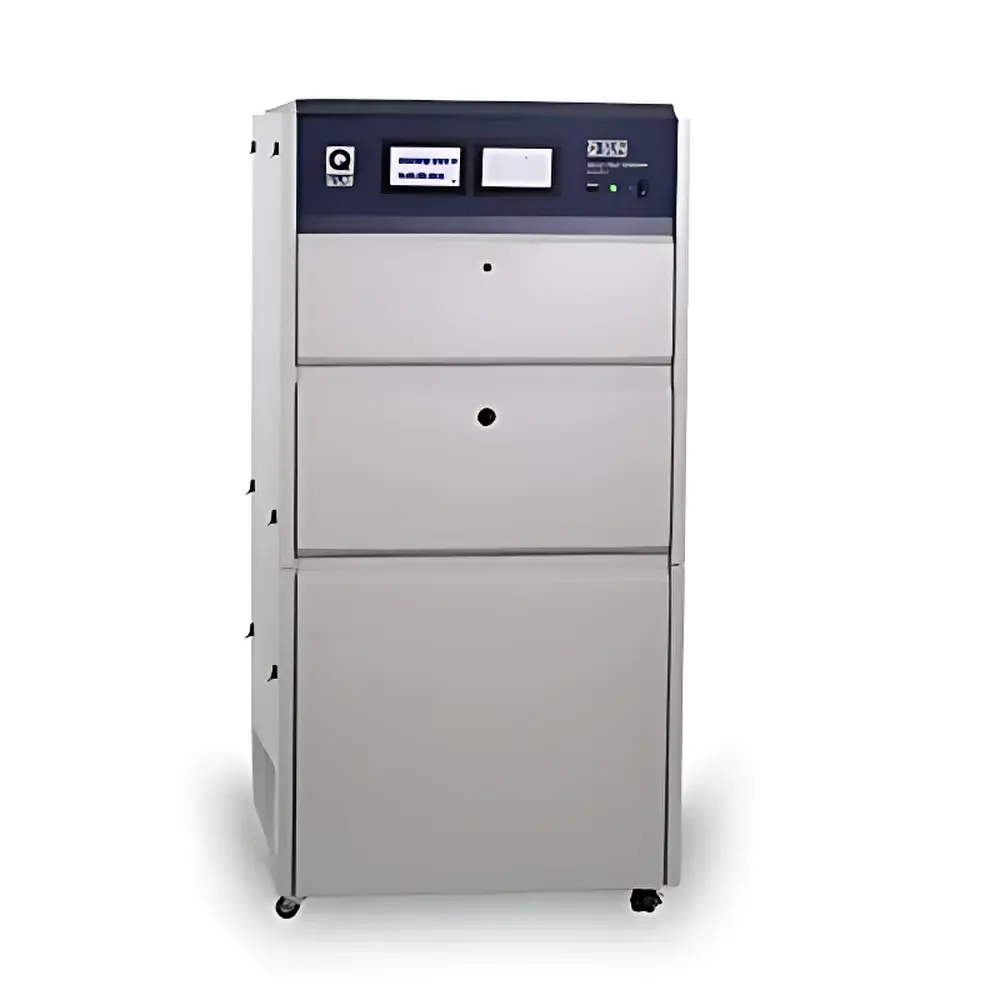
Q-LAB Q-SUN Xenon Arc Weathering Test Chamber
| Brand | Q-LAB |
|---|---|
| Origin | USA |
| Model | Q-SUN Xe-1 / Xe-2 / Xe-3 |
| Radiation Intensity | ≤1800 W/m² |
| Light Exposure Duration | 1–9999 h (continuously adjustable) |
| Humidity Range | 20–95% RH (model-dependent) |
| Lamp Type | Air-Cooled Xenon Arc Lamp |
| Filter Options | Daylight, Window Glass, Extended UV |
| Black Panel Temperature Range | 45–120 °C (varies by model and filter) |
| Sample Capacity | Up to 55 specimens (Xe-3 HD/HS models) |
| Compliance | ASTM G155, ISO 4892-2, AATCC TM16, SAE J2527, IEC 60068-2-9, GB/T 16422.2 |
Overview
The Q-LAB Q-SUN Xenon Arc Weathering Test Chamber is an engineered solution for accelerated exposure testing of materials subjected to solar radiation, temperature, and humidity—conditions representative of outdoor, indoor, or behind-window environments. Utilizing a high-stability, air-cooled xenon arc lamp, the system delivers a continuous full-spectrum output closely matching natural sunlight from 290 nm to 800 nm, including critical UV-B, UV-A, visible, and near-infrared regions. Unlike fluorescent UV or metal halide sources, xenon arc technology enables photometrically accurate simulation of solar irradiance, essential for evaluating photodegradation mechanisms such as polymer chain scission, pigment fading, coating chalking, and textile color loss. Each Q-SUN chamber integrates precise spectral filtering—Daylight (Q/B), Window Glass (WG), and Extended UV (Xe) filters—to replicate distinct exposure conditions defined in international standards. The optical architecture ensures uniform irradiance distribution across the sample plane (±15% per ASTM G155), minimizing edge effects and supporting reproducible inter-laboratory data.
Key Features
- Three platform configurations: Xe-1 (benchtop flat-bed), Xe-2 (rotating drum), and Xe-3 (large-capacity flat-bed), each optimized for specific sample geometries and throughput requirements
- Intelligent controller with five-language interface (English, French, Spanish, Italian, German) and non-volatile memory supporting up to 10 user-defined test cycles with power-fail recovery
- Integrated CR20 radiometer and CT202 black panel thermometer for on-site irradiance and temperature calibration; traceable to A2LA- and UKAS-accredited calibration laboratories (ISO/IEC 17025)
- Automated spray and humidity control systems enabling synchronized light/dark, light/spray, and dark/spray cycles per ASTM D4329 and ISO 4892-2
- Durable single-piece borosilicate glass filters (Xe-1/Xe-3) or multi-stage quartz/borosilicate + inner filter assemblies (Xe-2) with low spectral drift over service life
- Energy-efficient design: lower lamp wattage, reduced cooling demand, and extended lamp life (typically 1500–2000 hours) contribute to industry-leading operational cost efficiency
- Full compliance with GLP-relevant audit trails, event logging, and password-protected parameter access—supporting FDA 21 CFR Part 11 readiness when paired with optional software packages
Sample Compatibility & Compliance
The Q-SUN accommodates diverse specimen formats without mechanical modification: rigid panels (Xe-1/Xe-3), flexible textiles or thin films (Xe-2 drum), bottles, automotive trim, architectural coatings, and photovoltaic encapsulants. Standard flat sample holders accept dimensions up to 45 × 72 cm (Xe-3), while custom fixtures support irregular shapes, 3D components, and small-part arrays. All models meet the physical and metrological requirements of key global standards—including ASTM G155 (practice A/B/C), ISO 4892-2 (method A/B), AATCC TM16-2023, SAE J2527, IEC 60068-2-9, and GB/T 16422.2—ensuring data acceptance in regulatory submissions, supplier qualification programs, and R&D benchmarking. Filter selection directly determines spectral match fidelity: the Daylight filter replicates unfiltered terrestrial sunlight (290–800 nm); the Window Glass filter attenuates UV-B to simulate interior exposure through standard float glass; and the Extended UV filter enhances short-wavelength output for aggressive durability screening.
Software & Data Management
While the embedded controller provides standalone operation, optional Q-LAB’s SunTest™ PC software enables remote monitoring, real-time graphing of irradiance, chamber temperature, black panel temperature, and relative humidity. Exportable CSV and PDF reports include timestamped environmental profiles, alarm history, and calibration verification logs—structured to satisfy internal QA documentation protocols and external audit requirements (e.g., ISO 9001, IATF 16949). The system records all parameter changes, operator logins, and fault events with time/date stamps, fulfilling traceability mandates under GLP and GMP frameworks. For laboratories requiring electronic signatures and version-controlled method storage, integration with validated LIMS platforms is supported via standardized OPC UA communication protocols.
Applications
Q-SUN chambers serve as primary tools in polymer science (PP, PE, PVC, TPO), automotive OEM supply chains (paints, seals, dashboards), textile manufacturing (AATCC-compliant colorfastness validation), architectural product development (roofing membranes, cladding, window films), and electronics (UV-stable conformal coatings, display laminates). Typical use cases include: comparative ranking of stabilizer packages in polyolefins; correlation studies between accelerated exposure and 5-year Florida field data; qualification of new pigment systems for exterior signage; evaluation of hydrolytic stability in biodegradable packaging films; and validation of UV-cured inkjet inks for outdoor signage applications. The ability to decouple irradiance, temperature, and moisture stressors allows mechanistic investigation—not just pass/fail assessment—making Q-SUN indispensable in failure analysis and predictive lifetime modeling.
FAQ
What spectral filters are available, and how do they differ?
The Q-SUN offers three certified optical filter types: Daylight (Q/B), Window Glass (WG), and Extended UV (Xe). Each modifies the xenon spectrum to match distinct environmental exposure conditions—critical for test relevance and standard compliance.
Is calibration traceable to national standards?
Yes. Radiometric and thermal calibrations use NIST-traceable reference instruments. Q-LAB’s calibration laboratory holds dual A2LA and UKAS accreditation to ISO/IEC 17025 for irradiance and temperature measurement.
Can the Q-SUN operate unattended for extended durations?
All models support fully autonomous 24/7 operation with built-in fault detection, audible/visual alarms, and automatic shutdown on critical parameter deviation (e.g., lamp failure, coolant loss, sensor drift).
How is humidity controlled, and what water purity is required?
Humidity is generated via steam injection. Water quality requirements vary: standard models require deionized water (<5 µS/cm); high-purity variants (HDS/HBS) mandate ultrapure water (<0.2 µS/cm, <0.1 ppm silica) to prevent nozzle fouling.
Do Q-SUN chambers comply with FDA 21 CFR Part 11?
The base hardware supports Part 11 principles (audit trail, electronic signature readiness). Full compliance requires deployment of validated SunTest™ software with role-based access control and electronic record archiving.



