
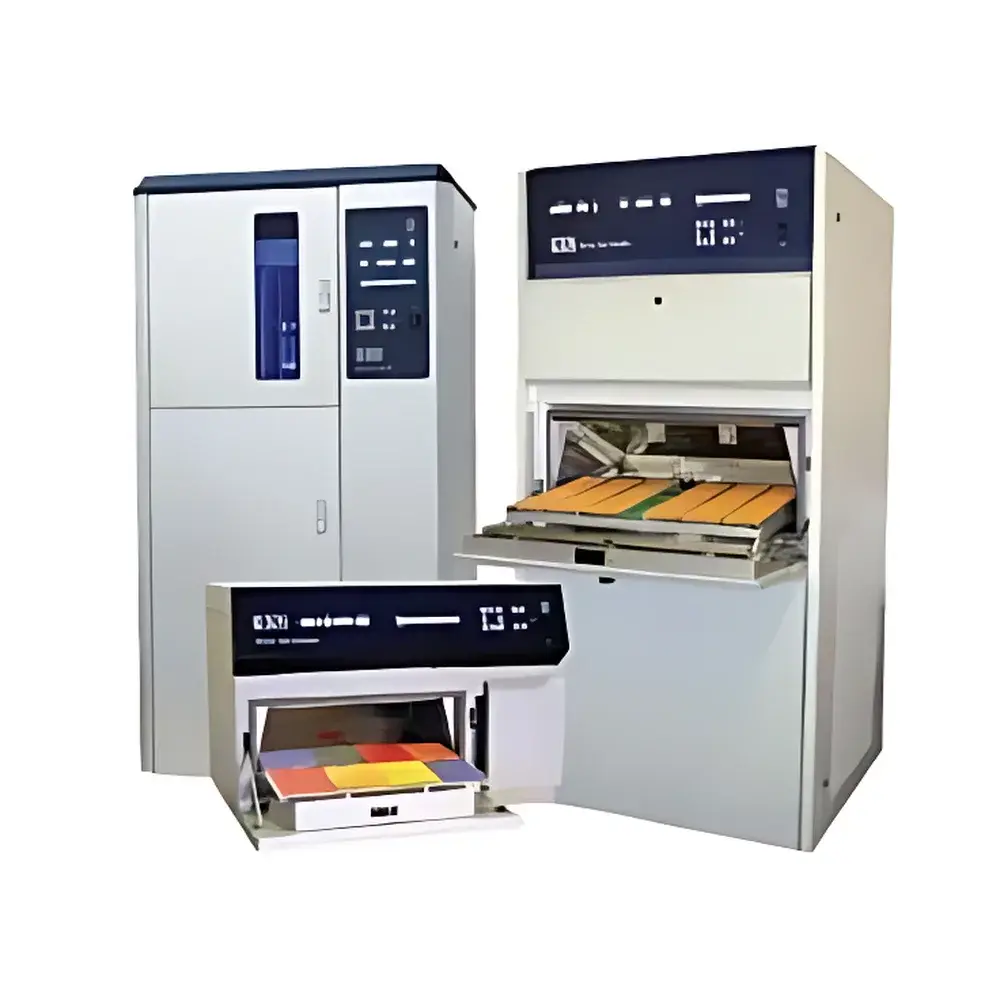
Q-Lab Xe-3-HS Air-Cooled Xenon Arc Weathering Test Chamber
| Brand | Q-Lab |
|---|---|
| Origin | USA |
| Model | Xe-3-HS |
| Cooling Type | Air-Cooled |
| Lamp Power | 1800 W |
| Spectral Range | Full-Spectrum Solar Simulation (UV, Visible, IR) |
| Humidity Control | Standard RH Regulation (10–95% RH) |
| Water Spray Function | Dual Nozzle Top-Mounted Spray System |
| Sample Tray Dimensions | 45 × 72 cm |
| Max Sample Capacity | 55 specimens (51 × 102 mm each) |
| Black Panel Temperature Range | 35–110 °C |
| Chamber Air Temperature Range | 25–80 °C |
| Compliance | ASTM G155, ISO 4892-2, SAE J2527, AATCC TM16, ISO 11341, IEC 60068-2-9 |
Overview
The Q-Lab Xe-3-HS Air-Cooled Xenon Arc Weathering Test Chamber is an engineering-grade accelerated weathering instrument designed to replicate full-spectrum solar irradiance—including ultraviolet (UV), visible, and near-infrared (NIR) radiation—under precisely controlled environmental conditions. Based on the principle of xenon arc lamp spectral simulation, the Xe-3-HS employs a 1800 W air-cooled xenon lamp paired with calibrated optical filters to deliver irradiance profiles that closely match natural sunlight at solar noon under summer mid-latitude conditions. This enables reproducible, quantitative aging assessments for polymers, coatings, textiles, automotive interiors, and packaging materials. Unlike UV-only or fluorescent-based testers, the Xe-3-HS provides true broadband exposure critical for evaluating photodegradation mechanisms involving synergistic UV/visible/thermal effects—particularly relevant for color shift, gloss loss, chalking, cracking, and fading phenomena.
Key Features
- Full-spectrum xenon arc illumination with spectral fidelity traceable to NIST-calibrated reference standards;
- Integrated humidity control system maintaining 10–95% relative humidity (RH) with real-time monitoring of black panel temperature (BPT), chamber air temperature, and RH;
- Dual-nozzle water spray module positioned at the chamber ceiling, programmable to operate during light or dark cycles to simulate dew, rain, or thermal shock;
- Modular flat-bed sample tray (45 × 72 cm) accommodating up to 55 standard 51 × 102 mm specimens—or custom fixtures for 3D objects including bottles, cosmetic containers, and automotive components;
- User-accessible calibration architecture: CT202 black panel thermometer for BPT sensor verification; CR20 irradiance calibrator compatible with 340 nm, 420 nm, or 300–400 nm TUV sensors—ensuring metrological traceability per ISO/IEC 17025 practices;
- Air-cooled thermal management system eliminating need for external chilled water infrastructure—reducing facility integration complexity and operational overhead.
Sample Compatibility & Compliance
The Xe-3-HS supports heterogeneous sample geometries—from rigid planar substrates (e.g., painted metal panels, plastic sheets) to irregular 3D items (e.g., headlight lenses, footwear, medical device housings). Its open-tray design allows rapid specimen loading/unloading and facilitates in-situ visual inspection without interrupting test cycles. The system complies with internationally recognized weathering standards including ASTM G155 (Practice for Operating Xenon Arc Light Apparatus), ISO 4892-2 (Plastics—Methods of Exposure to Laboratory Light Sources—Part 2: Xenon-Arc), SAE J2527 (Surface Vehicle Recommended Practice), AATCC TM16 (Colorfastness to Light), and IEC 60068-2-9 (Test Ed: Damp Heat, Cyclic). All control algorithms and data logging functions are engineered to support GLP-compliant workflows, with optional audit trail configuration meeting FDA 21 CFR Part 11 requirements when integrated with Q-Lab’s Q-Support software suite.
Software & Data Management
Operation is managed via Q-Lab’s intuitive touchscreen interface running embedded firmware compliant with IEC 62443-3-3 security guidelines. Test parameters—including irradiance setpoints (W/m² @ 340 nm), temperature ramps, RH profiles, and spray timing—are stored as reusable method files with version control and user access permissions. Raw sensor data (BPT, chamber air temp, RH, irradiance) are timestamped and logged at user-defined intervals (minimum 1-second resolution). Export formats include CSV and XML, compatible with LIMS platforms and statistical process control (SPC) tools. Optional Q-Support software enables remote monitoring, automated report generation (PDF/Excel), and trend analysis across multiple instruments—supporting enterprise-wide material qualification programs.
Applications
- Automotive OEMs validating exterior trim durability against ISO 11341 and SAE J2412;
- Textile manufacturers assessing colorfastness per AATCC TM16 and ISO 105-B02;
- Coatings R&D labs correlating lab-aged gloss loss with field exposure per ASTM D4303;
- Medical device suppliers verifying polymer stability under ISO 10993-12 simulated environmental stress;
- Packaging developers testing UV barrier efficacy of multilayer films using accelerated yellowing metrics;
- Academic research groups investigating photo-oxidation kinetics in organic photovoltaics and biodegradable polymers.
FAQ
What type of water is required for the Xe-3-HS humidity and spray systems?
Deionized or distilled water with conductivity ≤ 5 µS/cm is mandatory to prevent mineral buildup on sensors, filters, and spray nozzles. Tap water or softened water is not permitted.
Is the Xe-3-HS suitable for testing specimens requiring elevated black panel temperatures?
Yes—the system achieves black panel temperatures from 35 °C to 110 °C, enabling high-heat aging protocols aligned with ASTM D7869 and ISO 4892-2 Cycle 1B.
How often must the RH sensor be replaced?
Q-Lab recommends annual replacement of the relative humidity and chamber air temperature sensor assembly; it is not field-calibratable and must be replaced as a unit to maintain measurement integrity.
Can the Xe-3-HS perform cyclic tests combining light/dark, heat/cold, and wet/dry phases?
Yes—its programmable controller supports multi-segment cycles with independent control of irradiance, temperature, RH, and spray activation in both light and dark periods.
Does the Xe-3-HS meet regulatory requirements for pharmaceutical packaging stability studies?
While not classified as an ICH Q1-compliant stability chamber, its spectral fidelity and environmental control make it suitable for supplemental photostability screening per ICH Q5C and USP <1151>, provided method validation is performed per internal SOPs.



