
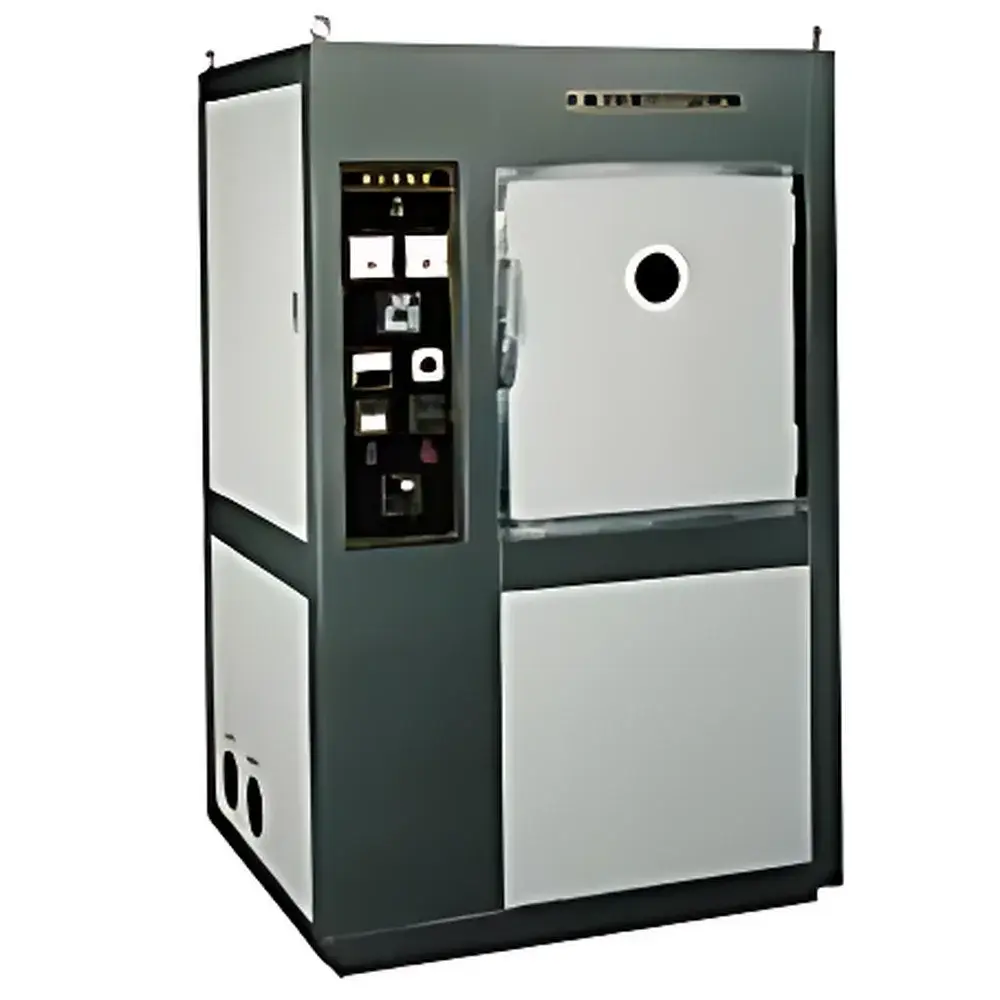
LabCompanion TMJ-9729 Xenon Arc Weathering Test Chamber
| Brand | LabCompanion |
|---|---|
| Origin | Guangdong, China |
| Manufacturer Type | Direct Manufacturer |
| Model | TMJ-9729 |
| Light Irradiance at 340 nm | 0.5 ± 0.05 W/m² |
| Broadband Irradiance (300–800 nm) | 60 ± 6 W/m² |
| Lamp Type | 6500 W Water-Cooled Xenon Arc Lamp |
| Filter Options | Borosilicate (267–800 nm) or Soda-Lime (300–800 nm) |
| Chamber Interior | SUS#304 Stainless Steel, Matte Finish |
| Airflow Velocity in Test Chamber | 1.5 m/s |
| Sample Capacity | ≥76 Standard Specimens (38 Aluminum Test Racks × 2 Layers) |
| Black Panel Temperature Range | 0.0–120.0 °C |
| UV/VIS Radiometer | ELSEC UV/VIS Transducer (290–400 nm, 0–200 W/m²) |
Overview
The LabCompanion TMJ-9729 Xenon Arc Weathering Test Chamber is an engineered environmental simulation system designed to replicate full-spectrum solar radiation—including ultraviolet (UV), visible, and near-infrared wavelengths—for accelerated weathering evaluation of materials. It operates on the principle of xenon arc irradiation, where a high-intensity 6500 W water-cooled xenon lamp generates spectral output closely matching natural sunlight when paired with appropriate optical filters (e.g., borosilicate or soda-lime). This enables standardized exposure testing per international protocols including ISO 4892-2, ASTM G155, SAE J2527, and IEC 60068-2-9. The chamber integrates precise control of irradiance (calibrated at 340 nm and broadband 300–800 nm), black panel temperature, relative humidity, and cyclic moisture events (including programmable rain cycles and dark periods), ensuring reproducible degradation profiles for polymers, coatings, textiles, automotive components, and packaging materials under controlled laboratory conditions.
Key Features
- High-stability 6500 W water-cooled xenon arc lamp with ≥2000-hour service life and integrated arc voltage protection circuitry
- Dual-filter configuration support: borosilicate outer/inner filters (267–800 nm) and soda-lime outer/quartz inner filters (300–800 nm), enabling compliance with multiple exposure standards
- SUS#304 stainless steel interior (1.0 mm thickness, matte finish) and exterior (powder-coated stainless steel) for corrosion resistance and long-term dimensional stability
- Programmable irradiance control with real-time feedback via calibrated ELSEC UV/VIS radiometer (traceable to NIST-equivalent calibration, 290–400 nm range)
- Touchscreen HMI interface supporting multi-parameter scheduling: irradiance setpoint, black panel temperature, humidity setpoint, rain duration/frequency, dark cycle timing, total exposure energy (kJ/m²), and cumulative test time
- Integrated air circulation system (stainless steel ducting) maintaining uniform airflow at 1.5 m/s across test specimen plane for thermal and irradiance homogeneity
- Dedicated cooling subsystem: reverse osmosis + activated carbon + resin-based ion filtration (60 L/h capacity), dual-stage heat exchangers, low-water cutoff, and overtemperature protection for lamp coolant loop
Sample Compatibility & Compliance
The TMJ-9729 accommodates up to 76 standard specimens (e.g., ISO 11341, ASTM D6695, or DIN 53387 formats) mounted on 38 aluminum test racks (two-layer design). Its cylindrical sample rotation assembly ensures uniform angular exposure, minimizing shadowing effects. All internal optical and thermal sensing elements—including black panel thermometer (BPT), humidity sensor, and irradiance transducer—are positioned per ISO 4892-2 Annex B requirements. The chamber’s construction and control architecture support GLP-compliant operation: audit-trail-enabled parameter logging, user-access-level management, and timestamped alarm history (including cause code and recovery status). It meets mechanical safety standards per IEC 61000-6-2/-4 and is compatible with facility integration for 21 CFR Part 11–compliant data archiving when paired with validated third-party LIMS or ELN platforms.
Software & Data Management
The embedded controller firmware provides real-time visualization of temperature, humidity, irradiance, voltage, current, and coolant parameters via trend graphs with selectable time scales (1 min to 30 days). Historical data are stored internally (≥30-day buffer) and exportable via USB to CSV format. Optional Ethernet connectivity supports Modbus TCP or OPC UA communication for centralized monitoring in industrial QA/QC environments. All setpoints, alarms, and operational logs are time-stamped with system clock synchronization (RTC-backed), satisfying traceability requirements for ISO/IEC 17025-accredited laboratories. Calibration records for the ELSEC radiometer and BPT sensor can be linked to individual test reports through manual metadata tagging.
Applications
This chamber is routinely deployed for: accelerated UV degradation assessment of automotive clearcoats and plastic trim; outdoor durability validation of architectural sealants and roofing membranes; photostability screening of pharmaceutical packaging under ICH Q1B guidelines; colorfastness evaluation of textile dyes per AATCC TM16; and weathering qualification of aerospace composite resins per ASTM D4329. Its spectral fidelity and environmental controllability make it suitable for comparative aging studies where correlation to field exposure (e.g., Arizona desert or Florida subtropical conditions) is required.
FAQ
What spectral filters are included as standard equipment?
Two filter sets are supplied: one borosilicate outer/inner pair (267–800 nm) and one soda-lime outer/quartz inner pair (300–800 nm).
Is the irradiance sensor NIST-traceable?
The ELSEC UV/VIS radiometer is factory-calibrated against reference standards traceable to national metrology institutes; certificate of calibration is provided with each unit.
Can the chamber operate unattended for extended durations?
Yes—integrated safety interlocks (coolant flow, lamp voltage, overtemperature, door switch) and auto-recovery logic enable continuous operation up to 1000 hours without intervention.
Does the system support automated rain cycling?
Yes—four precision nozzles deliver uniform spray distribution; pressure and duration are fully programmable within the HMI interface.
What maintenance intervals are recommended for the xenon lamp and filters?
Lamp replacement is advised after 2000 hours of operation; outer/inner filters should be inspected every 500 hours and replaced if visibly degraded or transmission drops >10% from baseline.




