
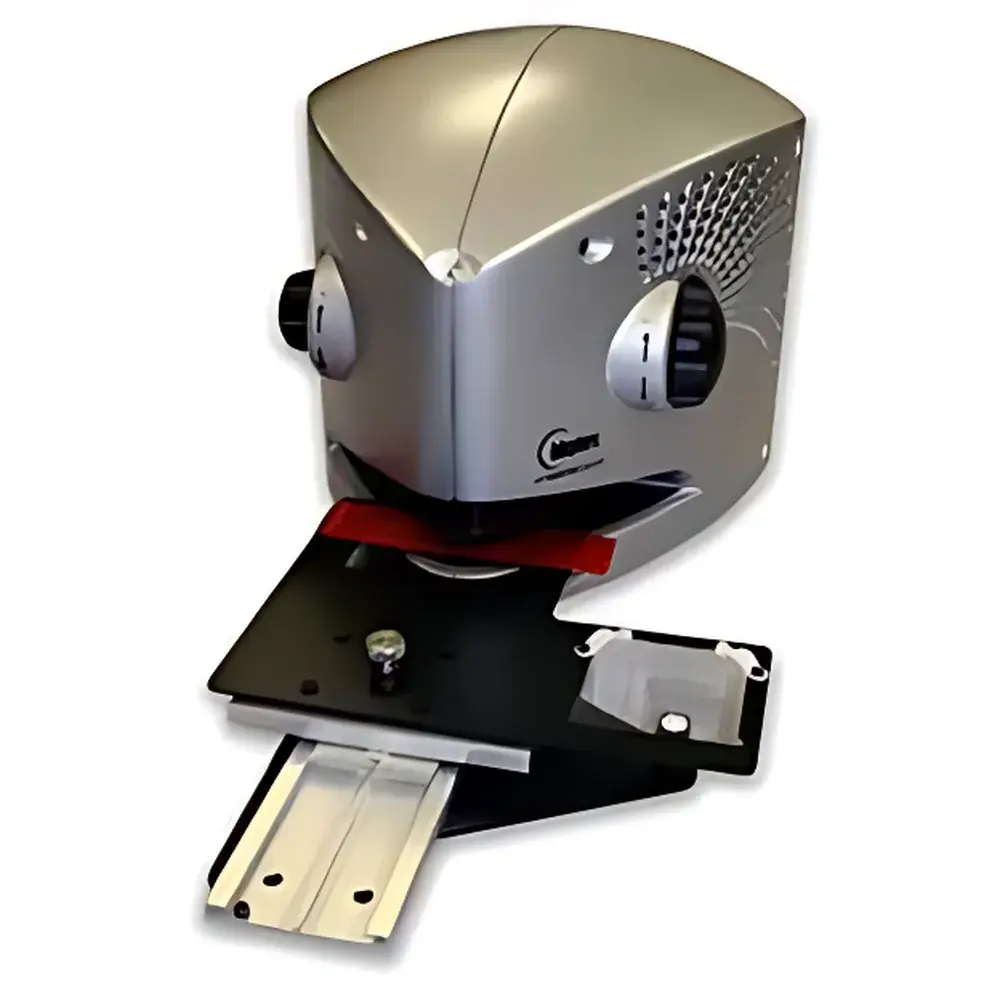
Labsphere UV-2000F UV Transmittance Analyzer for Textile UPF Testing
| Brand | Labsphere |
|---|---|
| Origin | USA |
| Model | UV-2000F |
| Instrument Type | Benchtop |
| Wavelength Range | 250–450 nm |
| Optical Resolution | ±1 nm |
| Measurement Area | 0.67 cm² |
| Dynamic Range | 2.7 AU |
| Light Source | Pulsed Xenon Flash Lamp |
| Detector | Custom Concave Holographic Grating Diode Array Spectrometer |
| Compliance Standards | AS/NZS 4399:2017, EN 13758-1:2007, AATCC TM183-2014, GB/T 18830:2009, JIS L 1096 & JIS L 1925 |
| Software Platform | Windows XP/7 Compatible, FDA 21 CFR Part 11–Ready Audit Trail Mode (Optional), GLP/GMP-Compliant Reporting |
Overview
The Labsphere UV-2000F UV Transmittance Analyzer is a purpose-engineered benchtop spectrophotometric system designed specifically for the quantitative assessment of ultraviolet protection factor (UPF) in textile materials. It operates on the principle of spectral diffuse transmittance measurement across the biologically relevant UV range (250–450 nm), enabling precise determination of UPF, critical wavelength (λc), and the UVA:UVB ratio — all in accordance with internationally harmonized test protocols. Unlike general-purpose UV transilluminators used in molecular biology, the UV-2000F integrates a calibrated optical architecture centered on a high-stability pulsed xenon flash source, a Spectralon®-coated integrating sphere, and a custom diode array spectrometer featuring a concave holographic grating. This configuration minimizes stray light, ensures wavelength fidelity (±1 nm), and delivers reproducible transmittance data under controlled illumination geometry — essential for regulatory-grade textile certification.
Key Features
- Optimized optical path incorporating a pulsed xenon flash lamp and Spectralon®-lined integrating sphere for uniform, low-heat diffuse illumination
- Custom diode array spectrometer with concave holographic grating — eliminating replication artifacts and delivering enhanced diffraction efficiency across 250–450 nm
- Fixed 0.67 cm² measurement aperture with motorized sample positioning stage for repeatable field-of-view registration
- Real-time dynamic range up to 2.7 absorbance units (AU), supporting both highly transparent and densely UV-blocking fabrics without manual gain adjustment
- Automated flash control with integrated exposure limiting filters to minimize photodegradation risk during repeated measurements
- Built-in self-diagnostic routines including spectral calibration verification, lamp energy monitoring, and detector linearity validation
- USB 2.0 interface with deterministic data transfer latency; no proprietary drivers required for Windows XP/7 host systems
Sample Compatibility & Compliance
The UV-2000F accommodates flat, non-stretch textile specimens up to 10 cm × 10 cm, mounted tautly over the measurement port using standardized clamping fixtures. Its optical design conforms to the collimated-beam + integrating sphere geometry specified in ISO 24442:2014 (equivalent to ASTM D6603), ensuring compliance with the foundational metrological requirements of all major UPF standards. The instrument is pre-configured with method templates aligned to AS/NZS 4399:2017 (Australia/New Zealand), EN 13758-1:2007 (Europe), AATCC TM183-2014 (USA), GB/T 18830:2009 (China), and JIS L 1096 (Japan) Annex E and JIS L 1925. Each unit ships with NIST-traceable wavelength and transmittance calibration standards, including a six-band spectral reference tile for on-site verification. Full traceability documentation supports GLP audits and ISO/IEC 17025 laboratory accreditation.
Software & Data Management
The UV-2000F Control Software provides a validated, menu-driven interface for method selection, parameter definition, and report generation. It supports dual-mode operation: standalone analysis with local storage or network-integrated deployment via shared folder or SQL-based repository. All raw spectra, intermediate calculations (e.g., weighted erythemal transmittance), and final UPF values are stored with immutable metadata — including operator ID, timestamp, environmental temperature/humidity (if external sensor connected), and calibration status flags. Audit trail functionality (enabled per FDA 21 CFR Part 11 requirements) logs every user action, parameter change, and report export event with digital signature capability. Export formats include CSV (for statistical process control), XML (for LIMS integration), and PDF/A-1b (archival-compliant reports with embedded spectral plots).
Applications
- UPF rating certification of sun-protective apparel, swimwear, and outdoor textiles per global regulatory frameworks
- R&D screening of UV-absorbing dyes, nanoparticle finishes (e.g., ZnO, TiO₂), and polymer matrix modifications
- Batch-to-batch quality control in high-volume textile manufacturing environments
- Validation of washing durability per AATCC TM183 Section 7.3 and EN 13758-2 Annex B
- Correlation studies between fabric construction parameters (yarn count, weave density, thickness) and spectral transmittance profiles
- Supporting technical documentation for OEKO-TEX® Standard 100 Class II/III UV claims and bluesign® system assessments
FAQ
Does the UV-2000F require annual recalibration by an accredited service provider?
No — the system includes built-in self-calibration routines and ships with NIST-traceable reference standards. However, laboratories operating under ISO/IEC 17025 must perform interval verification per their documented quality plan; Labsphere recommends quarterly performance checks.
Can the UV-2000F measure knitted or elastic fabrics without distortion artifacts?
Yes — the adjustable tension frame and low-pressure clamping mechanism maintain dimensional stability during measurement. For highly extensible samples, users may apply standardized pre-tension per EN 13758-1 Annex A.
Is spectral data export compatible with third-party chemometric software such as Unscrambler or MATLAB?
Yes — raw .CSV exports contain wavelength (nm) and %T columns at 0.5 nm intervals, fully compatible with standard multivariate analysis toolchains.
What is the minimum sample thickness the UV-2000F can accurately characterize?
The system is validated for specimens ≥0.1 mm thick. Ultra-thin films (<0.05 mm) may require backing support (e.g., quartz slide) to prevent sagging-induced scattering errors.
Does the software support multi-language UI localization?
The core interface is English-only; however, report templates and metadata fields accept Unicode input, enabling localized labeling of samples and operators within regulated environments.
Related Products



