
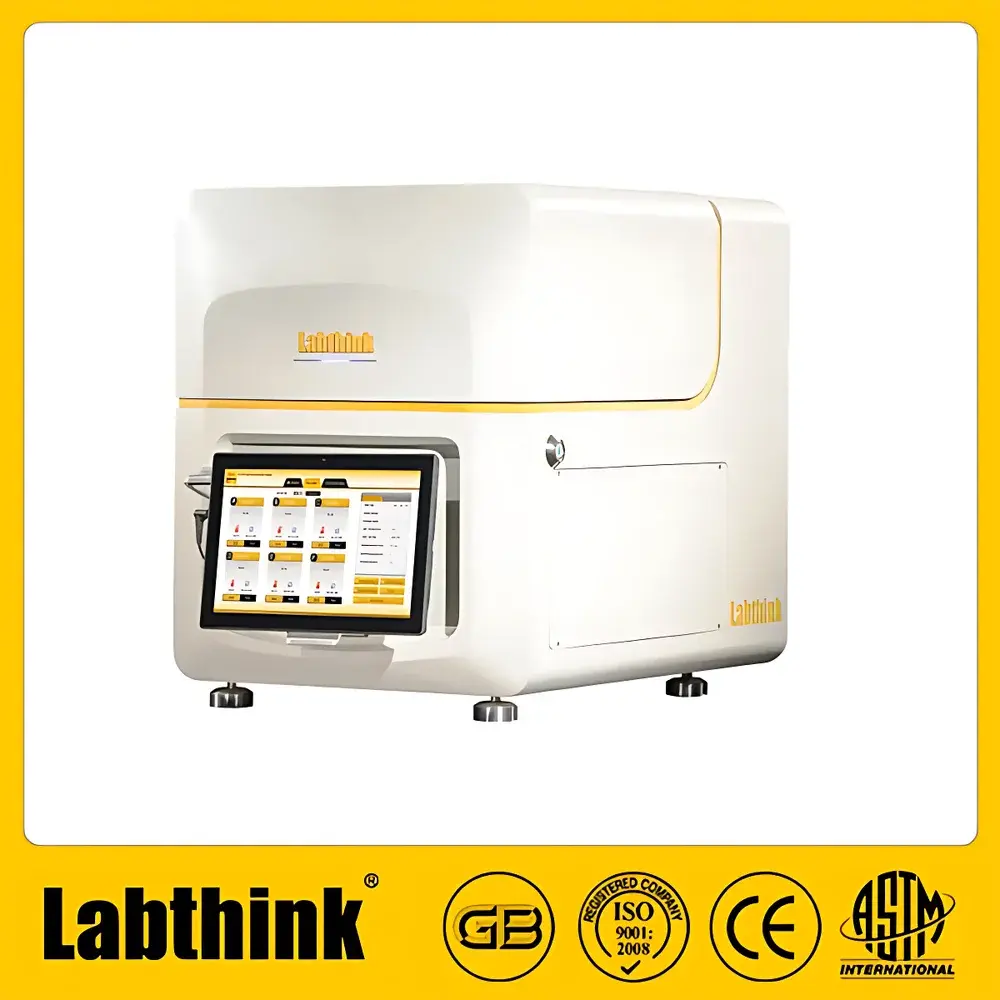
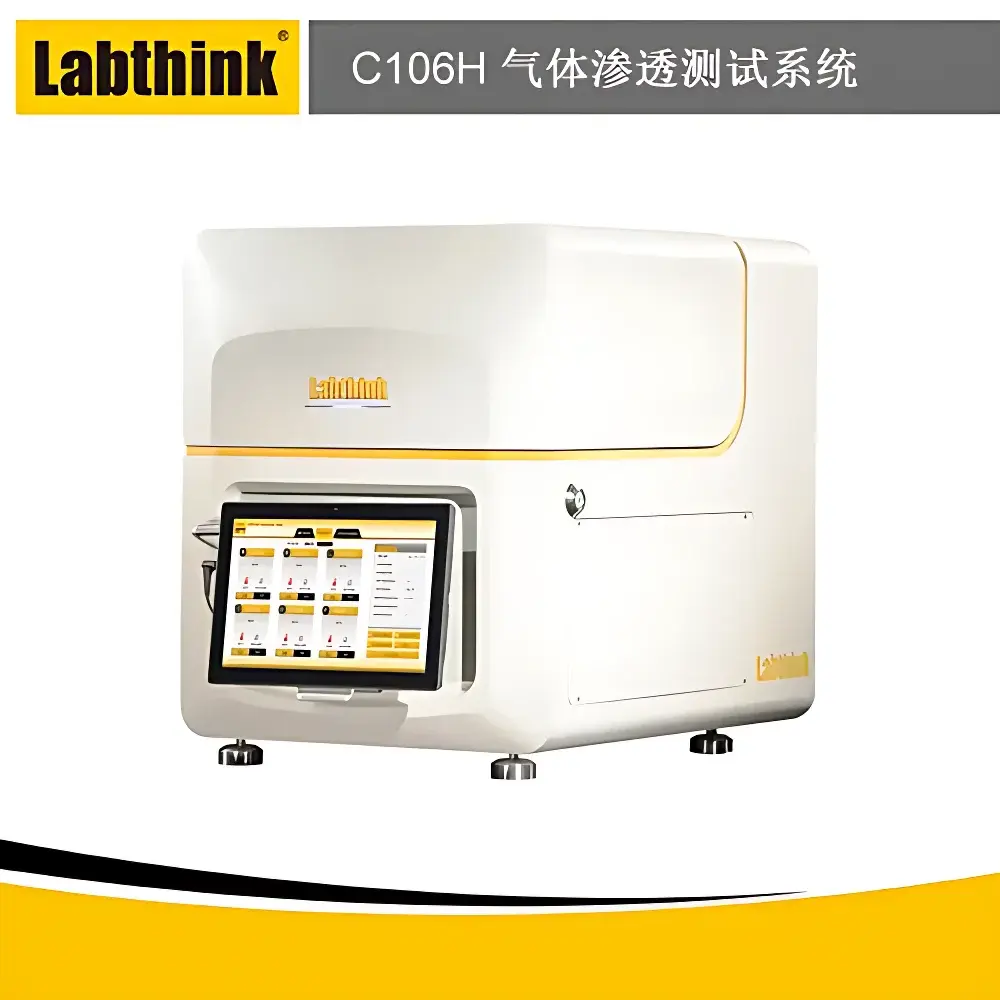
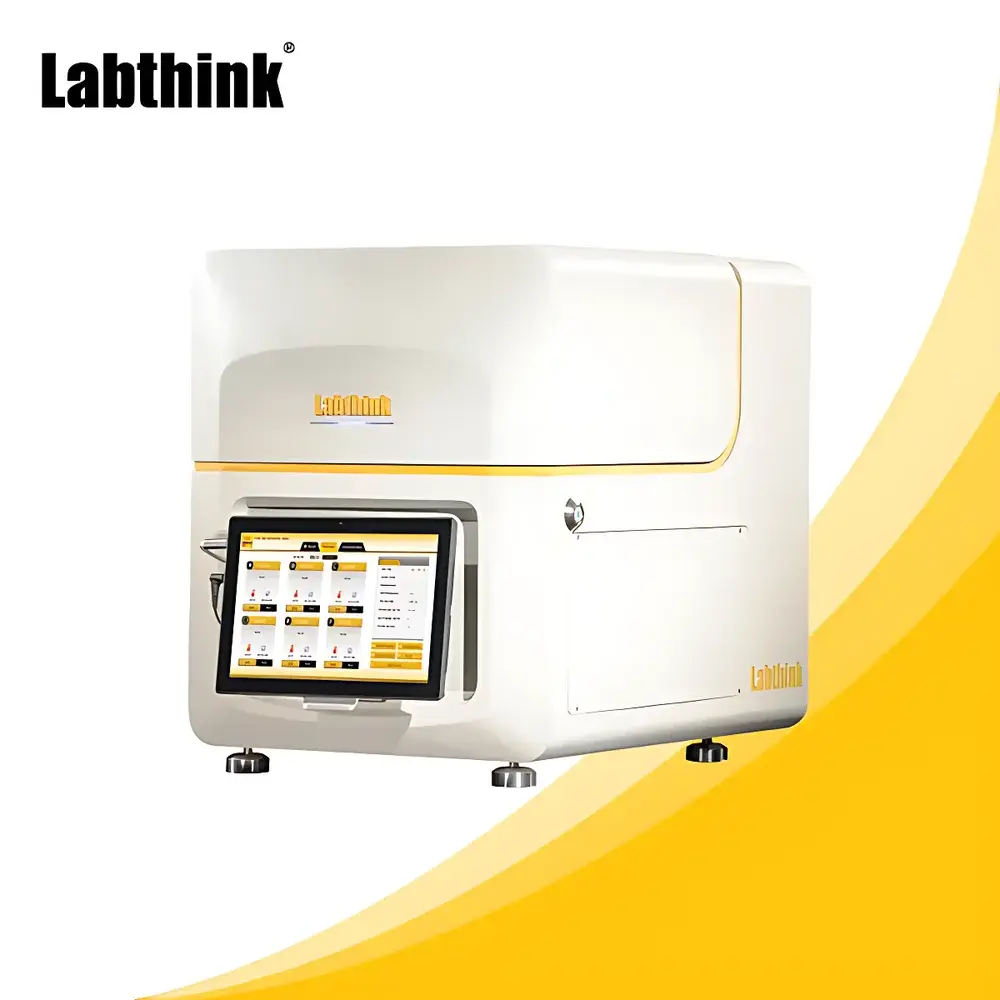
Labthink C106H Differential Pressure Gas Permeability Analyzer
| Brand | Labthink |
|---|---|
| Origin | Shandong, China |
| Manufacturer Type | Direct Manufacturer |
| Country of Origin | China |
| Model | C106H |
| Price Range | USD 14,000 – 98,000 |
| Test Principle | Differential Pressure (Manometric) Method |
| Standards Compliance | ISO 15105-1, ISO 2556, GB/T 1038-2000, ASTM D1434, JIS K7126-1, YBB 00082003 |
| Test Gases | O₂, N₂, CO₂ (H₂ and CH₄ available on custom configuration) |
| Measurement Range | 0.01–50,000 cm³/m²·24h·0.1MPa |
| Resolution | 0.001 cm³/m²·24h·0.1MPa |
| Temperature Range | 15–50 °C (5–60 °C optional) |
| Temp. Stability | ±0.15 °C |
| Vacuum Resolution | 0.01 Pa |
| Vacuum Accuracy | ±0.2% of reading (1–100% of sensor span) |
| Max. Vacuum Level | ≤10 Pa in test chamber |
| Pressure Control Range | 10–150 kPa (adjustable) |
| Pressure Stability | ±0.2 kPa |
| Sample Area | 38.48 cm² (11.2 cm × 11.2 cm) |
| Max. Sample Thickness | 3 mm |
| Chamber Count | 6 independent test chambers |
| Power Supply | 120 VAC ±10%, 60 Hz / 220 VAC ±10%, 50 Hz (user-selectable) |
| Net Weight | 100 kg |
| Dimensions | 600 × 490 × 660 mm |
Overview
The Labthink C106H Differential Pressure Gas Permeability Analyzer is an engineered precision instrument designed for the quantitative determination of gas transmission properties—including oxygen transmission rate (OTR), nitrogen transmission rate (NTR), carbon dioxide transmission rate (CO₂TR), as well as derived parameters such as permeability coefficient (P), diffusion coefficient (D), and solubility coefficient (S)—in flexible packaging materials. It operates on the differential pressure (manometric) principle, where a controlled pressure gradient is established across a conditioned specimen sealed between two isolated chambers. The high-pressure (upstream) chamber is pressurized with the test gas, while the low-pressure (downstream) chamber is maintained under high vacuum. Gas molecules permeate through the sample driven by the partial pressure difference; real-time monitoring of pressure rise in the downstream chamber enables calculation of gas flux using the ideal gas law and Fick’s first law of diffusion. This method is intrinsically traceable, highly reproducible, and fully compliant with international standards governing barrier property characterization in packaging R&D, quality control, and regulatory submission workflows.
Key Features
- Six independent, parallel test chambers—triple the capacity of conventional single- or dual-chamber systems—enabling statistically robust multi-sample evaluation under identical environmental conditions.
- Rainbow-bridge modular test cavity architecture with 360° circumferential air-circulation heating, ensuring uniform thermal distribution and temperature stability of ±0.15 °C across all chambers.
- Imported high-accuracy vacuum transducers (0.01 Pa resolution) and ultra-low-leakage pneumatic control system, delivering long-term sealing integrity and measurement repeatability critical for ultra-high-barrier materials (e.g., AlOx-coated PET, SiOx-laminates).
- Integrated vacuum pump (ultimate vacuum ≤0.2 Pa) with automated start/stop logic—eliminating manual valve operation and reducing operator intervention and energy consumption.
- Precision active pressure compensation technology maintains upstream pressure within ±0.2 kPa during extended tests, essential for accurate diffusion-controlled measurements at elevated pressures (10–150 kPa range).
- 12-inch Windows-based touchscreen HMI with intuitive workflow navigation, supporting both automated one-touch testing and advanced manual mode for method development and research-grade parameter tuning.
- Motorized sample clamping mechanism ensures consistent compressive load and hermetic seal across diverse material types—from thin polymer films (<12 µm) to rigid foils and laminates up to 3 mm thick.
Sample Compatibility & Compliance
The C106H accommodates flat, non-porous specimens including monolayer and multilayer plastic films (e.g., PE, PP, PET, PA, EVOH), metallized and oxide-coated substrates (Al foil, AlOx, SiOx), paper/plastic composites, rubber sheets, and rigid thermoplastic sheets (PVC, PVDC, PP). All test configurations adhere strictly to ISO 15105-1 (gas transmission rate determination), ISO 2556 (plastic films and sheets), ASTM D1434 (gas permeability of plastics), and Chinese national standard GB/T 1038-2000. Optional CFR 21 Part 11-compliant software modules support audit trails, electronic signatures, and role-based access control for GLP/GMP-regulated environments. Calibration protocols follow NIST-traceable reference standards, and system verification includes leak integrity checks per ASTM E438 and pressure decay validation per ISO 12083.
Software & Data Management
The embedded Windows OS hosts Labthink’s proprietary PermeationSuite™ software, providing full lifecycle data handling—from test setup and real-time curve visualization (transmission rate vs. time, permeability vs. temperature, Arrhenius plots) to automated report generation in PDF, CSV, and XML formats. Raw pressure-time datasets are timestamped and stored with metadata (operator ID, environmental logs, calibration history). The system supports scheduled calibration reminders, configurable pass/fail thresholds, and statistical analysis (mean, SD, CV%) across replicate chambers. Optional DataShield™ module adds encrypted local storage, tamper-evident logging, and export restrictions aligned with ISO/IEC 27001 data governance frameworks. Remote diagnostics and firmware updates are supported via secure HTTPS API endpoints.
Applications
This analyzer serves critical functions across packaging development, food/pharma shelf-life modeling, and regulatory compliance testing. Typical use cases include: evaluating OTR performance of retort pouches for sterilized meals; quantifying CO₂ permeability in modified atmosphere packaging (MAP) for fresh-cut produce; benchmarking barrier enhancement from nanocomposite additives; validating cold-form blister foil integrity for moisture-sensitive pharmaceuticals; and characterizing temperature-dependent diffusion kinetics in polymer blends used in medical device pouches. Its extended temperature range (5–60 °C) supports accelerated aging studies, while customizable gas modules enable safety-critical assessment of hydrogen permeation in fuel cell membrane substrates.
FAQ
What gases can be tested on the C106H?
Standard configurations support O₂, N₂, and CO₂. Custom variants are available for H₂, CH₄, and other non-corrosive gases upon request and subject to safety review.
Is the system suitable for testing ultra-high-barrier materials?
Yes—the combination of sub-0.01 Pa vacuum resolution, active pressure stabilization, and six-chamber redundancy ensures reliable quantification down to 0.01 cm³/m²·24h·0.1MPa, meeting requirements for metallized and ceramic-oxide barrier films.
Does the instrument comply with FDA 21 CFR Part 11?
Compliance is achieved via optional CFR 21 Part 11 software add-on, which includes electronic signature enforcement, audit trail generation, and user permission management.
Can humidity be controlled during testing?
Relative humidity control (5–90% RH ±2%) is available as a factory-installed option, enabling water vapor–gas interaction studies in hygroscopic polymers.
What maintenance is required for long-term accuracy?
Recommended annual calibration against certified reference films; quarterly verification of vacuum integrity and pressure sensor linearity; and routine replacement of vacuum pump oil and O-rings per manufacturer’s service schedule.







