
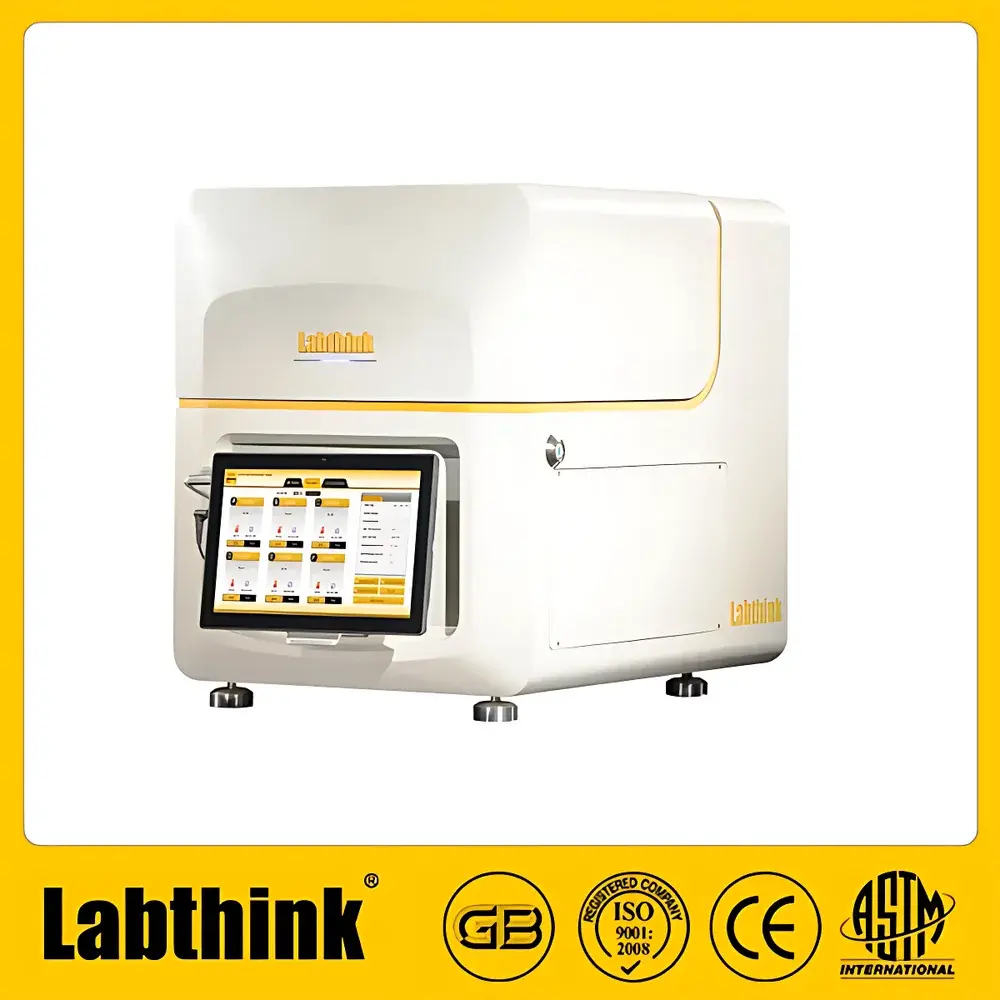
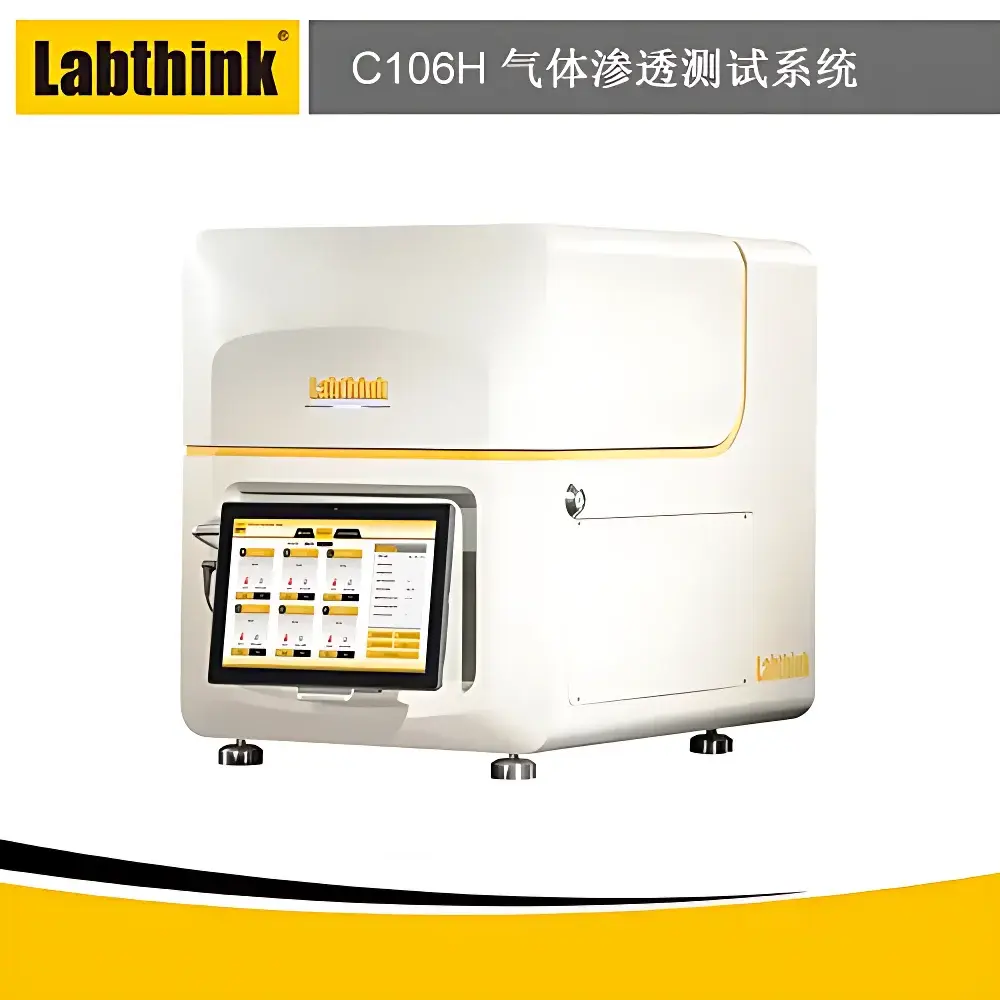
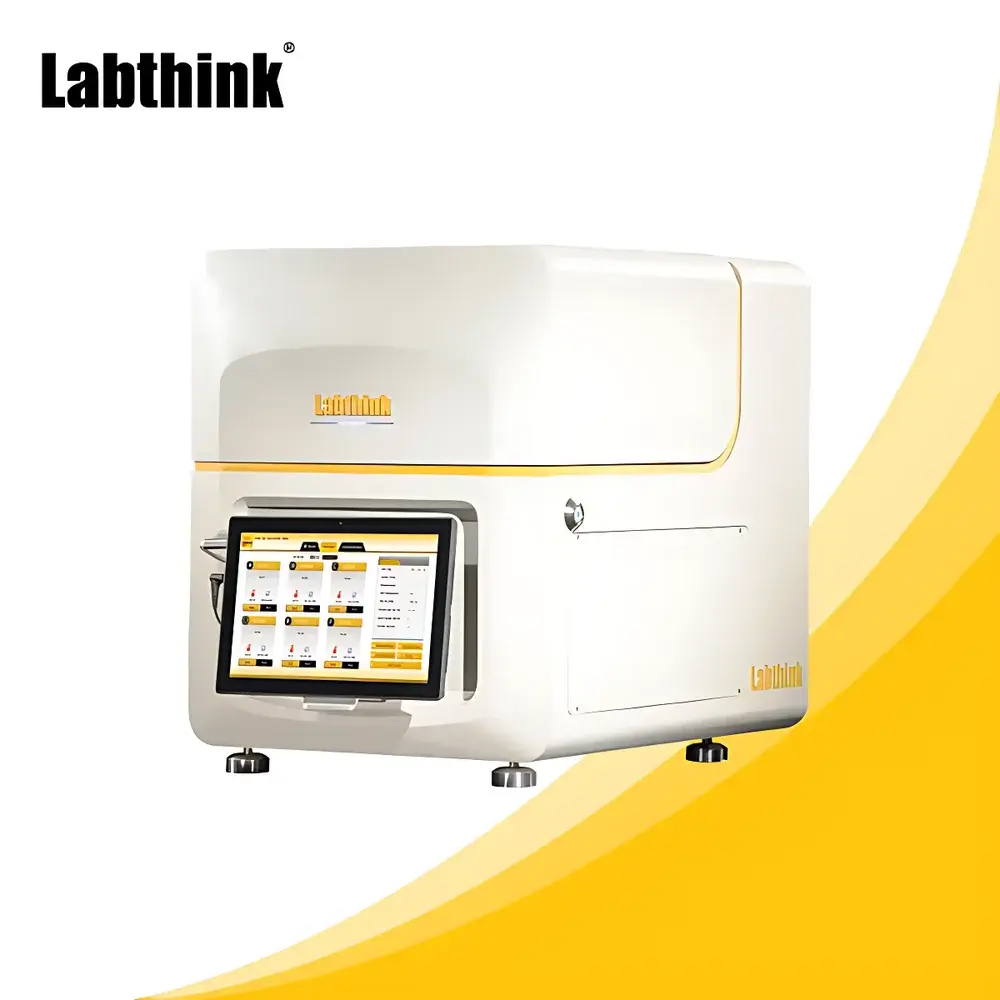
Labthink C106H Differential-Pressure Gas Permeability Tester
| Brand | Labthink |
|---|---|
| Origin | Shandong, China |
| Manufacturer Type | Direct Manufacturer |
| Country of Origin | China |
| Model | C106H Differential-Pressure Permeability Tester |
| Price Range | USD 14,000 – 98,000 |
| Test Principle | Differential-Pressure (Manometric) Method |
| Standards Compliance | ISO 15105-1, ISO 2556, GB/T 1038-2000, ASTM D1434, JIS K7126-1, YBB 00082003 |
| Test Gases | O₂, N₂, CO₂, He (customizable), H₂, CH₄ (hazardous gas option) |
| Temperature Range | 15–50 °C (standard) |
| Humidity Range | 0% RH (dry), 5–90% ±2% RH (optional) |
| Vacuum Resolution | 0.01 Pa |
| Vacuum Accuracy | ±0.2% of reading (1–100% of sensor span) |
| Test Chamber Vacuum Level | ≤10 Pa |
| Pressure Control Range | 10–150 kPa (adjustable) |
| Pressure Stability | ±0.2 kPa |
| Test Area | 38.48 cm² per chamber |
| Sample Size | 11.2 cm × 11.2 cm |
| Max Sample Thickness | 3 mm |
| Test Range | 0.01–50,000 cm³/(m²·24h·0.1MPa) |
| Resolution | 0.001 cm³/(m²·24h·0.1MPa) |
| Temperature Uniformity | ±0.15 °C |
| Temperature Resolution | 0.01 °C |
| Chamber Configuration | 6 independent test chambers |
| Power Supply | 120 VAC ±10%, 60 Hz OR 220 VAC ±10%, 50 Hz |
| Dimensions | 600 × 490 × 660 mm |
| Net Weight | 100 kg |
| Key Components | Imported high-precision vacuum transducer, imported pneumatic control system, imported vacuum pump (0.2 Pa ultimate vacuum), 12-inch Windows-based touch tablet |
Overview
The Labthink C106H Differential-Pressure Gas Permeability Tester is a precision-engineered instrument designed for the quantitative determination of gas transmission rates (GTR), permeability coefficients (P), diffusion coefficients (D), and solubility coefficients (S) in polymeric films, laminates, foils, and rigid sheets. It operates on the differential-pressure (manometric) principle—where a controlled pressure gradient is established across a conditioned specimen, and gas permeation is quantified by real-time monitoring of pressure rise in the evacuated downstream chamber. This method is standardized under ISO 15105-1, ASTM D1434, and GB/T 1038-2000, and is widely accepted for regulatory submissions in pharmaceutical packaging, food packaging, and barrier material R&D. Unlike sensor-based or coulometric methods, the C106H delivers absolute, calibration-free measurement traceable to SI units, making it suitable for GLP-compliant laboratories and validation protocols requiring audit-ready data integrity.
Key Features
- Six-Independent-Chamber Architecture: Six parallel, thermally isolated test chambers—each with standardized 38.48 cm² exposure area—enable concurrent, statistically independent measurements under identical environmental conditions, increasing throughput threefold versus conventional single- or dual-chamber systems.
- 360° Circulating Isothermal Control: Patented “Rainbow Bridge” chamber design integrates full-perimeter air circulation and PID-controlled heating/cooling to maintain temperature uniformity within ±0.15 °C across all chambers—even during extended high-barrier tests up to 8 hours.
- High-Fidelity Vacuum Metrology: Equipped with a calibrated, imported vacuum transducer (0.01 Pa resolution, ±0.2% accuracy over 1–100% span) and a high-speed vacuum pump achieving ≤0.2 Pa ultimate vacuum—ensuring reliable detection of ultra-low transmission rates down to 0.01 cm³/(m²·24h·0.1MPa).
- Dynamic Pressure Regulation: Closed-loop pneumatic control maintains upstream pressure between 10–150 kPa with drift <±0.2 kPa, enabling precise evaluation of pressure-dependent permeation behavior and compliance with variable-test-condition requirements in ASTM and ISO standards.
- Automated Sample Handling: Motorized clamping applies consistent compressive force across all six chambers, eliminating operator-induced seal variability; intelligent lid actuation includes audible/visual feedback and interlocked safety cutoffs.
- Modular Environmental Control: Optional humidity control (5–90% ±2% RH) and extended temperature range (5–60 °C) support testing under accelerated aging, tropical, or refrigerated storage conditions per ICH Q1 and USP <671>.
Sample Compatibility & Compliance
The C106H accommodates flat, non-porous specimens up to 3 mm thick—including biaxially oriented polypropylene (BOPP), ethylene-vinyl alcohol (EVOH) coextrusions, metallized PET, aluminum foil laminates, PVDC-coated paperboard, silicone elastomers, and ceramic-coated barrier films. Its 11.2 cm × 11.2 cm sample aperture ensures representative area coverage while minimizing edge effects. All test protocols are fully compliant with ISO 2556 (O₂ transmission), ISO 15105-1 (permeability coefficient calculation), ASTM D1434 (gas transmission rate), and YBB 00082003 (Chinese pharmaceutical packaging standard). For regulated environments, optional CFR 21 Part 11-compliant software modules provide electronic signatures, audit trails, and role-based access control—fully aligned with FDA, EMA, and PMDA expectations for computerized system validation.
Software & Data Management
Controlled via a dedicated 12-inch Windows-based touchscreen interface, the C106H’s embedded software supports both automated and expert modes. In Auto Mode, users input target temperature and pressure; the system executes vacuum conditioning, pressurization, data acquisition, and curve fitting without intervention. The software generates time-resolved permeation curves, calculates D, S, and P using Fickian and dual-mode sorption models, and exports reports in PDF, CSV, or XML formats. Raw pressure vs. time datasets are stored with full metadata (operator ID, timestamp, calibration log, environmental logs). Optional DataShield™ encryption and networked database integration enable centralized instrument fleet management and long-term archival per ALCOA+ principles (Attributable, Legible, Contemporaneous, Original, Accurate, Complete, Consistent, Enduring, Available).
Applications
- Pharmaceutical primary packaging: blister foil, cold-forming aluminum, PCTFE-coated push-through packs, and child-resistant barrier pouches.
- Food packaging R&D: evaluating shelf-life extension of modified atmosphere packaging (MAP), retort pouches, and stand-up pouches under varying O₂ and CO₂ partial pressures.
- Electronics encapsulation: quantifying helium leak rates in hermetic MEMS cavities and flexible OLED barrier stacks.
- Automotive & aerospace composites: assessing moisture vapor transmission through prepreg resins and adhesive interlayers.
- Academic research: studying temperature- and pressure-dependent sorption/diffusion kinetics in novel biopolymer films and nanocomposite membranes.
FAQ
What gases can be tested on the C106H?
The system is validated for O₂, N₂, and CO₂ using standard configurations. Helium testing is supported with optional hardware upgrades (leak-tight fittings, enhanced vacuum integrity verification). Hydrogen and methane testing require hazardous gas configuration packages—including explosion-proof solenoids, gas-specific calibration, and integrated purge protocols.
Is the C106H suitable for GMP-regulated environments?
Yes—when equipped with CFR 21 Part 11 software, electronic signature capability, and full audit trail functionality, the C106H meets GMP Annex 11 and EU GMP Annex 11 requirements for computerized system validation in pharmaceutical quality control labs.
How does the six-chamber design improve measurement reliability?
Each chamber operates independently with its own pressure sensor, temperature probe, and sealing mechanism—eliminating cross-talk and enabling statistical analysis (e.g., coefficient of variation across replicates) required by ISO 5725 and ICH Q2(R2) for method precision assessment.
Can the instrument operate at sub-ambient temperatures?
The base model supports 15–50 °C. A low-temperature option extends operation to 5 °C, enabling testing under refrigerated distribution conditions—critical for dairy, fresh produce, and biologics packaging validation.
What maintenance is required for long-term accuracy?
Annual recalibration of the vacuum transducer and pressure sensors is recommended. The pneumatic system requires no scheduled lubrication; the vacuum pump oil should be replaced every 3,000 operating hours. Labthink provides NIST-traceable calibration certificates and on-site service support globally.





