
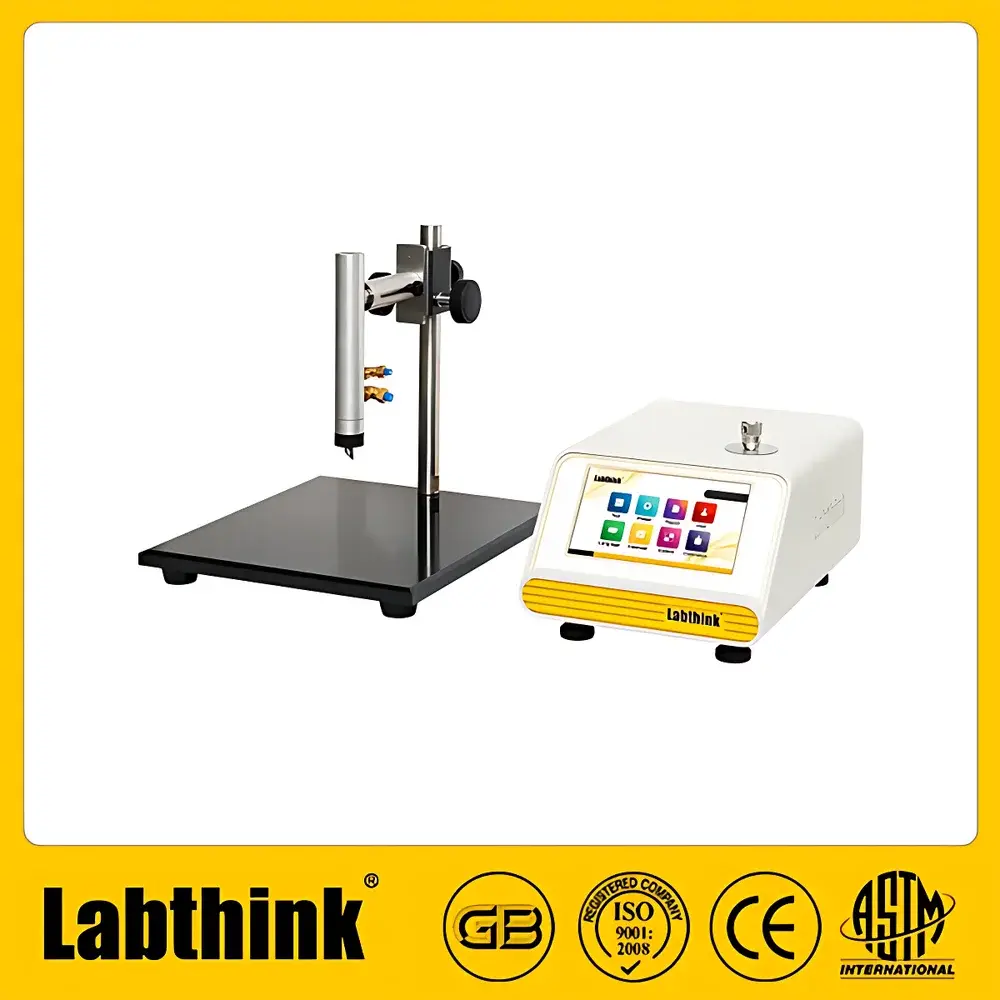
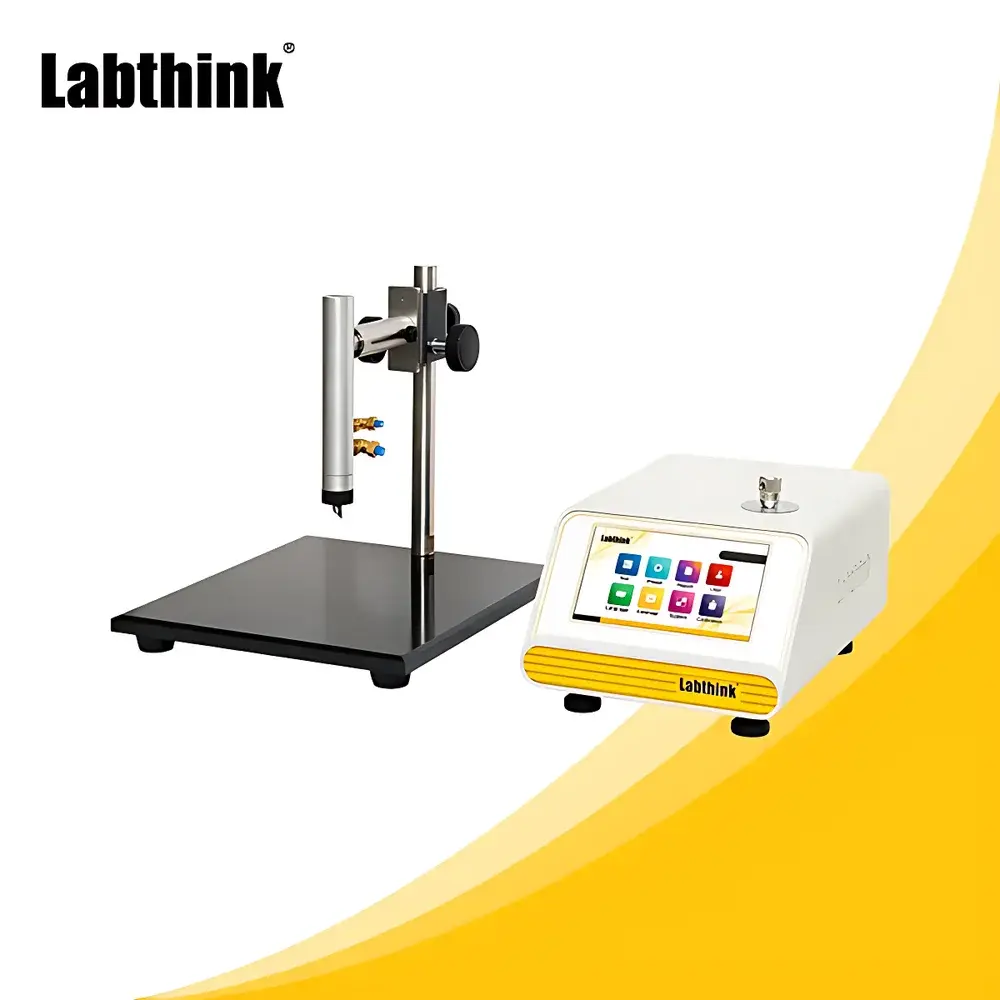
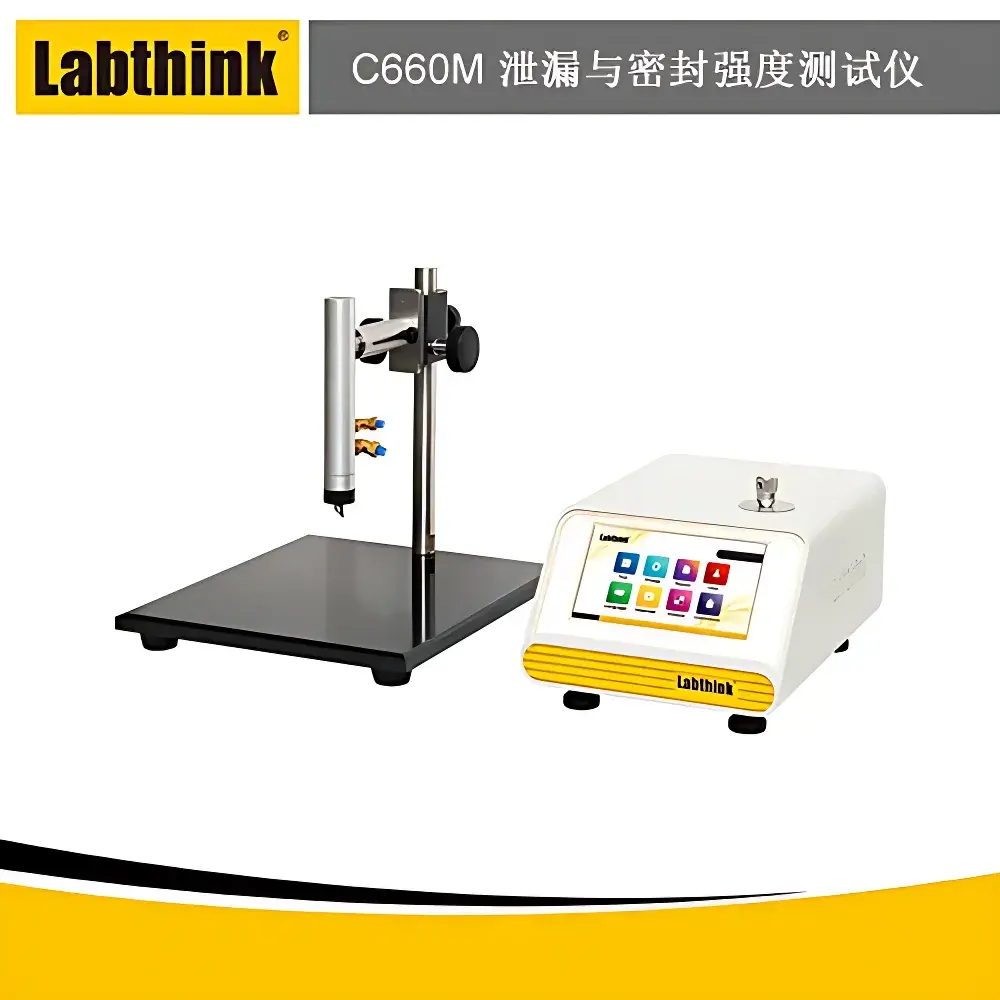
Labthink C660M Automated Positive-Pressure Seal Integrity & Burst Strength Tester
| Brand | Labthink |
|---|---|
| Origin | Shandong, China |
| Manufacturer Type | OEM Manufacturer |
| Model | C660M |
| Test Range | 0–600 kPa (standard) / 0–1.6 MPa (customizable) |
| Resolution | 0.1 kPa |
| Pressure Accuracy | ±0.25% FS |
| Inflation Flow Rate | 0.01–10 L/min |
| Hold Time | 0.1 s – 999999.9 s |
| Inflation Nozzle Diameter | Φ10 mm (standard), Φ4 mm / Φ1.6 mm (optional) |
| Air Supply Requirement | 0.6–0.7 MPa (87–101 psi), Φ8 mm polyurethane tubing |
| Dimensions (H×W×D) | 200 × 334 × 230 mm (main unit) |
| Power | 220 VAC ±10%, 50 Hz or 120 VAC ±10%, 60 Hz |
| Weight | 8 kg (unit), 16 kg (fixture) |
Overview
The Labthink C660M Automated Positive-Pressure Seal Integrity & Burst Strength Tester is an engineering-grade instrumentation platform designed for quantitative mechanical and hermetic performance evaluation of flexible packaging systems under controlled pressurization. It operates on the principle of regulated positive-pressure inflation—applying calibrated compressed air to the interior of sealed packages while continuously monitoring pressure, flow rate, and time-dependent deformation responses. This methodology enables direct measurement of seal strength, burst resistance, creep behavior, and leak integrity across a broad spectrum of package formats—including pouches, blister packs, tubes, aerosol valves, and capped containers. The system complies with internationally recognized test paradigms defined in ISO 11607-1/2 (packaging for terminally sterilized medical devices), ASTM F1140/F2054 (burst and creep testing of flexible barrier materials), and multiple Chinese national standards (GB/T 10440, GB 17447, YBB 00252005, etc.), making it suitable for R&D, quality control, and regulatory submission workflows in pharmaceutical, food, medical device, and consumer goods industries.
Key Features
- Multi-mode pressurization protocols: Supports burst testing, creep testing, creep-to-failure testing, and pressure-hold modes—each configurable with user-defined ramp rates, target pressures, and dwell durations.
- Dual expansion control architecture: Offers both expansion-suppressed and expansion-unrestricted test configurations via optional fixtures, enabling accurate differentiation between material yield and seal failure mechanisms.
- Real-time mass flow monitoring: Integrates high-precision thermal mass flow sensors to dynamically track inflow volume during pressurization—critical for reproducible creep analysis and leak quantification at elevated pressures.
- Industrial-grade touchscreen HMI: 7-inch capacitive display with intuitive icon-driven navigation, multi-language support (English/Chinese), customizable unit sets (kPa, psi, MPa), and password-protected user role management (operator, supervisor, administrator).
- Data integrity infrastructure: Onboard non-volatile memory stores up to 1200 test records with timestamp, operator ID, method parameters, and full pressure-time curves. Optional DataShield™ software enables centralized database synchronization, audit trail generation, and 21 CFR Part 11–compliant electronic signatures.
- Modular hardware scalability: Standard Φ10 mm inflation nozzle; optional micro-nozzles (Φ4 mm, Φ1.6 mm) for small-volume or high-aspect-ratio packages; expandable accessory kit supports blister, aerosol valve, and three-side-seal pouch configurations.
Sample Compatibility & Compliance
The C660M accommodates diverse sample geometries without mechanical modification: flat pouches (laminated film, foil, paper-based composites), cylindrical tubes (toothpaste, ointment, cosmetic), rigid-plastic containers with induction seals or snap-fit closures, aluminum aerosol cans with metered-dose valves, and thermoformed blister cavities. All test methods align with GLP and GMP documentation requirements. When equipped with validated firmware and optional computer system qualification packages, the instrument meets FDA 21 CFR Part 11 data governance criteria—including electronic record retention, change control logs, and user-access accountability. Reference compliance includes ISO 11607-1:2019 Annex D (seal strength validation), ASTM F1140-22 Section 7 (burst test procedure), and GB/T 10004-2008 Clause 6.6.2 (internal pressure resistance of composite films).
Software & Data Management
Built-in firmware provides real-time graphical visualization of pressure vs. time profiles during active tests, with automatic annotation of key events: onset of creep, inflection point, burst threshold, and pressure decay slope. Raw data exports in CSV format via USB port; optional Labthink proprietary software adds advanced statistical analysis (Weibull distribution fitting, confidence interval calculation per ASTM E2282), batch report generation, and trend charting across production lots. DataShield™ integration enables secure API-based transfer to LIMS or MES platforms, supporting automated release decisions and long-term stability trending. Audit trails record all parameter changes, user logins, calibration events, and test aborts—fully traceable for regulatory inspections.
Applications
- Flexible packaging validation: Quantifying heat seal strength of laminated pouches used in sterile medical device packaging per ISO 11607-2.
- Aerosol component verification: Measuring valve leakage rates and actuator retention force for pharmaceutical nasal sprays and topical dermatological formulations.
- Closure integrity assessment: Evaluating torque-dependent seal performance of child-resistant caps and tamper-evident bands on HDPE bottles.
- Tubular container qualification: Determining pinch resistance and cap detachment force for laminated aluminum tubes containing ophthalmic or dental pastes.
- Creep lifetime prediction: Generating time-to-failure datasets at sub-burst pressures to model shelf-life performance under ambient storage conditions.
- Material-level characterization: Deriving tensile modulus and yield stress equivalents from pressure-induced strain in unsupported film specimens using inverse modeling techniques.
FAQ
What pressure ranges does the C660M support?
Standard configuration covers 0–600 kPa (0–87 psi); extended-range version supports 0–1.6 MPa (0–232 psi) with reinforced pressure vessel and calibrated transducer.
Is external air supply required?
Yes—the instrument requires a clean, oil-free compressed air source delivering 0.6–0.7 MPa at the Φ8 mm polyurethane inlet port. An external air compressor is not included but can be procured as an optional accessory.
Can the C660M perform vacuum-based seal tests?
No—it is engineered exclusively for positive-pressure methodologies. For vacuum decay or bubble emission testing, Labthink’s VAC-VBS series is recommended.
How is calibration maintained?
The system features internal zero-point auto-calibration prior to each test sequence. Annual NIST-traceable pressure transducer calibration is advised; certified calibration certificates are available upon request.
Does the instrument meet pharmaceutical data integrity requirements?
When configured with DataShield™, audit trail logging, and electronic signature modules, the C660M satisfies ALCOA+ principles and supports full 21 CFR Part 11 compliance for electronic records and signatures in regulated environments.







