
Labthink C690B Vacuum Decay Leak Tester for Non-Destructive Package Seal Integrity Testing
| Brand | Labthink |
|---|---|
| Origin | Shandong, China |
| Manufacturer Type | Direct Manufacturer |
| Country of Origin | China |
| Model | C690B |
| Pricing | Upon Request |
| Test Principle | Vacuum Decay Method |
| Compliant Standards | ASTM F2338, YY/T 0681.18, USP <1207> |
| Detection Limit | ≤3 µm |
| Resolution | 0.1 µm |
| Repeatability | ±1 µm |
| Pressure Range | −100 to 0 kPa |
| Chamber Capacity | 1 unit, max sample size Φ45 mm × 80 mm |
| Gas Supply | Compressed air (user-supplied), ≥40.6 PSI (500 kPa) |
| Interface | Φ6 mm polyurethane tubing |
| Dimensions | 250 × 330 × 440 mm |
| Power | 120 VAC ±10%, 60 Hz / 220 VAC ±10%, 50 Hz (selectable) |
| Net Weight | 10 kg |
| Data Traceability | NIST-traceable pressure sensors |
| Software Compliance Options | 21 CFR Part 11 electronic signatures, GMP audit trail, multi-level user permissions |
Overview
The Labthink C690B Vacuum Decay Leak Tester is an engineered solution for quantitative, non-destructive seal integrity verification of rigid and semi-rigid packaging used across pharmaceutical, biotechnology, and food manufacturing sectors. It operates on the vacuum decay principle—a deterministic, pressure-based method recognized in ASTM F2338–22, USP , and YY/T 0681.18 for its high sensitivity, reproducibility, and suitability for regulatory submission. Unlike subjective dye ingress or bubble emission tests, the C690B measures minute pressure differentials over time within a sealed test chamber, enabling calculation of absolute leak rate (in standard cubic centimeters per minute, sccm) correlated to equivalent leak orifice diameter (e.g., ≤3 µm). This makes it especially appropriate for sterile barrier systems where integrity must be verified without compromising sterility—such as lyophilized drug vials, pre-filled syringes, blow-fill-seal containers, and retort pouches.
Key Features
- Vacuum decay methodology with NIST-traceable differential pressure sensors ensuring measurement stability and long-term calibration integrity
- Adjustable vacuum setpoint (−100 to 0 kPa) to accommodate diverse package geometries and material compliance characteristics
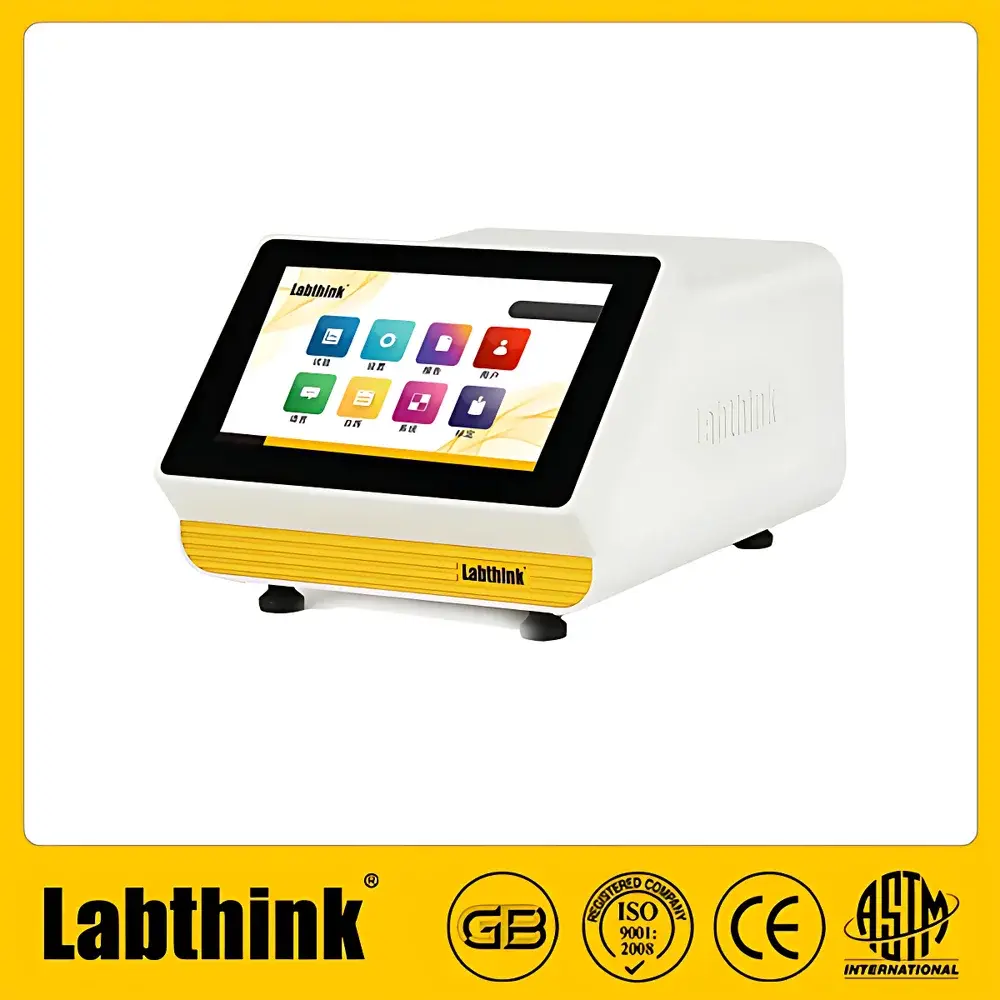
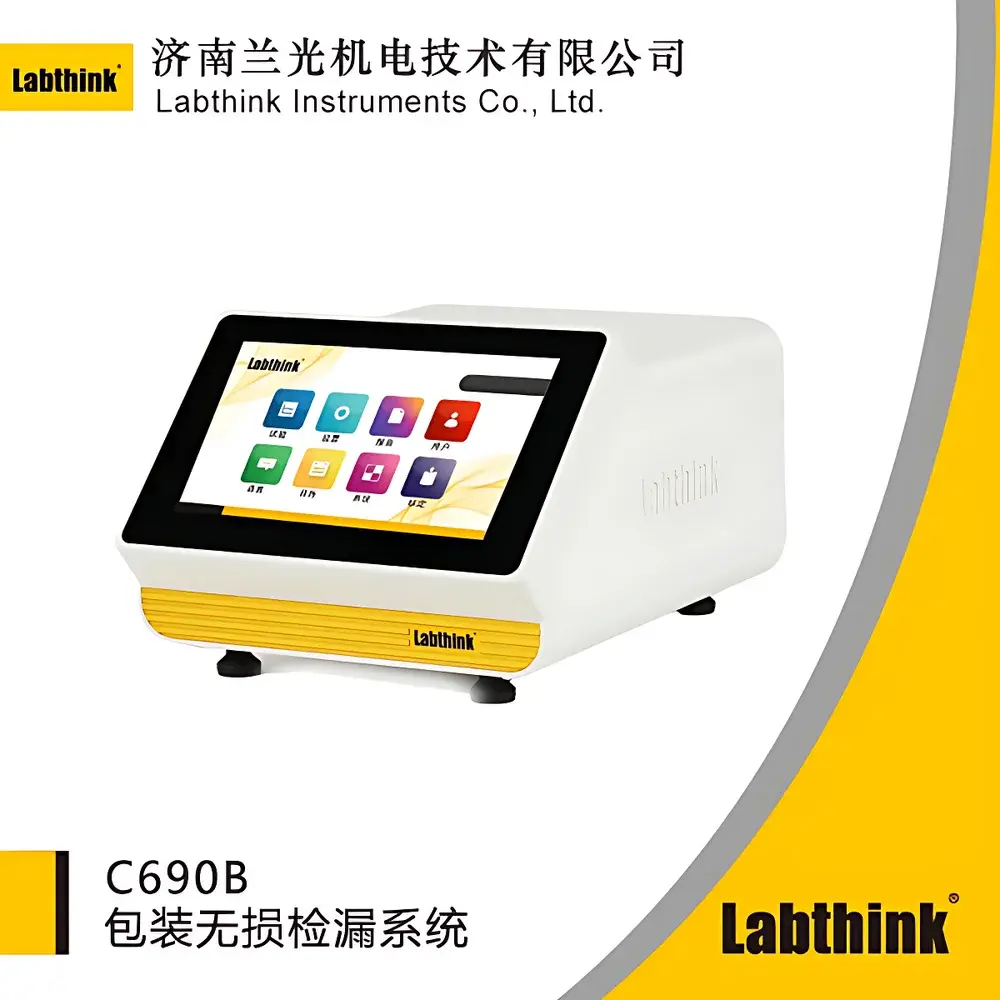
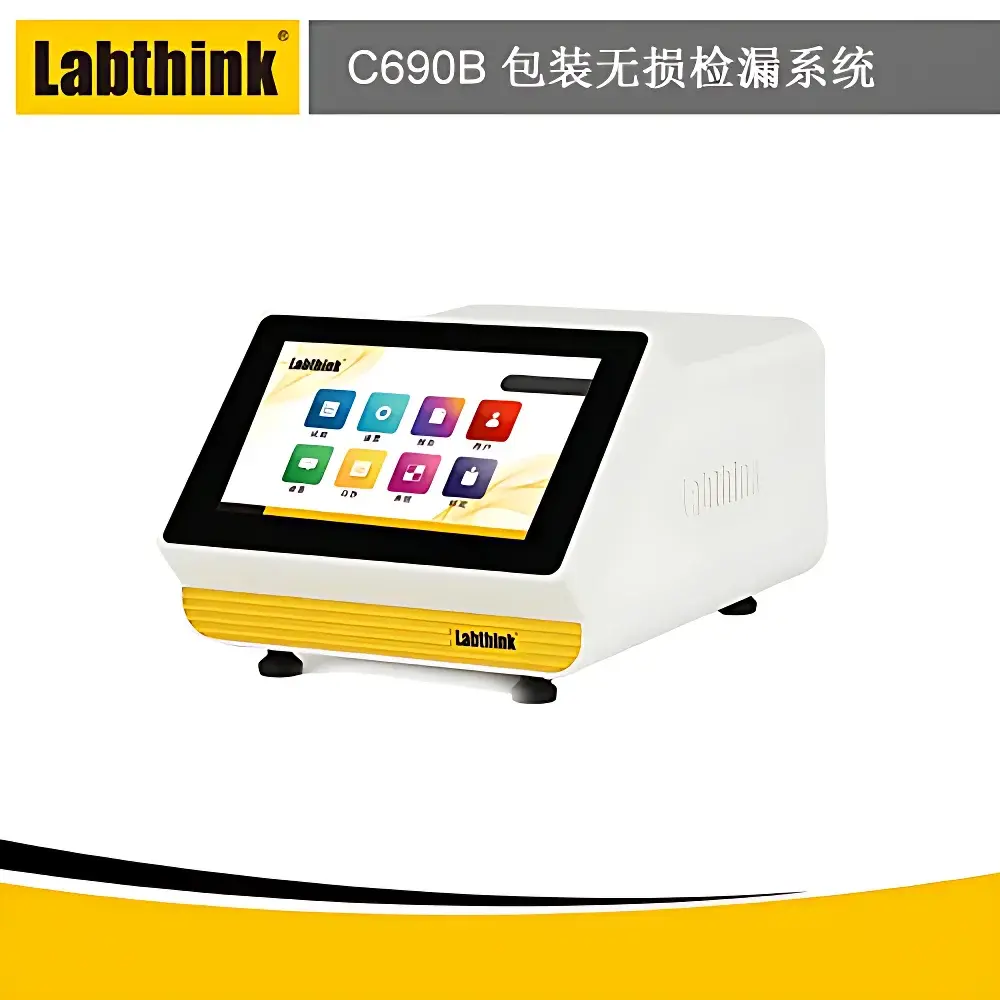
- Real-time pressure curve visualization on a 12.1-inch industrial-grade capacitive touchscreen with intuitive flat-layout UI
- Automated micro-flow control system that dynamically compensates for chamber volume and temperature drift, eliminating manual flow/pressure tuning
- Integrated data logging with timestamped test records, automatic leakage quantification, and power-loss recovery (auto-resume from last known state)
- Optional GMP-compliant software module supporting 21 CFR Part 11 requirements—including role-based user authentication, electronic signatures, and immutable audit trails
- Modular test chamber design with transparent acrylic enclosure for visual monitoring of sample deformation or valve actuation during vacuum application
Sample Compatibility & Compliance
The C690B accommodates single-unit samples up to Φ45 mm × 80 mm, including glass and polymer vials (e.g., serum, crimp-top, and flip-off types), ampoules, cartridge systems, blister cards, and flexible pouches. Its detection capability—validated against USP reference leaks—covers the critical range from nominal tightness (≥8 µm) down to sub-3 µm defects, aligning with container-closure integrity testing (CCIT) thresholds for sterile products. All hardware and firmware are designed to support GLP/GMP environments: pressure transducers are calibrated per ISO/IEC 17025, test reports include full metadata (operator ID, instrument ID, environmental conditions), and raw sensor data files are exportable in CSV format for third-party statistical analysis (e.g., SPC charts, capability studies).
Software & Data Management
The embedded test software provides full lifecycle data governance. Each test generates a structured report containing pressure vs. time curves, calculated leak rate (sccm), equivalent orifice diameter (µm), pass/fail status relative to user-defined limits, and environmental parameters (ambient temperature, humidity). Data are stored locally in encrypted SQLite databases with SHA-256 hashing; optional network integration enables centralized backup via FTP/SFTP. For regulated users, the validated GMP software add-on delivers full 21 CFR Part 11 compliance—including biometric or token-based sign-on, configurable permission tiers (Administrator, Technician, Reviewer), and tamper-evident audit logs recording all data modifications, method changes, or user logins.
Applications
- Pharmaceutical primary packaging: CCIT validation of lyophilization vials, pre-filled syringes, auto-injector cartridges, and IV bags
- Biotherapeutic containment: Leak screening of cold-chain transport shippers and dual-chamber delivery systems
- FDA-regulated food packaging: Seal evaluation of vacuum-sealed pouches, retort trays, and aseptic cartons subject to shelf-life claims
- Medical device packaging: Verification of Tyvek®-laminated trays and thermoformed blisters prior to sterilization release
- Method development & transfer: Generation of robust, platform-agnostic leak detection protocols suitable for tech transfer between QC labs and contract manufacturers
FAQ
What regulatory standards does the C690B comply with?
ASTM F2338–22, USP , YY/T 0681.18, and ISO 11607–2 for packaging validation.
Can the system detect leaks smaller than 3 µm?
The validated lower detection limit is ≤3 µm under controlled lab conditions using certified reference leaks per USP . Sub-micron detection requires complementary methods (e.g., helium mass spectrometry).
Is external compressed air required?
Yes—users must supply clean, dry, oil-free compressed air at ≥500 kPa (72.5 psi); a dedicated oil-free compressor is recommended for GMP use.
How is measurement traceability ensured?
All pressure sensors are factory-calibrated against NIST-traceable references, with calibration certificates provided; annual recalibration services are available.
Does the system support multi-user environments with audit logging?
Yes—the optional GMP software module provides full 21 CFR Part 11 compliance, including electronic signatures, role-based access, and immutable audit trails.




