
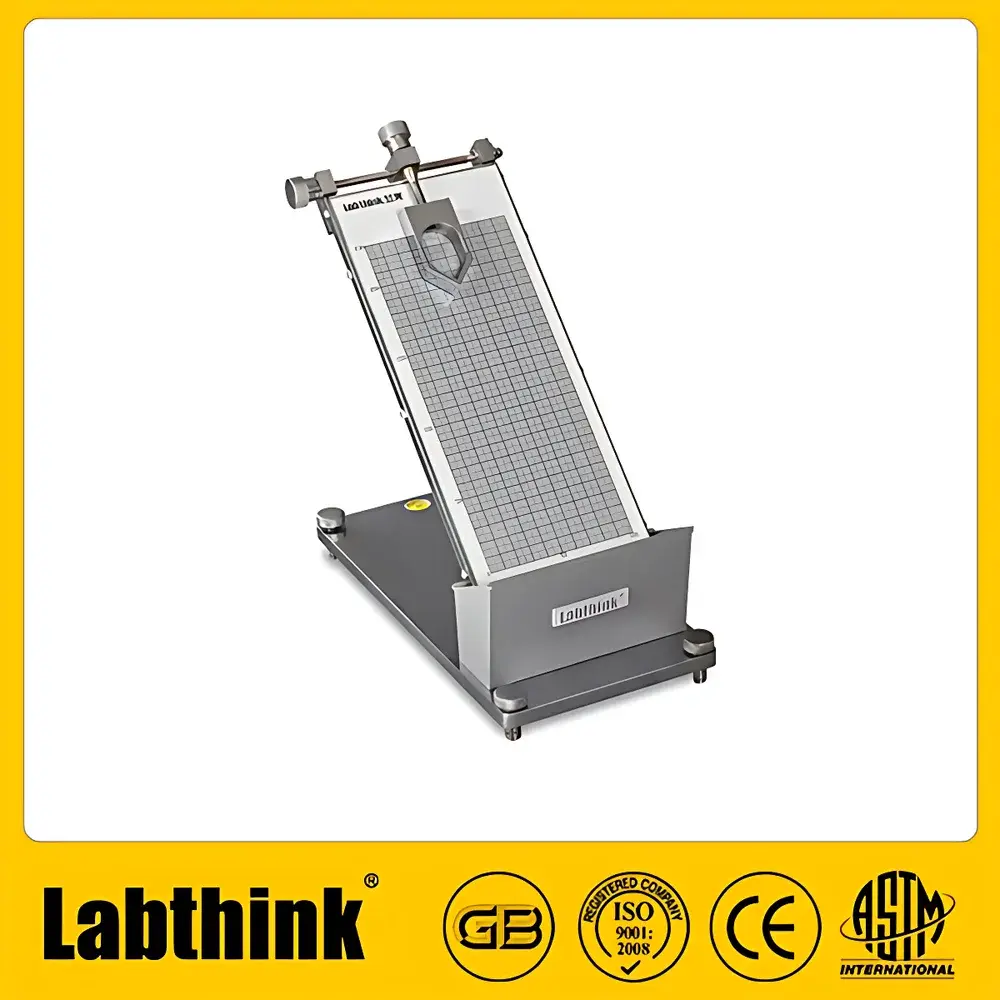
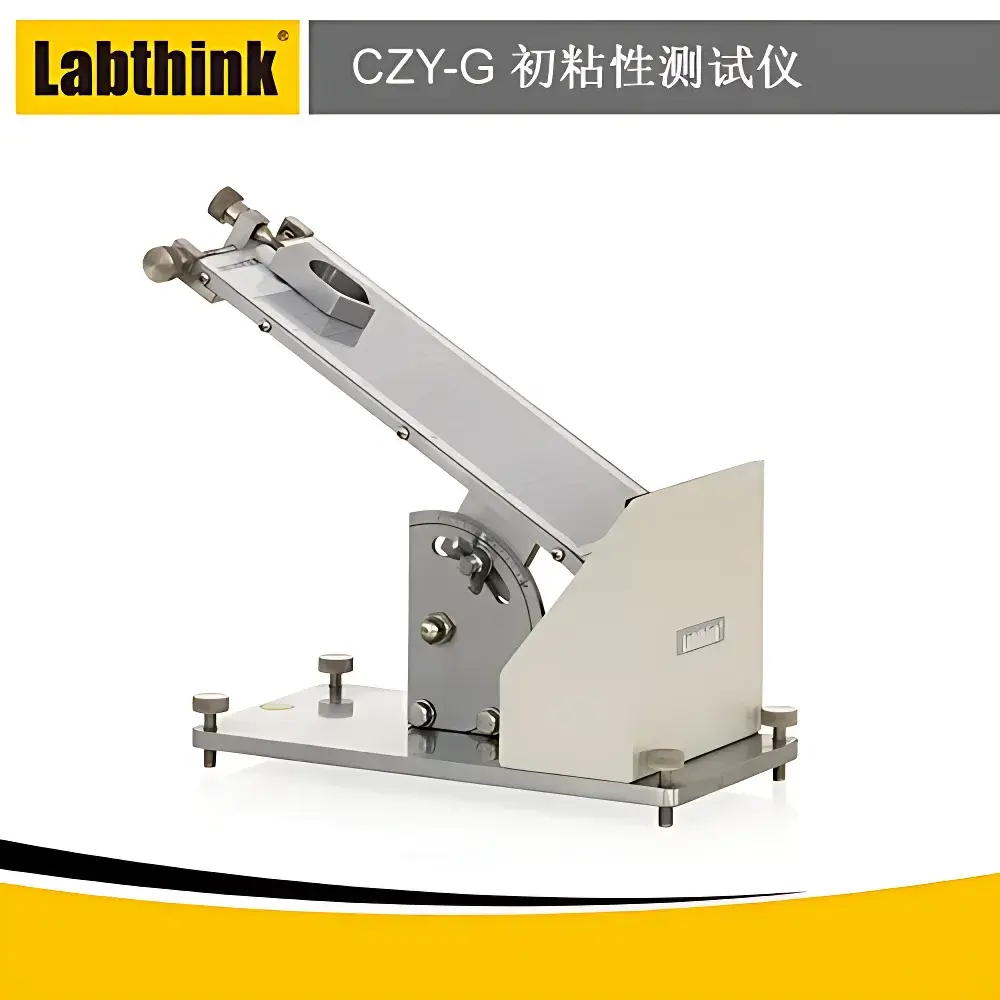
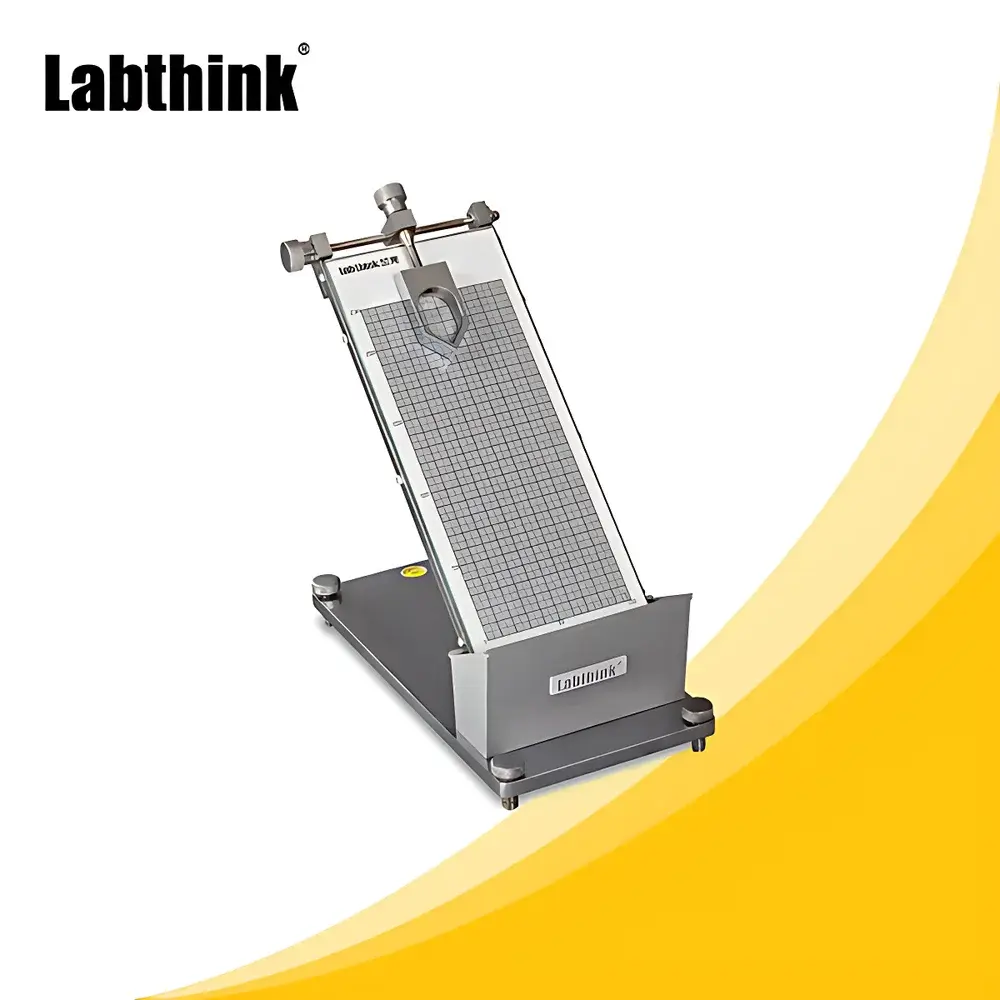
Labthink CZY-G Initial Adhesion Tester (Rolling Ball Method)
| Brand | Labthink |
|---|---|
| Origin | Shandong, China |
| Manufacturer | Labthink Instruments Co., Ltd. |
| Model | CZY-G |
| Adjustable Inclination Angle | 0–60° |
| Table Width | 120 mm |
| Test Zone Width | 80 mm |
| Standard Steel Balls | 1/32″ to 1″ (0.794 mm to 25.4 mm) |
| Dimensions (L×W×H) | 320 × 140 × 180 mm |
| Net Weight | 6 kg |
| Compliance Standards | GB/T 4852, JIS Z 0237 |
Overview
The Labthink CZY-G Initial Adhesion Tester is an engineered precision instrument designed for quantitative evaluation of the initial tack performance of pressure-sensitive adhesives (PSAs) using the standardized rolling ball method. It operates on the fundamental principle of controlled gravitational interaction between a calibrated steel ball and the adhesive surface under defined incline conditions—enabling reproducible measurement of the minimum energy required for instantaneous bond formation upon brief contact. This method is widely accepted in quality control laboratories across adhesive manufacturing, labeling, medical device, and electronics packaging industries, where rapid assessment of early-stage adhesion behavior directly correlates with real-world application reliability—such as label positioning accuracy, protective film removal consistency, or transdermal patch skin contact integrity.
Key Features
- Adjustable inclination mechanism enabling precise angular control from 0° to 60° in 1° increments, facilitating method optimization across diverse PSA formulations and substrate combinations.
- Test platform constructed from anodized aluminum alloy with high dimensional stability and surface flatness (< ±0.02 mm/m), ensuring consistent ball trajectory and minimizing mechanical deviation.
- Standardized steel ball set compliant with GB/T 4852 and JIS Z 0237 specifications—ranging from 1/32 inch (0.794 mm) to 1 inch (25.4 mm) diameter—with traceable calibration certificates available upon request.
- Dedicated test zone width of 80 mm accommodates standard specimen strips while maintaining lateral confinement to prevent ball drift during descent.
- Compact benchtop footprint (320 × 140 × 180 mm) and low net weight (6 kg) support flexible integration into ISO 17025-accredited labs, QC stations, or R&D environments without requiring structural reinforcement.
Sample Compatibility & Compliance
The CZY-G supports testing of a broad range of pressure-sensitive materials including acrylic, rubber-based, and silicone adhesives applied to backing substrates such as PET, PP, paper, foil, and release liners. Typical sample formats include adhesive tapes, self-adhesive labels (e.g., energy efficiency labels for household appliances), medical transdermal patches, protective films for display panels, and industrial masking tapes. All operational procedures align with internationally recognized standards: GB/T 4852–2002 “Test Method for Initial Tack of Pressure-Sensitive Adhesive Tapes by Rolling Ball Method” and JIS Z 0237:2019 “Methods of Test for Adhesive Tapes.” The instrument’s mechanical design and procedural workflow are compatible with GLP-compliant documentation practices and may be integrated into GMP-regulated environments when paired with validated SOPs and audit-ready recordkeeping protocols.
Software & Data Management
The CZY-G is a manually operated mechanical tester with no embedded microprocessor or digital interface—ensuring long-term operational reliability, zero firmware dependency, and immunity to software obsolescence. Test outcomes are recorded as pass/fail determinations based on observed ball stop position relative to pre-marked zones on the inclined plane. Users document results—including ball size, angle setting, substrate type, conditioning environment (temperature/humidity per ASTM D618), and operator ID—in laboratory notebooks or LIMS-integrated spreadsheets. This analog architecture simplifies 21 CFR Part 11 compliance pathways: all raw data remain human-readable, unaltered, and directly attributable, supporting straightforward audit trails during regulatory inspections or ISO 17025 accreditation assessments.
Applications
- Quality assurance of energy efficiency labels affixed to refrigerators, air conditioners, and washing machines—verifying resistance to slippage during transport and installation.
- Routine screening of label stock prior to high-speed rotary die-cutting and applicator integration in packaging lines.
- Formulation development support for PSA chemists evaluating tackifier-to-resin ratios, crosslink density effects, or solvent evaporation profiles.
- Comparative analysis of aging effects on initial tack after accelerated thermal/humidity exposure per ASTM D1876 (T-peel) or ISO 29337 (adhesive shelf-life modeling).
- Supplier qualification testing for medical-grade adhesive tapes used in wound care dressings and ECG electrodes—ensuring tactile responsiveness without excessive skin trauma upon removal.
FAQ
What standards does the CZY-G comply with?
The instrument is fully aligned with GB/T 4852–2002 and JIS Z 0237:2019 for rolling ball initial tack measurement.
Can the CZY-G be used for non-standard ball sizes?
Only certified steel balls conforming to the specified diameter range (1/32″ to 1″) and sphericity tolerance (≤0.1 µm) should be employed to maintain measurement validity and inter-laboratory comparability.
Is environmental conditioning required before testing?
Yes—specimens and balls must be conditioned at 23 ± 2°C and 50 ± 5% RH for ≥2 hours per ASTM D618 to minimize hygroscopic and thermal artifacts.
How is repeatability ensured across operators?
Standardized training on specimen mounting tension (10 N ± 0.5 N), ball release technique (zero initial velocity), and endpoint interpretation (first full stop within test zone) minimizes inter-operator variability.
Does Labthink provide validation documentation?
Yes—installation qualification (IQ), operational qualification (OQ), and user-defined performance qualification (PQ) templates are available upon request to support regulatory submissions and internal quality system requirements.



