
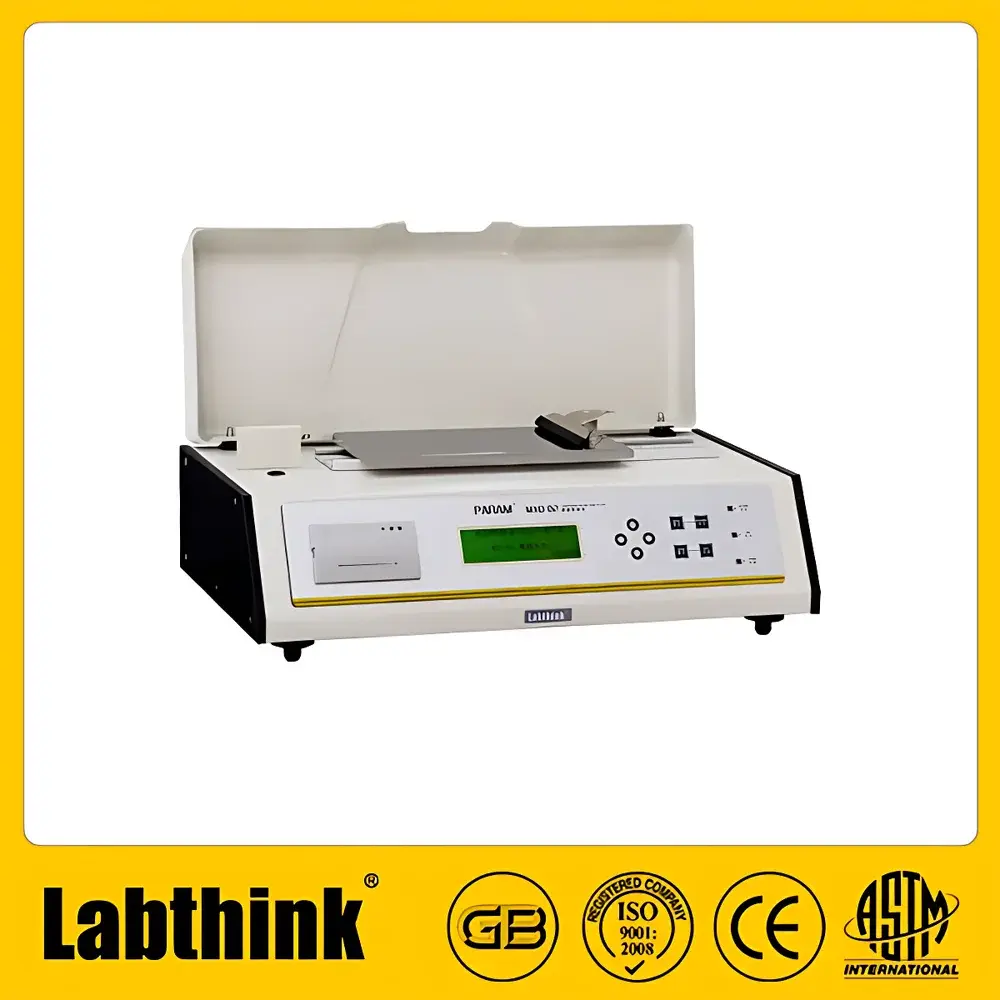
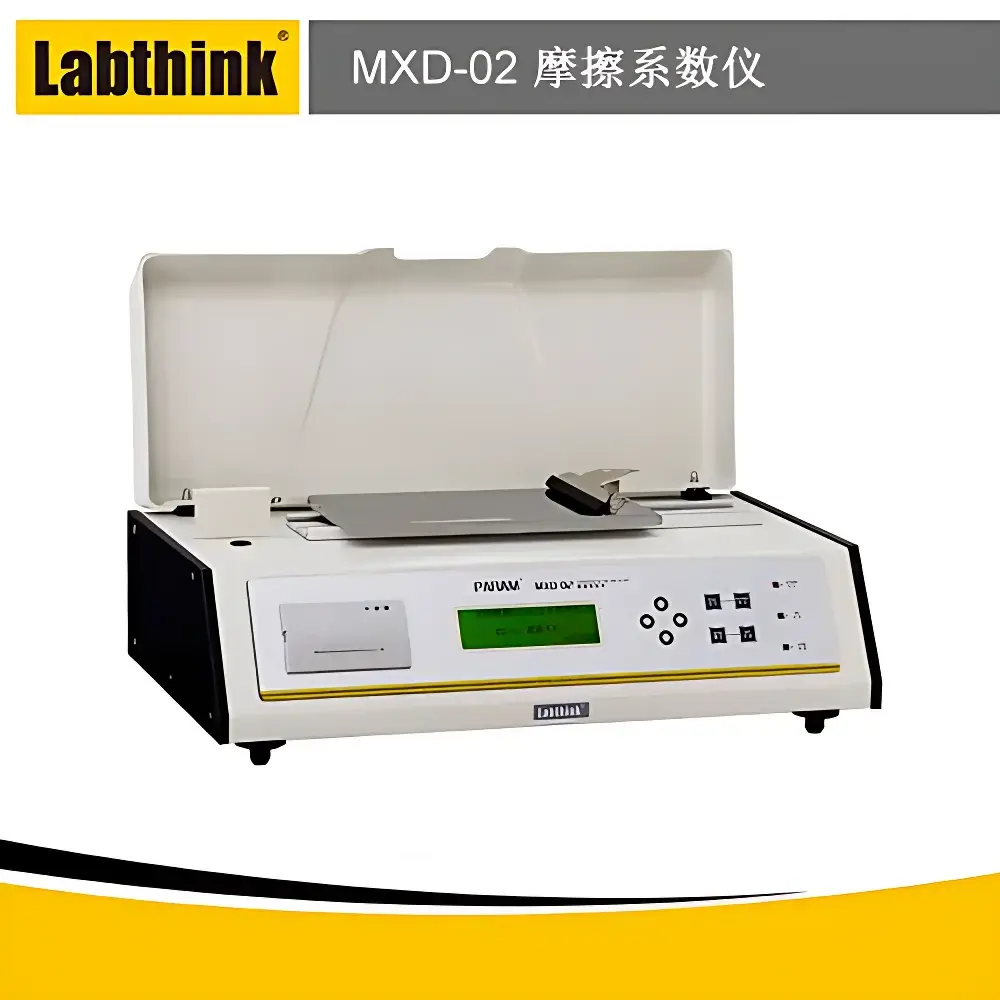
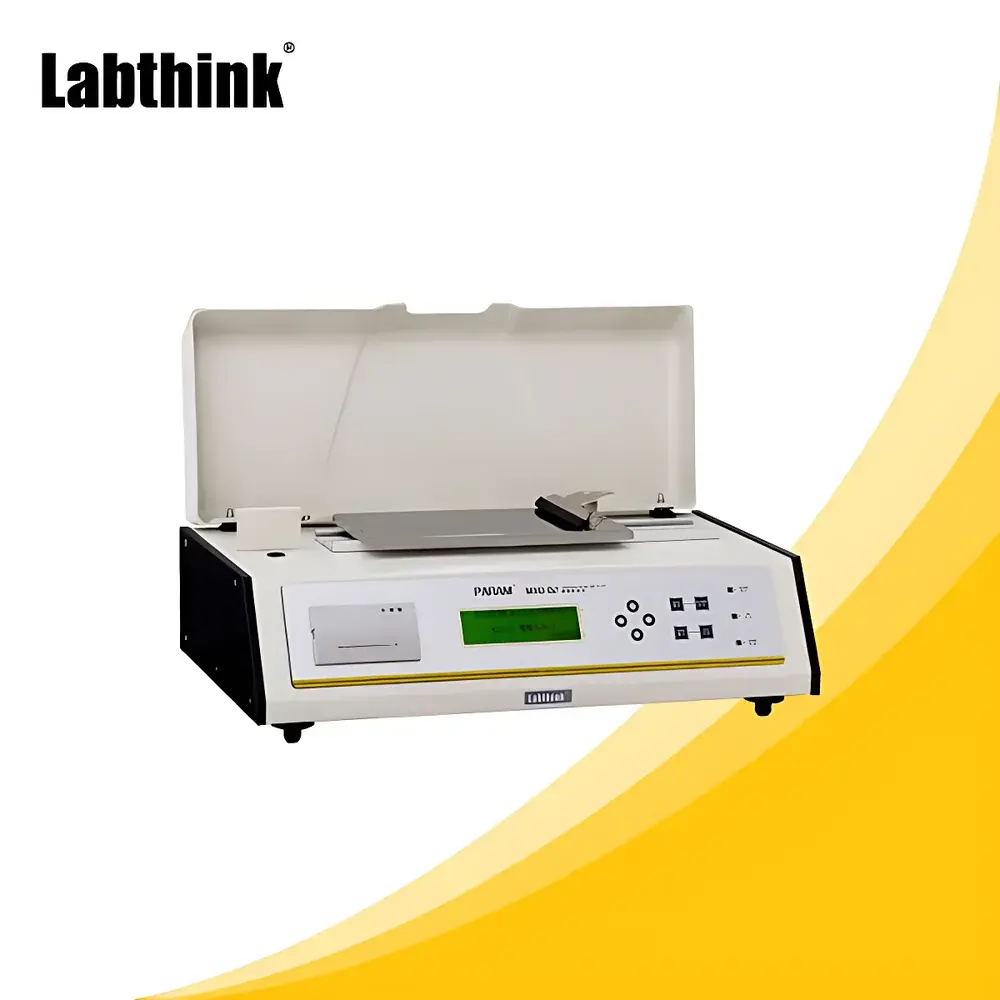
Labthink MXD-02 Coefficient of Friction Tester for Metallic Foils and Surface Slip Characterization
| Brand | Labthink |
|---|---|
| Origin | Shandong, China |
| Manufacturer Type | Direct Manufacturer |
| Origin Category | Domestic (China) |
| Model | MXD-02 |
| Price Range | USD 1,400 – 8,500 |
| Load Range | 0–5 N |
| Accuracy Class | 0.5 |
| Travel Distance | 70 mm / 150 mm |
| Standard Sled Mass | 200 g |
| Adjustable Test Speeds | 100 mm/min, 150 mm/min |
| Environmental Conditions | 23±2°C, 20–70% RH |
| Power Supply | 220 VAC 50 Hz / 120 VAC 60 Hz |
| Dimensions (L×W×H) | 630×360×230 mm |
| Net Weight | 33 kg |
| Compliance Standards | ISO 8295, GB 10006, ASTM D1894, TAPPI T816 |
Overview
The Labthink MXD-02 Coefficient of Friction Tester is a precision-engineered instrument designed for the quantitative determination of static (μs) and kinetic (μk) coefficients of friction in accordance with internationally recognized tribological test protocols. Based on the horizontal plane inclined-angle and constant-velocity sled-drag principle, the MXD-02 applies controlled normal force and measures tangential resistance during relative motion between two material surfaces—typically a standardized sled and a flat specimen substrate. This method delivers high reproducibility for evaluating surface slip behavior critical to packaging integrity, processing efficiency, and end-use performance. The instrument is widely deployed in R&D laboratories, quality control departments, and regulatory compliance units across packaging, polymer, paper, automotive, medical device, and personal care industries—where surface lubricity, handling consistency, and interfacial stability directly impact manufacturability and user experience.
Key Features
- Simultaneous dual-mode measurement: single-test acquisition of both static and kinetic friction coefficients under programmable load conditions (0–5 N, Class 0.5 accuracy)
- Modular sled system: standard 200 g stainless-steel sled included; optional calibrated masses (e.g., 500 g) available for application-specific normal force scaling
- Adjustable linear translation: two preset travel distances (70 mm and 150 mm) accommodate varying material response kinetics and ASTM/ISO-defined test lengths
- Digitally regulated speed control: fixed operational speeds at 100 mm/min and 150 mm/min; custom velocity profiles supported via firmware configuration
- Electromagnetically neutralized test platform: all contact surfaces—including sled base and stage—undergo certified demagnetization and residual magnetism verification (<0.2 mG) to eliminate parasitic force interference
- Dedicated microprocessor architecture: embedded controller with PVC membrane keypad and backlit LCD display enables standalone operation without external PC dependency
- High-integrity component sourcing: load cell, stepper motor, position encoder, and signal conditioning modules sourced from Tier-1 industrial suppliers for long-term metrological stability
Sample Compatibility & Compliance
The MXD-02 accommodates rigid and flexible planar specimens up to 100 mm × 100 mm, including metallic foils (Al, Cu, laminated composites), polymer films (BOPP, PET, PE, CPP), coated papers, rubber sheets, textile substrates, cable shielding tapes, conveyor belt materials, and elastomeric components (brake pads, wiper blades, footwear soles). It supports direct evaluation of consumer-facing interfaces such as ophthalmic solution vial caps, cosmetic tube interiors, and dermal applicator surfaces. All mechanical and data acquisition procedures comply with ISO 8295 (Plastics — Determination of coefficient of friction), GB/T 10006 (Chinese national standard for plastic film friction), ASTM D1894 (Standard Test Method for Static and Kinetic Coefficients of Friction of Plastic Film and Sheeting), and TAPPI T816 (Friction of Paper and Paperboard). Instrument validation documentation includes traceable calibration certificates and uncertainty budgets aligned with ISO/IEC 17025 requirements.
Software & Data Management
The optional Lystem™ Laboratory Data Sharing System provides full audit-trail capability compliant with FDA 21 CFR Part 11 and GLP/GMP data integrity principles. It enables automated statistical analysis—including mean, SD, CV%, confidence intervals—and comparative overlay of multi-group friction curves across timepoints or formulation batches. Raw force-time datasets are exportable in CSV and XML formats; report templates adhere to internal SOPs or external regulatory submission structures (e.g., ICH M4). Real-time synchronization via RS232 serial interface ensures seamless integration into centralized LIMS environments. All software modules undergo annual cybersecurity assessment and version-controlled release management per ISO/IEC 27001 guidelines.
Applications
- Packaging development: optimizing sealant layer slip for high-speed vertical form-fill-seal (VFFS) lines
- Pharmaceutical packaging: verifying peel-force consistency of blister lidding foils and child-resistant closures
- Automotive interior trim: quantifying tactile glide of dashboard overlays and seat fabric interfaces
- Medical device manufacturing: assessing catheter shaft lubricity and syringe plunger drag characteristics
- Personal care product design: characterizing dispensing resistance of squeeze-tube orifice seals and pump actuator interfaces
- Academic tribology research: generating fundamental μs/μk datasets for structure–property modeling of nanocomposite coatings
FAQ
What standards does the MXD-02 support out-of-the-box?
The instrument implements ISO 8295, GB/T 10006, ASTM D1894, and TAPPI T816 test routines natively via firmware; additional protocols may be enabled through software configuration.
Can the MXD-02 measure friction under elevated temperature or humidity?
No—the system operates within ambient environmental specifications (23±2°C, 20–70% RH); for non-standard climatic testing, integration with external environmental chambers requires third-party mechanical adaptation and recalibration.
Is the 200 g sled interchangeable with other masses without recalibration?
Yes; the load cell and control algorithm automatically compensate for mass-induced normal force changes, provided sleds are certified for dimensional and magnetic neutrality per Labthink’s accessory certification protocol.
Does the system support 21 CFR Part 11-compliant electronic signatures?
Only when operated with the Lystem™ software suite and configured with role-based access controls, digital certificate authentication, and immutable audit-log archiving.
What maintenance intervals are recommended for long-term accuracy?
Annual verification of load cell linearity and sled velocity accuracy is advised; biannual cleaning of linear guide rails and inspection of belt tension are required per the maintenance logbook included with shipment.




