
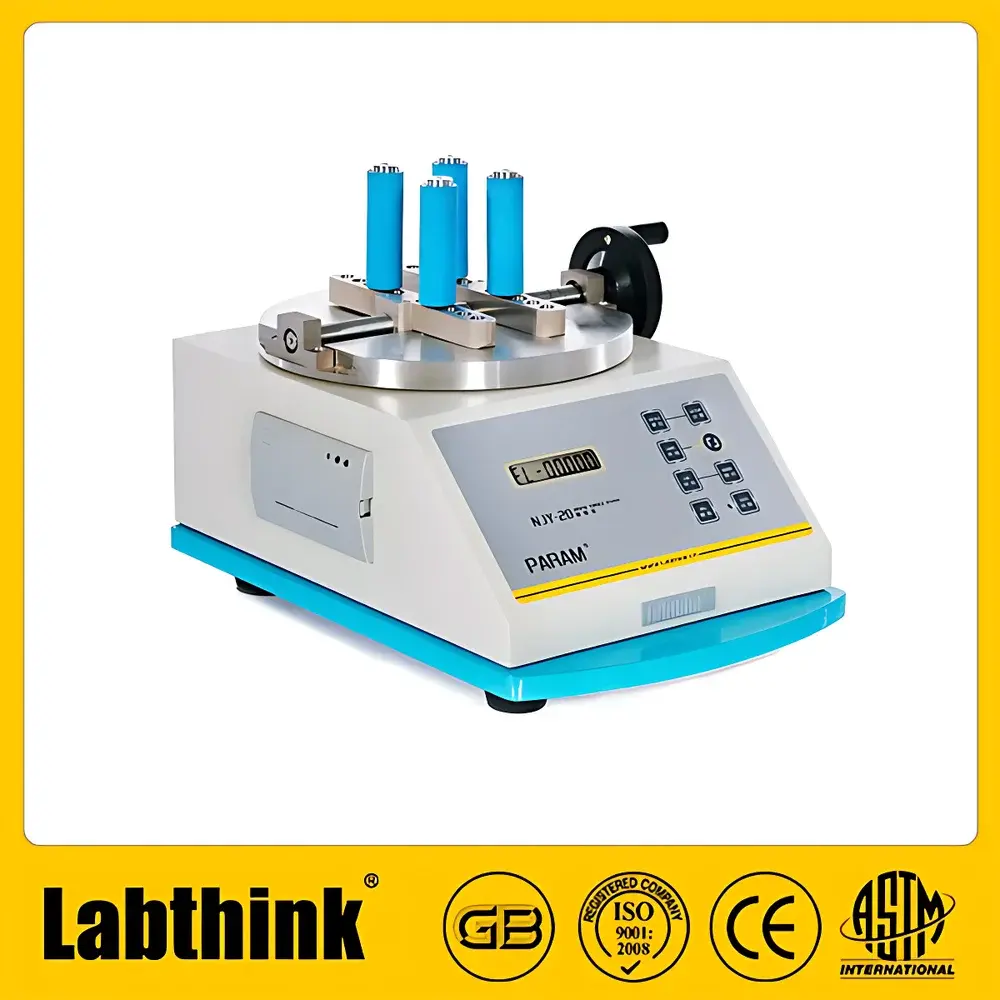
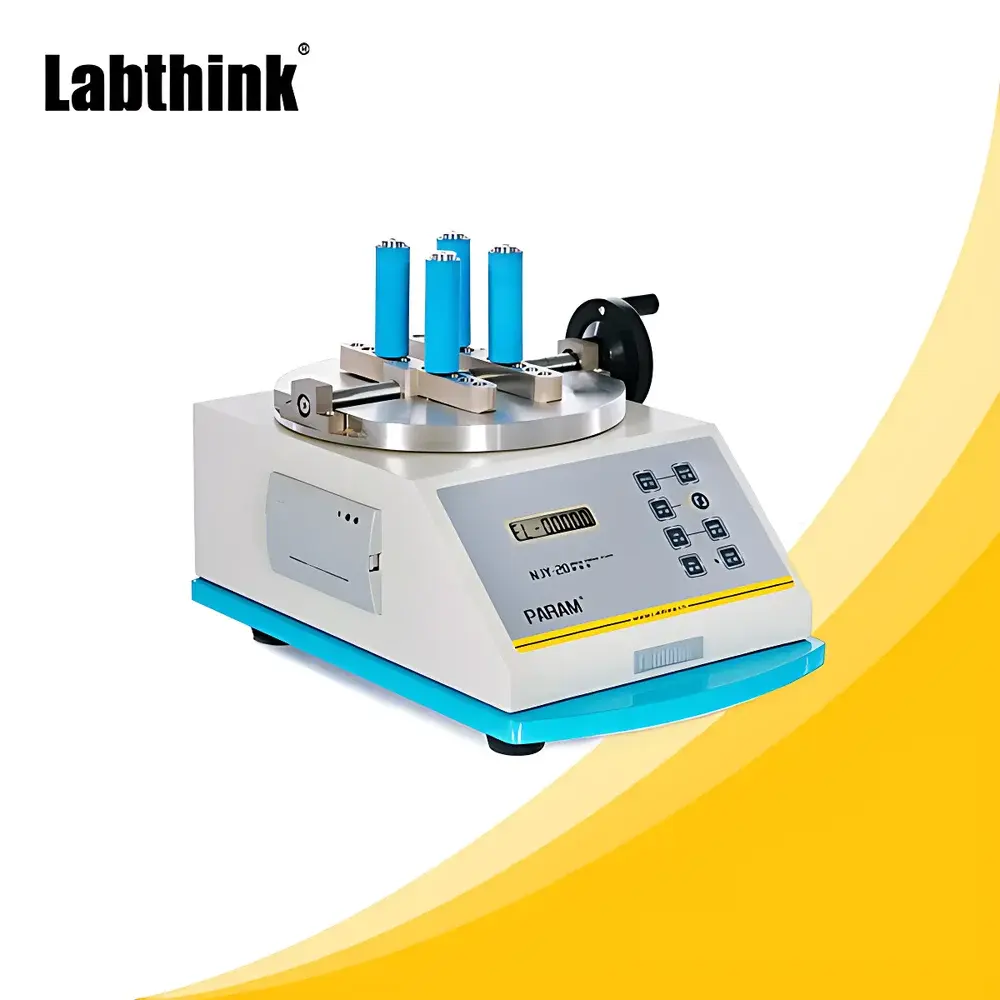
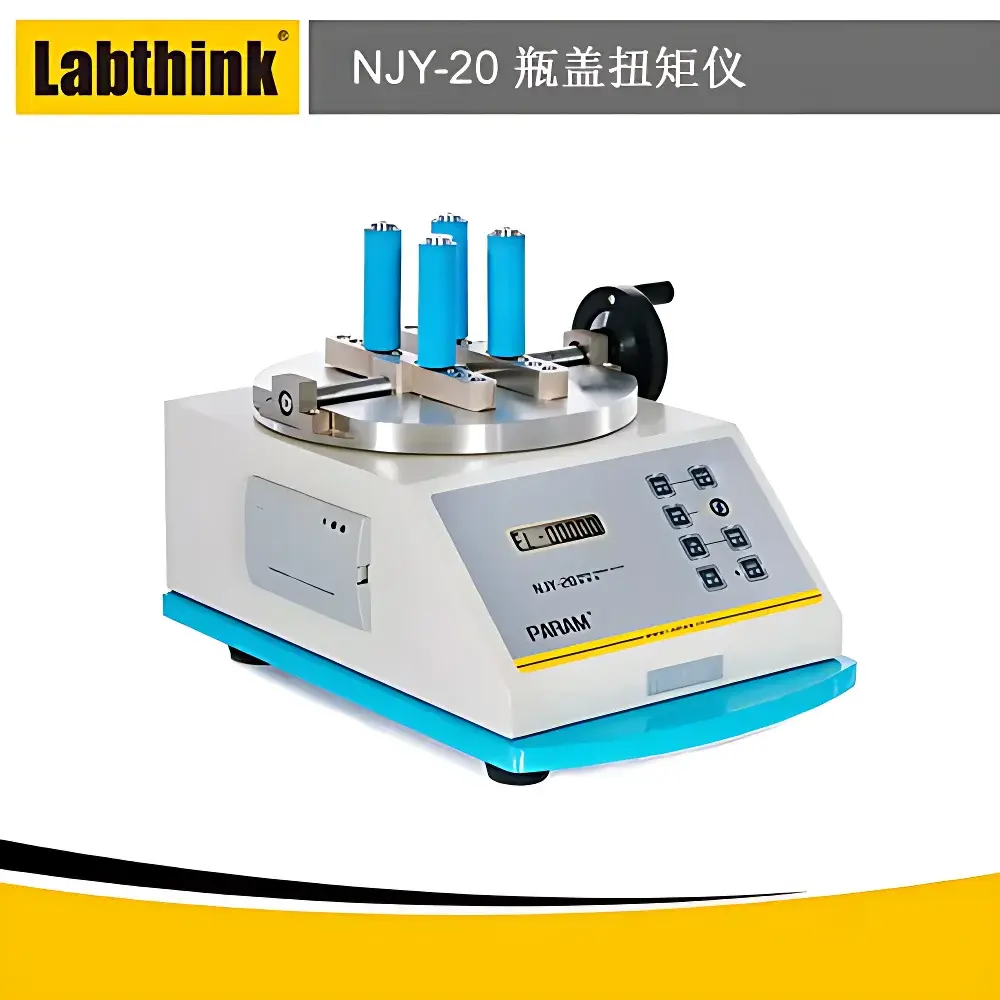
Labthink NJY-20 Food & Pharmaceutical Cap Torque Tester
| Brand | Labthink |
|---|---|
| Model | NJY-20 |
| Torque Range | 20 Nm (standard), 40 Nm / 50 Nm (optional) |
| Accuracy Class | Grade 1 |
| Resolution | 0.001 Nm |
| Clamping Diameter Range | Φ5–Φ170 mm |
| Sample Count per Test Cycle | 1–9 (unlimited with optional software) |
| Dimensions (L×W×H) | 350 × 240 × 140 mm |
| Weight | 19 kg |
| Power Supply | 220 VAC 50 Hz / 120 VAC 60 Hz |
| Compliance | GB/T 17876–2010, BB/T 0025–2004, BB/T 0034, ASTM D2063/D2063M–2010(2012), ASTM D3198–1997, ASTM D3474–1990 |
Overview
The Labthink NJY-20 Food & Pharmaceutical Cap Torque Tester is a precision electromechanical instrument engineered for the quantitative measurement of breakaway (opening) and application (closing) torque values of threaded closures on rigid and semi-rigid packaging containers. It operates on the principle of controlled rotational force application via a calibrated torque transducer, coupled with real-time angular displacement monitoring to capture peak torque events during cap engagement or disengagement. Designed specifically for quality assurance in food, pharmaceutical, cosmetic, and nutraceutical manufacturing, the NJY-20 supports both offline laboratory verification and process validation workflows. Its dual-mode operation—enabling sequential or independent measurement of opening and closing torque—aligns with regulatory expectations for closure integrity, child-resistant functionality, senior-friendly accessibility, and transport stability. The device meets mechanical and metrological requirements defined under national and international standards for packaging performance testing, serving as a critical tool for establishing and maintaining consistent capping parameters across production lines.
Key Features
- Microprocessor-controlled torque measurement system with LCD display and tactile PVC membrane keypad for intuitive operation and immediate visual feedback
- Dual-test mode: dedicated “Opening Torque” and “Closing Torque” protocols, each configurable for ramp rate, dwell time, and direction of rotation
- Automatic peak torque hold function ensures accurate capture and retention of maximum torque values without operator intervention
- Integrated overload protection, auto-zeroing at start-up, and diagnostic error codes enhance operational safety and instrument longevity
- Standard RS232 serial interface and built-in thermal mini-printer enable direct data export for audit-ready documentation
- Modular design accommodates optional torque ranges (40 Nm and 50 Nm) and supports firmware-upgradable calibration protocols
Sample Compatibility & Compliance
The NJY-20 accommodates a broad spectrum of closure geometries and container types, including PET, HDPE, glass, and aluminum bottles; collapsible tubes (e.g., ophthalmic, dermal, and dental formulations); insulated thermos flasks; and tamper-evident screw caps used in dietary supplement packaging. Its adjustable clamping mechanism (Φ5–Φ170 mm) enables secure fixation of both small-diameter vials and large-format dispensers without slippage or deformation. The instrument complies with ISO/IEC 17025 traceability principles through factory-calibrated torque sensors certified to national metrology institutes. Regulatory alignment includes GB/T 17876–2010 (Plastic Security Caps for Packaging Containers), BB/T 0025–2004 and BB/T 0034 (Aluminum Anti-Counterfeit Caps), and key ASTM standards governing torque methodology (D2063, D3198, D3474). These references support compliance with FDA 21 CFR Part 11 when used in conjunction with validated Lystem™ Laboratory Data Sharing System configurations.
Software & Data Management
The optional Lystem™ Laboratory Data Sharing System provides centralized management of test records, statistical analysis (mean, SD, CV%, min/max, histogram), multi-unit conversion (N·m, lbf·in, kgf·cm), and automated report generation compliant with GLP/GMP documentation requirements. All raw torque vs. time profiles are timestamped, user-ID tagged, and stored with full audit trail functionality—including modification history and electronic signature capability. Data exports conform to CSV, PDF, and XML formats for integration into enterprise QMS platforms such as TrackWise or MasterControl. The RS232 interface supports bidirectional communication for remote command execution and real-time data streaming during continuous monitoring applications.
Applications
- Primary packaging validation: torque consistency assessment for beverage bottles, prescription drug containers, and infant formula cans
- Child-resistant/senior-friendly closure evaluation per ISO 8317 and ASTM D3475 protocols
- Process capability studies (Cp/Cpk) during capper setup and maintenance qualification
- Stability testing of closure-torque retention under accelerated aging conditions (e.g., temperature/humidity cycling)
- Cross-material compatibility analysis: comparing torque behavior across resin grades, liner formulations, and thread geometries
- Non-packaging extension: fastener torque verification for medical device housings, diagnostic cartridge assemblies, and lab equipment enclosures
FAQ
What torque units does the NJY-20 support natively?
The instrument displays and stores results in Newton-meters (N·m) by default, with optional software enabling real-time conversion to lbf·in, kgf·cm, and mN·m.
Can the NJY-20 perform dynamic torque profiling (e.g., torque-angle curves)?
No—the NJY-20 captures only peak torque values per test cycle. For full torque-angle analysis, Labthink recommends the TC-01 Torque Curve Analyzer as a complementary system.
Is calibration certification included with shipment?
Yes—each unit ships with a factory-issued calibration certificate traceable to CNAS-accredited standards, valid for 12 months under normal operating conditions.
Does the device meet requirements for FDA-regulated environments?
The hardware satisfies mechanical and electrical safety standards (IEC 61010-1); full 21 CFR Part 11 compliance requires implementation of the Lystem™ software with configured audit trails and role-based access controls.
How is sample alignment ensured during testing?
The vertical spindle axis is mechanically aligned to within ±0.1° of true perpendicularity, and the chuck assembly features concentricity adjustment to minimize eccentric loading during torque application.



