
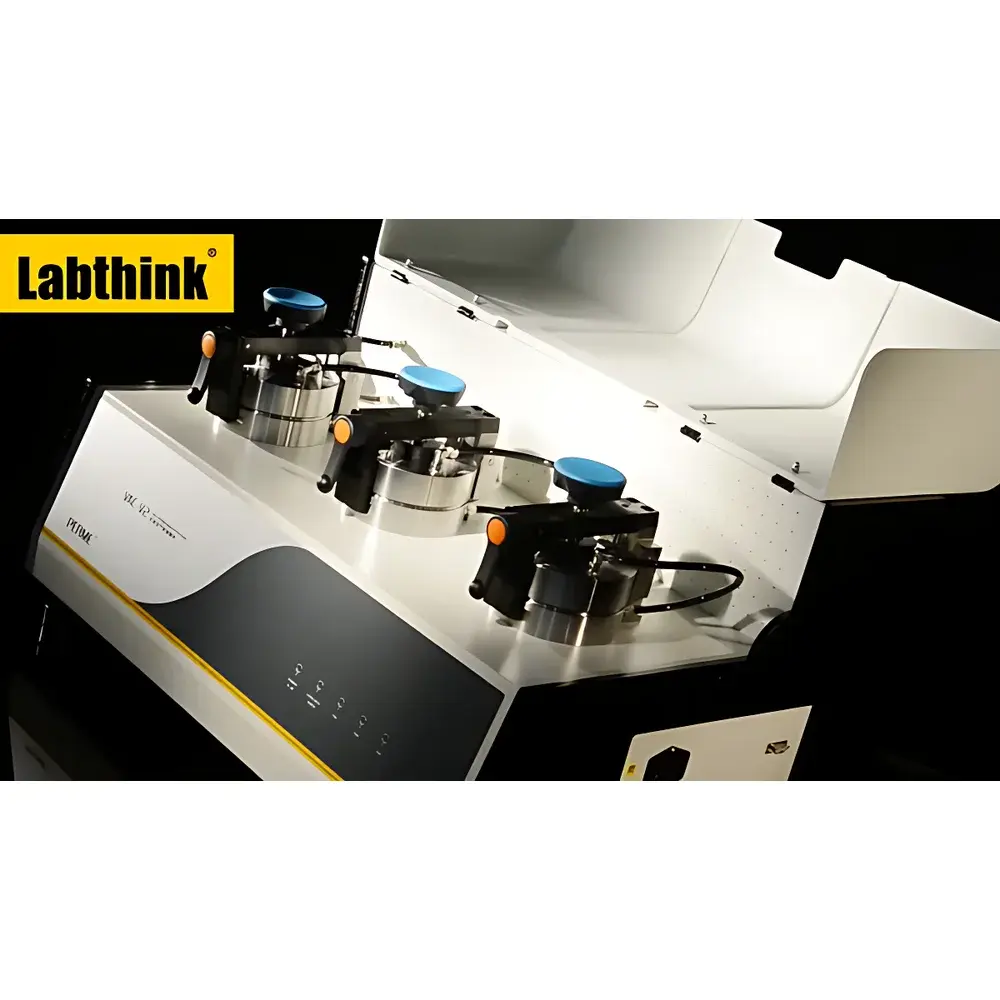
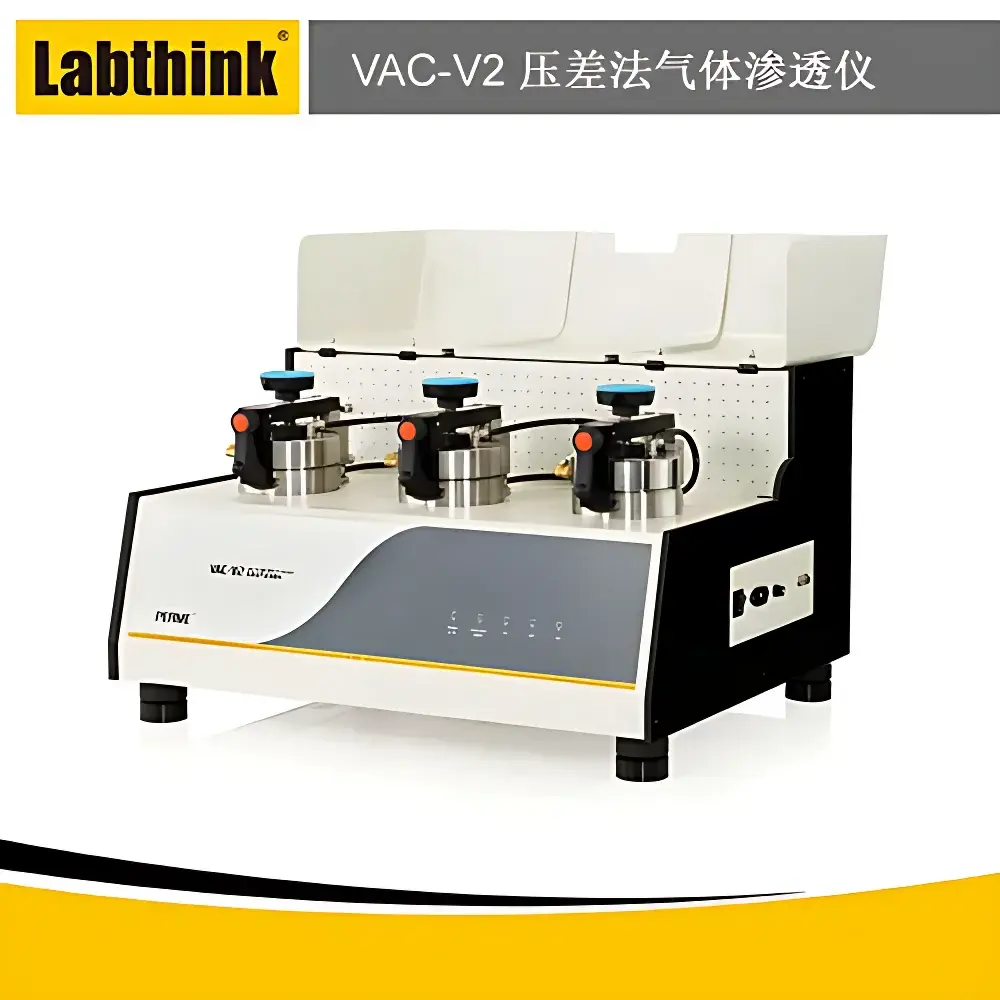
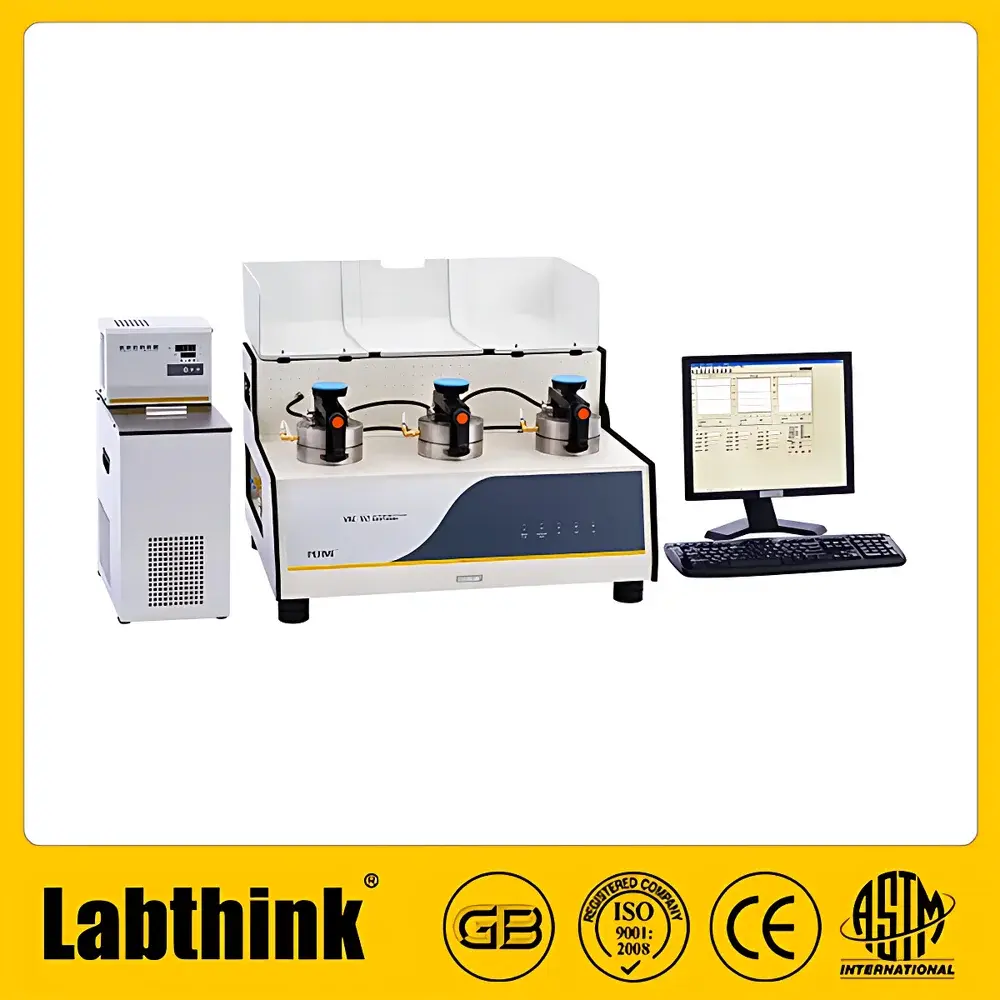
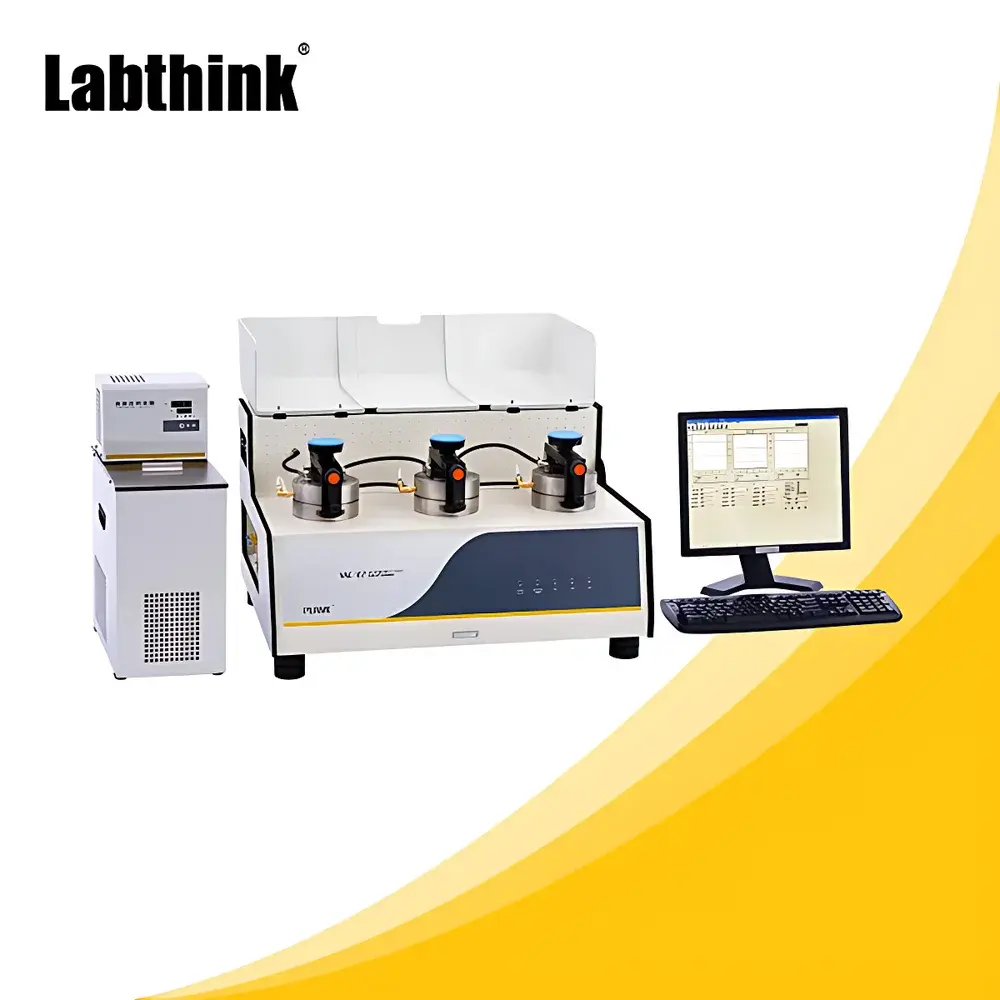
Labthink VAC-V2 Differential Pressure Gas Permeability Analyzer
| Brand | Labthink |
|---|---|
| Model | VAC-V2 |
| Measurement Principle | Differential Pressure (Manometric) Method |
| Test Gases | O₂, N₂, CO₂ |
| Test Range | 0.05–50,000 cm³/m²·24h·0.1MPa (extendable to ≥500,000 cm³/m²·24h·0.1MPa) |
| Specimen Count | 3 independent chambers |
| Vacuum Resolution | 0.1 Pa |
| Test Chamber Vacuum Level | <20 Pa |
| Temperature Control Range | 5–95 °C |
| Temperature Accuracy | ±0.1 °C |
| Humidity Control Range | 0% RH, 2–98.5% RH, 100% RH (optional humidity generator) |
| Humidity Accuracy | ±1% RH |
| Specimen Diameter | Φ97 mm |
| Effective Test Area | 38.48 cm² |
| Test Pressure Range | −0.1 to +0.1 MPa |
| Gas Supply Pressure | 0.4–0.6 MPa |
| Interface | Ø6 mm polyurethane tubing |
| Dimensions (L×W×H) | 760 × 575 × 450 mm |
| Weight | 88 kg |
| Power | 220 VAC 50 Hz / 120 VAC 60 Hz |
| Compliance | ISO 15105-1, ISO 2556, ASTM D1434, GB/T 1038-2000, JIS K7126-1, YBB00082003 |
Overview
The Labthink VAC-V2 Differential Pressure Gas Permeability Analyzer is an engineered solution for precise, traceable, and repeatable measurement of gas transmission rates (GTR) through flexible packaging materials under controlled environmental conditions. Based on the manometric differential pressure method—defined in ISO 15105-1 and ASTM D1434—the instrument quantifies the permeation of gases such as oxygen (O₂), nitrogen (N₂), and carbon dioxide (CO₂) across thin-film specimens including plastic films, laminated composites, metallized foils, and high-barrier substrates. The core principle relies on establishing a stable transmembrane pressure gradient: the upstream (high-pressure) chamber is pressurized with test gas while the downstream (low-pressure) chamber is maintained under high vacuum; real-time monitoring of pressure rise in the downstream chamber enables calculation of gas permeability (P), diffusion coefficient (D), solubility coefficient (S), and gas transmission rate (GTR) via Fick’s law and Henry’s law derivations. This dual-parameter output supports advanced barrier modeling and accelerated shelf-life prediction in pharmaceutical, food, and medical device packaging development.
Key Features
- Triple independent test chambers enable concurrent, statistically independent measurements of up to three specimens—identical or dissimilar—reducing inter-test variability and improving throughput.
- High-resolution vacuum sensing (0.1 Pa) and ultra-stable thermal control (±0.1 °C over 5–95 °C) ensure compliance with stringent regulatory temperature ramping protocols required for Arrhenius-based activation energy analysis.
- Dual-mode test logic—proportional and fuzzy inference algorithms—automatically adapts data acquisition timing to specimen permeability magnitude, optimizing signal-to-noise ratio across low- and high-permeability ranges.
- Expandable measurement range (up to ≥500,000 cm³/m²·24h·0.1MPa) accommodates both ultra-high-barrier materials (e.g., SiOₓ-coated PET) and highly permeable polymers (e.g., LDPE), eliminating the need for multiple instruments.
- Integrated calibration workflow using certified reference films provides traceable verification per ISO/IEC 17025 requirements; all calibration events are logged with timestamps and operator IDs.
- Modular design supports hazardous gas adaptation (e.g., H₂, CH₄, SO₂) via optional explosion-proof modifications and sealed gas-handling pathways—fully documented per ATEX and IECEx guidelines.
Sample Compatibility & Compliance
The VAC-V2 accepts flat, non-porous sheet specimens up to Φ97 mm diameter (38.48 cm² effective area), covering standard formats used in ISO, ASTM, and Chinese pharmacopoeial testing (YBB00082003). It is validated for use with FDA-listed packaging components, including blister lidding foils, pouch laminates, and cold-form aluminum blisters. All firmware and software operations comply with FDA 21 CFR Part 11 for electronic records and signatures, supporting audit-ready GLP/GMP environments. Full traceability is ensured through embedded hardware clocks, tamper-evident log files, and user-access-level permissions managed within Lystem™ Laboratory Data Management System (LDMS).
Software & Data Management
Controlled via Labthink’s proprietary Lystem™ v3.x software, the VAC-V2 delivers automated test sequencing, real-time curve visualization, and multi-parameter regression fitting—including Arrhenius plots for temperature-dependent permeability modeling. Raw pressure vs. time datasets are stored in encrypted SQLite databases with SHA-256 checksums. Export options include CSV, PDF test reports (with digital signatures), and XML for integration into enterprise LIMS platforms. Lystem™ LDMS enables centralized management of instrument metadata, calibration history, method templates, and cross-laboratory result comparison—supporting ISO/IEC 17025 clause 7.7 on result reporting integrity.
Applications
- Quantification of O₂ transmission rate (OTR) for retort pouches and aseptic cartons to validate shelf-life claims under accelerated aging protocols.
- Diffusion coefficient profiling of barrier coatings (e.g., AlOₓ, SiOₓ) on PET and PP films at elevated temperatures per ASTM F1307 Annex A3.
- Regulatory submission support for USP and Ph. Eur. 3.2.1 permeation testing of primary packaging for sterile injectables.
- Comparative evaluation of seal integrity in heat-sealed PE/Alu laminates using CO₂ permeation under variable humidity conditions (with optional humidity generator).
- Development of sustainable mono-material structures by benchmarking permeability trade-offs between bio-based polyesters and traditional PET.
FAQ
What gases can be tested on the VAC-V2?
O₂, N₂, and CO₂ are standard; other gases—including H₂, He, CH₄, and SO₂—are supported with factory-installed safety modifications and gas-specific calibration.
Is humidity control built-in?
Relative humidity (RH) control from 0% to 100% RH is available via an optional external humidity generator module—required for moisture-coupled permeation studies per ISO 15105-2.
How is system accuracy verified?
Certified reference films (e.g., SRM 1472) are supplied for daily verification; drift correction routines and vacuum integrity checks are executed automatically before each test sequence.
Can the VAC-V2 integrate with existing lab IT infrastructure?
Yes—via RS232 serial interface or Ethernet (optional), supporting HL7, ASTM E1384, and custom API integrations for enterprise LIMS and MES systems.
What maintenance is required for long-term reliability?
Annual vacuum pump oil replacement, biannual recalibration of pressure transducers, and quarterly validation of thermal uniformity across all three chambers—documented in accordance with ISO/IEC 17025 clause 6.4.





