
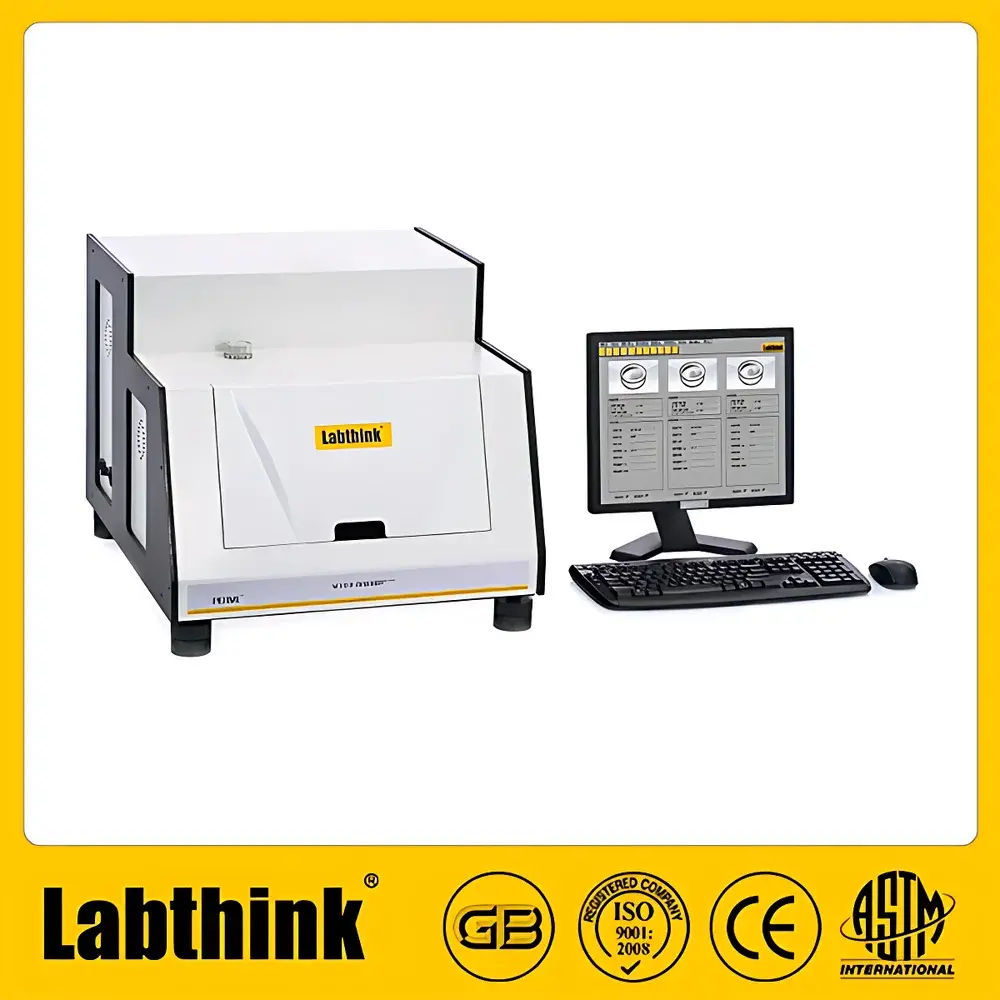
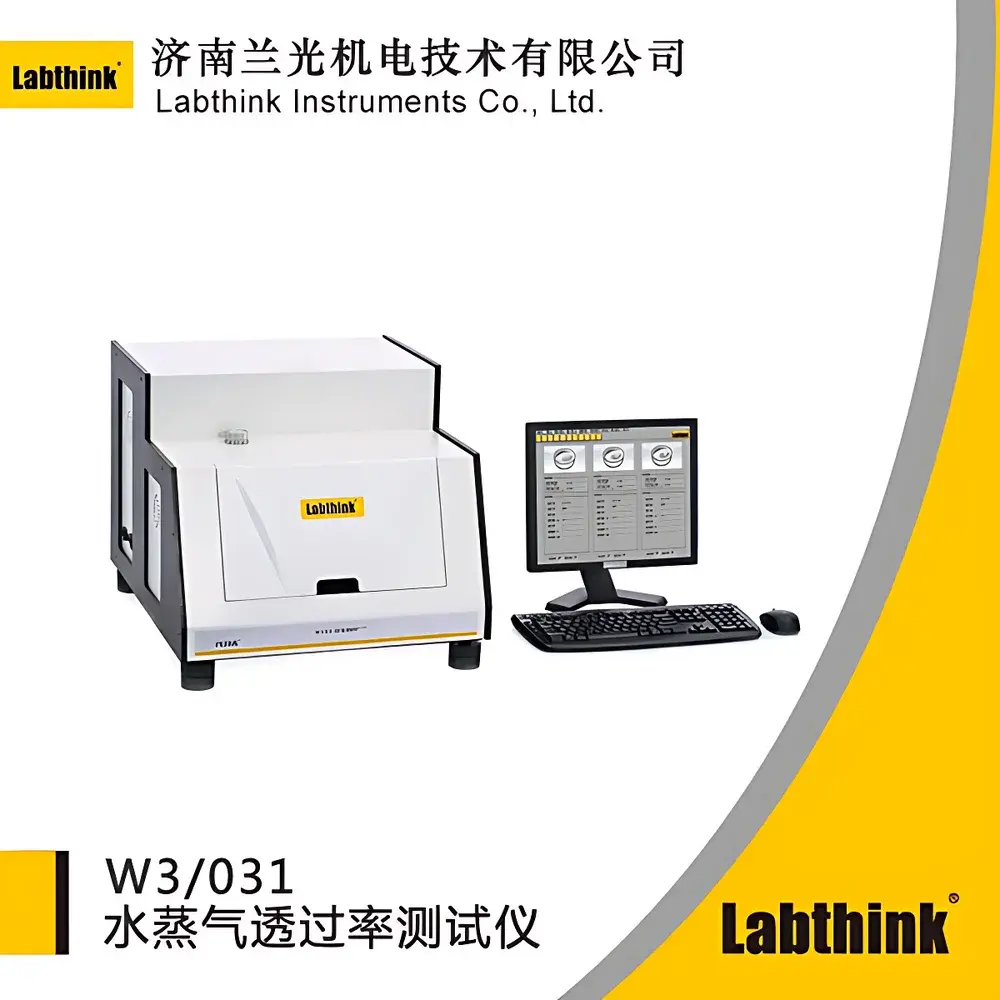
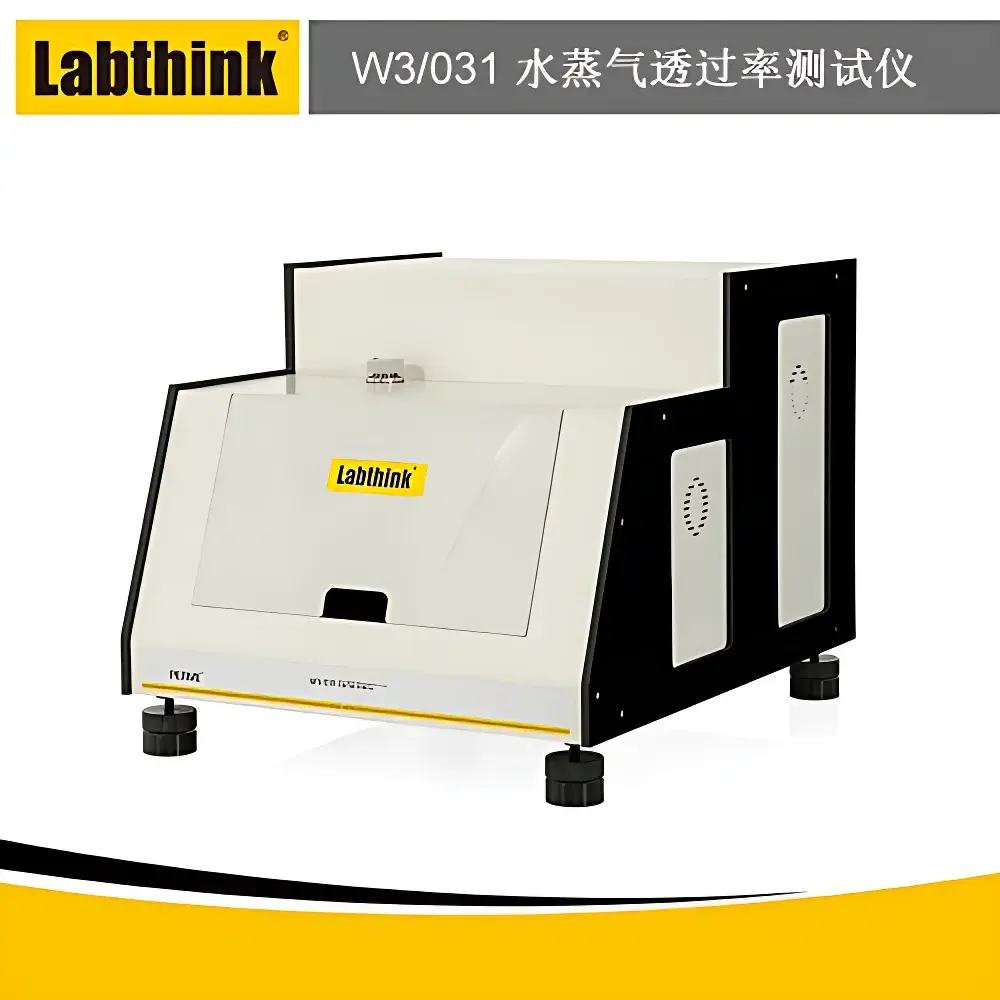
Labthink W3/031 Gravimetric Water Vapor Transmission Rate (WVTR) Tester
| Brand | Labthink |
|---|---|
| Model | W3/031 |
| Principle | Gravimetric Cup Method |
| Test Range | 0.1–10,000 g/m²·24h |
| Resolution | 0.0001 g |
| Accuracy | ±0.01 g/m²·24h |
| Temperature Control | 15–55°C (±0.1°C) |
| Humidity Control | 10–98% RH (±1% RH) |
| Test Area | 33 cm² |
| Sample Thickness | ≤3 mm |
| Sample Diameter | Φ74 mm |
| Cup Capacity | 3 independent cups |
| Air Supply | 0.6 MPa, Φ4 mm polyurethane tubing |
| Power | 220 VAC 50 Hz / 120 VAC 60 Hz |
| Net Weight | 83 kg |
| Dimensions | 580 × 680 × 470 mm (L×W×H) |
Overview
The Labthink W3/031 Gravimetric Water Vapor Transmission Rate (WVTR) Tester is an ASTM- and ISO-compliant instrument engineered for precise, repeatable measurement of water vapor permeation through flexible packaging materials—including pharmaceutical PTP aluminum foil, polymer films, laminates, coated papers, and rigid sheet materials. It operates on the standardized gravimetric cup method (also known as the desiccant method), wherein a conditioned test specimen seals a permeation cup containing desiccant; under controlled temperature and relative humidity (RH) gradients across the sample, water vapor migrates from the humid side to the dry side, inducing measurable mass gain in the cup over time. The system calculates WVTR (g/m²·24h) by linear regression of cumulative weight change versus time—ensuring traceability, compliance with first-principles mass balance, and alignment with regulatory expectations for barrier performance validation in pharmaceutical, food, and medical device packaging.
Key Features
- Triple independent test stations: Three sealed permeation cups operate simultaneously yet autonomously—enabling parallel testing of identical or dissimilar specimens without cross-contamination or thermal/hygrometric interference.
- High-precision microbalance integration: Embedded 0.0001 g resolution analytical balance with active drift compensation and vibration-dampened mounting ensures metrological integrity during long-duration (up to 10-day) gravimetric monitoring.
- Advanced environmental control: Dual-zone thermoelectric temperature regulation (15–55°C, ±0.1°C) coupled with PID-controlled RH generation (10–98% RH, ±1% RH) delivers stable, programmable gradient conditions per ASTM E96 Annex A1 (inverted cup) and Annex A2 (standard cup).
- Dedicated embedded computing platform: Linux-based real-time OS replaces legacy microcontroller architecture—supporting deterministic timing, multi-threaded data acquisition, and secure local storage of raw weight/time series with timestamped audit trails.
- Modular gas handling subsystem: Integrated air drying unit with dual-stage desiccant filtration, automatic moisture scavenging, and calibrated purge airflow (0.5–2.5 m/s) minimizes ambient humidity intrusion and enhances signal-to-noise ratio in low-permeability measurements.
Sample Compatibility & Compliance
The W3/031 accommodates flat, non-porous, and semi-crystalline substrates up to 3 mm thick and 74 mm in diameter—including cold-forming aluminum foils (YBB00092003), blister lidding materials, PVDC-coated PET, SiOx-treated films, and ethylene-vinyl alcohol (EVOH) laminates. All operational parameters adhere strictly to international standard test methods: GB/T 1037 (China), ASTM E96/E96M (desiccant and water methods), ISO 2528, DIN 53122-1, JIS Z0208, TAPPI T464, and USP . The system supports GLP-compliant workflows via configurable user access levels, electronic signatures, and 21 CFR Part 11–ready data export formats (CSV, PDF, XML) when paired with optional Lystem™ Laboratory Data Management System.
Software & Data Management
Labthink’s proprietary WinWVTR software provides intuitive graphical configuration of test protocols—including multi-step RH/temperature ramps, automatic cup sealing verification, real-time mass trend visualization, and dynamic endpoint detection based on statistical slope stability (R² ≥ 0.995). Raw weight logs are stored with full metadata (operator ID, calibration certificate IDs, environmental setpoints, cup ID), and all calculations comply with ISO/IEC 17025 uncertainty propagation guidelines. When deployed within a LAN environment, the instrument natively interfaces with Lystem™—enabling centralized result archiving, cross-instrument comparative analysis, automated report generation (including customizable templates for regulatory submissions), and role-based audit trail review per FDA and EMA requirements.
Applications
- Pharmaceutical packaging qualification: Quantifying WVTR of PTP aluminum foil blisters, sachets, and cold-forming foils per YBB00092003 and ICH Q5C stability guidance.
- Food packaging shelf-life modeling: Correlating barrier performance of multilayer pouches and retortable films with accelerated aging predictions.
- Medical device sterile barrier validation: Verifying moisture ingress resistance of Tyvek® lids, peelable pouches, and thermoformed trays per ISO 11607-1.
- R&D material screening: Benchmarking novel barrier coatings (e.g., AlOx, SiOx) and nanocomposite films against industry baselines.
- Quality control release testing: Enforcing incoming material specifications for film suppliers under ISO 9001 and IATF 16949 frameworks.
FAQ
What standards does the W3/031 support for pharmaceutical packaging testing?
It fully complies with YBB00092003 (Chinese Pharmacopoeia), ASTM E96, ISO 2528, and GB/T 1037—covering both desiccant and water methods for PTP foil and laminated blister materials.
Can the instrument measure ultra-low WVTR values below 0.1 g/m²·24h?
While the nominal range starts at 0.1 g/m²·24h, extended-duration tests (≥120 h) combined with high-resolution mass tracking and environmental stability enable reliable extrapolation down to ~0.05 g/m²·24h for high-barrier metallized films.
Is external compressed air required—and what are the specifications?
Yes: clean, oil-free air at 0.6 MPa supplied via Φ4 mm polyurethane tubing. Optional integrated air dryer or external zero-air generator may be used to meet ISO 8573-1 Class 2 purity requirements.
How is calibration traceability maintained?
Each unit ships with NIST-traceable stainless-steel calibration weights (1 g, 10 g, 100 g) and a documented uncertainty budget aligned with ISO/IEC 17025. Field recalibration is supported via built-in balance diagnostics and auto-zero routines.
Does the system support 21 CFR Part 11 compliance out of the box?
The base configuration meets technical prerequisites (audit trail, electronic signature, data integrity); full Part 11 enforcement requires Lystem™ deployment with configured user roles, password policies, and encrypted database logging.





