
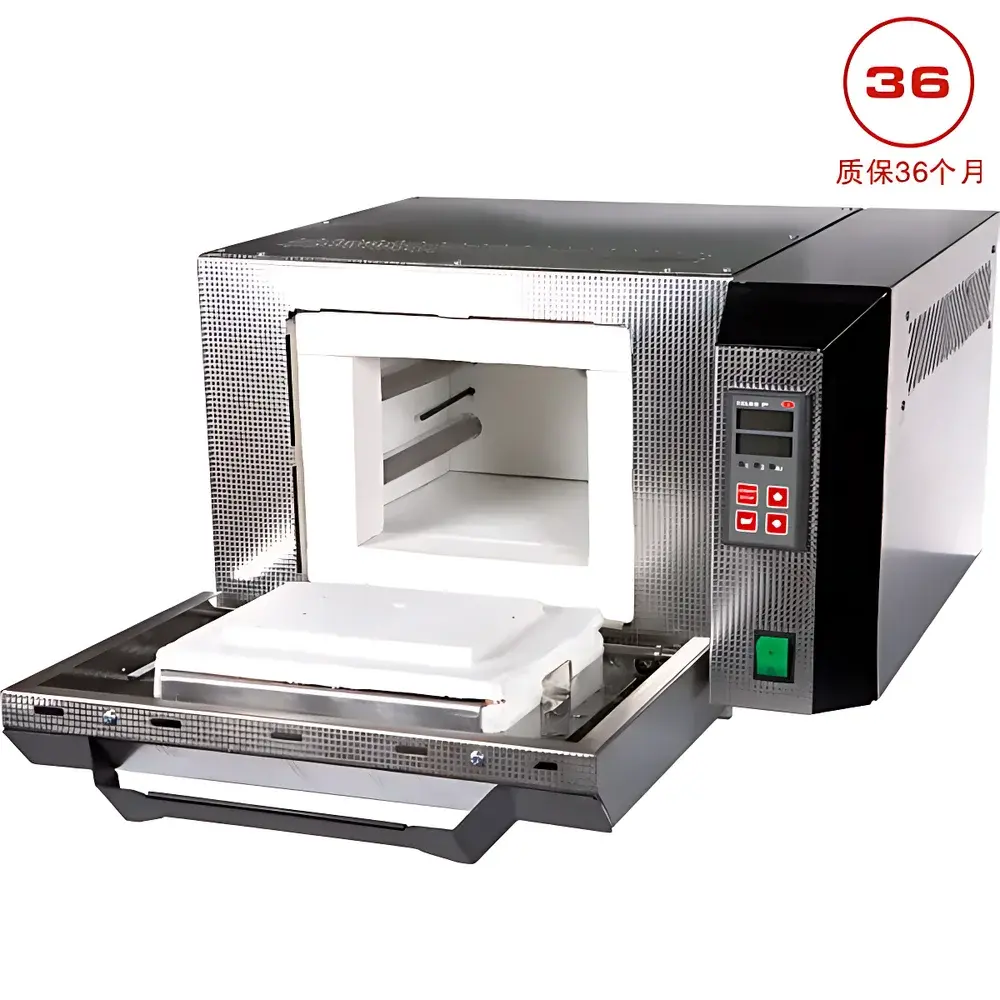
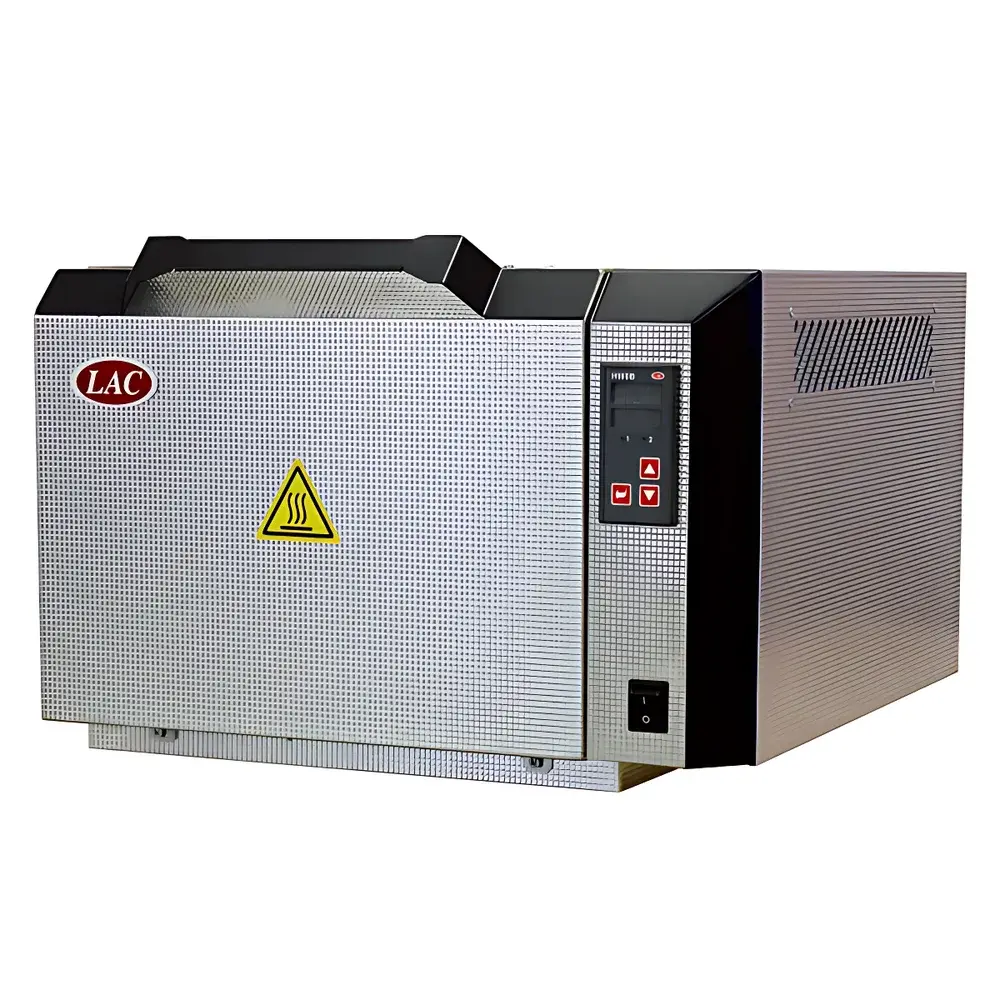
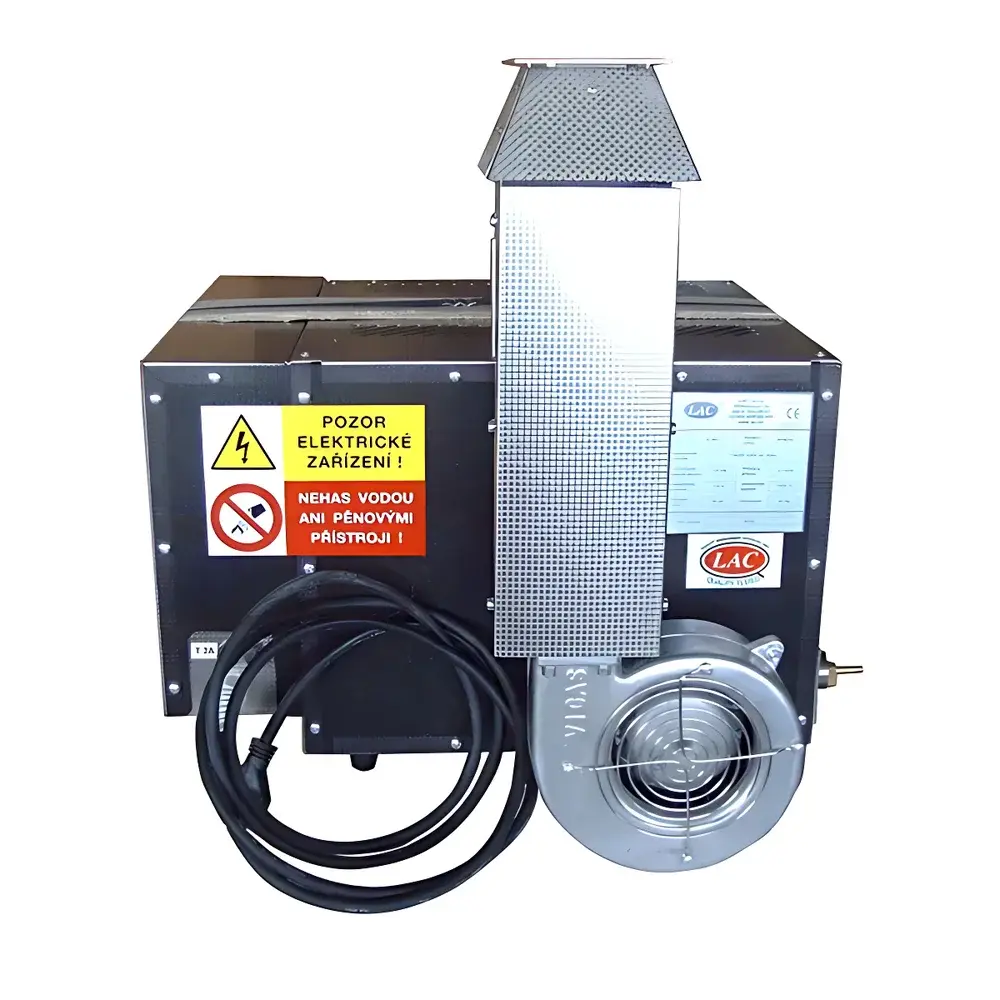
LAC LE 05/11 Benchtop Muffle Furnace (1100 °C)
| Brand | LAC |
|---|---|
| Origin | Czech Republic |
| Model | LE 05/11 |
| Type | Box-Type Muffle Furnace |
| Max Temperature | 1100 °C |
| Temperature Uniformity | Compliant with DIN 17052-1 |
| Control Accuracy | ±5 °C |
| Heating Element | Resistance Wire |
| Internal Dimensions (W×H×D) | 170×130×230 mm |
| Max Power | 1.8 kW |
| Time to Max Temperature | 31 min |
| Controller | HT60B (standard) |
| Door Operation | Manual Downward Opening |
| Thermal Insulation | High-Performance Ceramic Fiber |
| Housing Material | Stainless Steel (AISI 304) |
| Safety Features | Door Limit Switch, Bottom Protection Plate (optional), Solid-State Relay (SSR) |
Overview
The LAC LE 05/11 is a compact, benchtop muffle furnace engineered for precision thermal processing in research laboratories, quality control environments, and small-scale industrial R&D settings. Designed and manufactured in the Czech Republic by LAC, a long-standing European specialist in laboratory heating systems, this furnace operates on resistive heating principles using high-stability resistance wire elements embedded within multi-layer ceramic fiber insulation. Its muffle architecture fully isolates samples from combustion gases and heating element emissions, ensuring contamination-free, oxidation-controlled thermal treatment. With a maximum operating temperature of 1100 °C and certified temperature uniformity per DIN 17052-1 (±5 °C across the working chamber at setpoint), the LE 05/11 supports reproducible heat treatments including ashing, calcination, sintering, preheating, and determination of thermal stability endpoints. The stainless steel (AISI 304) housing provides mechanical durability and corrosion resistance, while low thermal mass design enables rapid ramp rates—achieving 1100 °C in approximately 31 minutes—without compromising long-term thermal stability or energy efficiency.
Key Features
- Compact internal chamber (170 × 130 × 230 mm W×H×D) optimized for sample batches up to 5 L volume, ideal for analytical ashing, dental porcelain firing, and ceramic glaze testing.
- DIN 17052-1–compliant temperature uniformity ensures spatial consistency critical for ASTM E119, ISO 5660, or USP <231> ash residue validation protocols.
- HT60B digital controller (standard) with dual-display (setpoint/actual), manual PID tuning, and real-time overtemperature cutoff.
- Quiet solid-state relay (SSR) switching eliminates electromagnetic interference—essential in shared instrumentation labs with sensitive balances or spectrometers.
- Manually actuated downward-opening door with integrated safety limit switch, preventing operation when open and enhancing operator ergonomics.
- Integrated K-type thermocouple with direct furnace wall mounting for robust, drift-resistant temperature feedback.
- Passive ventilation system with adjustable inlet valve and dedicated exhaust port—enables controlled atmosphere conditioning when paired with optional accessories.
Sample Compatibility & Compliance
The LE 05/11 accommodates crucibles, sintering boats, and ceramic setters made from alumina, silicon carbide, or platinum—compatible with non-reactive sample matrices including polymers, pharmaceutical excipients, geological sediments, metal oxides, and dental alloys. Its sealed muffle chamber meets IEC 61010-1 requirements for laboratory electrical equipment safety. Optional inert gas inlet (with integrated flowmeter and pressure gauge) supports nitrogen or argon purging for reducing or inert-atmosphere processes—validated for use under GLP-compliant thermal analysis workflows. All thermal profiles generated with HT40P controller (optional upgrade) support audit-ready timestamped logging, satisfying FDA 21 CFR Part 11 data integrity requirements when used with HTMonit software and RS485 interface.
Software & Data Management
While the standard HT60B controller offers local manual operation, the optional HT40P programmable controller extends functionality with 10 independent thermal programs (15 steps each), ramp/soak logic, and event-triggered outputs. When coupled with the HTMonit PC software suite (via RS232 or RS485 interface), users gain full traceability: real-time graphing, CSV export, alarm history, and electronic signature-capable report generation. Data logs include ambient temperature compensation, SSR duty cycle, and thermocouple millivolt readings—enabling root-cause analysis of thermal deviations. Firmware updates are performed via serial interface without hardware modification, ensuring long-term regulatory compliance and interoperability with LIMS platforms.
Applications
- Residue-on-ignition (ROI) and total ash content determination per AOAC 942.05, EPA Method 2540E, and ISO 21668.
- Thermal decomposition studies of catalysts, battery cathode materials, and nanocomposites under controlled airflow.
- Dental laboratory firing of zirconia frameworks and feldspathic porcelains requiring precise hold times at 950–1050 °C.
- Pre-treatment of filter media and gravimetric sampling substrates prior to particulate matter analysis.
- Calibration verification of thermogravimetric analyzers (TGA) using certified reference materials (CRMs) across 300–1100 °C range.
- Small-batch sintering of metal injection molding (MIM) feedstocks and low-temperature co-fired ceramics (LTCC).
FAQ
What is the recommended maintenance interval for the LE 05/11?
Annual inspection of heating element continuity, thermocouple calibration (traceable to NIST standards), and ceramic fiber integrity is advised. Replace door gasket if compression set exceeds 20%.
Can the furnace operate continuously at 1100 °C?
Yes—rated for continuous duty at maximum temperature, provided ambient conditions remain below 30 °C and ventilation clearance (≥100 mm on all sides) is maintained.
Is the HT40P controller required for GLP-compliant documentation?
Yes—only HT40P + HTMonit + RS485 interface provides electronic audit trail, user access control, and data immutability features mandated by GLP Annex 11 and ISO/IEC 17025.
Does the furnace support vacuum or positive-pressure atmospheres?
No—standard configuration is atmospheric only. Optional inert gas inlet supports ≤0.2 bar overpressure; vacuum operation requires custom flange adaptation and is not factory-certified.
What is the typical service life of the heating elements?
Under normal usage (≤8 h/day at ≤1000 °C), resistance wire elements typically exceed 5,000 operating hours before measurable resistance drift (>5%) occurs.



