
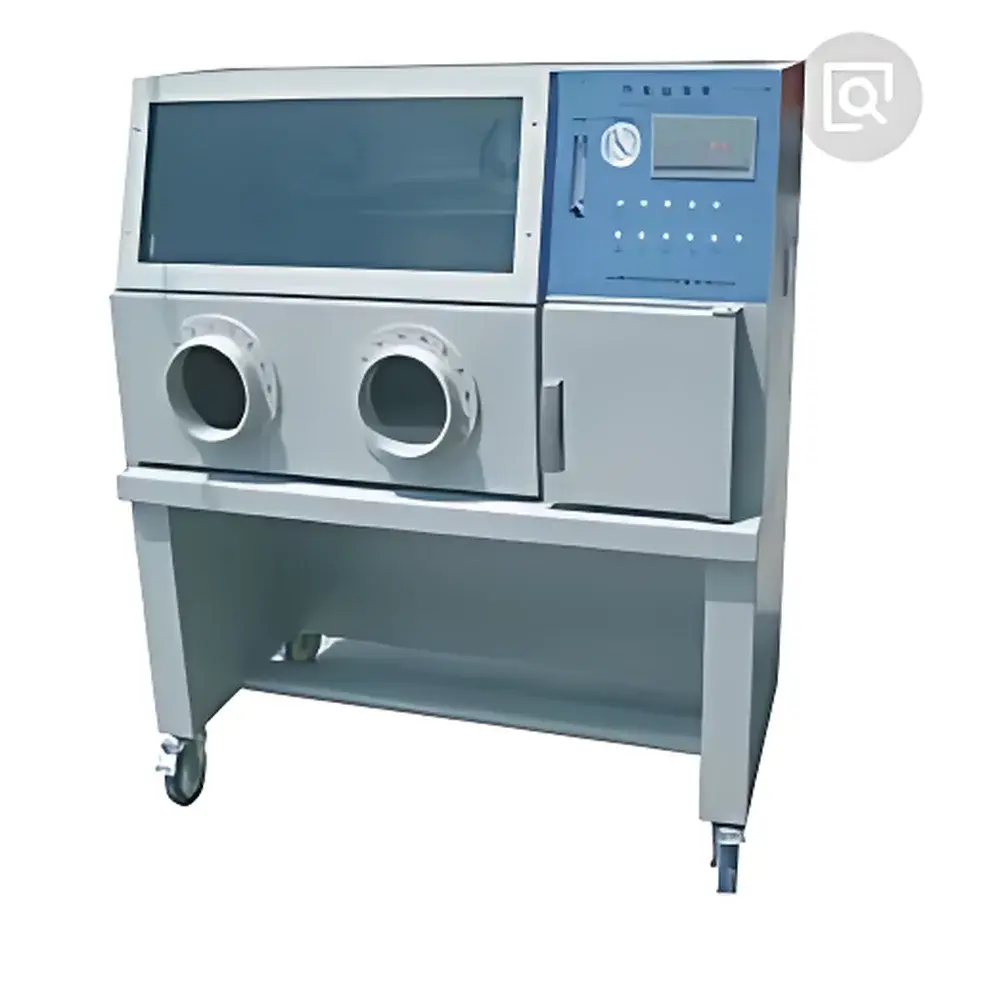
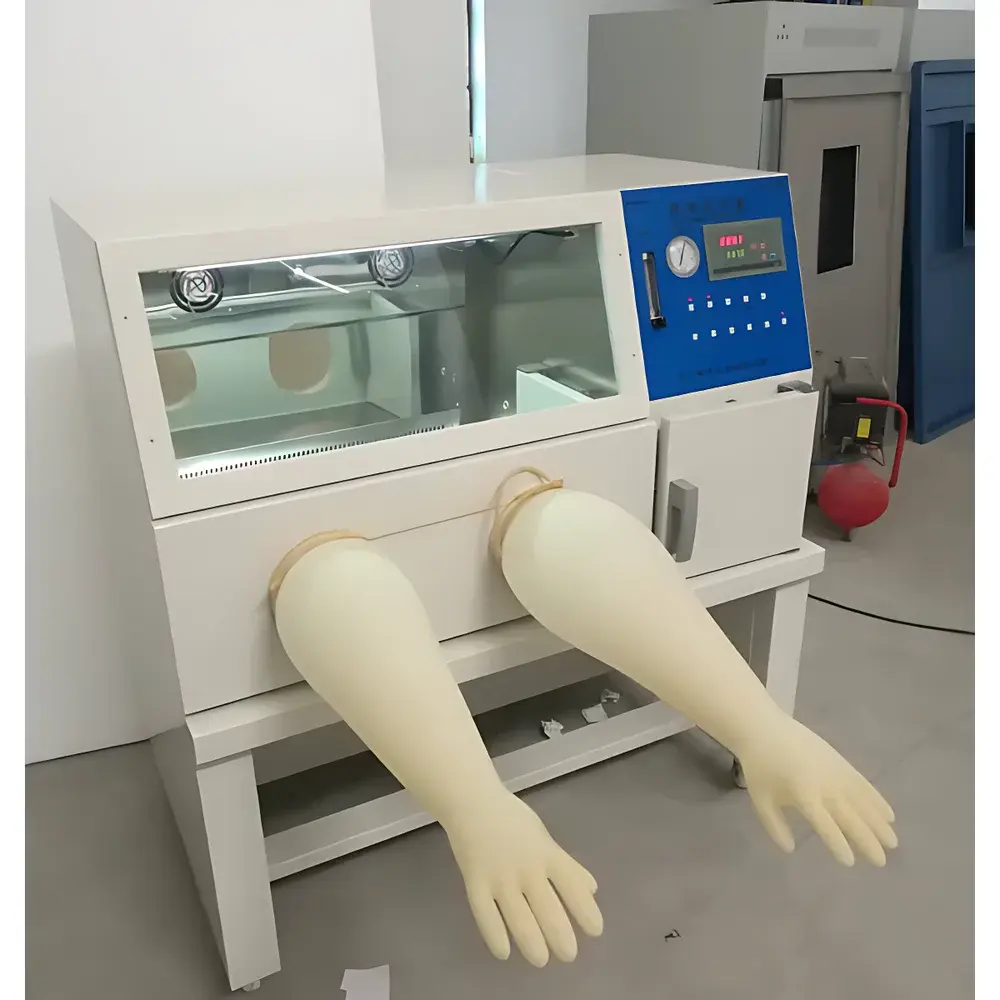
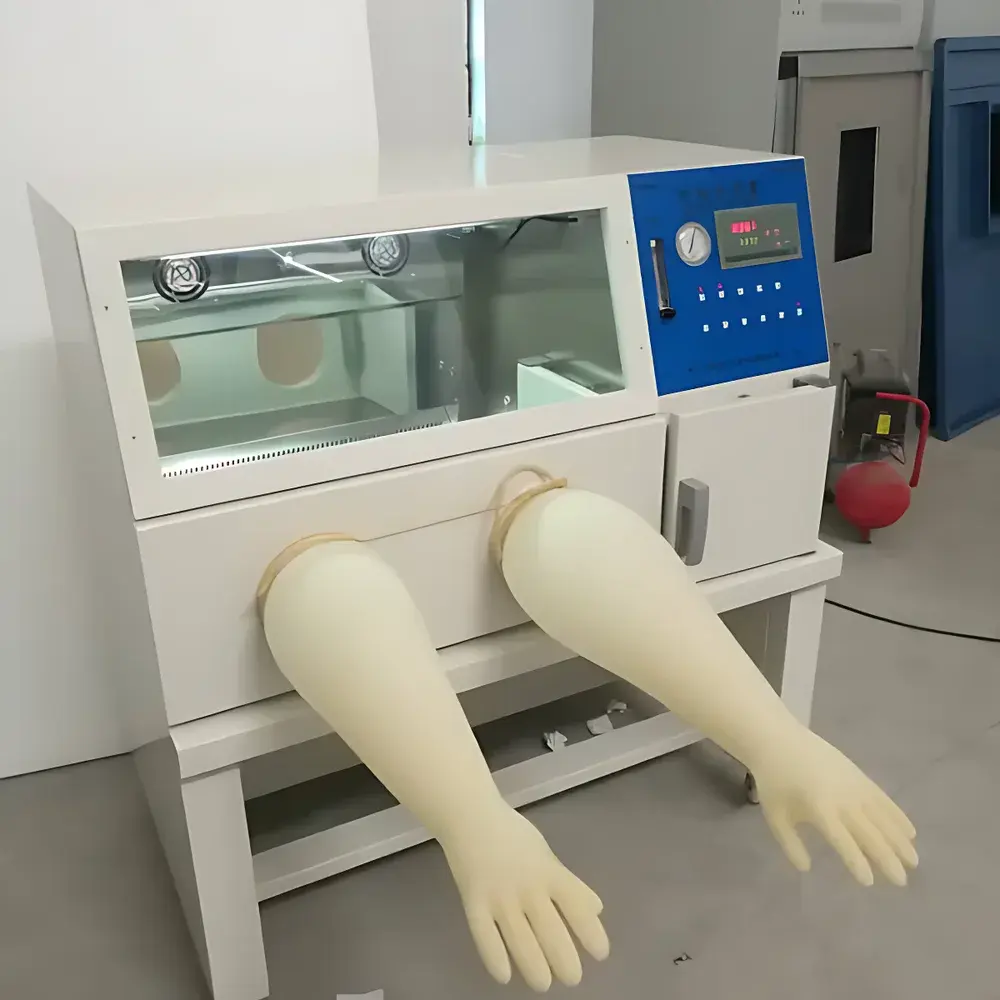
Langbo YQX-II Manual Anaerobic Incubator
| Brand | Langbo |
|---|---|
| Origin | Jiangsu, China |
| Model | YQX-II |
| Instrument Type | Manual Anaerobic Incubator |
| Temperature Control Range | Ambient +3°C to 60°C |
| Temperature Uniformity | ±1.0°C |
| Temperature Stability | ≤±0.1°C |
| Anaerobic Chamber Volume | 820 × 550 × 660 mm (L×W×H) |
| Oxygen Concentration Range | 0–20% (adjustable, <1% typical operational setpoint) |
| Anaerobiosis Establishment Time | ≤5 min (sample chamber), ≤60 min (main culture chamber) |
| Anaerobic Hold Time | ≥12 h without gas replenishment |
| Gas Supply | Nitrogen (N₂) or N₂/CO₂/H₂ mixed gas (user-provided) |
| Power Supply | AC 220 V, 50 Hz |
| Rated Power | 1500 W |
Overview
The Langbo YQX-II Manual Anaerobic Incubator is a purpose-engineered environmental chamber designed for the cultivation, isolation, and manipulation of obligate and facultative anaerobic microorganisms under precisely controlled oxygen-depleted conditions. It operates on a gas-exchange principle: ambient air is evacuated from sealed chambers and replaced with inert gas mixtures—primarily nitrogen (N₂), optionally supplemented with hydrogen (H₂) and carbon dioxide (CO₂)—to achieve and sustain low-oxygen atmospheres. Unlike automated systems with integrated catalysts or continuous gas monitoring, the YQX-II relies on manual gas purging cycles and validated chamber sealing protocols to establish reproducible anaerobic environments. Its dual-chamber architecture—comprising a smaller antechamber (sample transfer lock) and a larger main culture chamber—enables safe specimen introduction without oxygen ingress. The incubator maintains thermal stability across its full operating range (ambient +3°C to 60°C), with temperature uniformity ≤±1.0°C and short-term stability ≤±0.1°C, meeting foundational requirements for microbial growth kinetics studies, clinical microbiology workflows, and pre-analytical sample conditioning in ISO 15189-accredited laboratories.
Key Features
- Dual-chamber design: Independent sample transfer lock (antechamber) and main culture chamber, minimizing oxygen exposure during specimen loading
- Rapid anaerobiosis establishment: ≤5 minutes for antechamber, ≤60 minutes for main chamber using standardized N₂ purge protocol
- Extended anaerobic retention: Maintains O₂ concentration <1% for ≥12 hours without active gas replenishment, verified via integrated O₂ sensor calibration points
- Precision thermostatic control: PID-regulated heating system with digital display and adjustable setpoint resolution of 0.1°C
- Robust chamber construction: Stainless steel interior walls and silicone-sealed acrylic viewing window ensure long-term gas-tight integrity and chemical resistance to common decontamination agents (e.g., 70% ethanol, hydrogen peroxide vapor)
- Manual gas interface: Standardized CGA-580 inlet port compatible with laboratory-grade N₂ cylinders and optional mixed-gas manifolds
Sample Compatibility & Compliance
The YQX-II supports standard microbiological consumables including Petri dishes (up to 150 mm diameter), test tubes, anaerobic jars, and multi-well plates. Its chamber dimensions (820 × 550 × 660 mm) accommodate up to 40 standard agar plates per cycle. While not certified to IEC 61010-1 or UL 61010B as a standalone medical device, the unit complies with general electrical safety requirements for laboratory equipment (GB 4793.1–2007, equivalent to IEC 61010-1:2010). It is routinely deployed in CLIA-waived and CAP-accredited clinical labs for processing specimens such as stool, wound swabs, and blood cultures where strict anaerobic handling is mandated by CLSI M48-A2 guidelines. For GMP environments, users must validate chamber leak rate, O₂ decay profile, and temperature mapping per Annex 1 (EU) and USP recommendations.
Software & Data Management
The YQX-II is a manually operated instrument with no embedded microprocessor or data-logging capability. Temperature is monitored via a calibrated digital LED display; no remote interface, USB export, or audit trail functionality is provided. Users are required to maintain manual logbooks documenting daily temperature verification, gas purge cycles, chamber O₂ validation (using external handheld O₂ analyzers), and maintenance activities—consistent with GLP documentation practices (OECD Principles of Good Laboratory Practice, ENV/MC/CHEM(98)17). For laboratories requiring 21 CFR Part 11 compliance, integration with external environmental monitoring systems (e.g., Vaisala viewLinc, DeltaTrak BlueView) via analog 4–20 mA output (optional retrofit) is feasible upon request.
Applications
- Cultivation of obligate anaerobes (e.g., Clostridium difficile, Bacteroides fragilis, Prevotella melaninogenica) for clinical diagnostics and antimicrobial susceptibility testing
- Pre-incubation of samples prior to anaerobic PCR setup or metagenomic DNA extraction to prevent oxidative DNA damage
- Microaerophilic culture support (e.g., Helicobacter pylori) when configured with 5–10% O₂/N₂/CO₂ blends
- Long-term storage of anaerobic stock cultures at sub-optimal temperatures (e.g., 4°C–8°C) without cryoprotectants
- Teaching laboratories for demonstrating oxygen sensitivity, redox potential gradients, and fermentation metabolism principles
FAQ
What gas mixture is required to achieve true anaerobiosis?
Nitrogen (N₂) alone achieves <1% O₂; for catalytic removal of residual traces, a 80:10:10 N₂:CO₂:H₂ blend is recommended—compatible with palladium catalysts (not included).
Can the YQX-II be used for microaerophilic cultures?
Yes—by adjusting purge duration and gas composition, users can reliably maintain 5–10% O₂ for organisms such as Campylobacter jejuni and Helicobacter pylori.
Is temperature mapping required during qualification?
Yes—per ISO/IEC 17025 and FDA guidance, users must perform initial and periodic temperature uniformity mapping using ≥9 calibrated thermocouples distributed across the chamber volume.
How often should the O₂ sensor be calibrated?
The external handheld O₂ analyzer used for chamber validation must be zeroed before each use and calibrated weekly against certified 0% and 20.9% O₂ standards per manufacturer specifications.
Does the unit include an internal humidity control system?
No—humidity is not regulated. Users may place water trays or saturated salt solutions inside to stabilize relative humidity if required for specific culture media.





