
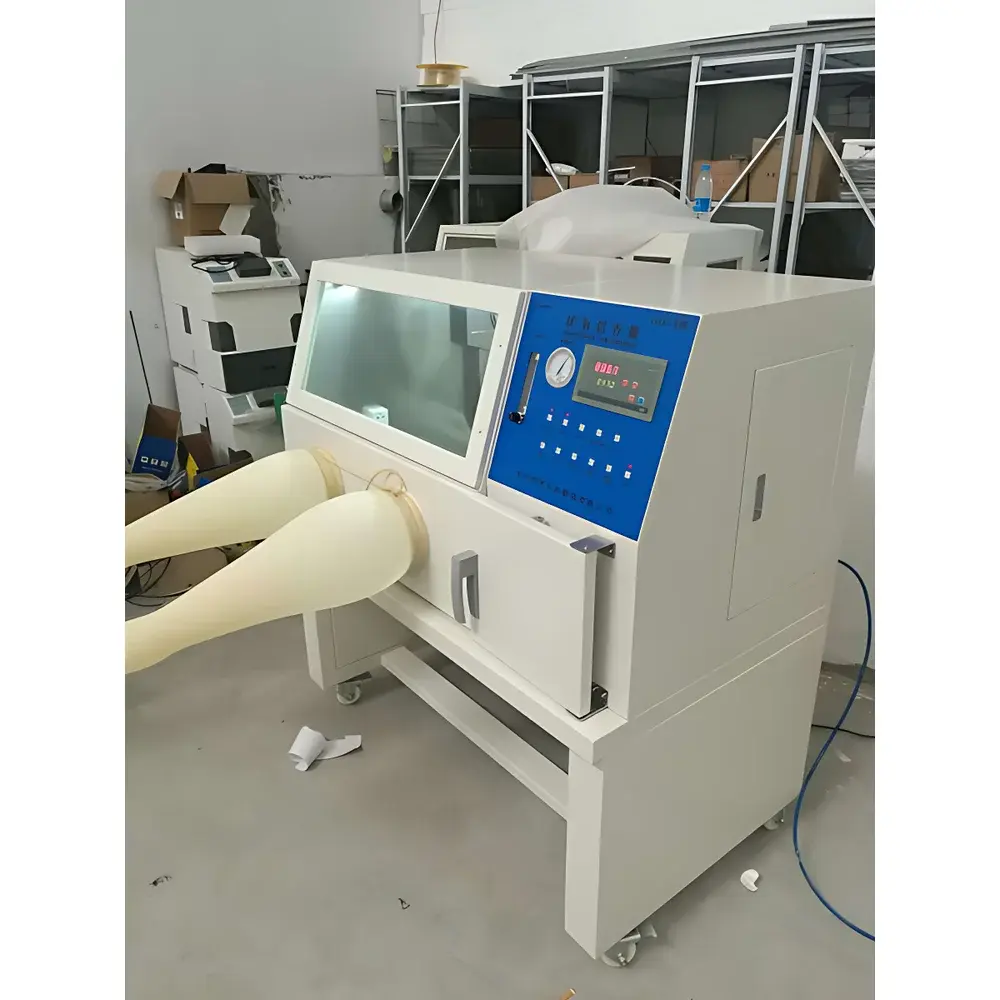
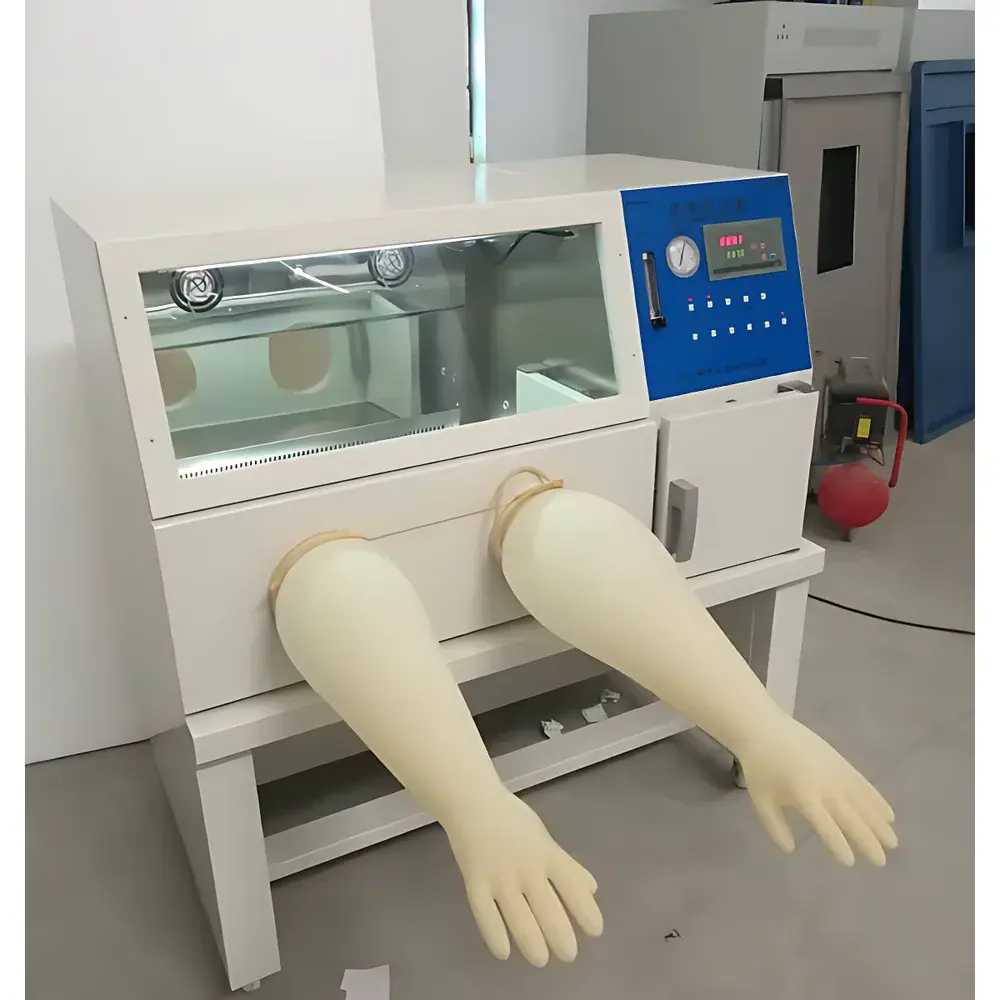
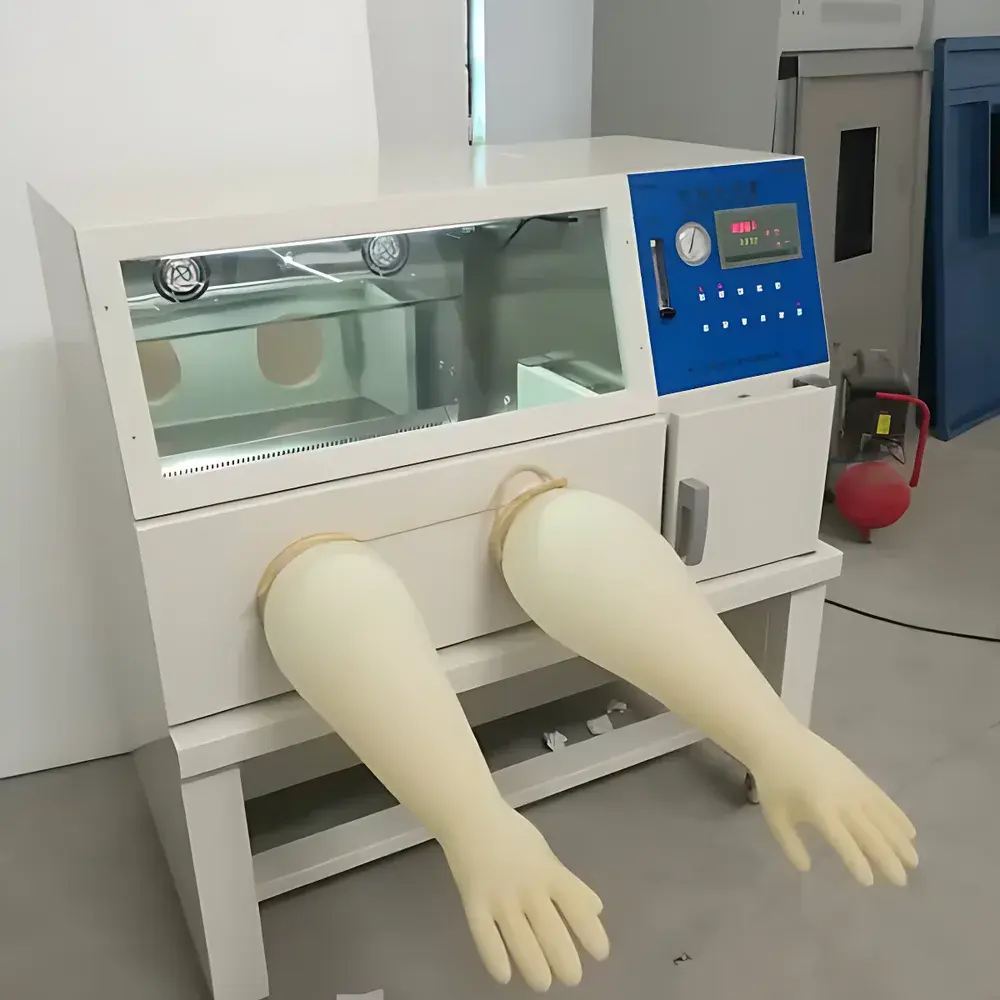
Langbo YQX-II Manual Anaerobic Incubator
| Brand | Langbo |
|---|---|
| Origin | Jiangsu, China |
| Manufacturer Type | Authorized Distributor |
| Product Category | Domestic |
| Model | YQX-II |
| Instrument Type | Manual Anaerobic Incubator |
| Oxygen Concentration Range | 0–20% (adjustable) |
| Temperature Control Range | Ambient +5°C to 50°C |
| Temperature Uniformity & Stability | ±1°C |
| Humidity Capability | Compatible with ambient humidity ≤75% RH |
| Gas Supply | Nitrogen (N₂) |
| Chamber Dimensions (W×D×H) | 820 × 550 × 660 mm |
| Internal Volume | Approx. 297 L |
| Deoxygenation Method | Catalytic Oxygen Removal + Vacuum/Flush Protocol |
| Safety Features | Over-Temperature Cut-Off, UV Sterilization Lamp, Locked Gas Valves, Dual-Glove Access |
Overview
The Langbo YQX-II Manual Anaerobic Incubator is a purpose-built environmental chamber engineered for the cultivation, isolation, and handling of obligate anaerobes, facultative anaerobes, and microaerophiles under precisely controlled low-oxygen or oxygen-free conditions. It operates on a validated vacuum-assisted gas replacement principle: ambient air is evacuated from the working chamber, followed by sequential nitrogen (N₂) flush cycles to displace residual O₂; catalytic deoxygenation—using a palladium-based catalyst at elevated temperature—ensures final O₂ levels are reduced to ≤0.5% (typical), enabling reproducible anaerobic culture initiation. Unlike automated glove boxes, the YQX-II employs manual operation protocols aligned with CLSI M48-A and ISO 11133 microbiological quality assurance standards, making it suitable for clinical microbiology labs, academic research groups, and food safety testing facilities where cost-effective, operator-controlled anaerobic workflows are required.
Key Features
- Integrated catalytic deoxygenation system with heated palladium catalyst—ensures consistent O₂ removal to <1% across full chamber volume
- Dual-glove access port with thick, high-clarity tempered glass viewport—enables direct visual monitoring and tactile manipulation without compromising seal integrity
- High-precision digital PID temperature controller with LED display—maintains setpoint accuracy within ±1°C across the full operating range (ambient +5°C to 50°C)
- UV germicidal lamp (254 nm) mounted internally—activated automatically during chamber purge cycles to suppress surface microbial contamination
- Lockable electromagnetic gas valves with fine-adjustment flow regulators—supports precise N₂ delivery and optional mixed-gas configurations (e.g., N₂/CO₂/H₂ for microaerophilic applications)
- Over-temperature protection circuit—cuts heating power and triggers audible/visual alarm if internal temperature exceeds user-defined threshold
- Compact footprint (820 × 550 × 660 mm) with 297 L usable chamber volume—optimized for benchtop deployment in space-constrained BSL-2 laboratories
Sample Compatibility & Compliance
The YQX-II accommodates standard microbiological consumables including Petri dishes (up to 150 mm), culture tubes, anaerobic jars, and multi-well plates. Its chamber geometry supports uniform thermal distribution and gas exchange, critical for colony isolation and serial dilution workflows. The incubator complies with general electrical safety requirements per IEC 61010-1 and is designed to support GLP-compliant documentation when integrated with external loggers. While not certified to ISO 13485 or FDA 21 CFR Part 11 out-of-the-box, its operational logs (temperature, gas cycle timing, UV activation) can be manually recorded to satisfy audit trails required under CLIA, CAP, or ISO/IEC 17025-accredited microbiology testing protocols.
Software & Data Management
The YQX-II is a hardware-centric, microcontroller-driven platform with no embedded software stack or network interface. All operational parameters—including temperature setpoint, gas flush duration, UV exposure time, and alarm thresholds—are configured via front-panel push-button controls and displayed on a 4-digit LED screen. Data recording is performed externally using calibrated thermocouple loggers (e.g., Testo 176 T4) placed inside the chamber. For laboratories requiring electronic records, integration with LIMS is achieved through manual entry or CSV upload of time-stamped validation reports generated during chamber qualification (IQ/OQ/PQ). No proprietary drivers or cloud services are required.
Applications
- Cultivation of strict anaerobes such as Clostridium difficile, Bacteroides fragilis, and Fusobacterium nucleatum for clinical diagnostics
- Isolation and enumeration of sulfate-reducing bacteria (SRB) in environmental or industrial water samples
- Maintenance of anaerobic reference strains in culture collections (ATCC, DSMZ) under long-term storage protocols
- Microaerophilic growth of Helicobacter pylori and Campylobacter jejuni using custom N₂/CO₂ (90:10) or N₂/CO₂/O₂ (85:10:5) gas blends
- Pre-incubation of anaerobic blood cultures prior to automated detection systems (e.g., BacT/ALERT, BACTEC)
- Teaching laboratory use for demonstrating oxygen sensitivity, redox potential effects, and metabolic diversity in prokaryotic physiology
FAQ
What gas mixture is required for optimal anaerobic operation?
Nitrogen (N₂) of ≥99.998% purity is recommended. For microaerophilic applications, users may blend N₂ with CO₂ and trace O₂ using external mass flow controllers—no internal mixing capability is provided.
Can the chamber be validated for GMP environments?
Yes—the YQX-II supports IQ/OQ/PQ execution per Annex 15 of EU GMP guidelines when paired with third-party calibration certificates, mapping studies (thermal and oxygen distribution), and documented procedural SOPs.
Is catalytic deoxygenation self-regenerating?
The palladium catalyst requires periodic reactivation at 120–150°C for 2–4 hours after extended use or exposure to high-humidity samples; full replacement is recommended every 18–24 months under continuous operation.
Does the unit include oxygen monitoring?
No built-in O₂ sensor is included; however, the chamber features a standardized 6 mm threaded port compatible with third-party electrochemical O₂ analyzers (e.g., Baseline MOCON PAC II) for real-time verification.
What maintenance is required for long-term reliability?
Monthly inspection of glove integrity, quarterly cleaning of catalyst housing and UV lamp sleeve, and annual recalibration of the temperature controller using NIST-traceable probes.





