
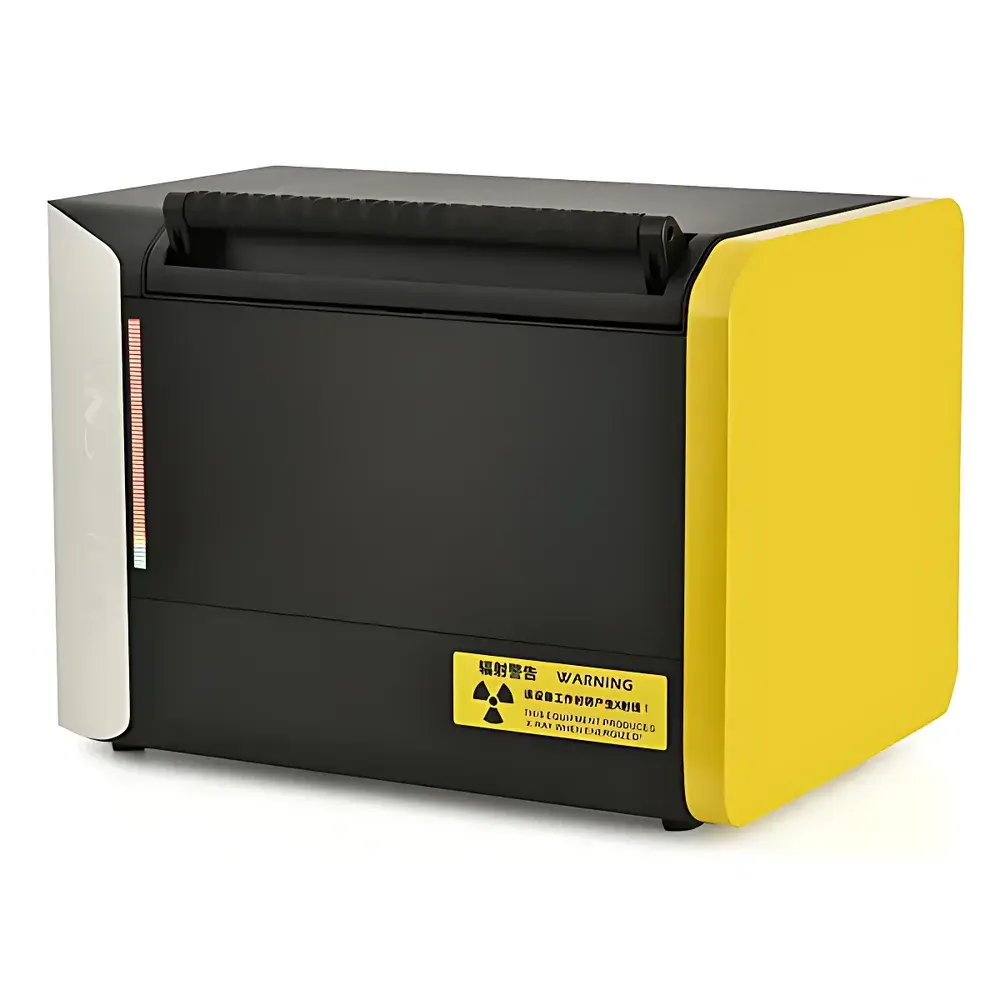
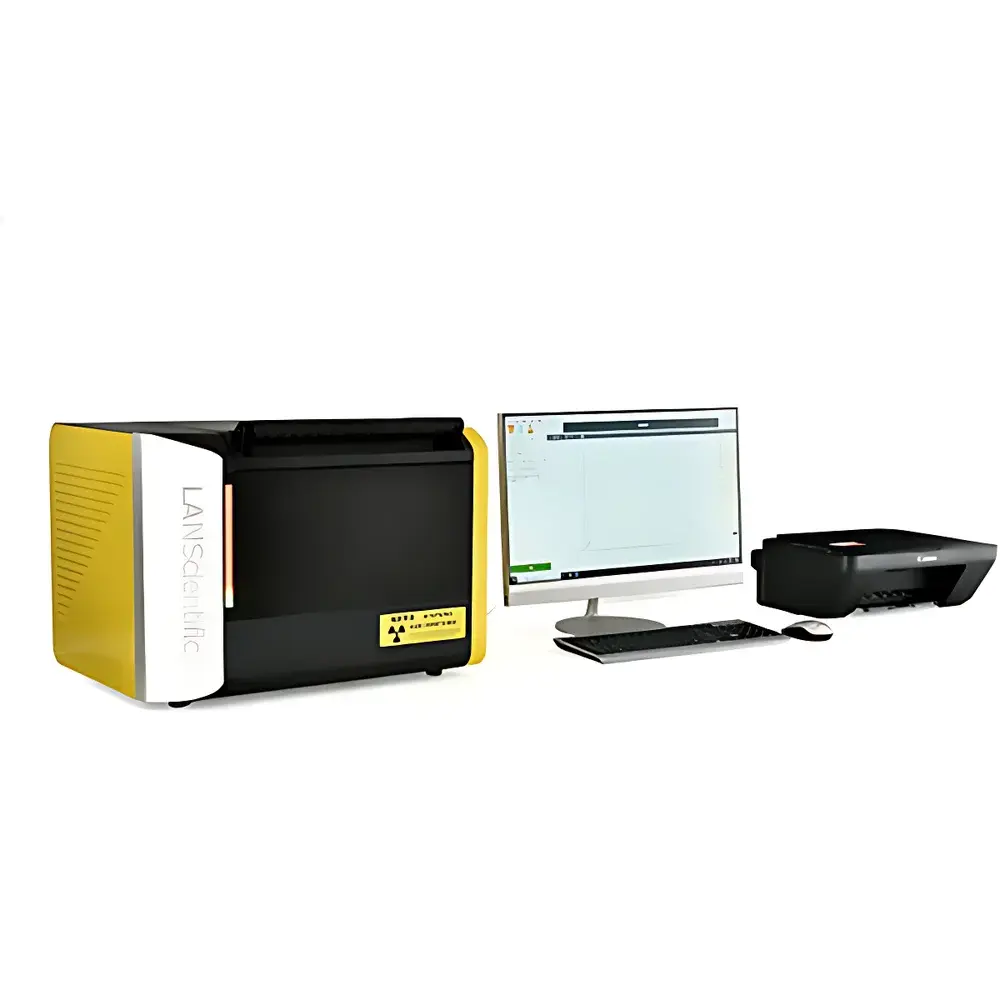
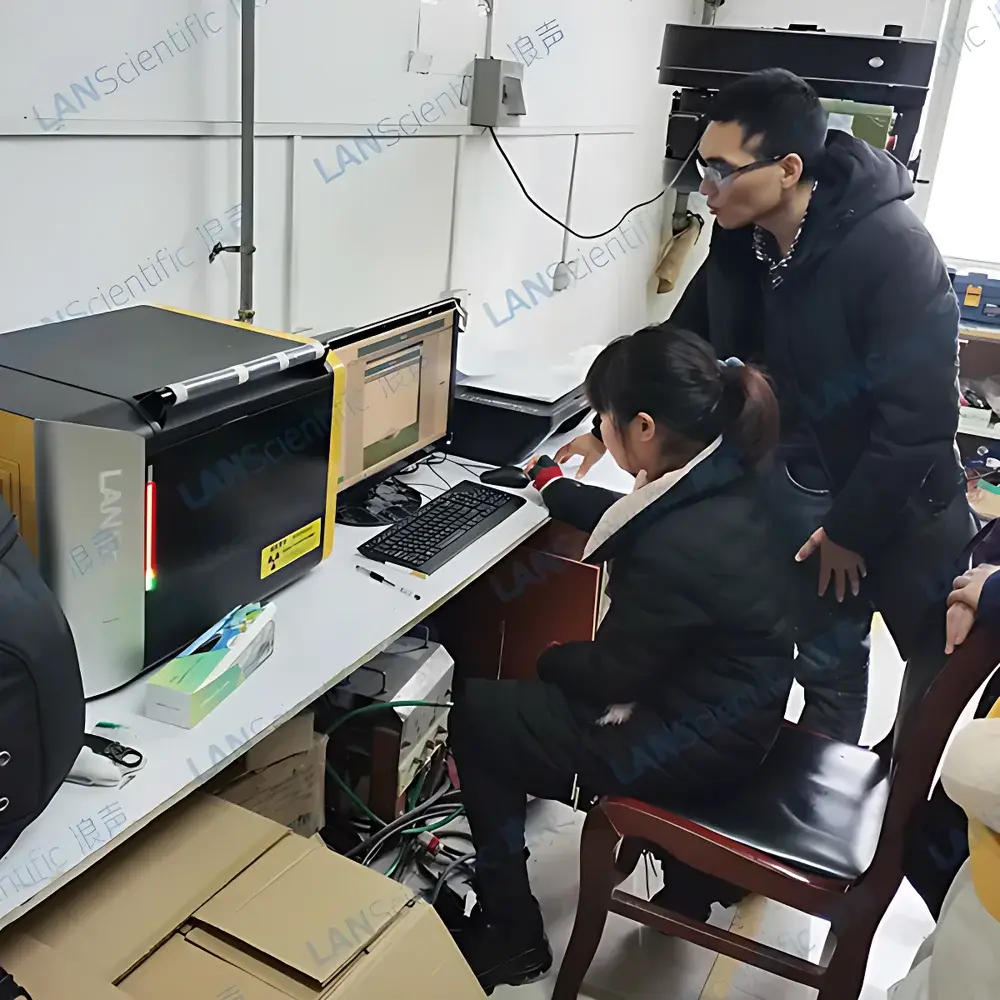
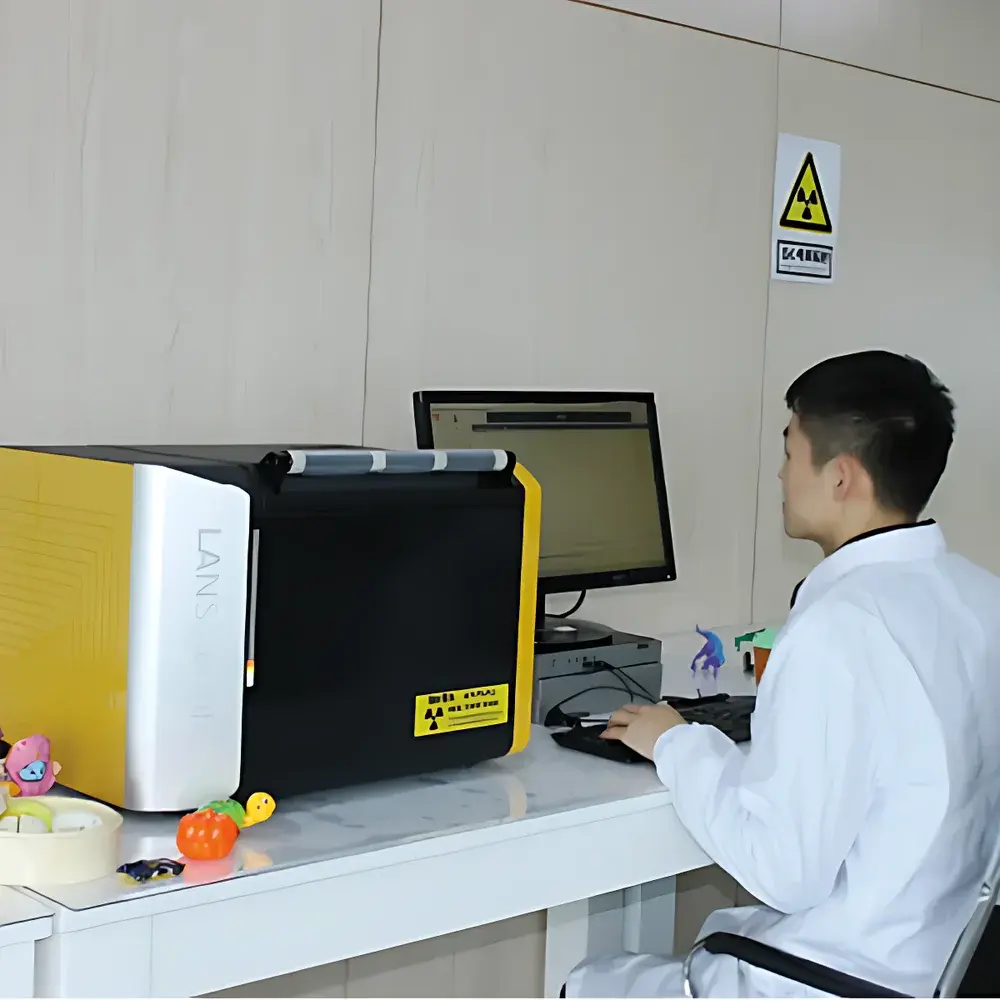
LANScientific ScopeX CSA 660 Benchtop RoHS Compliance Analyzer (ED-XRF)
| Brand | LANScientific |
|---|---|
| Origin | Jiangsu, China |
| Manufacturer Type | Direct Manufacturer |
| Regional Classification | Domestic (China) |
| Model | ScopeX CSA 660 |
| Form Factor | Benchtop |
| Instrument Type | Conventional ED-XRF Spectrometer |
| Application Scope | General-Purpose Regulatory Screening |
| Elemental Range | Mg to U |
| Detection Limit | 1 ppm (for Cd, Pb, Hg, Cr, Br, Cl in polymer matrices) |
| Energy Resolution | <125 eV at Mn Kα |
| Repeatability | ≤0.1% RSD (for 100 s counting time on homogeneous standards) |
Overview
The LANScientific ScopeX CSA 660 is a benchtop energy dispersive X-ray fluorescence (ED-XRF) spectrometer engineered for rapid, non-destructive screening of restricted substances under international environmental compliance directives—including EU RoHS 2.0 (2011/65/EU), ELV (2000/53/EC), and China’s GB/T 33352–2016 standard for electrical and electronic equipment. It operates on the fundamental principle of X-ray fluorescence: primary X-rays from a high-power microfocus tube excite inner-shell electrons in sample atoms; upon electron relaxation, characteristic secondary X-rays are emitted and resolved by a silicon drift detector (SDD). The instrument’s optimized optical path, integrated vacuum chamber, and low-energy excitation capability enable reliable quantification of light elements—particularly chlorine (Cl) and bromine (Br)—critical for halogen-free material verification. Designed for laboratory and QC environments, the CSA 660 delivers regulatory-grade data without sample digestion or chemical reagents, supporting GLP-aligned workflows in electronics manufacturing, component sourcing, and third-party testing laboratories.
Key Features
- Integrated vacuum system enabling accurate detection of Mg, Al, Si, P, S, Cl, and Br—essential for halogen-free compliance verification per IEC 61249-2-21 and JIG-001.
- High-power X-ray tube (50 kV / 1 mA) coupled with a Peltier-cooled silicon drift detector (SDD) delivering <125 eV energy resolution at Mn Kα (5.895 keV), ensuring baseline separation of overlapping peaks (e.g., Cr Kβ / Fe Kα, Pb Mα / Sb Kα).
- Dual quantification algorithms: Empirical coefficient method (requiring matrix-matched certified reference materials) and fundamental parameters (FP) method—enabling robust analysis even when certified standards for specific polymers or alloys are unavailable.
- Automated collimation and beam filtration optimized for RoHS-relevant elements (Cd, Pb, Hg, Cr, Br, Cl) and extended elemental coverage from Mg (Z=12) to U (Z=92).
- Benchtop footprint (<600 × 500 × 450 mm) with safety-interlocked shielding compliant with IEC 61010-1 and GB 4793.1, suitable for ISO/IEC 17025-accredited labs.
Sample Compatibility & Compliance
The CSA 660 accommodates solid, powdered, and thin-film samples up to 100 mm in diameter and 50 mm in height—including PCB substrates, plastic housings, metal contacts, solder joints, and coated fasteners. Sample presentation is standardized via reusable polypropylene cups (for powders) or custom aluminum holders (for irregular geometries). All measurement protocols align with ASTM F2617–23 (Standard Test Method for Determining Lead, Mercury, Cadmium, and Chromium in Polymer Materials and Electronic Parts by ED-XRF) and IEC 62321-3-1:2023 (Screening for RoHS substances using XRF). Data output includes full spectral reports, peak deconvolution overlays, and uncertainty estimation per ISO/IEC 17025 Clause 7.6. Instrument calibration verification is traceable to NIST SRM 2582 (Polyethylene containing Cd, Pb, Cr, Hg) and BAM CRM 012 (PVC with Br and Cl).
Software & Data Management
ScopeX Analysis Suite v4.2 provides intuitive workflow-driven operation—from method setup and calibration to report generation. Each analysis session logs operator ID, timestamp, instrument configuration, and raw spectrum metadata. Audit trails comply with FDA 21 CFR Part 11 requirements, including electronic signatures, immutable log files, and role-based access control (admin, analyst, reviewer). Quantitative results export in CSV, PDF, and XML formats compatible with LIMS integration. Optional IQ/OQ documentation packages support GMP-regulated environments and ISO/IEC 17025 accreditation audits.
Applications
- Routine screening of RoHS 2.0 restricted substances (Cd ≤ 100 ppm, Pb ≤ 1000 ppm, Hg ≤ 1000 ppm, Cr(VI) ≤ 1000 ppm, Br/Cl ≤ 900 ppm in homogenous materials).
- ELV-compliant analysis of automotive components (catalytic converters, wiring harnesses, interior trims) for Pb, Hg, Cd, and Cr.
- Verification of halogen-free status in printed circuit boards and cable insulation per IPC-4101 and JEDEC J-STD-020.
- Quantitative analysis of plating thickness (Ni, Sn, Au, Ag) on connectors and terminals using FP-based layer modeling.
- Multi-element composition verification of recycled plastics and metal alloys prior to reprocessing.
FAQ
Does the CSA 660 meet EU RoHS 2.0 enforcement requirements for laboratory screening?
Yes—it satisfies the performance criteria defined in EN 62321-3-1:2023 for screening-level compliance assessment, including detection limits, repeatability, and inter-laboratory reproducibility benchmarks.
Can it quantify chromium(VI) directly?
No. As an XRF technique, it measures total Cr. Cr(VI) speciation requires wet-chemical extraction followed by IC-ICP-MS or UV-Vis, per EN 62321-7-1.
Is vacuum operation mandatory for Cl and Br detection?
Yes. Air absorption strongly attenuates low-energy X-rays (<2 keV); vacuum or helium purge is required for reliable Cl (2.62 keV) and Br (11.9 keV) quantification in polymers.
What calibration standards are recommended for routine verification?
NIST SRM 2582 (polymer matrix), BAM CRM 012 (PVC), and IARM 51A (ABS with Br) are recommended for daily system suitability checks.
Does the software support multi-language interfaces and regulatory report templates?
Yes—English, German, Japanese, and Simplified Chinese UI options are available. Preconfigured RoHS, ELV, and China RoHS report templates include pass/fail flags and uncertainty statements per ISO/IEC 17025.




