
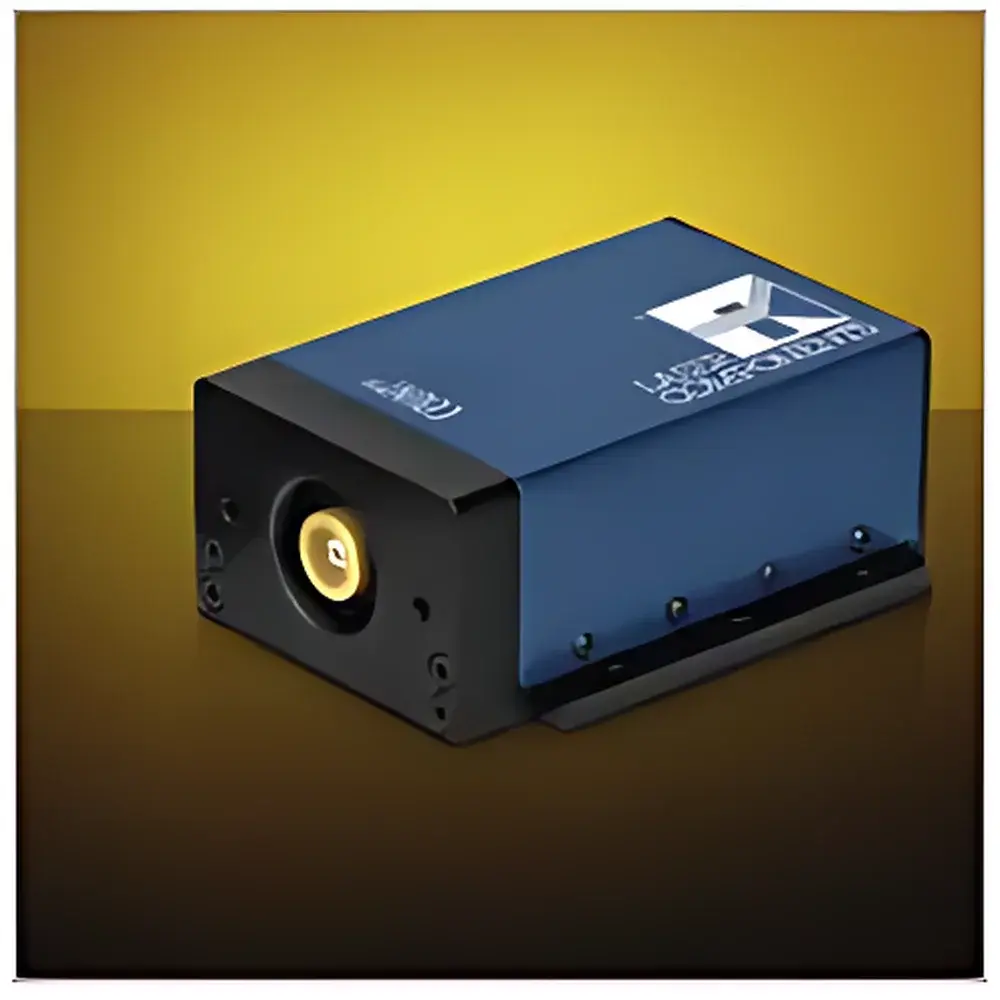
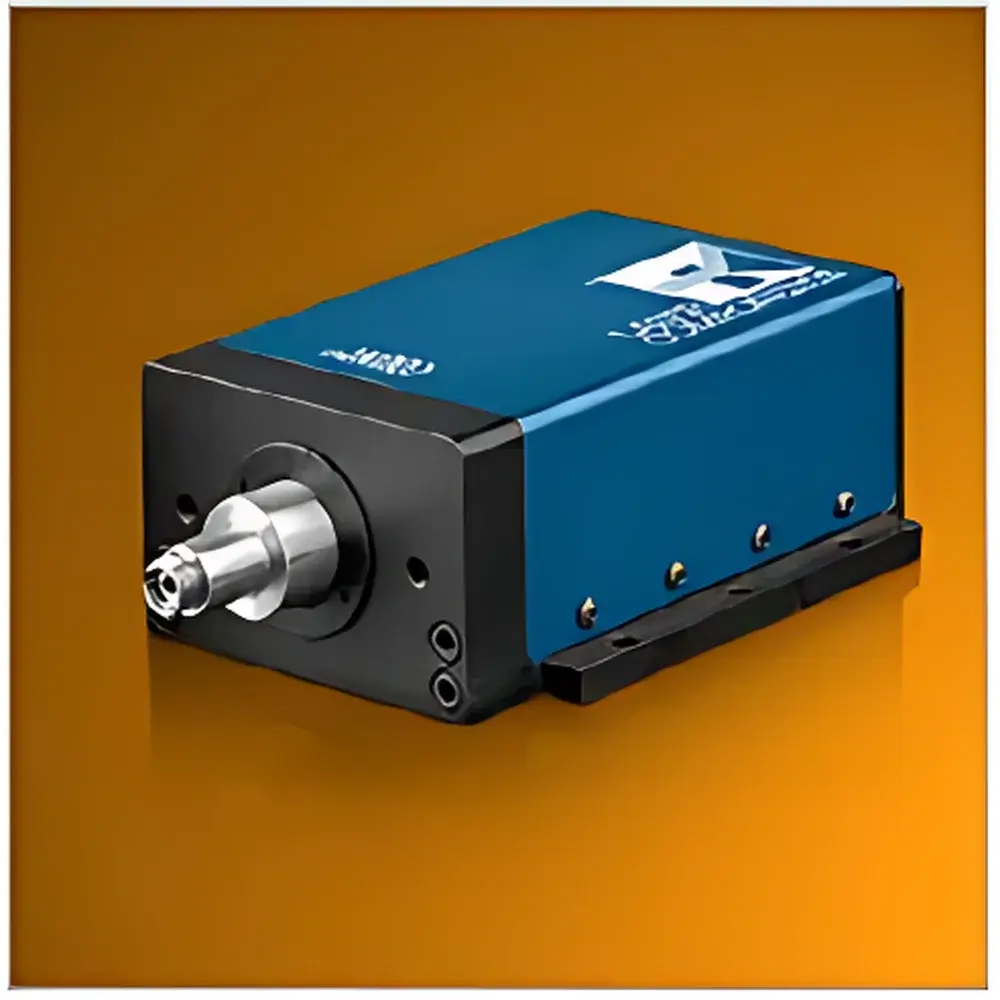
Laser Components COUNT BLUE UV-Vis Single-Photon Counting Module
| Brand | Laser Components |
|---|---|
| Model | COUNT BLUE |
| Spectral Range | 350–1000 nm |
| Peak Detection Efficiency | 55% @ 405 nm, 70% @ 532 nm, 55% @ 670 nm |
| Active Area | 100 µm diameter |
| Dark Count Rate | 10–250 counts/s (configurable per bias) |
| Timing Resolution | 1000 ps FWHM |
| Dead Time | 42–45 ns |
| Afterpulsing Probability | ≤0.2% |
| Gating Input | TTL-compatible (0–0.5 V = disabled, ≥2.4 V = enabled) |
| Gating Response Time | ≤20 ns (on), ≤65 ns (off) |
| TTL Output Pulse Width | 15–17 ns |
| TTL Output Amplitude (50 Ω) | 3 V |
| Supply Voltage | 11.5–12.5 V DC |
| Supply Current | ≤0.8 A |
| Maximum Count Rate | 20 Mcps |
| Connector Options | SMA (standard), FC (optional) |
Overview
The Laser Components COUNT BLUE UV-Vis Single-Photon Counting Module is a compact, turnkey photodetection solution engineered for high-fidelity photon counting in the ultraviolet to near-infrared spectral region (350–1000 nm). Based on a custom-designed, ultra-low-noise VLoK silicon avalanche photodiode (APD), the module operates in Geiger mode and integrates proprietary active quenching and signal conditioning electronics to deliver stable, low-jitter output pulses synchronized with incident photons. Its core architecture adheres to fundamental principles of single-photon detection physics—namely, impact ionization amplification in reverse-biased p-n junctions, followed by rapid quenching to reset the APD for subsequent detection events. This ensures high temporal fidelity and minimal afterpulsing, critical for time-resolved applications such as fluorescence lifetime imaging (FLIM), time-correlated single-photon counting (TCSPC), and pulsed LIDAR ranging. The module requires no external cooling or complex biasing infrastructure, making it suitable for integration into OEM instruments, laboratory setups, and field-deployable optical systems where reliability, compactness, and ease of interfacing are essential.
Key Features
- High quantum efficiency across UV-Vis-NIR: up to 55% at 405 nm, 70% at 532 nm, and 55% at 670 nm—optimized for common laser excitation wavelengths used in confocal microscopy and Raman spectroscopy.
- Sub-nanosecond timing resolution: 1000 ps full width at half maximum (FWHM) pulse timing jitter enables precise photon arrival time stamping in TCSPC and time-of-flight measurements.
- Low intrinsic noise: dark count rate configurable between 10 and 250 counts/s via adjustable bias voltage—allowing trade-offs between sensitivity and background suppression based on application requirements.
- Integrated gating functionality: TTL-compatible enable/disable control with <20 ns response time provides robust protection against saturation during high-flux illumination or laser pulse leakage.
- Standard SMA electrical interface and optional FC fiber coupling support flexible integration with free-space optics or multimode fiber-based sample delivery systems.
- Stable DC operation: 12 V ±0.5 V supply with ≤0.8 A draw; no thermoelectric cooler or high-voltage driver required—reducing system complexity and power overhead.
Sample Compatibility & Compliance
The COUNT BLUE module is compatible with standard optical configurations used in fluorescence correlation spectroscopy (FCS), particle sizing, astronomical photometry, and Raman scattering experiments. Its 100 µm active area supports efficient coupling to microscope objectives (e.g., 40×–100× oil immersion) and multimode fibers (up to 200 µm core). The device complies with CE marking requirements for electromagnetic compatibility (EMC Directive 2014/30/EU) and low-voltage safety (LVD Directive 2014/35/EU). While not certified for medical or industrial safety standards (e.g., IEC 61010-1), its design aligns with general laboratory equipment best practices for electrical isolation and thermal management. For regulated environments (e.g., GLP/GMP-compliant analytical labs), users may implement audit-trail-capable data acquisition software that logs timestamps, gate states, and count rates in accordance with FDA 21 CFR Part 11 requirements.
Software & Data Management
The COUNT BLUE outputs standardized TTL logic pulses (3 V amplitude, 15–17 ns width, 50 Ω impedance-matched), enabling direct interfacing with commercial time-tagging hardware (e.g., PicoQuant HydraHarp, Becker & Hickl SPC-150) or FPGA-based acquisition systems. No proprietary drivers or SDKs are required—pulse trains are fully compatible with LabVIEW, MATLAB, Python (via PyVISA or GPIO libraries), and C/C++-based DAQ frameworks. When integrated into larger measurement platforms, the module’s gating input allows synchronization with laser pulsing, scanning mirrors, or shutter control signals—facilitating gated detection schemes for background rejection in ambient-light-sensitive applications. Raw count data can be streamed in real time and stored in HDF5 or ASCII formats, supporting traceability, post-acquisition histogramming, and cross-platform analysis workflows.
Applications
- Confocal and multiphoton microscopy: Photon-efficient detection of weak fluorescent signals from biological specimens, especially in low-light FLIM and Förster resonance energy transfer (FRET) assays.
- LIDAR and atmospheric sensing: Time-of-flight distance measurement using pulsed UV-Vis lasers; enhanced signal-to-noise ratio in daylight-limited conditions due to gating capability.
- Astronomical photometry: High-time-resolution stellar scintillation monitoring and exoplanet transit detection requiring sub-millisecond photon arrival precision.
- Raman spectroscopy: Low-flux anti-Stokes signal capture under continuous-wave or pulsed excitation, particularly in portable or fiber-coupled systems.
- Quantum optics experiments: Hanbury Brown–Twiss (HBT) interferometry, photon antibunching verification, and entanglement characterization where detector dead time and afterpulsing must be quantified and minimized.
- Fluorescence correlation spectroscopy (FCS): Accurate autocorrelation of intensity fluctuations in nanoliter-scale volumes, dependent on linear count-rate response up to 20 Mcps.
FAQ
What is the maximum sustainable count rate without significant dead-time losses?
The module supports up to 20 million counts per second (Mcps) with less than 5% nonlinearity error under typical operating conditions—verified using Poissonian light sources and calibrated reference detectors.
Can the COUNT BLUE be operated in free-running mode without gating?
Yes—gating is optional and disabled by default; the module functions continuously unless a TTL low signal is applied to the gate input.
Is temperature stabilization required for long-term measurement stability?
No active cooling is needed; however, for sub-1% drift in dark count rate over 8-hour sessions, mounting on a passive heatsink or maintaining ambient temperature within ±2°C is recommended.
How is quantum efficiency characterized across the spectral range?
QE values are measured traceably against NIST-calibrated photodiodes at discrete wavelengths (405, 532, 670 nm); full QE curve data is available upon request in CSV format for interpolation.
Does the module support analog output or only digital TTL pulses?
TTL pulse output only—no analog current or voltage output is provided; photon counting is implemented digitally at the detector level.




