
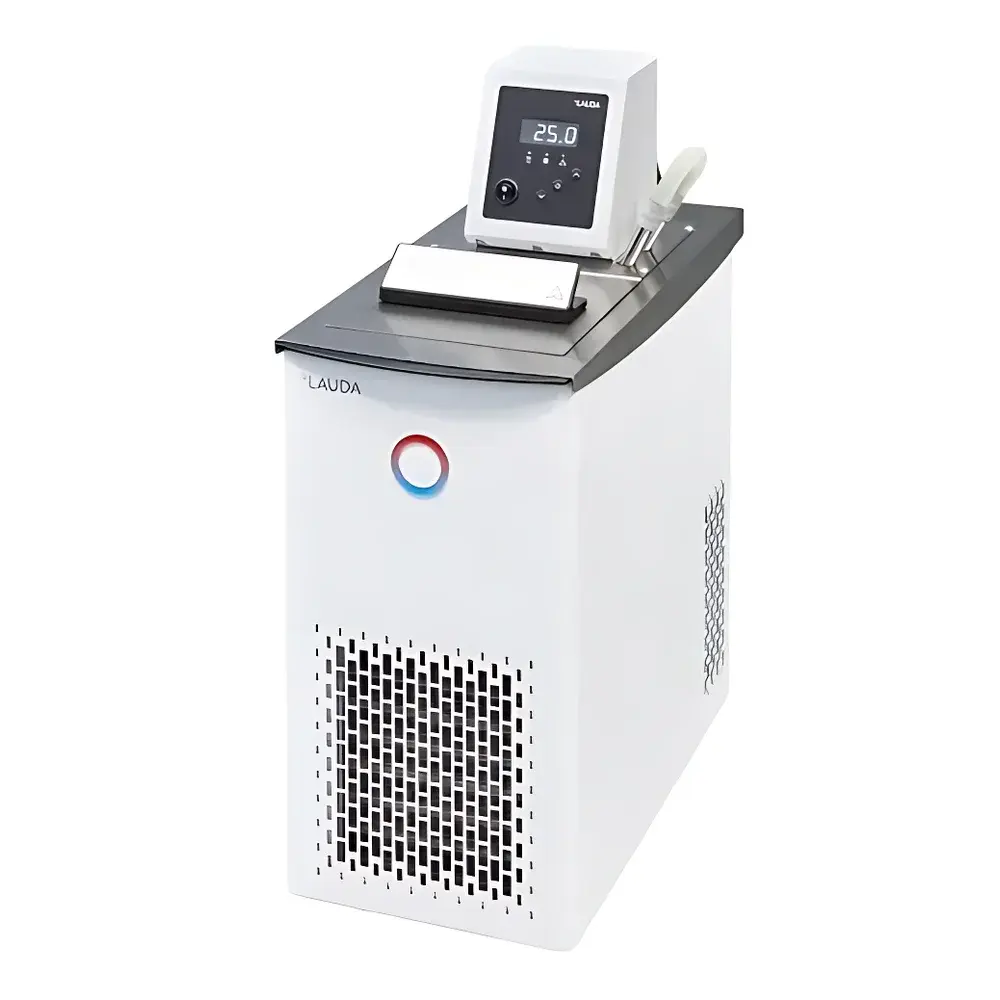
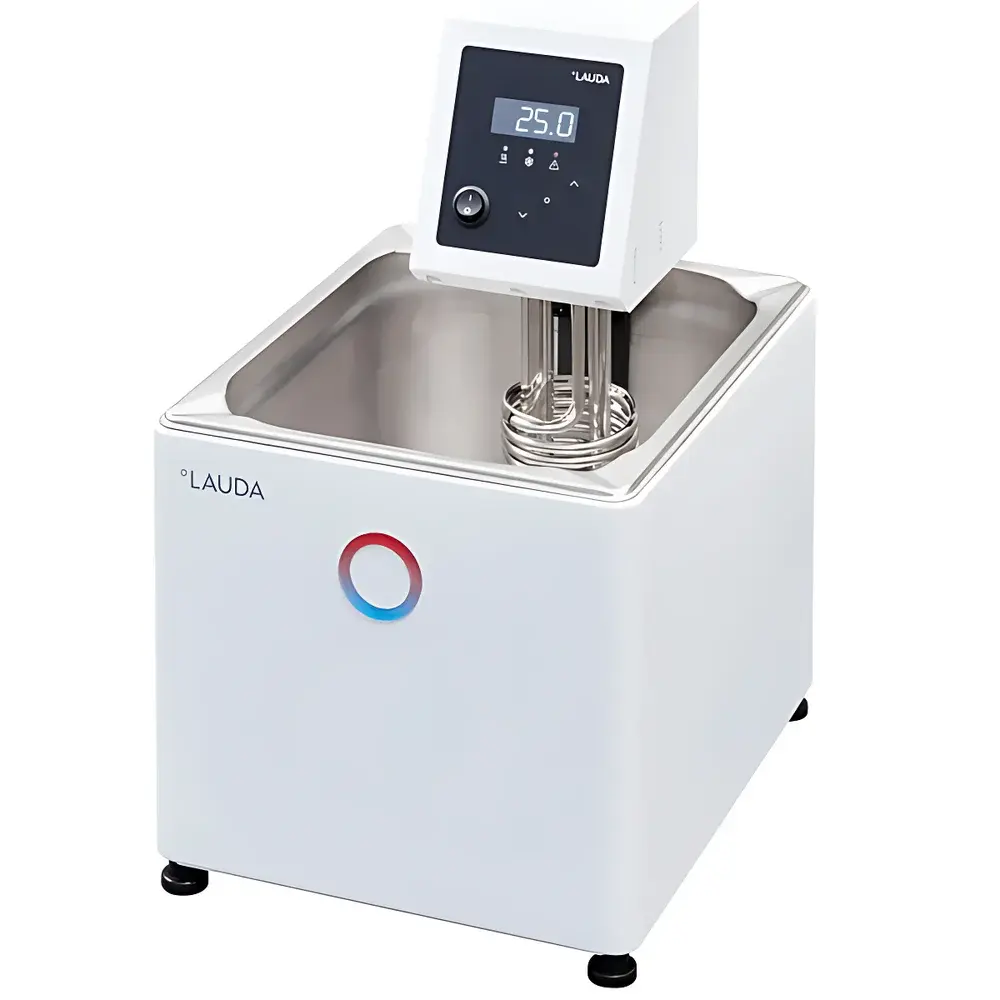
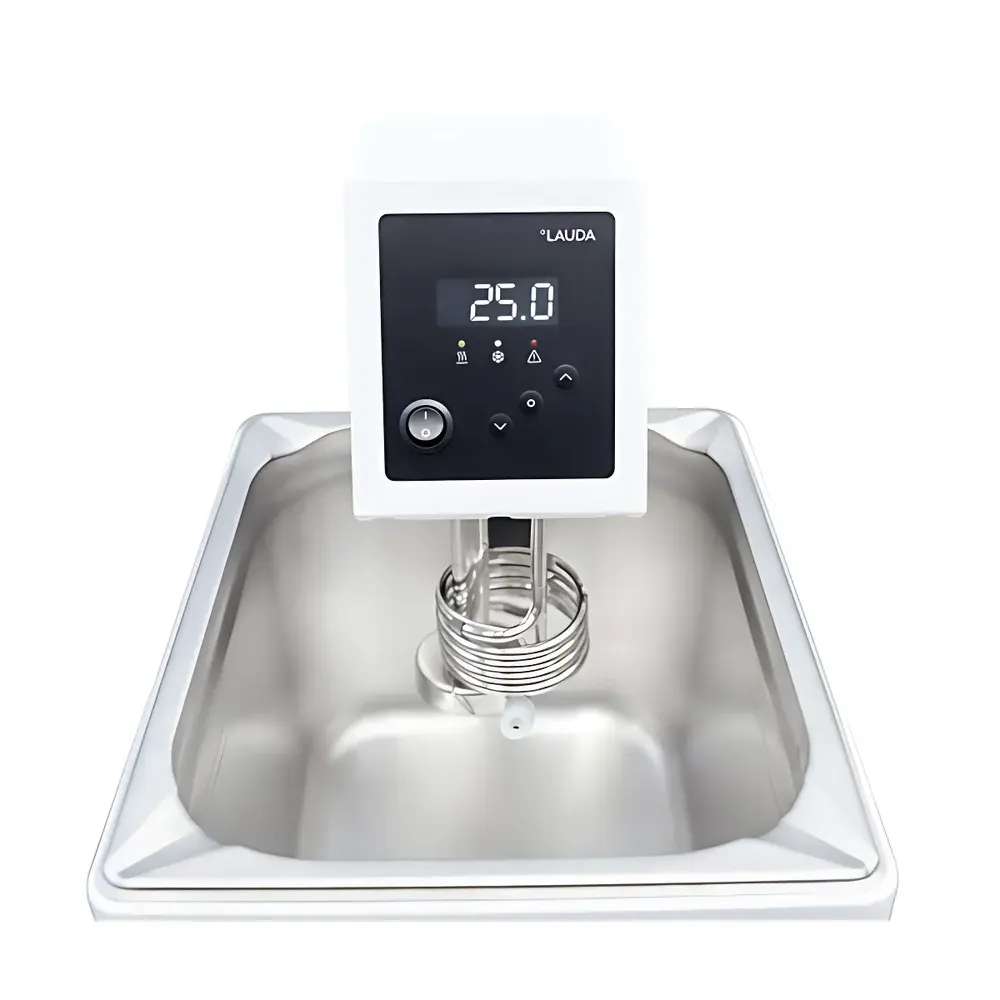
LAUDA Alpha Series Refrigerated/Heating Circulating Bath
| Brand | LAUDA |
|---|---|
| Origin | Germany |
| Models | RA 8 / RA 12 / RA 24 / A 6 / A 12 / A 24 |
| Temperature Range | −25 °C to 100 °C |
| Stability | ±0.05 K |
| Bath Volume | 7.5–22 L |
| Circulation Type | Internal & External |
| Fluid Compatibility | Water, Ethylene Glycol/Water Mixtures (Non-Flammable) |
| Safety Features | Low-Level & Over-Temperature Protection, Integrated Timer for Auto Standby |
| Construction | Stainless Steel Bath Vessel |
| Cooling Method | Compressor-Based (Demand-Controlled Activation) |
| Mounting | Threaded Clamp for Wall Thickness ≤30 mm |
Overview
The LAUDA Alpha Series Refrigerated/Heating Circulating Bath is a precision-engineered temperature control platform designed for demanding laboratory environments where stable, repeatable thermal management is essential. Based on Peltier-free compressor-driven refrigeration and high-efficiency resistive heating, the Alpha series operates across a broad working range of −25 °C to 100 °C—enabling both sub-ambient cooling and high-temperature heating in a single compact unit. Its core architecture follows a minimalist engineering philosophy: eliminating non-essential features while retaining metrological integrity, mechanical robustness, and long-term operational reliability. This makes it particularly suited for applications requiring continuous thermal conditioning of external devices (e.g., viscometers, spectrophotometers, electrophoresis systems), sample preparation under controlled thermal conditions, and material testing protocols where temperature stability better than ±0.05 K is critical. All models comply with IEC 61010-1 for laboratory electrical safety and are CE-marked for use within the European Economic Area.
Key Features
- Stainless steel bath vessel with integrated drain port for rapid fluid exchange and maintenance
- Demand-controlled compressor activation—reduces mechanical wear, extends service life, and lowers energy consumption by engaging refrigeration only when required
- Front-accessible air filter and condenser—removable front panel requires no tools, facilitating routine cleaning without disassembly
- Three-button intuitive interface with LED display and context-sensitive menu navigation—designed for fast setup and minimal training overhead
- Integrated timer function enabling programmable auto-standby mode to conserve power during unattended operation
- Standard pump connection kit and insulated bath lid included—ensures immediate readiness for external circulation or evaporation suppression
- Threaded clamp mounting system compatible with wall thicknesses up to 30 mm—enables flexible integration into custom rigs or auxiliary equipment
Sample Compatibility & Compliance
The Alpha series is validated exclusively for use with non-flammable heat transfer fluids—including deionized water and aqueous ethylene glycol solutions (up to 50% v/v). It is not rated for organic solvents, oils, or flammable media. All units incorporate dual independent safety interlocks: low-fluid-level detection and over-temperature cutoff, meeting functional safety requirements outlined in EN 60335-1 and supporting GLP-compliant workflows. While the Alpha series does not include full 21 CFR Part 11 audit trail capabilities, its deterministic control logic, fixed parameter set, and hardware-based safety layers make it suitable for regulated environments where traceability is maintained via external loggers or LIMS integration.
Software & Data Management
The Alpha operates as a standalone instrument with no proprietary software dependency. Temperature setpoints, timer values, and status indicators are managed locally via the front-panel interface. For laboratories requiring centralized monitoring or data logging, analog output (0–10 V or 4–20 mA) is available on select models (RA/A 12 and RA/A 24) to interface with PLCs, SCADA systems, or third-party DAQ platforms. Optional RS485 Modbus RTU communication enables remote readout of bath temperature, setpoint, and alarm status—supporting integration into facility-wide environmental monitoring networks without introducing cybersecurity surface area associated with Ethernet-connected instruments.
Applications
- External temperature control of analytical instruments (e.g., rheometers, DSC cells, UV-Vis cuvette holders)
- Circulating coolant supply for rotary evaporators, small-scale bioreactors, and electrophoresis apparatus
- Thermal conditioning of biological samples during live-cell imaging or enzymatic assays
- Calibration support for temperature-sensitive sensors and transducers
- Material property testing—including coefficient of thermal expansion (CTE) measurements and polymer crystallization studies
- Pre-conditioning of reagents and standards prior to chromatographic or spectroscopic analysis
FAQ
What heat transfer fluids are approved for use with the LAUDA Alpha series?
Only non-flammable liquids—specifically deionized water and aqueous ethylene glycol mixtures (≤50% v/v)—are permitted. Mineral oil, silicone oil, acetone, ethanol, and other flammable or corrosive fluids are strictly prohibited.
Can the Alpha bath be used for internal sample immersion only, or does it support external circulation?
All models support both internal bath immersion and external recirculation via standard pump connections. The RA variants include pre-installed circulation components; the A-series heating-only models accept optional circulation kits.
Is the ±0.05 K temperature stability specification verified under static or dynamic load conditions?
Stability is specified under steady-state, no-load conditions per DIN 12876-1. Under typical external loads (e.g., 1–2 L/min flow at 5 m head), stability remains within ±0.1 K when using recommended fluid types and proper insulation.
Does LAUDA provide factory calibration certificates with NIST-traceable documentation?
Yes—each unit ships with a factory calibration report traceable to PTB (Physikalisch-Technische Bundesanstalt), including verification points at −20 °C, 25 °C, and 95 °C. On-site recalibration services are available through authorized LAUDA service centers.
What is the expected service interval for compressor maintenance?
With demand-controlled operation and routine condenser cleaning, the hermetic compressor is rated for ≥25,000 operating hours. LAUDA recommends annual visual inspection and biennial performance validation in GxP environments.



