LaVision FlowMaster®-UW Underwater Particle Image Velocimetry (PIV) System
| Brand | LaVision GmbH |
|---|---|
| Origin | Germany |
| Model | FlowMaster®-UW |
| Measurement Domain | Planar (2D/3D) |
| Measurement Frequency | Low-frequency operation |
| Velocity Range | 0–2,000 m/s |
| Accuracy | ±1% of measured velocity |
| Measurement Area | Up to 1 m × 1 m |
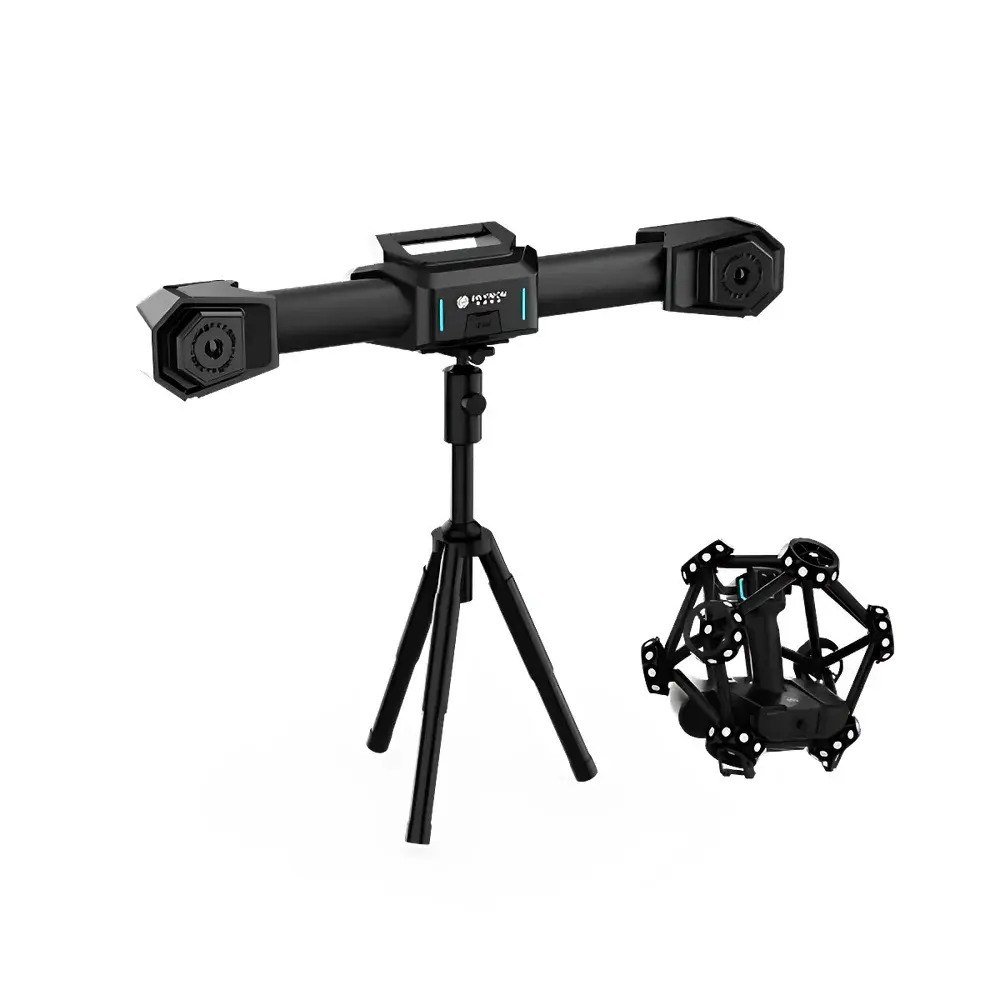
| Optical Architecture | Modular submersible configuration with surface-mounted electronics |
| Compliance | Designed for ISO/IEC 17025-aligned laboratory environments and GLP-compliant fluid dynamics research |
Overview
The LaVision FlowMaster®-UW is a purpose-engineered underwater Particle Image Velocimetry (PIV) system designed for quantitative, non-intrusive measurement of instantaneous two-dimensional (2D) and stereo three-dimensional (3D) velocity fields in submerged fluid environments. Based on the fundamental principle of double-pulse laser sheet illumination and high-speed digital image correlation, the system captures sequential particle-seeded flow images with nanosecond-level interframe timing. Cross-correlation algorithms then compute displacement vectors at pixel-resolved interrogation windows, converting spatial shifts into calibrated velocity vectors. Unlike conventional PIV systems optimized for air or transparent tanks, the FlowMaster®-UW integrates hydrostatically rated optical components, pressure-compensated housings, and refractive-index-matched light delivery paths to maintain diffraction-limited resolution under water—enabling accurate measurements even in turbulent, high-Reynolds-number marine or hydraulic conditions.
Key Features
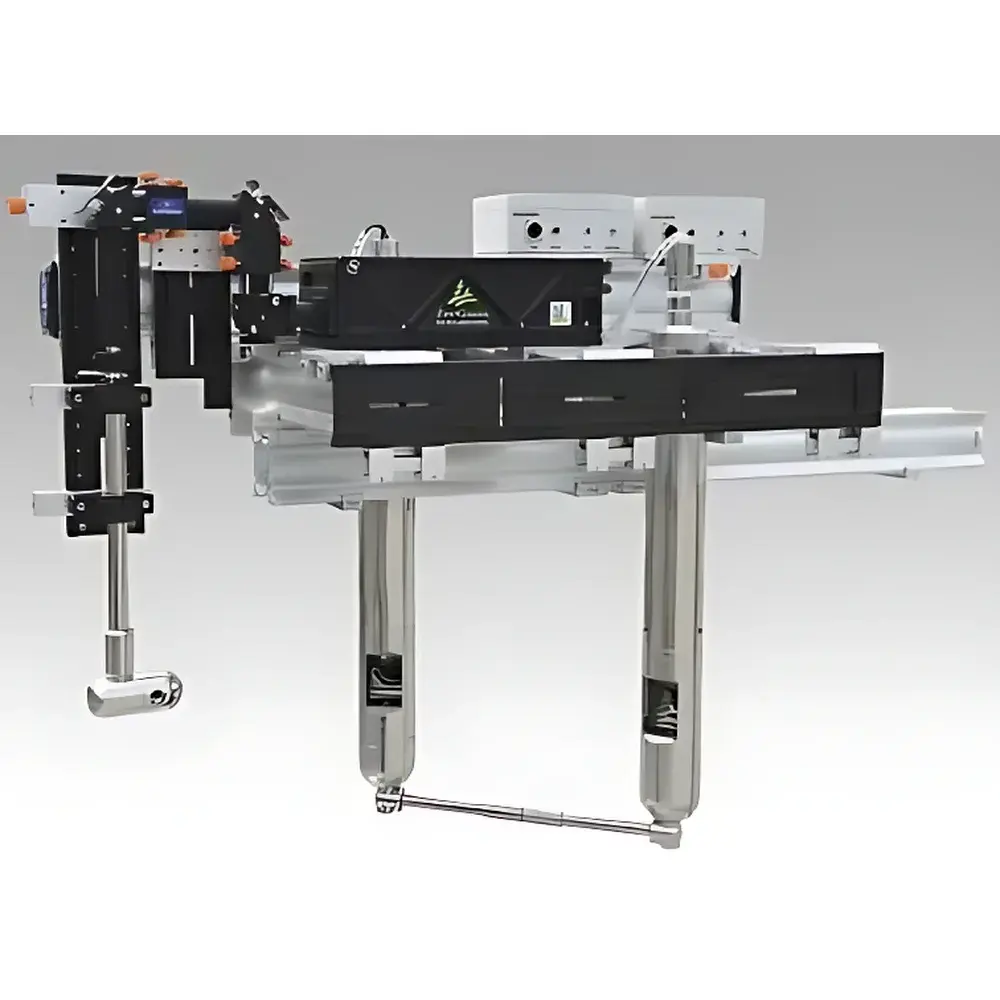
- Modular underwater architecture: Separates optically sensitive imaging modules (submerged) from control electronics (surface-mounted), minimizing thermal drift and enabling long-duration deployments.
- Patented self-calibration algorithm: Automatically compensates for misalignment between laser sheet geometry and calibration target plane—eliminating manual recalibration and reducing setup time by >40% in field applications.
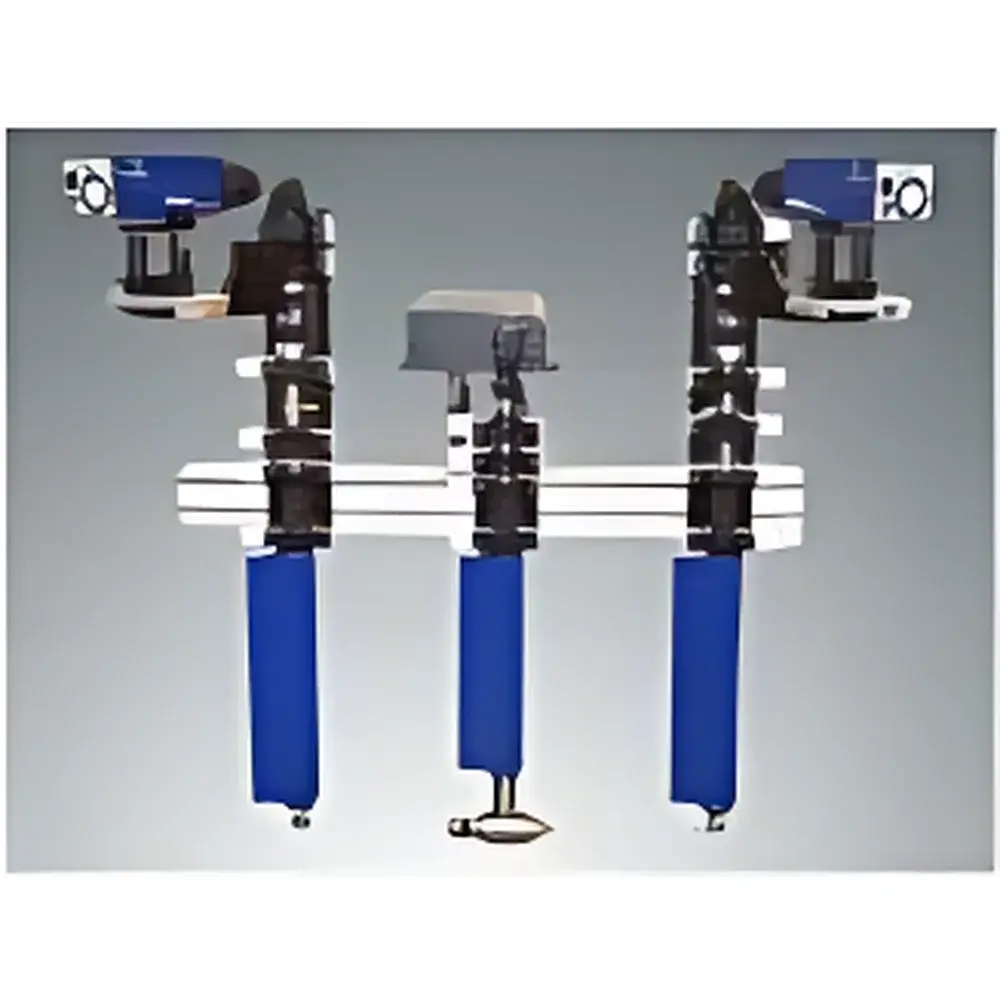
- Compact periscope-style and torpedo-shaped probe variants: Engineered to minimize flow disturbance (blockage ratio < 0.8%) while maintaining optical path integrity; validated via CFD simulation and tow-tank testing.
- High-resolution submersible PIV cameras: Sealed, titanium-housed CMOS sensors with global shutter, 12-bit dynamic range, and synchronized triggering to dual Nd:YAG lasers (up to 15 Hz repetition rate).
- Refractive-index-optimized optics: Custom-designed quartz lenses and fused-silica windows mitigate spherical aberration and chromatic dispersion induced by water immersion.
- Ruggedized mechanical construction: All underwater components undergo 100-hour saltwater immersion testing and meet IP68 ingress protection standards.
Sample Compatibility & Compliance
The FlowMaster®-UW supports seeding with neutrally buoyant particles (e.g., hollow glass spheres, polyamide particles, or custom-synthesized tracer materials) sized between 10–100 µm—compatible with freshwater, seawater, and low-viscosity aqueous solutions. It operates within temperature ranges of 2–30 °C and depths up to 100 m (custom-rated housings available). The system conforms to metrological traceability requirements outlined in ISO/IEC 17025 for calibration laboratories and supports audit-ready data logging aligned with Good Laboratory Practice (GLP) frameworks. While not a medical or safety-critical device, its software architecture accommodates 21 CFR Part 11-compliant electronic signatures and audit trails when integrated with validated Lab Information Management Systems (LIMS).
Software & Data Management
Davis® 10 software serves as the unified acquisition, processing, and visualization platform. It provides real-time PIV processing with adaptive interrogation window sizing, multi-pass recursive correlation, and vector validation via universal outlier detection (e.g., median filtering, normalized cross-correlation thresholding). Time-resolved datasets are stored in HDF5 format with embedded metadata (laser energy, camera gain, calibration matrix, environmental parameters). Batch processing pipelines support automated post-processing for turbulence statistics (Reynolds stress, vorticity, Q-criterion), ensemble averaging, and phase-locked analysis. All processing steps are scriptable via Python API, enabling integration into CI/CD workflows for reproducible computational fluid dynamics (CFD) validation studies.
Applications
- Marine hydrodynamics: Wake characterization behind ship hulls, propeller-induced cavitation zones, and tidal turbine inflow profiling.
- Hydraulic engineering: Flow structure analysis in spillways, stilling basins, and sediment transport channels.
- Biological fluid mechanics: Quantification of fish swimming kinematics, coral reef boundary layer dynamics, and larval dispersal patterns.
- Subsea equipment testing: Validation of ROV thruster jets, AUV hydrodynamic drag, and offshore platform vortex-induced vibration (VIV) mitigation.
- Environmental monitoring: In-situ measurement of estuarine mixing layers, riverbed shear stress, and pollutant dispersion plumes.
FAQ
What laser safety class does the FlowMaster®-UW use?
The system employs Class IV pulsed Nd:YAG lasers (532 nm), requiring certified laser safety officers (LSOs), interlocked enclosures, and ANSI Z136.1-compliant operational protocols.
Can the system perform time-resolved 3D-3C measurements?
Yes—when configured with two synchronized cameras and stereo calibration, it delivers three-component velocity vectors in a planar domain; volumetric reconstruction requires tomographic PIV add-ons (e.g., LaVision Tomo-PIV®).
Is remote operation supported for deep-water deployments?
Fully supported via Ethernet-over-fiber or acoustic telemetry interfaces; all camera triggering, laser firing, and image transfer are controllable from surface workstations with latency < 50 ms.
How is optical distortion corrected for varying water depths?
The Davis® software incorporates depth-dependent refraction modeling using Snell’s law and user-defined bathymetric profiles, enabling pixel-to-physical-space mapping accuracy better than 0.2% across 0–50 m depth ranges.
Does LaVision provide application-specific validation reports?
Yes—each installation includes NIST-traceable calibration certificates, uncertainty budgets per ISO 5725, and peer-reviewed benchmark datasets from the PIV Challenge series (2021–2023).