
LEI-TECH LK-JXFX Advanced Metallurgical Image Analysis Software
| Brand | LEI-TECH |
|---|---|
| Origin | Tianjin, China |
| Manufacturer Type | OEM/ODM Producer |
| Regional Category | Domestic (China) |
| Model | LK-JXFX |
| Price | USD 2,800 (FOB Tianjin) |
Overview
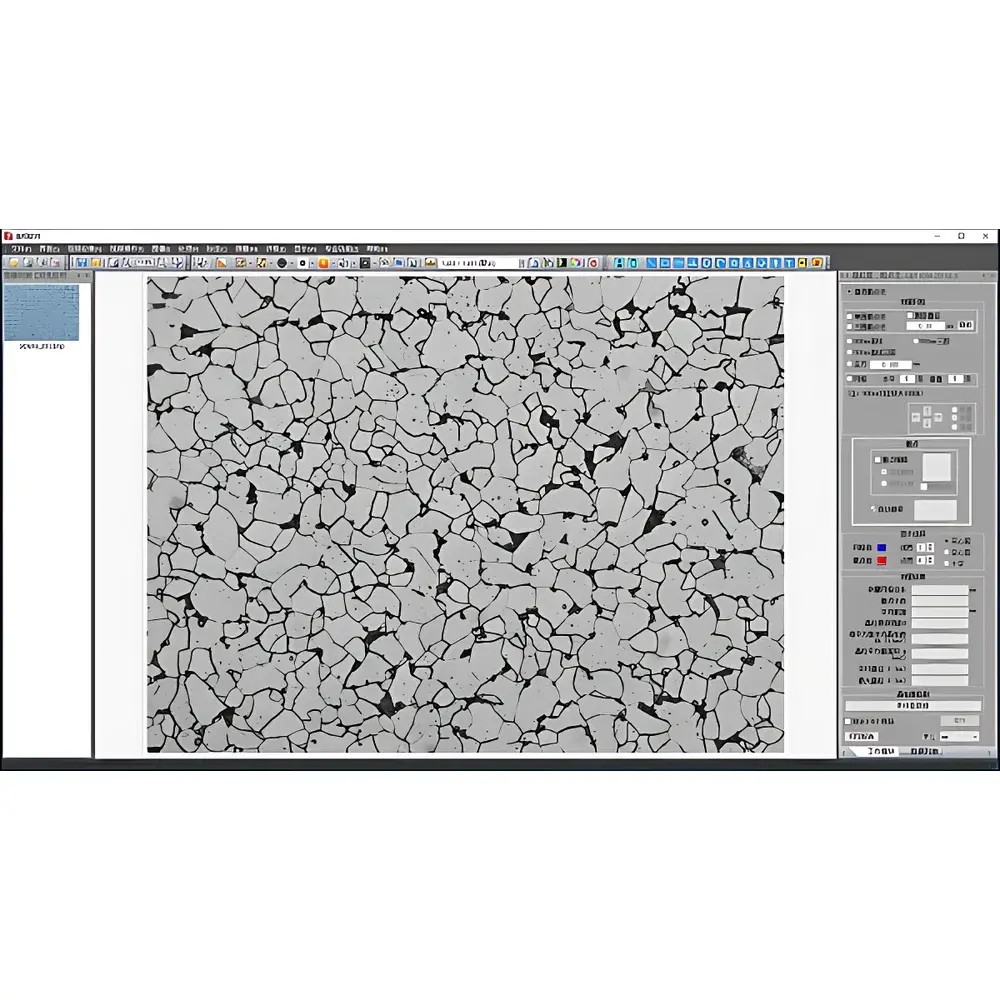
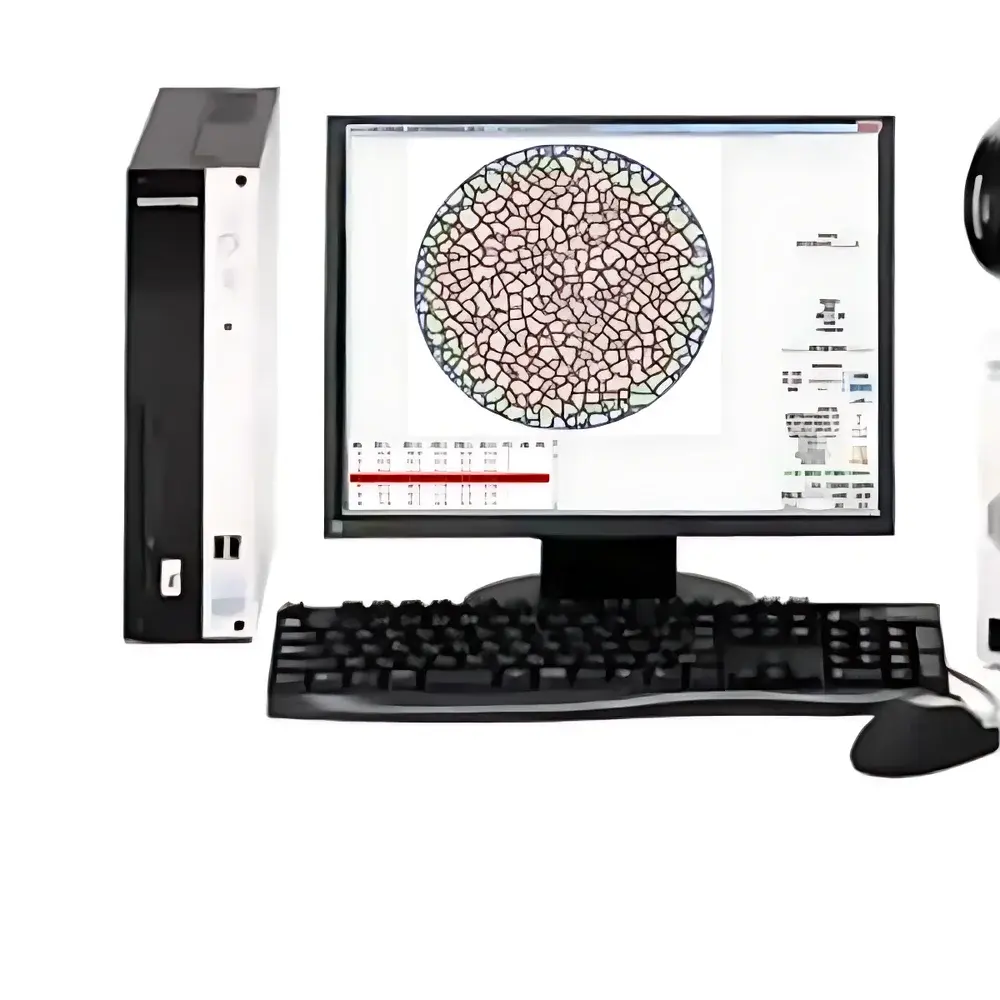
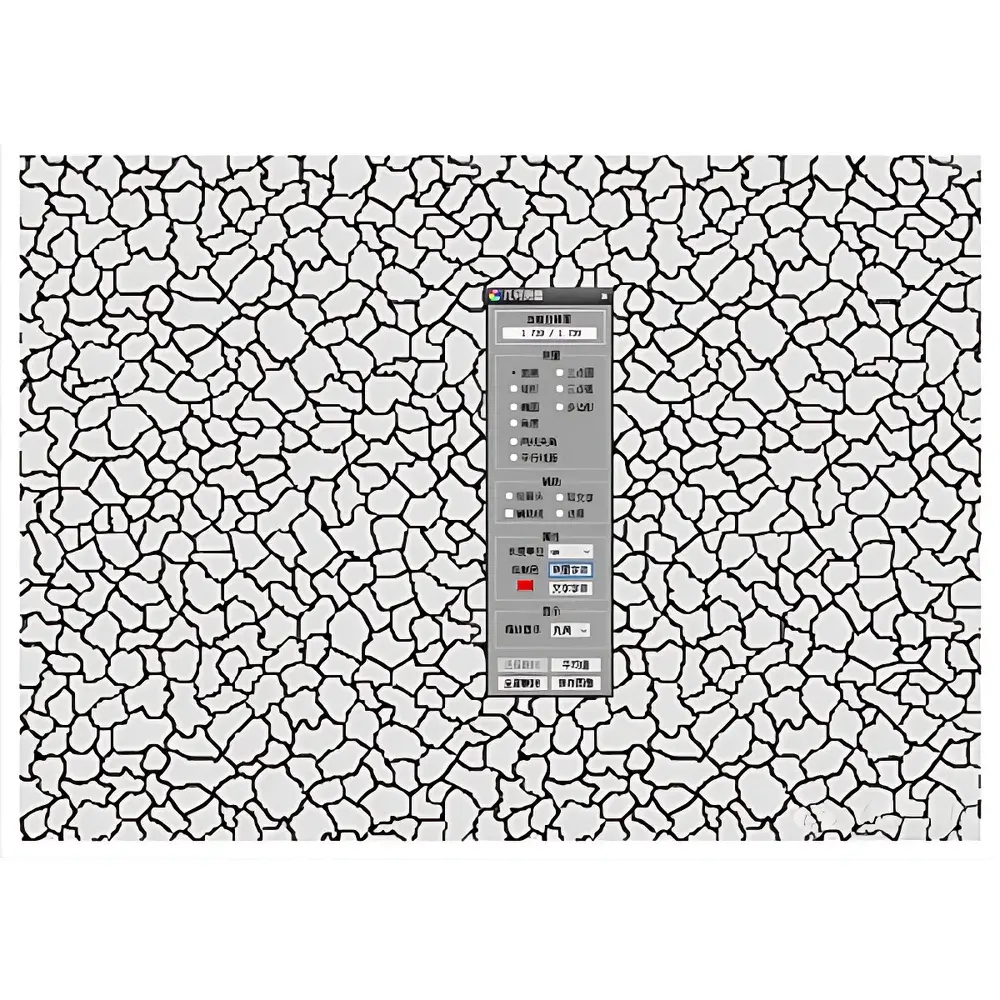
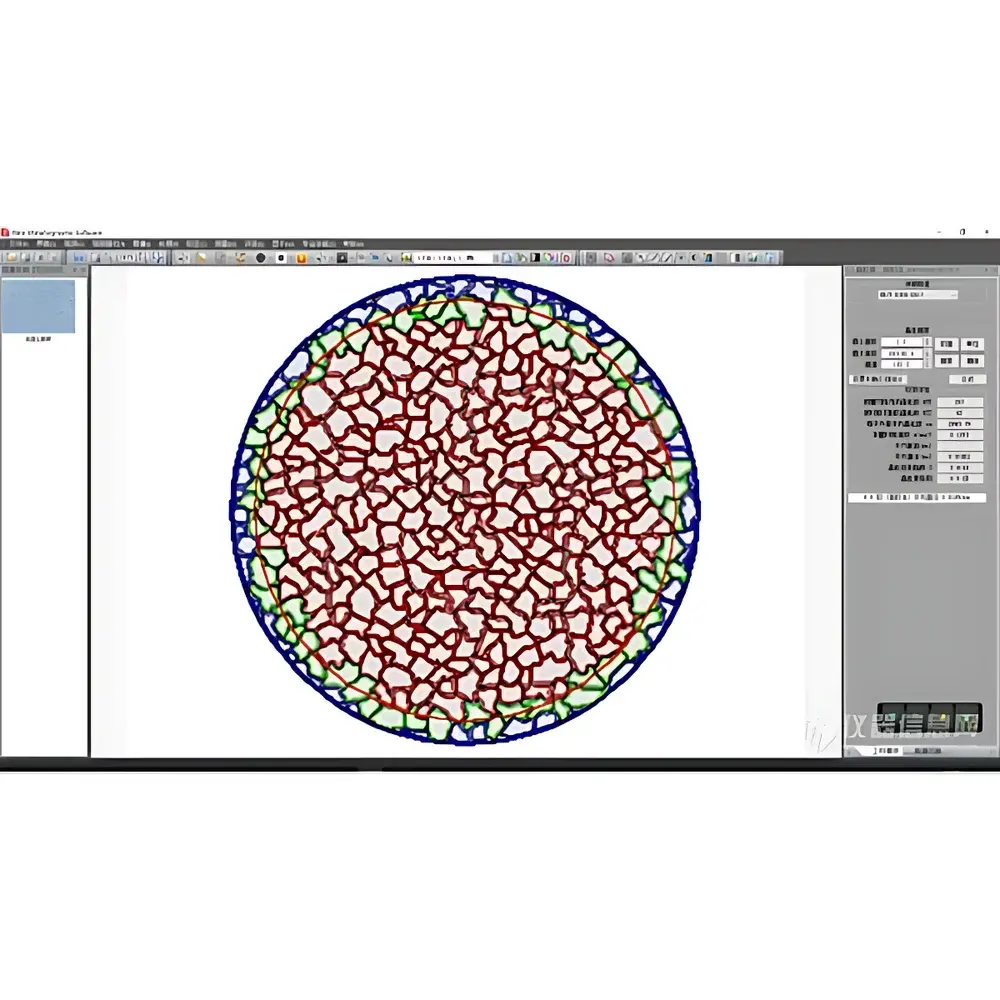
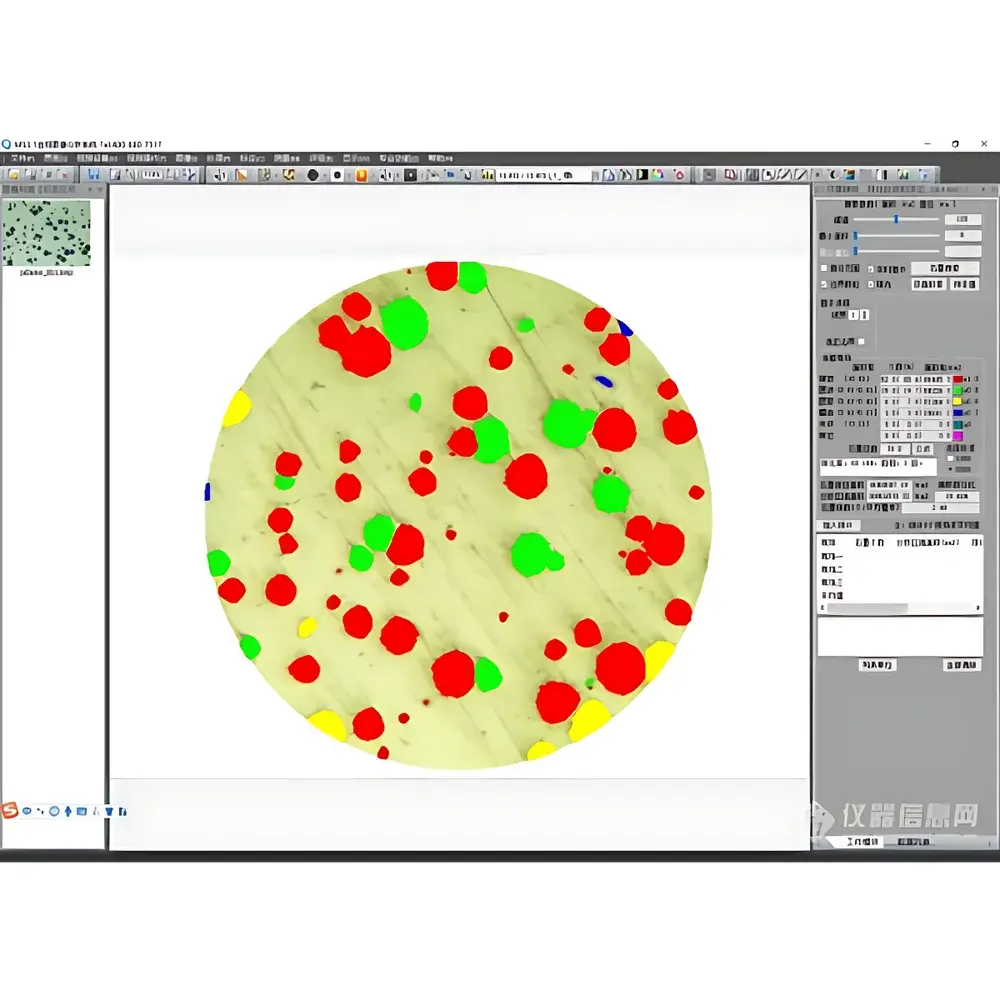
The LEI-TECH LK-JXFX Advanced Metallurgical Image Analysis Software is a comprehensive, standards-compliant digital image analysis platform engineered for quantitative and qualitative microstructural evaluation of metallic materials. Designed as a modular, microscope-agnostic solution, it integrates seamlessly with optical metallurgical microscopes—both upright and inverted—and supports real-time acquisition via industry-standard camera SDKs (including DP27 and Toupcam). The software implements ASTM, ISO, GB/T, JB/T, DL, EN, and JIS-compliant algorithms to perform standardized metallographic assessments including grain size measurement (ASTM E112, GB/T 6394), inclusion rating (ASTM E45, GB/T 10561), phase area quantification (GB/T 6401, ASTM E562), decarburization depth determination (ASTM E1077, GB/T 224), and spheroidization, pearlite, carbide, and graphite morphology analysis across ferrous and non-ferrous alloys. Its architecture adheres to GLP-aligned workflow principles—ensuring traceable, auditable, and reproducible results suitable for QC laboratories, R&D centers, and third-party testing facilities operating under ISO/IEC 17025 or GMP-regulated environments.
Key Features
- Standards-driven automated rating engine supporting over 311 preconfigured modules across seven material categories: General Metallurgy, Cast Iron, Steels, Automotive/Gear/Bearing Components, Power Industry (DL-series), Non-Ferrous Alloys (Al, Mg, Cu), and Educational/Reference.
- Multi-modal image acquisition: single-frame capture, batch directory import, and embedded real-time camera sampling (DP27/Toupcam SDK) without pop-up dialogs—enabling uninterrupted workflow continuity.
- Advanced image enhancement suite: ROI selection, noise suppression, contrast/brightness optimization, spot removal, freehand annotation, and grayscale normalization—optimized for low-SNR metallographic images.
- Geometric metrology toolkit: calibrated linear distance, angular measurement, ellipse/rectangle/polygonal area calculation, three-point circle/arc fitting, parallel line spacing, and multi-point arc interpolation—all traceable to user-defined stage calibration.
- Confocal stack fusion (Z-stack depth compositing): algorithmic merging of multi-focus image sequences into a single in-focus composite—critical for high-aspect-ratio features (e.g., deep etch pits, layered coatings).
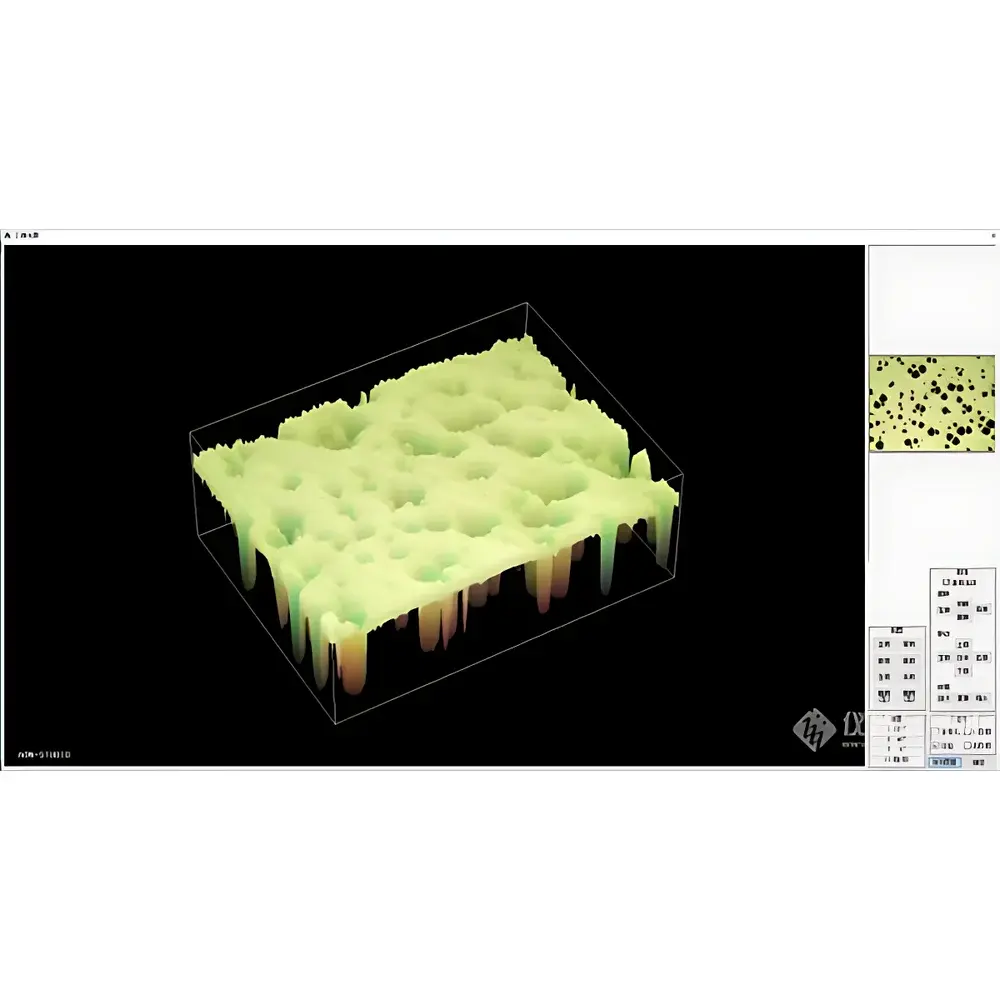
- 3D topographic reconstruction: pixel-intensity-to-height mapping generating surface relief models for qualitative texture assessment and depth profiling visualization.
- Large-area mosaic stitching: manual alignment and automated motorized stage-assisted tiling (requires optional motorized XY stage and controller)—supporting full-field coverage of large specimens (>100 mm²).
- Hardware-synchronized autofocus: three operational modes—manual Z-step button control, mouse-wheel Z-scanning, and closed-loop auto-focus with gradient-based sharpness maximization—compatible with standard piezoelectric or stepper-motor Z-drives.
- Comparative and quantitative rating workflows: side-by-side standard reference library matching (human-in-the-loop decision) and fully automated ASTM/GB-compliant grading (e.g., ASTM E45 Method A/D, GB/T 10561 Type A–D, ISO 4967).
- Configurable UI framework: drag-and-drop menu reorganization, theme-based color scheme customization (light/dark mode), and DPI-aware scaling for high-resolution displays.
Sample Compatibility & Compliance
The LK-JXFX software is validated for use with polished, etched, and unetched metallurgical specimens prepared per ASTM E3, ISO 14489, and GB/T 13298. It supports image inputs from monochrome and RGB cameras with resolutions up to 20 MP (via TIFF, BMP, JPEG, PNG, and proprietary RAW formats). All rating modules are explicitly mapped to referenced standards—including ASTM E112 (grain size), ASTM E45 (inclusions), ASTM E562 (volume fraction), ISO 945 (graphite morphology), ISO 20160 (Ti alloy microstructures), DL/T 786 (graphitization), and GB/T 18254 (bearing steel)—with version-controlled parameter sets reflecting current editions (e.g., ASTM E112-2013, GB/T 6394-2017). Audit trails log operator ID, timestamp, image metadata, applied standard, selected module, and final rating output—enabling compliance with FDA 21 CFR Part 11 (when deployed on validated Windows OS with electronic signature configuration) and ISO/IEC 17025 documentation requirements.
Software & Data Management
LK-JXFX employs a relational SQLite database backend for secure, local storage of image archives, measurement records, rating histories, and report templates. All data exports support CSV (for statistical analysis in MATLAB/Python/R), PDF/A-1b (archival-grade reports), and structured XML (for LIMS integration). Built-in report generation includes three standardized layouts: universal 4-image summary, ASTM-compliant tabular output, and custom multi-page technical dossiers with embedded calibration certificates. Version-controlled module updates are delivered via encrypted offline patches; no cloud dependency ensures air-gapped deployment in classified or regulated environments. Software licensing is node-locked to hardware fingerprint—preventing unauthorized redistribution—while enterprise deployments support concurrent license pooling across networked workstations.
Applications
This software serves critical functions across industrial and academic domains: incoming material verification per ASTM A370 or ISO 6892-1; heat treatment process validation (e.g., carburizing depth per GB 9450, nitriding layer analysis per GB 11354); failure analysis of fatigue cracks, intergranular corrosion, or hydrogen embrittlement; R&D of new alloy systems (e.g., high-entropy alloys, additive-manufactured Ti-6Al-4V); and accreditation-ready testing for ISO 17025-certified labs. End users include metallurgical QA/QC engineers at Tier-1 automotive suppliers, nuclear power component inspectors applying DL/T 884 creep damage protocols, aerospace fastener manufacturers validating AMS 2300 cleanliness, and university materials science departments conducting graduate-level microstructure-property correlation studies.
FAQ
Is LK-JXFX compatible with non-LEI-TECH microscopes?
Yes—it supports all major optical metallurgical microscopes (Olympus, Zeiss, Leica, Nikon, Meiji) via standard USB/UVC or GigE Vision interfaces.
Does the software support FDA 21 CFR Part 11 compliance?
When installed on a validated Windows environment with enabled audit logging, electronic signatures, and role-based access control, it meets core Part 11 requirements for electronic records and signatures.
Can custom rating modules be developed?
Yes—LEI-TECH offers OEM module development services, including algorithm implementation, reference image library curation, and formal validation documentation per ISO 17025 Annex A.2.
What camera SDKs are natively integrated?
DP27 (Olympus), Toupcam (ToupTek), and generic DirectShow/UVC drivers—with optional SDK integration available for FLIR, Basler, and IDS cameras.
Is motorized stage control included?
Stage control is optional and requires the LEI-TECH MTS-2000 motorized XY stage + STC-100 controller; software provides native driver support and scripting API for custom automation.
What is the warranty and support model?
Two-year comprehensive hardware-agnostic software warranty; 7×24 remote diagnostics, on-site installation/training, and annual calibration verification packages are available globally.






