
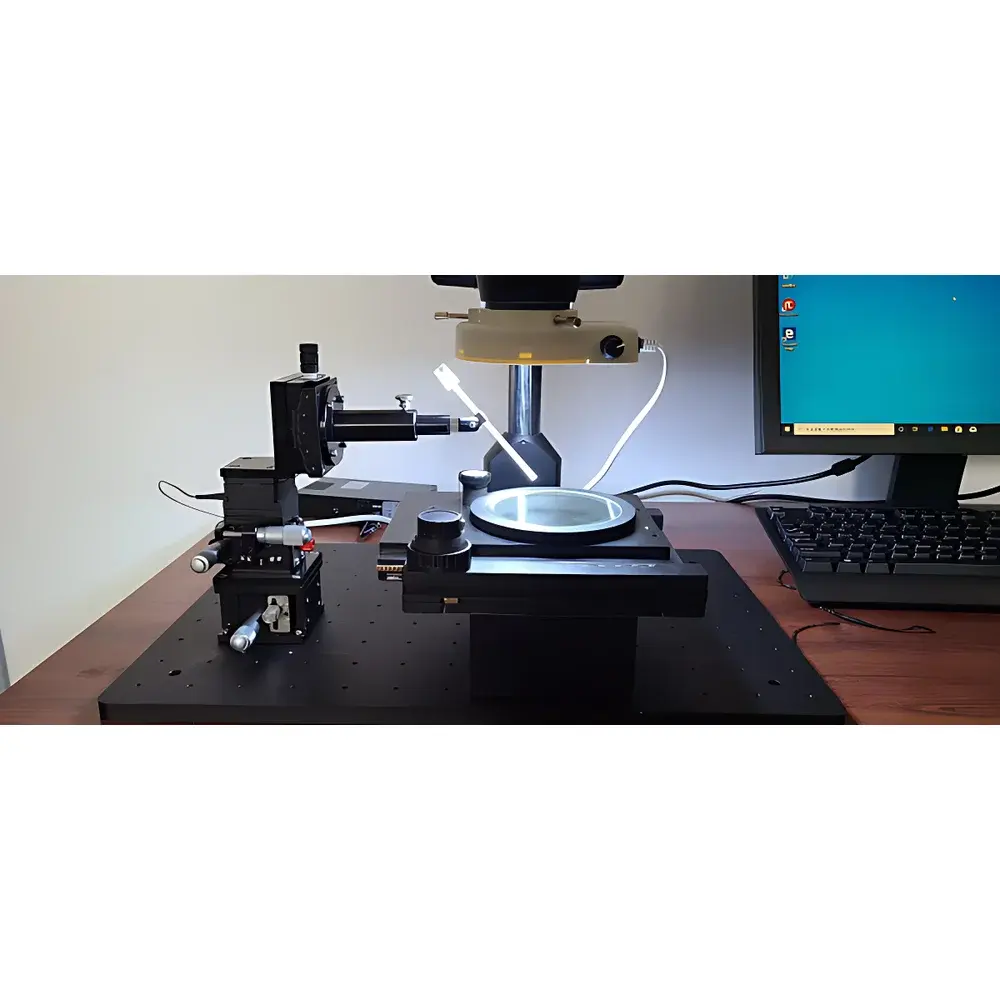
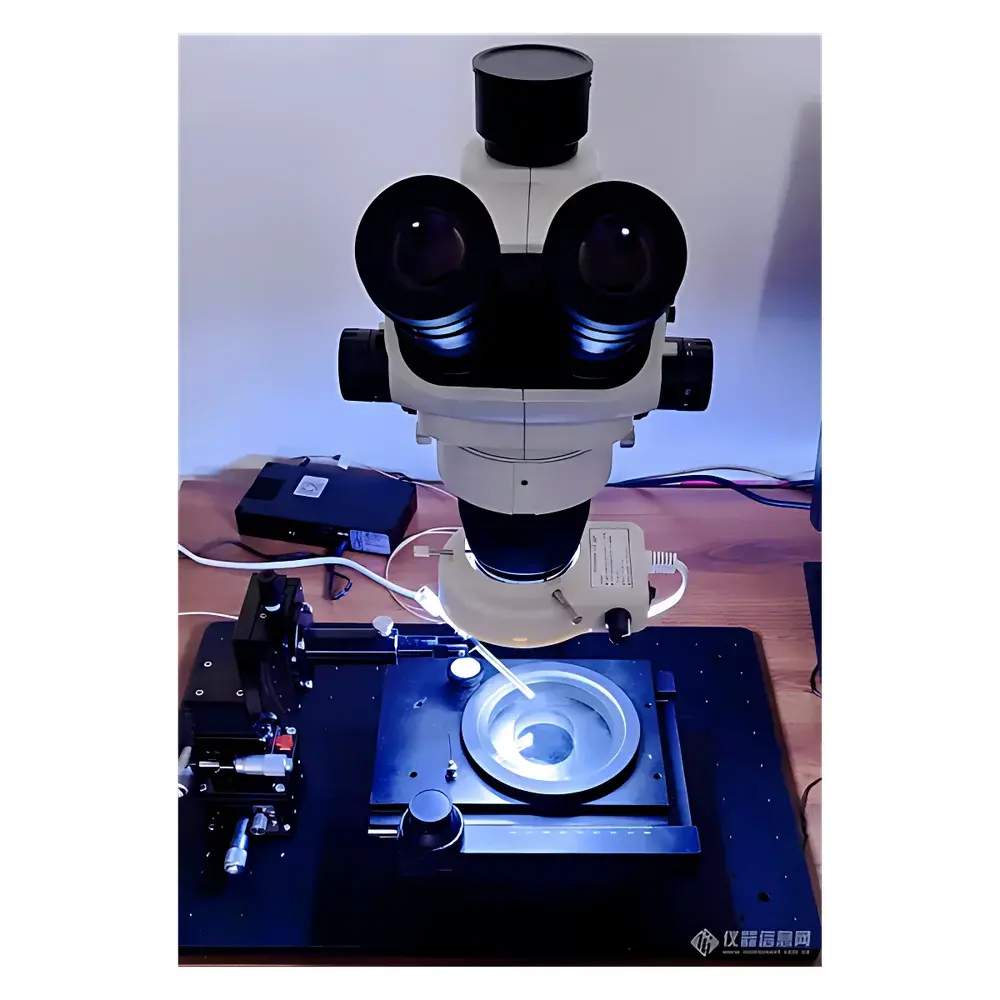
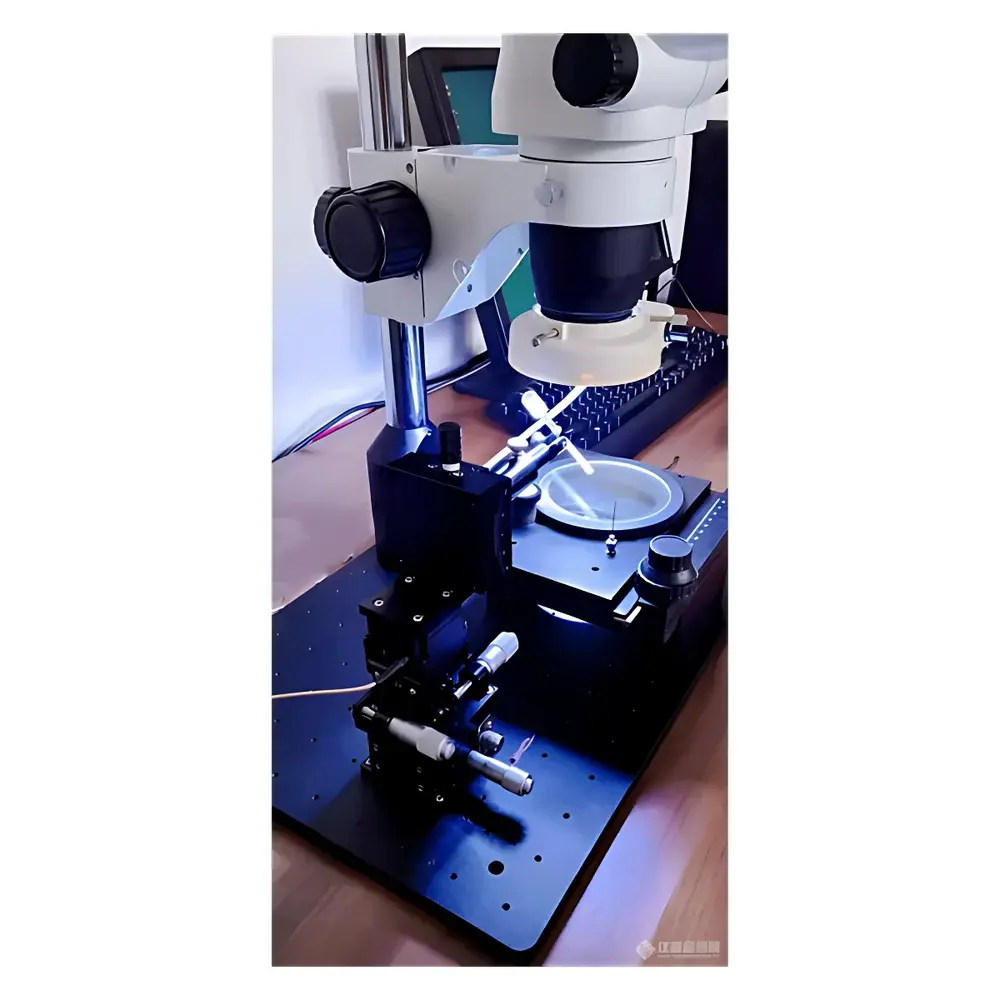
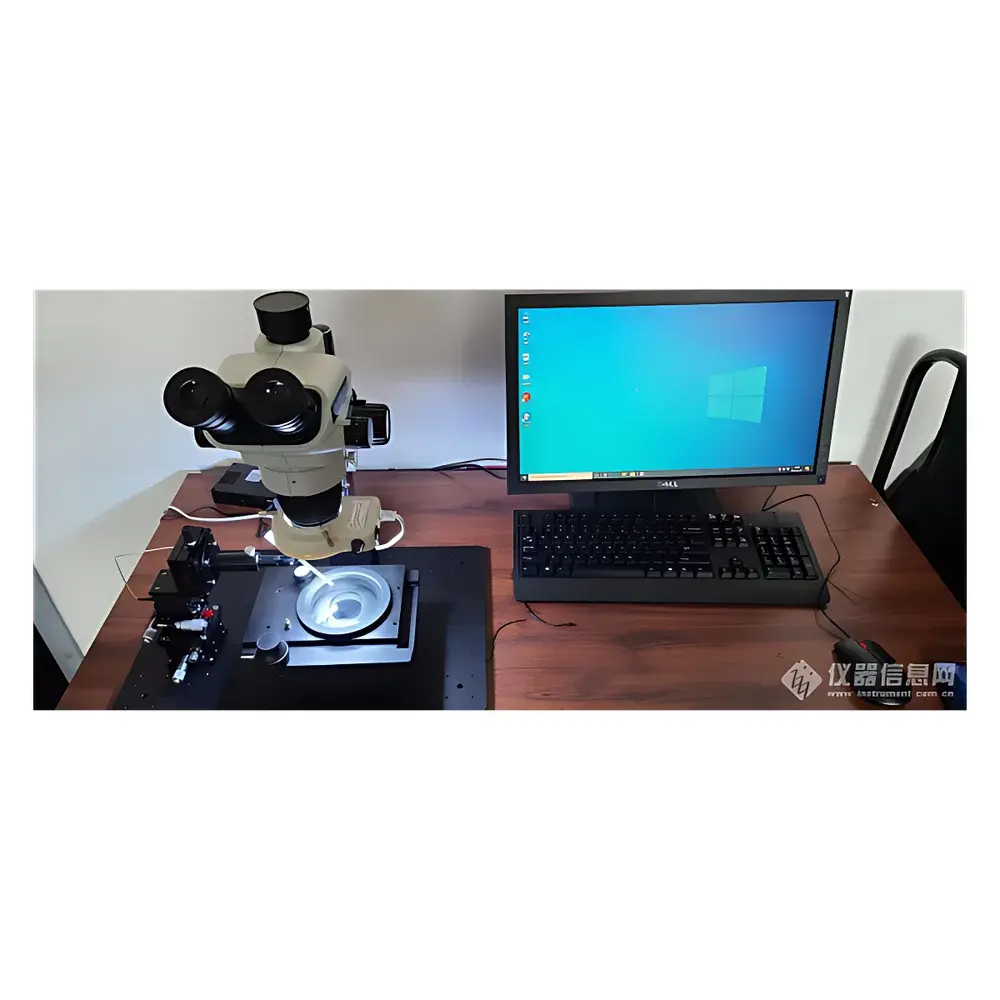
Lei-Tech LK-XWCZS Nano-Resolution Micromanipulator
| Brand | Lei-Tech |
|---|---|
| Origin | Tianjin, China |
| Manufacturer Type | Direct Manufacturer |
| Model | LK-XWCZS |
| Price Range | USD 4,200 – 7,000 |
| Axes | X, Y, Z, R (Rotational) |
| Optical Compatibility | Stereo Microscope Integration |
| Stage Travel | Large-Area X/Y Translation + Full 360° R Rotation |
| Illumination Options | Transmitted/Reflected, Dual Gooseneck Oblique, Ring Light |
| Z-Axis Control | Motorized with Software-Driven Position Readout |
| Magnification Range | Standard 7×–45×, Extended 14×–90× |
| Working Distance | 110 mm |
| Imaging Module | 2000-pixel HD Camera, 1-inch CMOS Sensor, Capable of Image Capture, Dimensional Measurement, Extended Depth-of-Field Stacking, Panoramic Stitching, and Report Generation |
Overview
The Lei-Tech LK-XWCZS Nano-Resolution Micromanipulator is a precision-engineered four-axis (X, Y, Z, R) mechanical positioning system designed for real-time, high-fidelity microscale manipulation under stereo optical microscopy. Built upon a rigid, low-drift mechanical architecture, it enables sub-micron positional repeatability during live visual feedback workflows—critical for applications such as microinjection, intracellular surgery, micropipette patch clamping, and microdissection. Unlike conventional coarse manipulators, the LK-XWCZS integrates calibrated linear translation stages with a continuously rotatable R-axis, allowing users to maintain precise angular orientation while translating samples in orthogonal planes. Its modular design supports seamless integration with standard stereo microscopes (e.g., Leica M-series, Olympus SZX, Zeiss Stemi platforms), and its mechanical coupling ensures minimal parallax shift across magnification changes. The system operates without vacuum or magnetic interference, making it compatible with both conductive and non-conductive specimens—including live biological tissues, microfluidic chips, MEMS devices, and semiconductor wafers.
Key Features
- Four-degree-of-freedom (4-DOF) mechanical control: independent, backlash-compensated X, Y, Z, and R axes with fine-threaded lead screws and precision-ground linear guides.
- Large-area XY stage platform (≥120 mm × 80 mm travel range) enabling broad specimen navigation without repositioning the microscope stage.
- Full 360° continuous rotational (R) axis with digital angle readout and lockable detent positions for repeatable angular alignment.
- Motorized Z-axis with programmable step resolution (≤0.5 µm per step) and bidirectional encoder feedback for closed-loop position verification.
- Multi-illumination compatibility: standardized mounting interfaces for transmitted/reflected base illumination, dual gooseneck oblique lighting, and coaxial ring light systems—optimizing contrast for transparent, reflective, or topographically complex samples.
- Optical path-ready configuration: designed to align with standard 45° inclined eyepiece tubes and C-mount camera adapters; accommodates objective turrets up to 63 mm diameter.
Sample Compatibility & Compliance
The LK-XWCZS supports diverse sample formats including glass-bottom Petri dishes, silicon wafers, ITO-coated slides, microfluidic PDMS chips, and live embryo culture chambers. Its non-magnetic stainless steel and anodized aluminum construction ensures ESD-safe handling and compatibility with cleanroom Class 1000 environments. All mechanical components meet ISO 9001:2015 manufacturing traceability standards. While not certified for ISO 13485 or FDA 21 CFR Part 11 out-of-the-box, the system’s software-controlled Z-axis and imaging module support audit-trail-enabled operation when integrated with validated third-party acquisition platforms compliant with GLP/GMP documentation requirements. Electrical safety complies with IEC 61010-1 for laboratory equipment.
Software & Data Management
The optional LK-ControlSuite software (v3.2+) provides native USB 2.0 communication for Z-axis motor control, real-time position logging (CSV export), and synchronized image capture via UVC-compliant 2000-pixel camera interface. It supports measurement annotation (line, angle, area), multi-frame depth stacking (Z-stack fusion algorithm), panoramic tile-based stitching (up to 16×16 grid), and automated report generation (PDF/HTML) with embedded metadata (timestamp, magnification, stage coordinates, illumination mode). Raw image data is stored in lossless TIFF format; metadata conforms to EXIF 2.3 and MIAME-compliant tagging conventions for downstream analysis in ImageJ/Fiji or MATLAB-based pipelines.
Applications
- Developmental biology: single-embryo microinjection (mRNA, CRISPR ribonucleoprotein complexes) in zebrafish, Xenopus, and mouse models.
- Neuroscience: patch-clamp electrode positioning on primary neuronal cultures and acute brain slices.
- Materials science: nanowire placement, carbon nanotube bridging, and localized probe contact testing on 2D material heterostructures.
- Microfabrication QA: visual inspection and manual probing of MEMS comb drives, RF switches, and photonic crystal cavities.
- Cell therapy: viability-assessed single-cell picking from heterogeneous suspension cultures using capillary aspiration.
FAQ
Is the LK-XWCZS compatible with inverted microscopes?
Yes—when equipped with optional vertical adapter brackets, it can be mounted on standard inverted microscope stages (e.g., Nikon Ti2, Olympus IX83) with ≥75 mm clearance beneath the objective nosepiece.
What is the maximum payload capacity for the XY stage?
The stage maintains ≤0.8 µm positional drift under 500 g static load at room temperature (23 ± 2°C) over 60 minutes, verified per ASTM E2550-16 thermal stability protocol.
Can the R-axis rotation be motorized?
Motorized R-axis is available as a factory-configurable option (LK-XWCZS-RM), supporting programmable angular sweeps and synchronization with Z-motion profiles.
Does the system support DIC or phase contrast imaging?
Yes—the mechanical design preserves Köhler illumination geometry and accommodates standard condenser modules; however, polarizer/analyzer insertion requires external accessories not included in base configuration.
Is technical documentation available in English with calibration certificates?
Full English-language user manuals, mechanical drawings (STEP/IGES), and factory calibration reports (traceable to NIST standards via CNAS-accredited lab) are provided with each unit shipment.





