
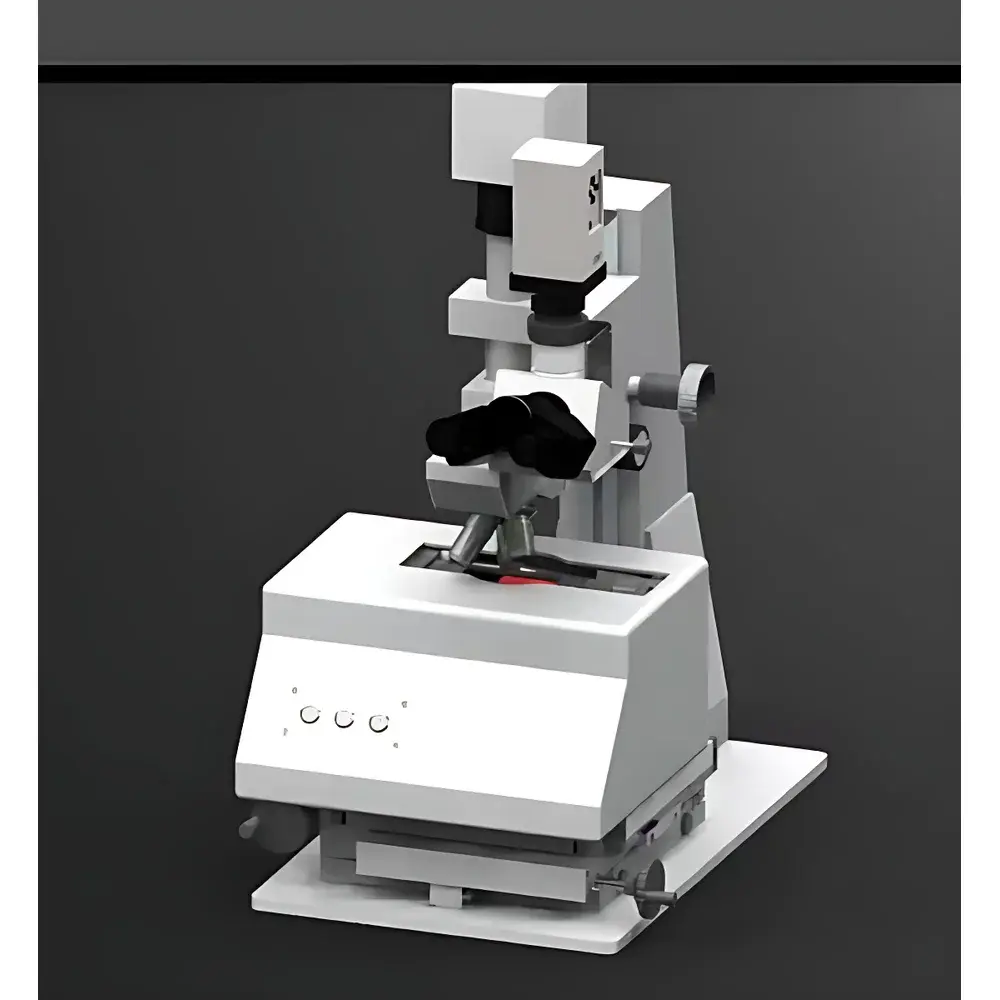
LEI-TECH LK-XWLS Micro-Mechanical Tensile Tester
| Brand | LEI-TECH |
|---|---|
| Origin | Tianjin, China |
| Manufacturer Type | Direct Manufacturer |
| Model | LK-XWLS |
| Max Load | ±500 N (0.01 N resolution) |
| Max Displacement | 170 mm (0.01 mm resolution) |
| Force Sensor | Nonlinear calibration & auto-zeroing |
| Control Mode | Programmable loading speed (tension/compression) |
| Data Acquisition | Real-time force/displacement/time logging |
| Software | Windows 7/10 native, Chinese GUI |
| Curve Types | Force–Time, Displacement–Time, Force–Displacement |
| Curve Processing | Local zoom, overlay, replay, manual annotation |
| Safety Protection | Overload stop (>110% FS), displacement limit cutoff |
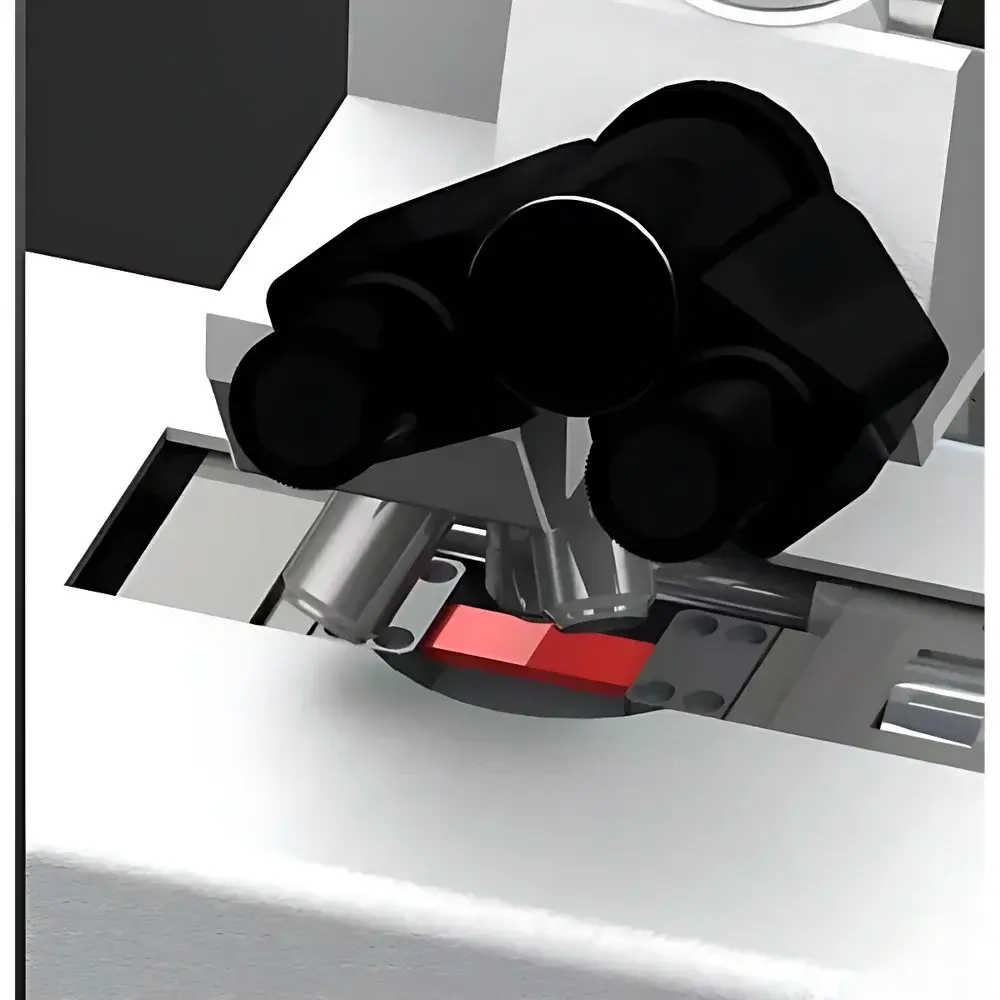
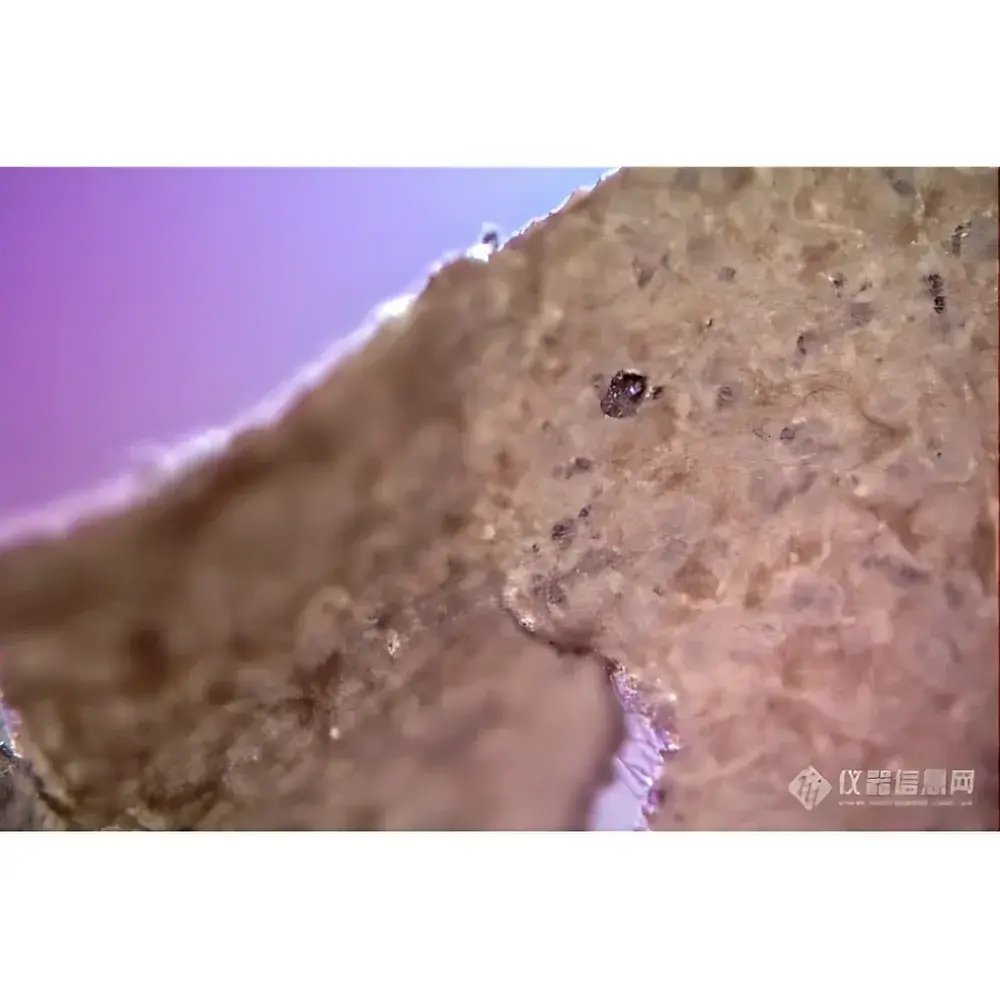
| Integrated Imaging | Synchronized microscopy imaging, image + mechanical data time-stamped playback |
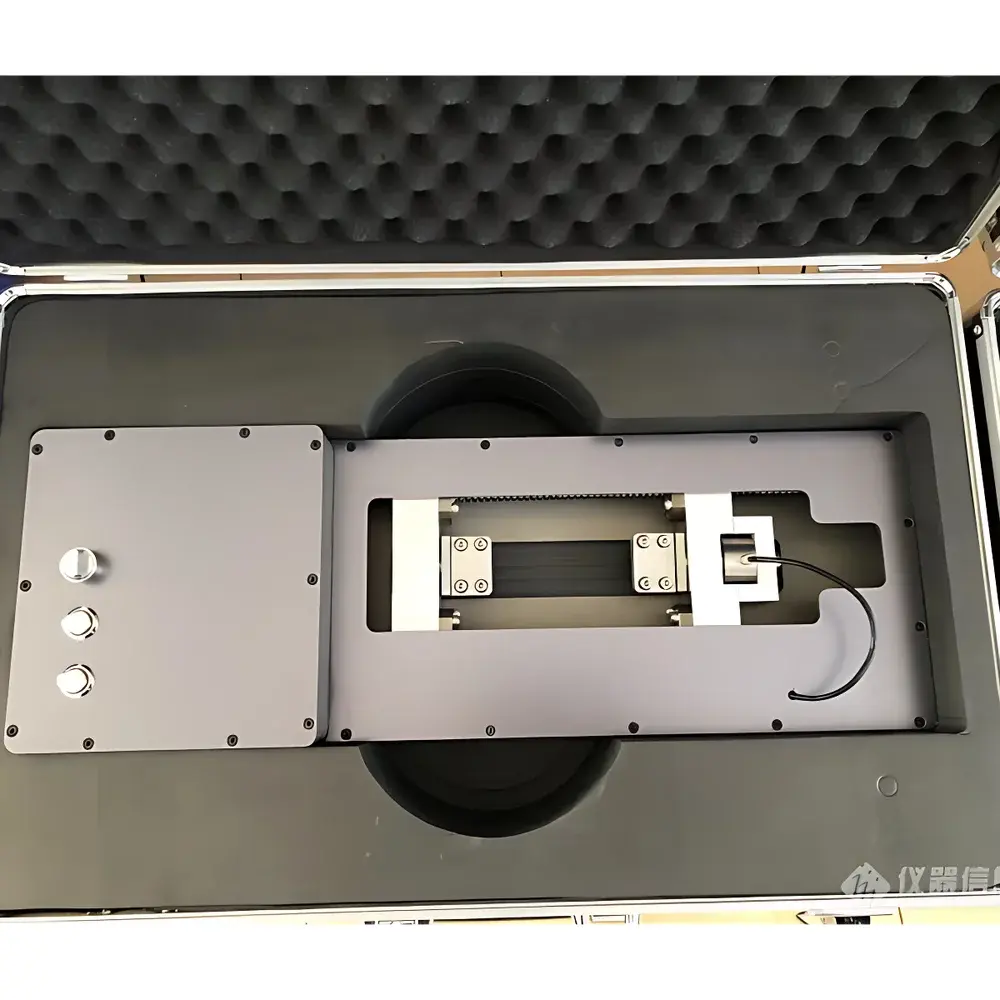
| Form Factor | Benchtop, 500 × 170 × 50 mm (L×W×H) |
Overview
The LEI-TECH LK-XWLS Micro-Mechanical Tensile Tester is a benchtop electromechanical testing system engineered for high-resolution quasi-static mechanical characterization of microscale and soft materials under controlled uniaxial loading. It operates on the principle of servo-controlled displacement actuation coupled with precision load cell measurement, enabling direct quantification of stress–strain behavior, yield point, fracture energy, elastic modulus, and viscoelastic recovery in specimens ranging from hydrogels and biological tissues to thin polymer films and microfibers. Unlike macro-scale universal testers, the LK-XWLS integrates synchronized optical microscopy—allowing real-time visual correlation between mechanical deformation and structural evolution at the micron level. Its compact footprint (500 × 170 × 50 mm), combined with sub-10 µm displacement resolution and 0.01 N force resolution, makes it suitable for integration into cleanroom environments, shared instrumentation labs, and university teaching facilities where space, repeatability, and multimodal observation are critical.
Key Features
- Precision dual-range force sensing with nonlinear calibration and automatic zero compensation—ensuring consistent accuracy across full dynamic range (±0.1 N to ±500 N).
- Programmable displacement control with user-defined ramp rates, hold durations, and cyclic profiles—supporting ASTM D882 (thin plastic films), ISO 6892-1 (metallic tensile), and custom protocols.
- Real-time acquisition and visualization of force–displacement, force–time, and displacement–time curves—with no latency or data drop during continuous 100 Hz sampling.
- Integrated high-magnification optical module (compatible with standard C-mount microscopes) enabling simultaneous live imaging and mechanical recording, with time-synchronized metadata tagging for post-hoc frame-by-frame mechanical state mapping.
- Comprehensive software suite featuring curve overlay, differential analysis, region-of-interest zoom, manual annotation, and export to CSV, MATLAB (.mat), and HDF5 formats for third-party modeling.
- Dual-stage safety architecture: hardware-based emergency cutoff (mechanical limit switches + overload relay) and software-enforced bounds (configurable displacement ceiling/floor, force threshold, and rate limits).
Sample Compatibility & Compliance
The LK-XWLS accommodates specimens requiring minimal clamping force and precise alignment—including hydrogels (e.g., alginate, collagen, PEGDA), electrospun nanofibers, tissue-engineered constructs, elastomeric micropatterns, and brittle biomaterials such as decellularized scaffolds. Sample mounting utilizes low-inertia pneumatic or screw-type grips with interchangeable jaw geometries (flat, serrated, and custom micro-grooved). The system meets essential functional requirements for GLP-compliant mechanical testing workflows: audit-trail-enabled software logging (user ID, timestamp, parameter changes), electronic signature support (via optional Windows domain integration), and traceable calibration certificates aligned with ISO/IEC 17025-accredited reference standards. While not FDA-cleared as a medical device, its data output structure complies with 21 CFR Part 11 readiness when deployed with validated IT infrastructure.
Software & Data Management
The proprietary LEI-TECH TestMaster v3.2 software runs natively on Windows 7 SP1 and later (64-bit), offering full localization in English and Chinese without runtime dependencies. All test parameters—including load cell gain settings, displacement PID tuning, trigger conditions, and image capture intervals—are stored in encrypted XML project files. Raw datasets include timestamps synchronized to system clock (NTP-capable), sensor serial numbers, environmental metadata (optional USB temperature/humidity sensor input), and embedded microscope configuration tags. Export modules generate publication-ready SVG/PNG figures with customizable axis scaling, error bars, and statistical overlays (mean ± SD across replicates). Batch processing supports automated parameter sweeps (e.g., strain rate series) with result aggregation and ANOVA-ready tabular outputs.
Applications
- Biomechanics: Quantifying stiffness gradients in 3D-bioprinted constructs, measuring adhesion strength of cell-laden hydrogels, and evaluating fatigue resistance of vascular graft analogs.
- Materials Science: Characterizing strain-hardening behavior in shape-memory polymers, determining interfacial shear strength in fiber-reinforced composites, and assessing crack initiation thresholds in thin-film coatings.
- Pharmaceutical Development: Validating mechanical integrity of orally disintegrating films (ODFs), evaluating tablet friability under controlled humidity, and profiling mucoadhesive gel detachment forces.
- Academic Research: Supporting undergraduate mechanics labs with guided experiments on Hooke’s law verification, creep/recovery analysis, and failure mode classification via correlated imaging.
FAQ
What is the recommended calibration frequency for the force sensor?
Annual recalibration is advised per ISO 9001 internal audit schedules; however, daily auto-zeroing and quarterly verification using NIST-traceable deadweight standards are strongly recommended for research-grade reproducibility.
Can the system interface with third-party microscopes or environmental chambers?
Yes—the LK-XWLS provides TTL-triggered shutter control, analog video sync output, and RS-232/USB-serial ports for bidirectional communication with commercial microscope controllers (e.g., Thorlabs, Olympus) and chamber systems (e.g., Linkam, Instec).
Is raw data accessible without proprietary software?
All acquired datasets are saved in open-format CSV and HDF5 containers with documented column headers and SI units—enabling direct import into Python (NumPy/Pandas), MATLAB, or Origin without conversion utilities.
Does the system support cyclic loading protocols with variable amplitude or frequency?
Yes—waveform generation includes sine, triangle, square, and user-defined arbitrary profiles with amplitude modulation, phase offset, and dwell interval control—up to 5 Hz maximum frequency depending on specimen inertia and grip compliance.
What documentation is provided for regulatory submissions?
A complete validation package—including IQ/OQ protocols, calibration records, software verification reports, and risk assessment (ISO 14971) summaries—is available upon request for GMP-aligned deployments.





