
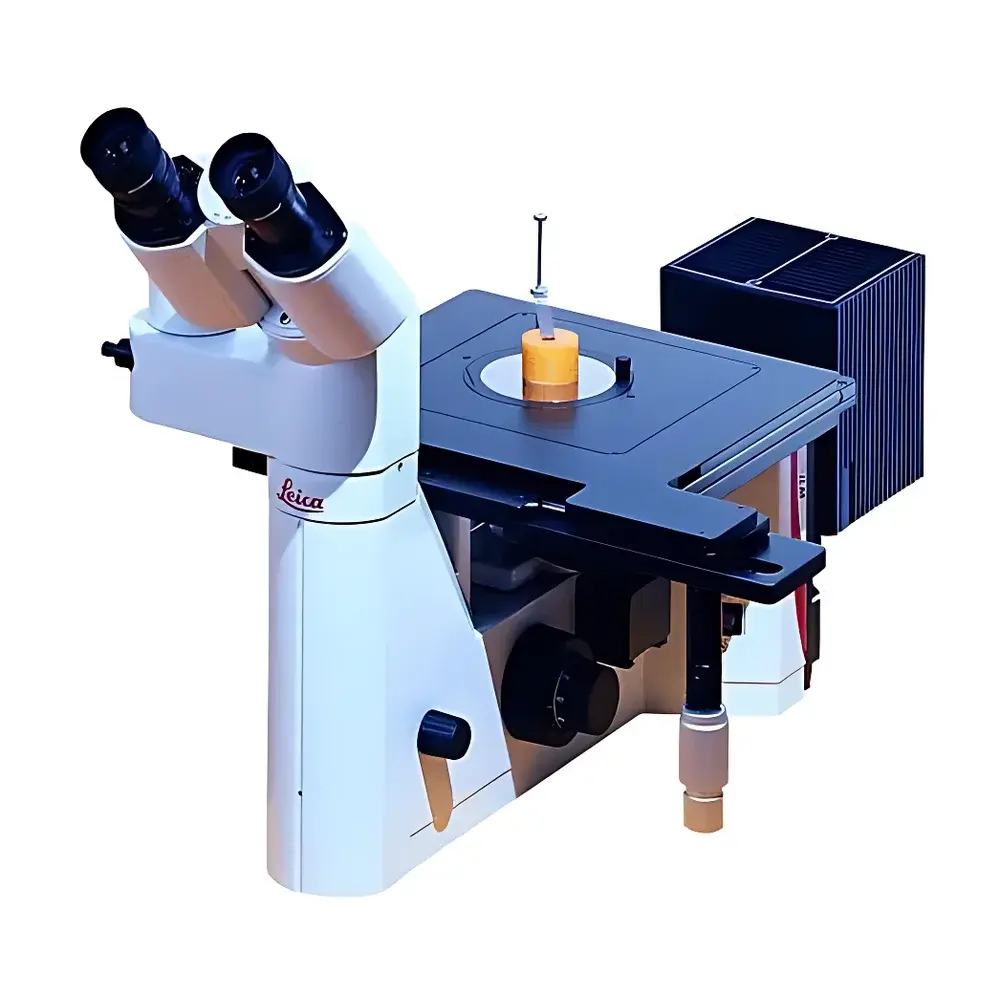
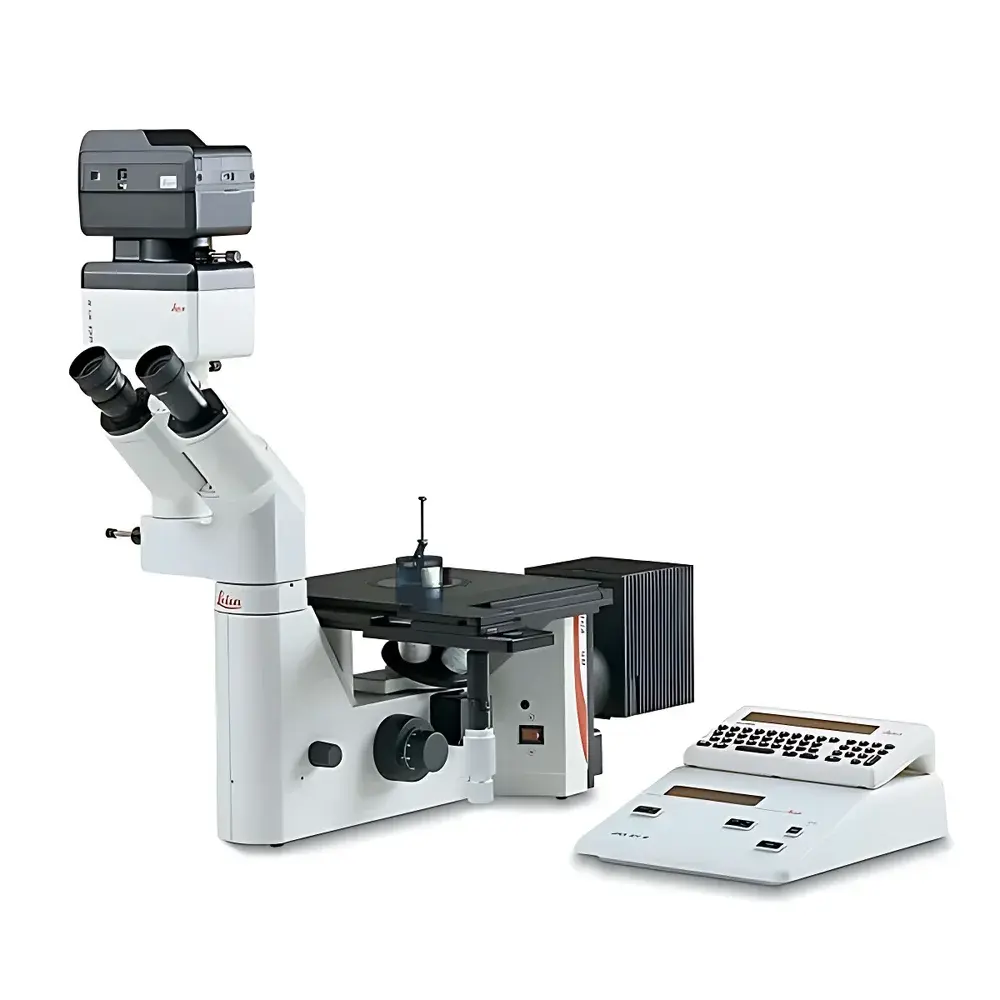
Leica DM ILM Inverted Metallurgical Microscope
| Brand | Leica |
|---|---|
| Origin | Germany |
| Model | DM ILM |
| Configuration | Inverted |
| Total Magnification Range | 50×–1000× |
| Eyepieces | 10× (standard), optional 12.5×, 16×, 25× (18–20 mm field of view) |
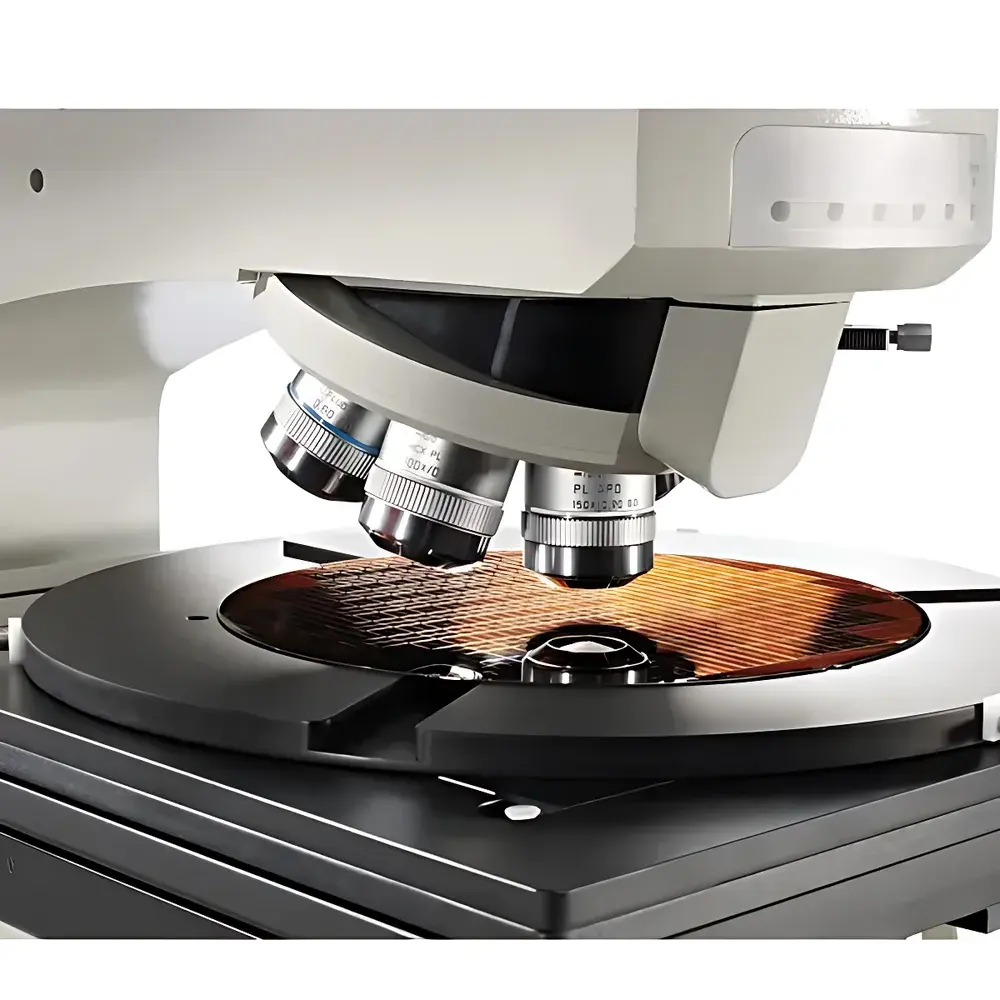
| Objective Lenses | 1.25×, 5×, 10×, 20×, 50×, 100×, 250× |
| Nosepiece | 4-position, M25 thread, brightfield-optimized |
| Stage Dimensions | 247 × 230 mm |
| XY travel | 60 × 40 mm |
| Focusing Mechanism | Coaxial coarse/fine adjustment (7 mm upward, 2 mm downward travel) |
| Illumination | LED-based cold-light source with integrated polarizer/analyzer modules |
| Optical System | HC (High Contrast) infinity-corrected optics with axial and radial chromatic aberration correction |
| Observation Modes | Brightfield, Polarized Light |
| Camera Interface | C-mount port |
| Tube | 30° inclined binocular tube, interpupillary adjustment 48–75 mm |
| Compliance | Designed and manufactured in accordance with ISO 9001-certified production processes |
Overview
The Leica DM ILM is a purpose-engineered inverted metallurgical microscope designed for high-precision microstructural analysis of opaque, reflective specimens—particularly metallic alloys, sintered powders, castings, welds, and advanced engineered materials. Its inverted configuration places the objective lenses beneath the specimen stage, enabling unobstructed access to large, heavy, or irregularly shaped samples—such as turbine blades, engine blocks, or semiconductor substrates—without requiring sample sectioning or complex mounting. The instrument operates on the principle of reflected light microscopy: illumination is directed vertically onto the specimen surface via an episcopic light path, and the same optical pathway collects the specularly or diffusely reflected light to form a high-fidelity image. Coupled with Leica’s proprietary HC (High Contrast) infinity-corrected optical system—featuring dual axial and radial chromatic aberration correction—the DM ILM delivers exceptional resolution, contrast uniformity, and color fidelity across its full magnification range (50×–1000×). This optical architecture minimizes stray light, eliminates spherical distortion at high NA, and ensures consistent image quality from edge to edge—even under demanding industrial QA/QC or R&D validation protocols.
Key Features
- Inverted mechanical design supports direct observation of bulky, tall, or bottom-mounted specimens without reorientation or disassembly.
- HC infinity-corrected optical system optimized for brightfield and polarized light contrast modes—enabling reliable grain boundary delineation, phase identification, and inclusion analysis per ASTM E112, ISO 643, and EN 10360 standards.
- 4-position M25-thread nosepiece with parfocal, apochromatic objectives (1.25× to 250×), delivering stable focus retention and minimal chromatic shift during magnification changes.
- Large-format mechanical stage (247 × 230 mm) with 60 × 40 mm XY travel and coaxial control—engineered for repeatable positioning during serial inspection or automated coordinate mapping.
- Dedicated LED illumination module with integrated, rotatable polarizer and analyzer—allowing rapid switching between isotropic and anisotropic contrast modes using a single-hand operation.
- Robust focusing mechanism with 9 mm total vertical travel (7 mm up / 2 mm down), coaxial coarse/fine controls, and objective-turret actuation—ensuring precise Z-axis repeatability for thickness measurement and surface topography assessment.
- C-mount interface compatible with scientific CMOS and CCD cameras; supports third-party calibration and measurement software integration via standardized SDKs.
Sample Compatibility & Compliance
The DM ILM accommodates specimens up to 120 mm in height and 5 kg in mass, making it suitable for as-received production parts, cross-sectioned metallographic mounts, and coated or plated components requiring non-destructive surface evaluation. Its optical path is fully compliant with ISO/IEC 17025 requirements for metrological traceability when used with calibrated stage micrometers and NIST-traceable reference standards. The system supports GLP/GMP-aligned documentation workflows when paired with Leica Application Suite (LAS) X or third-party audit-ready image analysis platforms. All optical components—including objectives, tube lenses, and beam splitters—meet DIN EN ISO 10934-1 specifications for resolution, modulation transfer function (MTF), and contrast transfer at spatial frequencies up to 200 lp/mm.
Software & Data Management
While the base DM ILM configuration does not include embedded image analysis software, it features native compatibility with Leica’s LAS X platform (v3.7+), which provides FDA 21 CFR Part 11-compliant user authentication, electronic signatures, and full audit trail functionality. Optional modules include Extended Depth of Field (EDF) reconstruction for topographic rendering, quantitative grain size analysis per ASTM E112, inclusion rating per ASTM E45, and phase fraction measurement via threshold-based segmentation. All acquired images retain EXIF metadata—including objective ID, magnification, illumination intensity, and polarizer angle—ensuring full experimental reproducibility and regulatory readiness.
Applications
- Metallurgical quality control: grain size evaluation, porosity quantification, dendrite arm spacing measurement, and heat-affected zone (HAZ) characterization in welded joints.
- Fatigue and fracture analysis: crack initiation site identification, cleavage vs. ductile rupture morphology differentiation, and secondary cracking assessment.
- Coating and plating inspection: thickness uniformity verification, interfacial delamination detection, and corrosion product morphology classification.
- Failure analysis laboratories: root cause investigation of stress corrosion cracking, hydrogen embrittlement, and intergranular attack in aerospace and power generation components.
- R&D of additive manufacturing materials: powder morphology screening, melt pool geometry analysis, and post-build microstructure homogeneity mapping.
FAQ
Is the DM ILM compatible with digital camera systems for documentation and measurement?
Yes—the microscope includes a standardized C-mount port and supports both monochrome and color scientific cameras. Calibration routines and pixel-size mapping are supported through LAS X or third-party metrology software.
Can the DM ILM perform polarized light imaging without external accessories?
Yes—it integrates a built-in, motorized polarizer and analyzer within the illumination path, enabling rapid, repeatable polarization contrast acquisition without manual filter insertion.
What is the maximum specimen height supported by the stage clearance?
The inverted design allows up to 120 mm of vertical clearance between the stage surface and the lowest objective lens housing, accommodating thick castings, machined billets, or multi-layer assemblies.
Does Leica provide calibration certificates for the optical system?
Leica offers factory-issued optical performance verification reports (OPVR) upon request, documenting MTF, resolution, and chromatic fidelity against ISO 10934-1 benchmarks.
Is the LED illumination system serviceable in the field?
The LED module is sealed and non-user-serviceable; however, its rated lifetime exceeds 20,000 hours, and replacement is performed by authorized Leica service centers under warranty or extended support contracts.




