
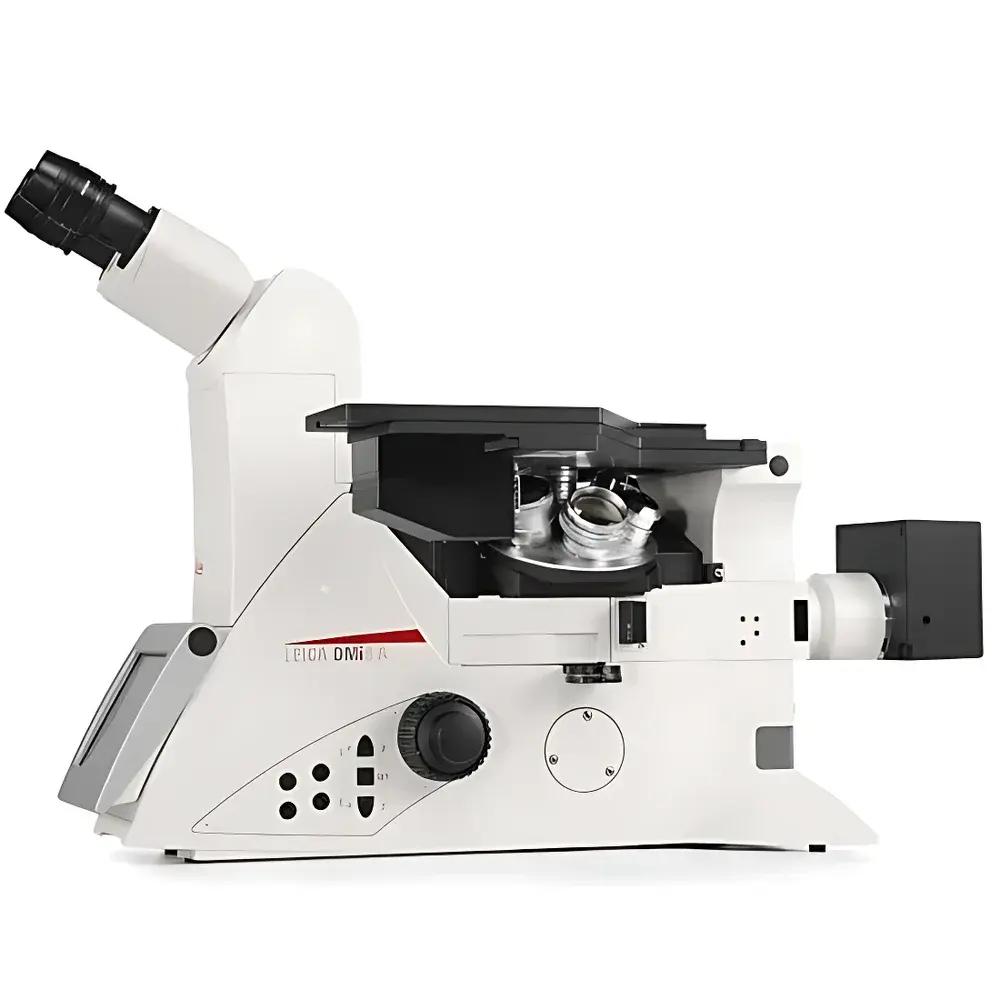
Leica DMi8 M/A/C Inverted Universal Metallurgical Microscope
| Brand | Leica |
|---|---|
| Origin | Germany |
| Model | DMi8 M/A/C |
| Configuration Type | Inverted |
| Total Magnification | 1200× |
| Eyepieces | 6 |
| Objective Lenses | 100 |
| Integrated Image Analysis System | Yes |
| Macro Mode Field of View | 35.7 mm at 0.7× |
| Minimum Resolvable Detail | 200 nm |
| Maximum Sample Weight Capacity | 30 kg |
| Focus Drive | 3-Position Adjustable Precision Drive |
Overview
The Leica DMi8 M/A/C is an inverted universal metallurgical microscope engineered for high-precision microstructural analysis across materials science, failure analysis, quality control, and advanced manufacturing environments. Its inverted optical architecture places the objective lenses beneath the stage—enabling direct observation of large, heavy, or irregularly shaped specimens (up to 30 kg) without repositioning or sample inversion. This configuration eliminates mechanical interference between objectives and samples during magnification changes and significantly reduces risk of lens collision—a critical advantage over upright systems when handling polished metallographic mounts, castings, welds, or semiconductor wafers. The system operates on a modular platform supporting three functional tiers: manual (M), encoded (A), and fully automated (C), allowing progressive upgrades aligned with evolving workflow demands. Optical performance is anchored in Leica’s proprietary HCX PL FLUOTAR and EC EPI objectives, delivering diffraction-limited resolution down to 200 nm and consistent contrast across brightfield, darkfield, differential interference contrast (DIC), polarized light, and fluorescence modalities.
Key Features
- Inverted optical design optimized for metallurgical and industrial specimen handling—including bulk alloys, heat-treated components, and coated substrates.
- Modular configuration path: Start with manual operation (M), add encoding for repeatable parameter recall (A), or integrate motorized Z-drive, stage, and filter turrets for full automation (C).
- Macro-to-nano seamless transition: Leica’s dedicated macro objectives provide 0.7×–100× continuous magnification range; single-click switching between overview imaging (35.7 mm FOV at 0.7×) and high-resolution microanalysis (200 nm detail resolution).
- Three-position focus drive with calibrated sensitivity: Enables fine-tuned Z-axis control across low-, medium-, and high-magnification regimes—critical for layered sample analysis and depth profiling.
- Integrated digital imaging interface compatible with Leica Application Suite (LAS X) software, supporting real-time measurement, annotation, multi-channel overlay, and export compliant with ISO/IEC 17025 documentation requirements.
- Robust mechanical stage with extended travel (X/Y ≥ 120 × 80 mm) and load-bearing capacity up to 30 kg—designed for industrial-grade metallographic mounts, turbine blades, and PCB assemblies.
Sample Compatibility & Compliance
The DMi8 M/A/C accommodates a broad spectrum of metallurgical and industrial specimens: polished cross-sections (e.g., ASTM E3, ISO 643), as-cast surfaces, fracture surfaces, thermal spray coatings, and microelectronic interconnects. Its inverted geometry supports direct mounting of specimens in standard petri dishes, custom fixtures, or vacuum chucks—eliminating need for embedding or thin-sectioning in many routine QC applications. The system complies with key international standards governing optical metrology and laboratory practice, including ISO 9001 (quality management), ISO/IEC 17025 (testing and calibration laboratories), and ASTM E883 (standard guide for reflected-light photomicrography). When paired with LAS X software configured for audit trail and electronic signature, it meets FDA 21 CFR Part 11 requirements for regulated environments such as medical device manufacturing and aerospace component certification.
Software & Data Management
Leica LAS X software serves as the central hub for image acquisition, quantitative analysis, and reporting. It provides calibrated measurement tools (grain size per ASTM E112, inclusion rating per ASTM E45, phase fraction analysis), batch processing for serial sample evaluation, and metadata-rich export formats (TIFF, JPEG2000, OME-TIFF) compatible with LIMS integration. All acquisitions retain embedded calibration data, objective identification, illumination settings, and user-defined annotations. For GLP/GMP workflows, optional LAS X Security Pack enables role-based access control, electronic signatures, and immutable audit trails—ensuring full traceability from raw image capture to final report generation.
Applications
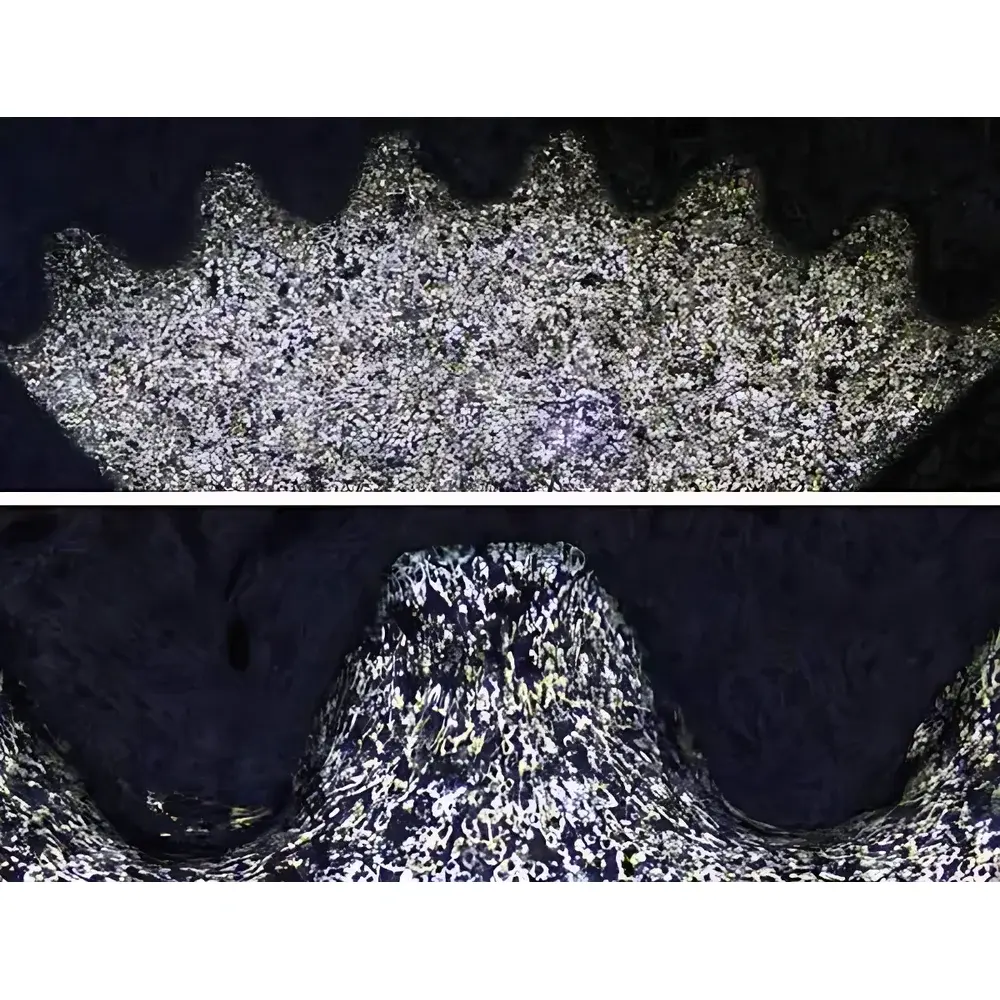
- Metallurgical QC: Grain structure evaluation, inclusion analysis, decarburization depth measurement, and heat-affected zone (HAZ) characterization per ISO 643 and ASTM E112.
- Failure analysis: Fractography of fatigue cracks, brittle/ductile transition assessment, and corrosion morphology mapping on pipeline steels or aerospace alloys.
- Microelectronics: Solder joint inspection, wire bond integrity verification, and die attach void analysis under oblique illumination and DIC contrast.
- Medical device manufacturing: Surface roughness validation of orthopedic implants, coating uniformity assessment of stents, and biocompatibility-related microstructural review.
- R&D in advanced materials: Phase distribution analysis in Ni-based superalloys, carbide precipitation kinetics in tool steels, and additive manufacturing layer fusion quality assessment.
FAQ
What distinguishes the DMi8 M/A/C from upright metallurgical microscopes?
Its inverted design allows direct observation of large, heavy, or topographically complex specimens without reorientation—reducing setup time by up to 75% and eliminating objective collision risk during magnification changes.
Can the system be upgraded from manual to automated operation post-purchase?
Yes—the DMi8 platform supports field-upgradable modules including motorized Z-focus, encoded turret rotation, programmable illumination, and automated stage navigation.
Is LAS X software validated for regulated industries?
When deployed with LAS X Security Pack and configured per site-specific SOPs, it satisfies FDA 21 CFR Part 11, EU Annex 11, and ISO/IEC 17025 data integrity requirements.
What is the maximum working distance achievable at low magnification?
With the 0.7× macro objective, working distance exceeds 60 mm—enabling unobstructed access for probe insertion, thermal treatment, or in-situ manipulation.
Does the system support third-party camera integration?
Yes—it features standardized C-mount and F-mount interfaces, along with SDK support for custom integration with OEM cameras and machine vision platforms.




