
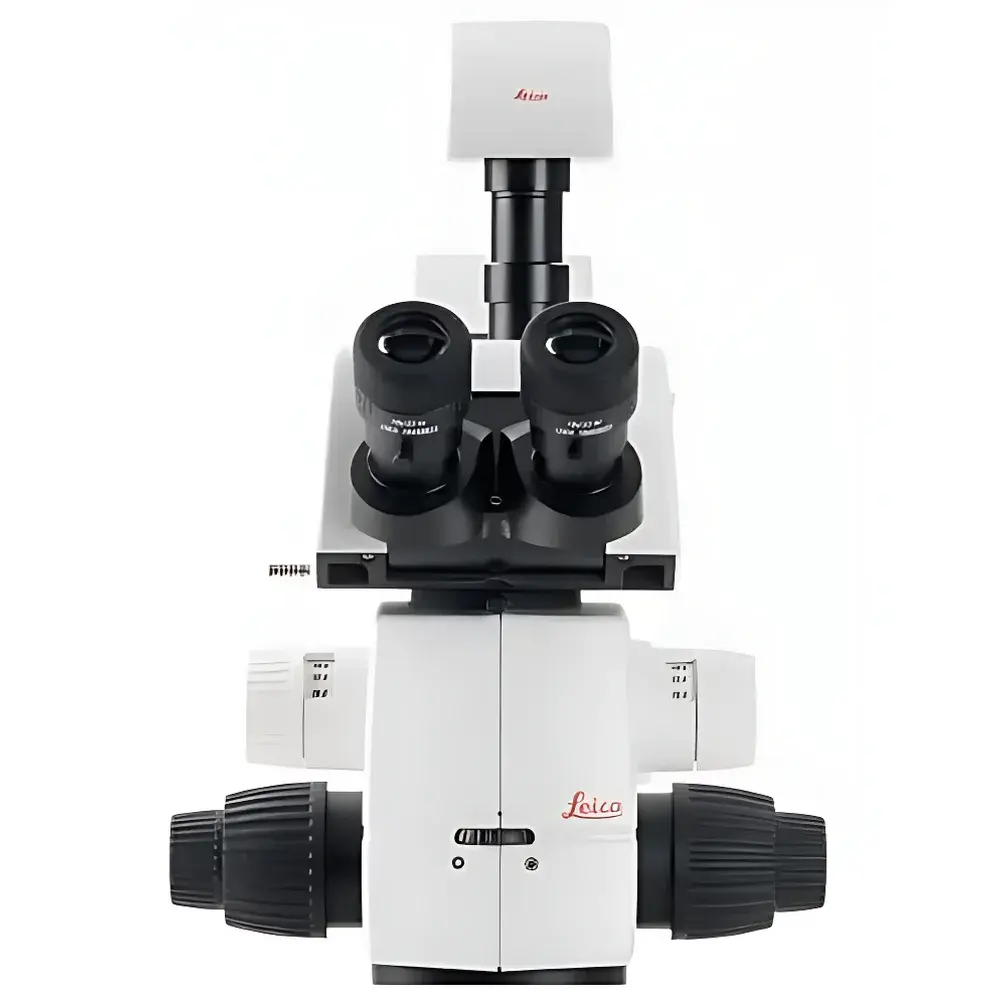
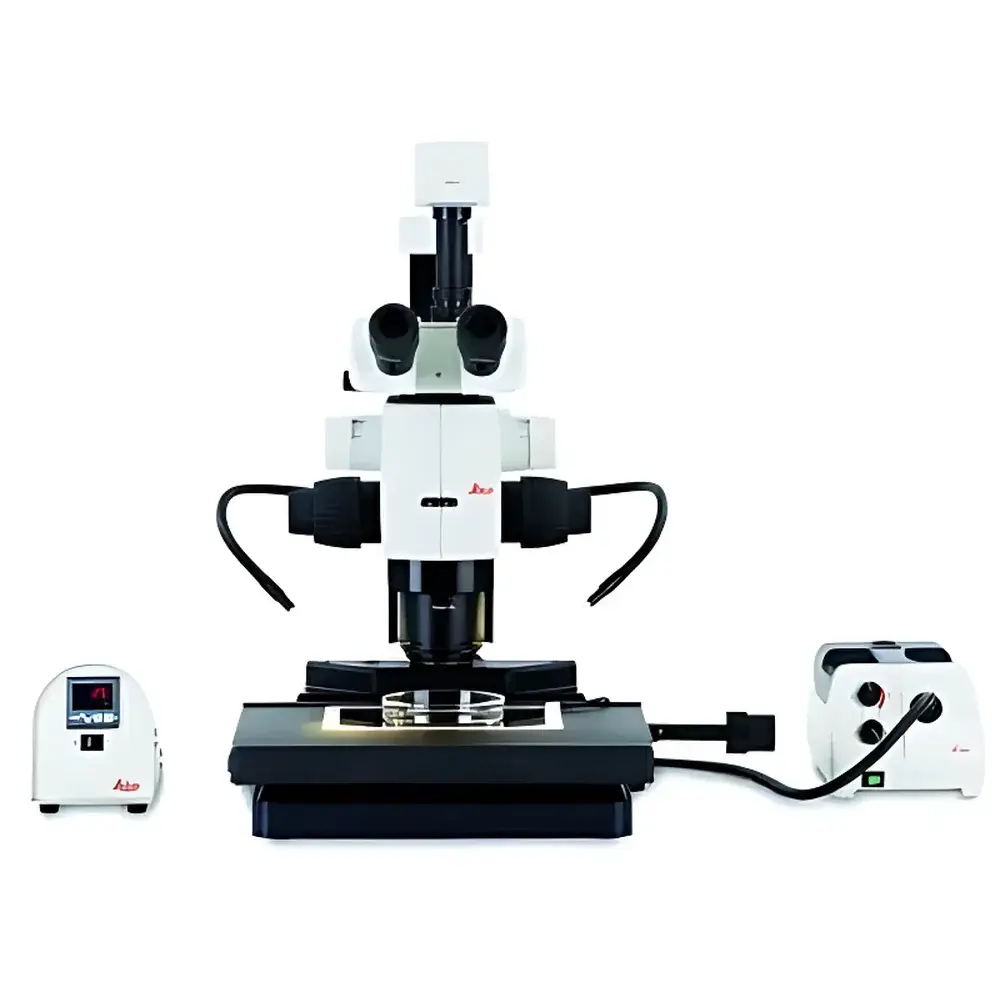
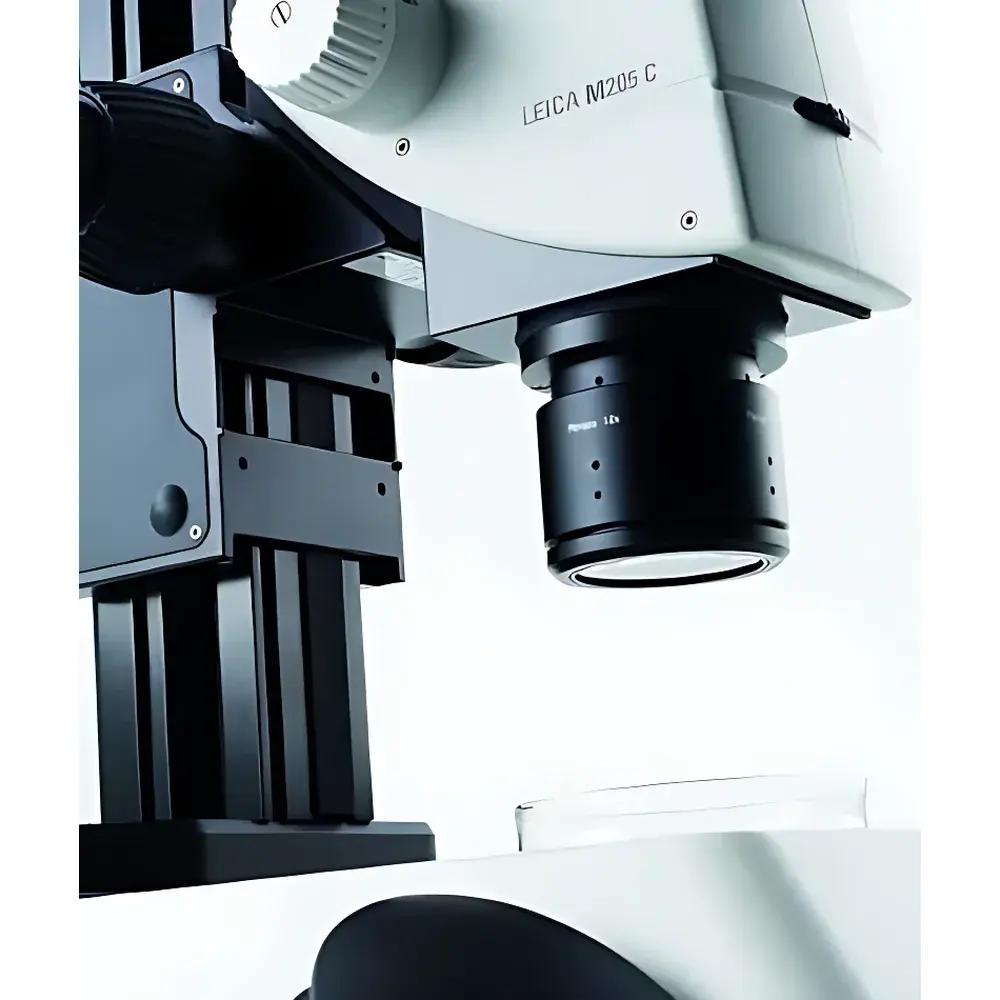
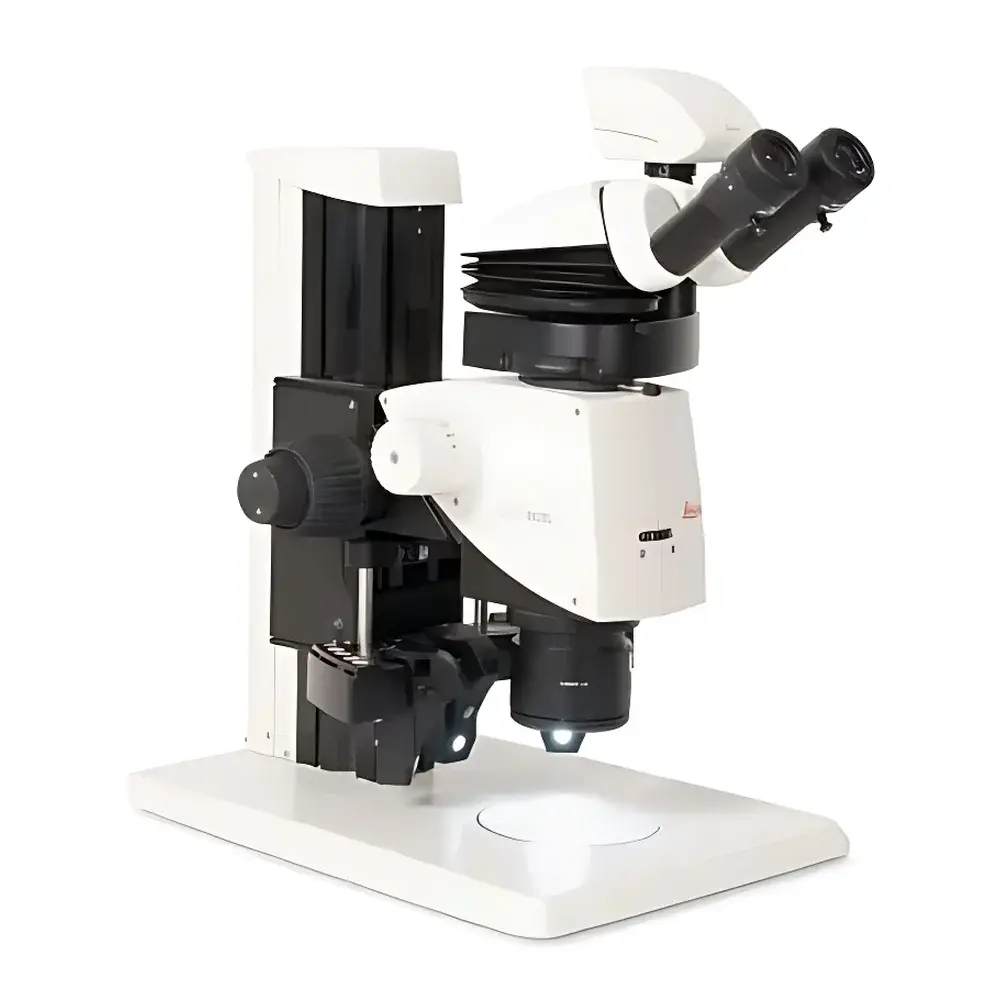
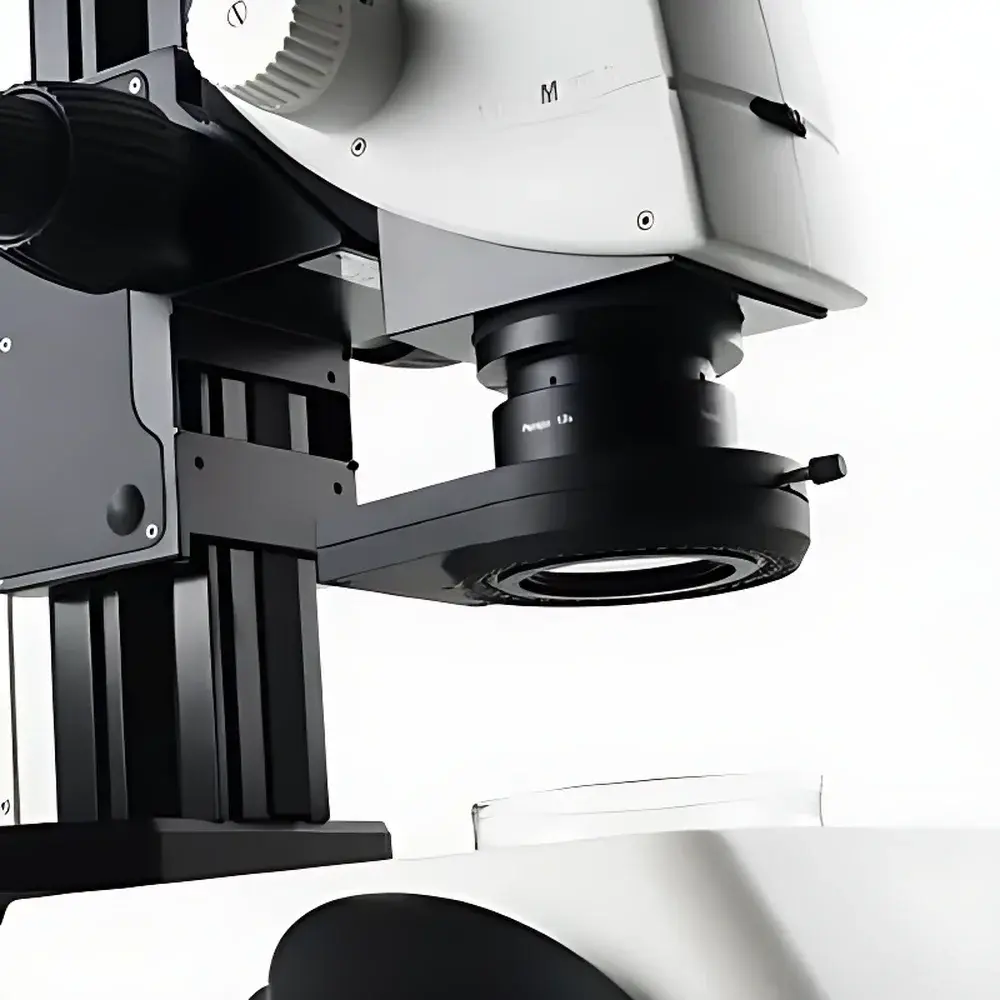
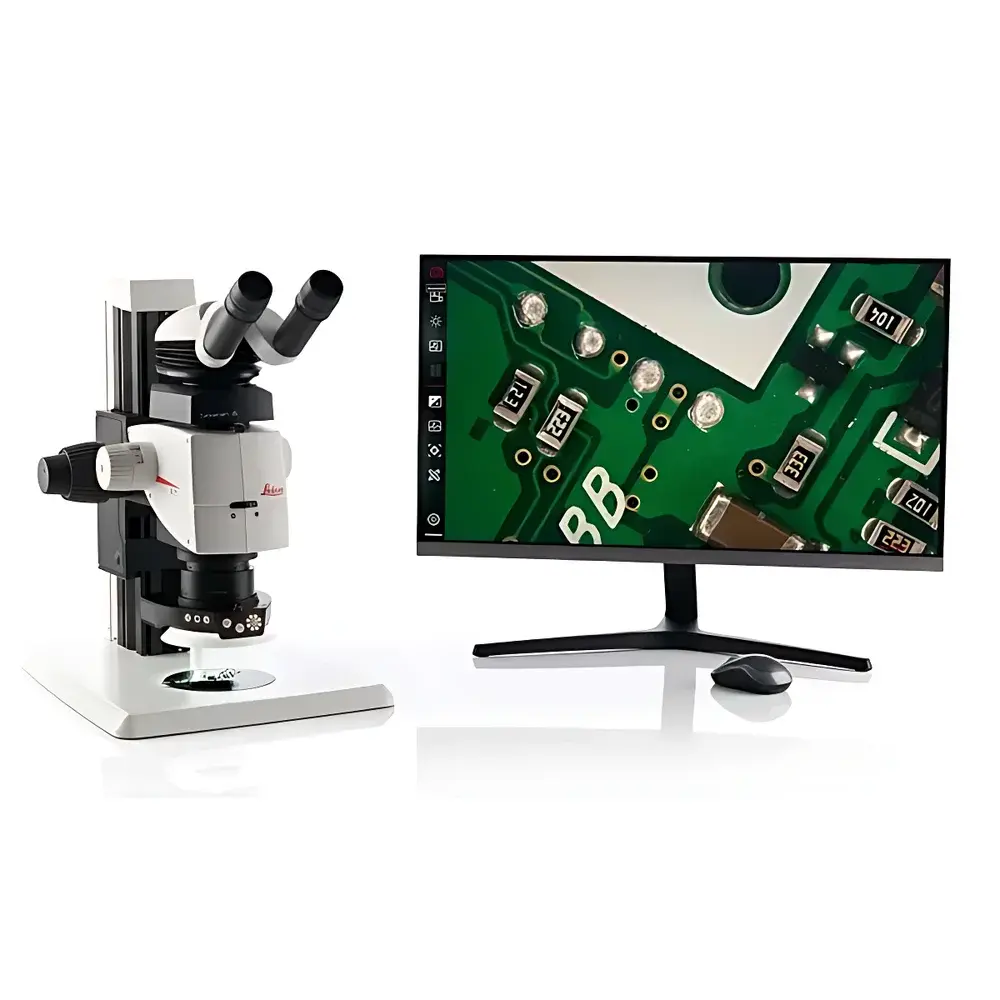
Leica M205 C Stereo Microscope
| Brand | Leica |
|---|---|
| Origin | Germany |
| Model | Leica M205 C |
| Configuration | Upright |
| Digital Imaging System | Integrated |
| Total Magnification Range | 7.8×–160× |
| Eyepieces | 10× wide-field (23 mm FOV), optional 16×, 25×, 40× |
| Objective Lenses | 1× apochromatic PlanApo objective (0.9 µm resolution), optional 0.5×, 2×, 4× objectives |
| Zoom Ratio | 20.5:1 |
| Apochromatic Optical Path | Full system-corrected for chromatic and spherical aberration |
| Resolution | Up to 1050 line pairs/mm |
| Encoded Zoom & Illumination Control | Yes |
| Adjustable Dual Iris Diaphragm | Encoded, motorized |
| ESD-Safe Housing | Discharge time <2 s |
| Illumination Options | LED transmitted base, incident ring light, oblique, polarized, and structured light modules available |
| Compatibility | Leica Application Suite (LAS X) with FDA 21 CFR Part 11 compliance mode, GLP/GMP audit trail support |
Overview
The Leica M205 C is a research-grade stereomicroscope engineered for high-fidelity three-dimensional visualization and quantitative digital analysis in demanding life science, materials science, and industrial quality control environments. Built upon Leica’s proprietary FusionOptics technology—a patented optical architecture combining dual-path beam splitting with real-time parallax compensation—the M205 C delivers simultaneous high-resolution, high-depth-of-field imaging without compromise. Its fully apochromatic optical path corrects chromatic and spherical aberrations across the entire zoom range, enabling diffraction-limited performance up to 1050 line pairs per millimeter at the 1× PlanApo objective. Unlike conventional stereo systems relying on fixed magnification steps or mechanical zoom calibration, the M205 C integrates an encoded zoom mechanism that continuously communicates position data to the imaging software, ensuring traceable, repeatable magnification metadata for every acquired image.
Key Features
- FusionOptics technology provides true stereoscopic depth perception while maintaining optimal resolution and contrast across the full 20.5:1 zoom range (7.8×–160× with 10× eyepieces and 1× objective)
- 1× PlanApo apochromatic objective with 0.9 µm lateral resolution and flat-field correction over 23 mm field of view
- Encoded zoom and illumination control: automatic adjustment of LED intensity based on magnification; real-time scaling of on-screen measurement overlays and calibration bars
- Motorized, encoded dual iris diaphragm for precise, reproducible control of depth of field and image contrast—critical for multi-layer sample documentation and focus stacking workflows
- ESD-compliant housing with <2 s static discharge time, certified for use in cleanroom and electronics assembly environments (ISO Class 5–8 compatible)
- Modular illumination platform supporting transmitted brightfield/darkfield, incident ring light, polarized, oblique, and structured illumination—each with independent intensity and angle control
- Standard 10× wide-field (23 mm) eyepieces; optional high-magnification eyepieces (16×, 25×, 40×) enable extended magnification ranges without compromising ergonomics or eye relief
Sample Compatibility & Compliance
The Leica M205 C accommodates specimens ranging from sub-millimeter electronic components and semiconductor wafers to whole-organism biological samples (e.g., zebrafish embryos, Drosophila, plant meristems) and metallurgical cross-sections. Its upright configuration and large working distance (up to 110 mm at lowest magnification) support integration with micromanipulators, patch-clamp rigs, and automated stage systems. The microscope complies with IEC 61000-4-2 (ESD immunity), ISO 13406-2 (display ergonomics), and meets CE/UKCA marking requirements for laboratory equipment. When configured with LAS X software in regulated mode, it supports 21 CFR Part 11 compliance—including electronic signatures, audit trails, user access levels, and immutable data archiving—making it suitable for GLP and GMP-regulated laboratories.
Software & Data Management
Leica Application Suite (LAS X) is the native acquisition and analysis platform, offering synchronized hardware control, multi-channel fluorescence registration, Z-stack acquisition with motorized focus drive compatibility, and automated tiling for large-area mosaic imaging. Measurement tools include calibrated linear, angular, area, and particle-counting functions, all traceable to NIST-traceable standards via embedded magnification metadata. Data export supports TIFF (with embedded EXIF and custom metadata), JPEG2000, and HDF5 formats for interoperability with MATLAB, Python-based analysis pipelines (e.g., scikit-image, OpenCV), and LIMS integration via DICOM-SR or REST API extensions. Raw image buffers are retained in non-destructive editing workflows, preserving bit-depth fidelity throughout processing.
Applications
- Microelectronics inspection: solder joint integrity assessment, PCB trace continuity verification, MEMS device characterization
- Preparatory histology: tissue block orientation, cryosection guidance, laser microdissection targeting
- Materials failure analysis: fracture surface topography mapping, inclusion identification in alloys, coating delamination evaluation
- Developmental biology: live embryo staging, microinjection site validation, organoid growth monitoring
- Pharmaceutical QC: tablet coating uniformity assessment, capsule defect classification, lyophilized powder morphology analysis
- Forensic document examination: ink differentiation, paper fiber structure analysis, latent impression enhancement
FAQ
Is the Leica M205 C compatible with third-party camera systems?
Yes—via C-mount adapter (included) and GenICam-compliant drivers; supports USB3 Vision and GigE Vision cameras from Basler, FLIR, and IDS.
Can the encoded zoom function be integrated into automated production inspection routines?
Yes—through Leica’s SDK (Software Development Kit) and LabVIEW, Python, or C++ APIs; zoom position, magnification, and illumination settings are programmatically addressable and loggable.
What objective options extend the working distance beyond the standard 1× lens?
The 0.5× long-working-distance objective (WD = 200 mm) and 2× telecentric objective (WD = 60 mm) are available with matching tube lenses and calibration files for metrology-grade measurements.
Does LAS X support automated focus mapping for uneven surfaces?
Yes—using the Focus Map module, which acquires Z-stacks across user-defined regions and generates height-profile maps with sub-micron axial precision when paired with a piezo-driven focus drive.
How is calibration traceability maintained during routine maintenance or objective replacement?
Each objective and eyepiece carries a unique serial-numbered calibration certificate; LAS X auto-detects optics via RFID tags (optional) and applies pre-validated magnification and distortion correction profiles stored in its calibration database.



