
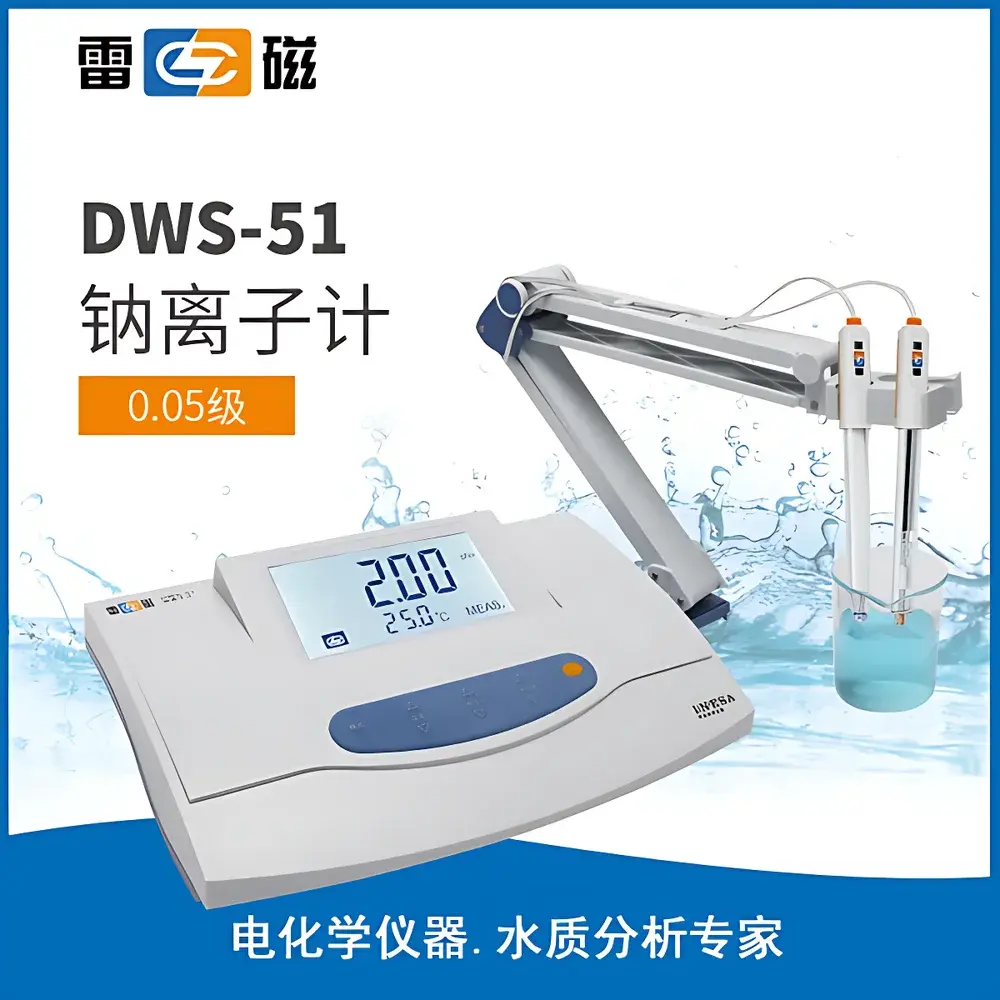
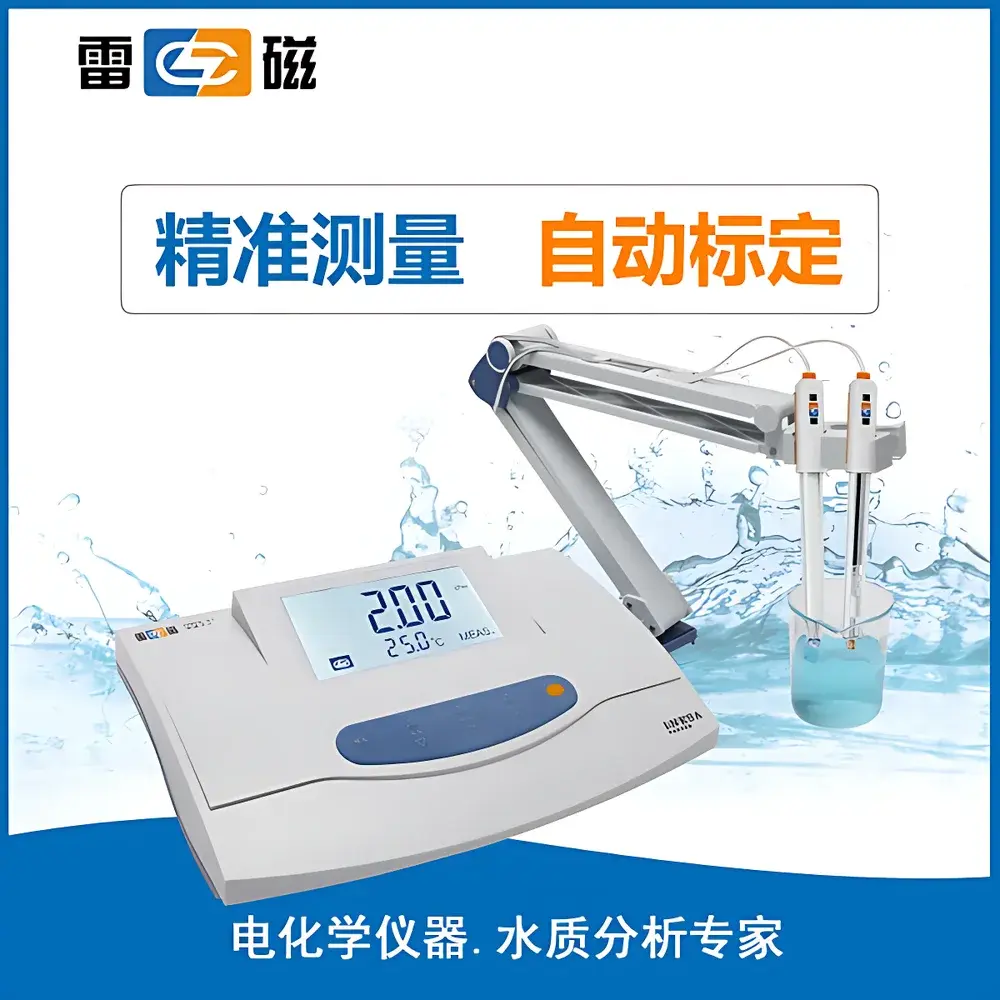
Leici DWS-51 Sodium Ion Meter
| Brand | Leici |
|---|---|
| Origin | Shanghai, China |
| Manufacturer Type | Authorized Distributor |
| Product Category | Domestic |
| Model | DWS-51 |
| Pricing | Upon Request |
| Instrument Type | Benchtop Sodium Ion Analyzer |
| Measurement Range | pNa 0.00–9.00 (equivalent to [Na⁺] = 2.3×10⁻²–2.3×10⁷ µg/L) |
| Detection Limit | 1 µg/L |
| Response Time | ≤1 min (to 95% of final value) |
| Accuracy | ±0.02 pNa unit (electronic unit) |
| Temperature Compensation | Manual, 0.0–40.0 °C |
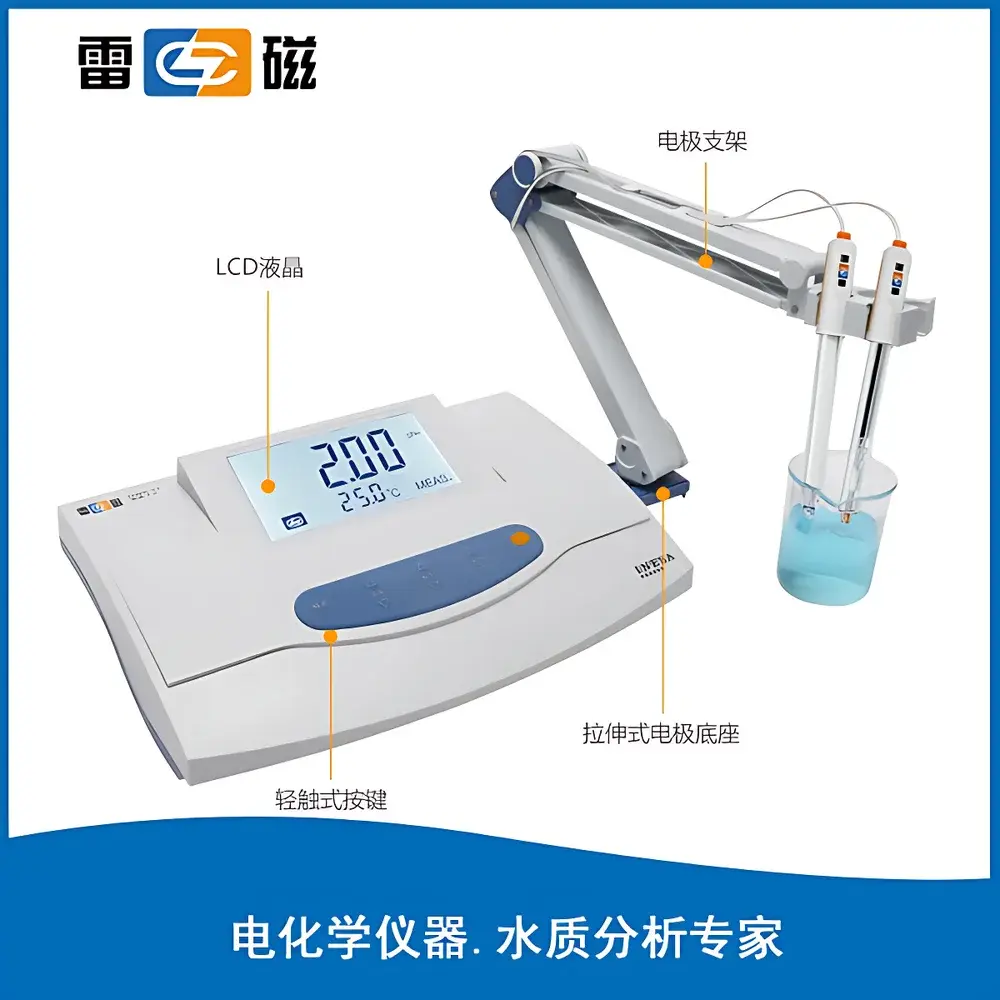
| Display | Segment LCD |
| Power Supply | AC 220 V ±10%, 50 Hz |
| Dimensions (W×D×H) | 290×210×95 mm |
| Weight | 1.5 kg |
Overview
The Leici DWS-51 Sodium Ion Meter is a benchtop potentiometric analyzer engineered for precise and reliable measurement of sodium ion activity (pNa) and concentration ([Na⁺]) in ultra-pure water systems and low-conductivity aqueous samples. Based on the Nernst equation and employing a selective sodium ion-selective electrode (ISE), the instrument delivers high reproducibility in environments where trace-level sodium monitoring is critical—particularly in thermal power plant steam cycles, boiler feedwater, condensate return lines, and nuclear primary coolant loops. Its design adheres to fundamental electrochemical principles governing ion activity measurement: the measured potential difference between the sodium ISE and a stable reference electrode is logarithmically proportional to the negative decadic logarithm of sodium ion activity (pNa = –log₁₀aₙₐ). The DWS-51 supports both static (batch) and dynamic (flow-through) measurement modes—when paired with the optional DWS-51-1 alkalizing unit—to suppress hydrogen ion interference and stabilize the electrode potential in sub-ppb sodium regimes.
Key Features
- Benchtop architecture with compact footprint (290 × 210 × 95 mm) and lightweight construction (1.5 kg), optimized for laboratory and control room deployment;
- Segment-type LCD display providing simultaneous, dual-parameter readout: pNa value (0.00–9.00) and corresponding sodium concentration ([Na⁺]) in µg/L (2.3×10⁻²–2.3×10⁷ µg/L);
- Manual temperature compensation across 0.0–40.0 °C, enabling correction of electrode response drift due to thermal variation;
- Two-point calibration capability—supporting both static (immersion) and dynamic (flow cell) calibration protocols—ensuring traceable accuracy per ISO 8655-6 and ASTM D1129;
- Dual-mode operation: direct pNa measurement and real-time conversion to [Na⁺] concentration, with documented conversion uncertainty of ±3% (relative to reading);
- Compliant with IEC 61010-1 safety standards for electrical equipment used in measurement, control, and laboratory applications.
Sample Compatibility & Compliance
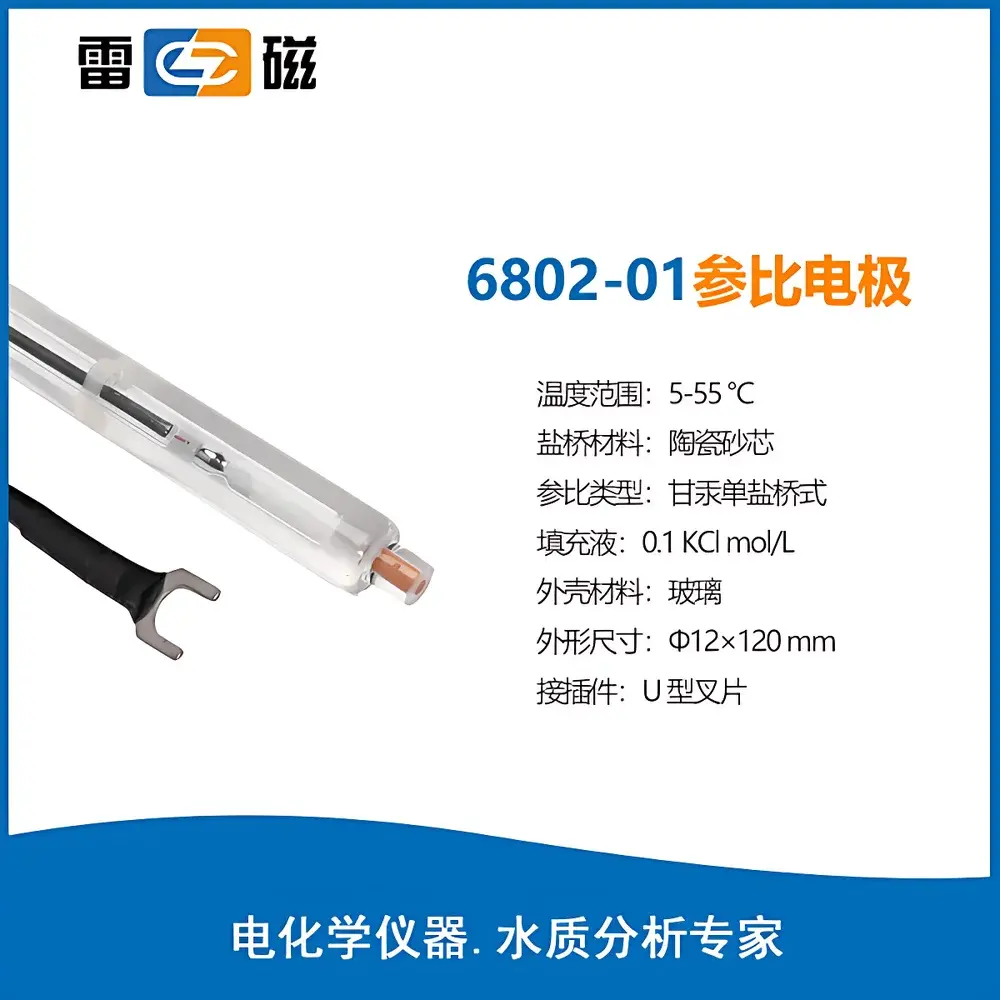
The DWS-51 is validated for use with low-TDS aqueous matrices including ultrapure water (resistivity ≥18.2 MΩ·cm), steam condensate, deionized boiler feedwater, and process cooling water. It is not intended for high-ionic-strength or viscous samples without dilution or matrix-matching. Electrode compatibility requires use of Leici’s certified sodium ISE (e.g., PNA-101) and double-junction reference electrode (e.g., 232-01) to minimize liquid junction potential errors. The instrument meets functional requirements outlined in ASTM D4582 (Standard Practice for Measuring Sodium in High-Purity Water) and supports documentation practices aligned with GLP and GMP environments—though it does not include built-in audit trail or 21 CFR Part 11 electronic signature functionality.
Software & Data Management
The DWS-51 operates as a standalone analog-digital hybrid system with no embedded firmware-based data logging or PC connectivity. All measurements are displayed in real time and must be manually recorded. For regulated environments requiring traceability, users are advised to integrate external recording solutions—such as calibrated chart recorders or validated LIMS interfaces via RS-232 (optional adapter)—and maintain written calibration logs per ISO/IEC 17025 clause 7.7. Calibration verification at start/end of shift, along with electrode slope checks (>90% theoretical Nernstian response), is recommended for continuous monitoring applications.
Applications
- Power generation: Continuous sodium monitoring in turbine steam, condensate polishing systems, and high-pressure boiler feedwater to prevent stress corrosion cracking (SCC) in austenitic stainless steel components;
- Microelectronics: Verification of rinse water purity during wafer cleaning processes where Na⁺ contamination induces gate oxide defects;
- Pharmaceutical water systems: Support for USP purified water and water for injection (WFI) sodium specification compliance (≤10 µg/L);
- Academic research: Teaching potentiometric principles, ion-selective electrode characterization, and activity-coefficient modeling in dilute electrolyte solutions;
- Chemical process control: Monitoring sodium carryover in amine-treated natural gas streams or caustic recovery circuits.
FAQ
What is the minimum detectable sodium concentration using the DWS-51?
The specified detection limit is 1 µg/L under optimal conditions—achieved using a clean, properly hydrated sodium ISE, low-noise grounding, and alkalized sample (pH > 10.5 via DWS-51-1 unit).
Can the DWS-51 measure sodium in seawater or brine?
No. High ionic strength causes significant activity coefficient deviation and junction potential errors; the instrument is designed exclusively for low-conductivity (<1 µS/cm), low-sodium matrices.
Is automatic temperature compensation (ATC) available?
No—the DWS-51 provides manual temperature input only. An external Pt100 sensor port is not included; users must measure sample temperature separately and enter it via front-panel keys.
Does the meter support GLP-compliant calibration reporting?
Not natively. Calibration data (date, standard values, slope, offset) must be transcribed manually into lab notebooks or electronic records meeting local QA requirements.
Which electrode models are compatible with the DWS-51?
Leici PNA-101 sodium ISE and 232-01 double-junction reference electrode are factory-validated; third-party electrodes may yield non-compliant accuracy and are not supported under warranty.







