
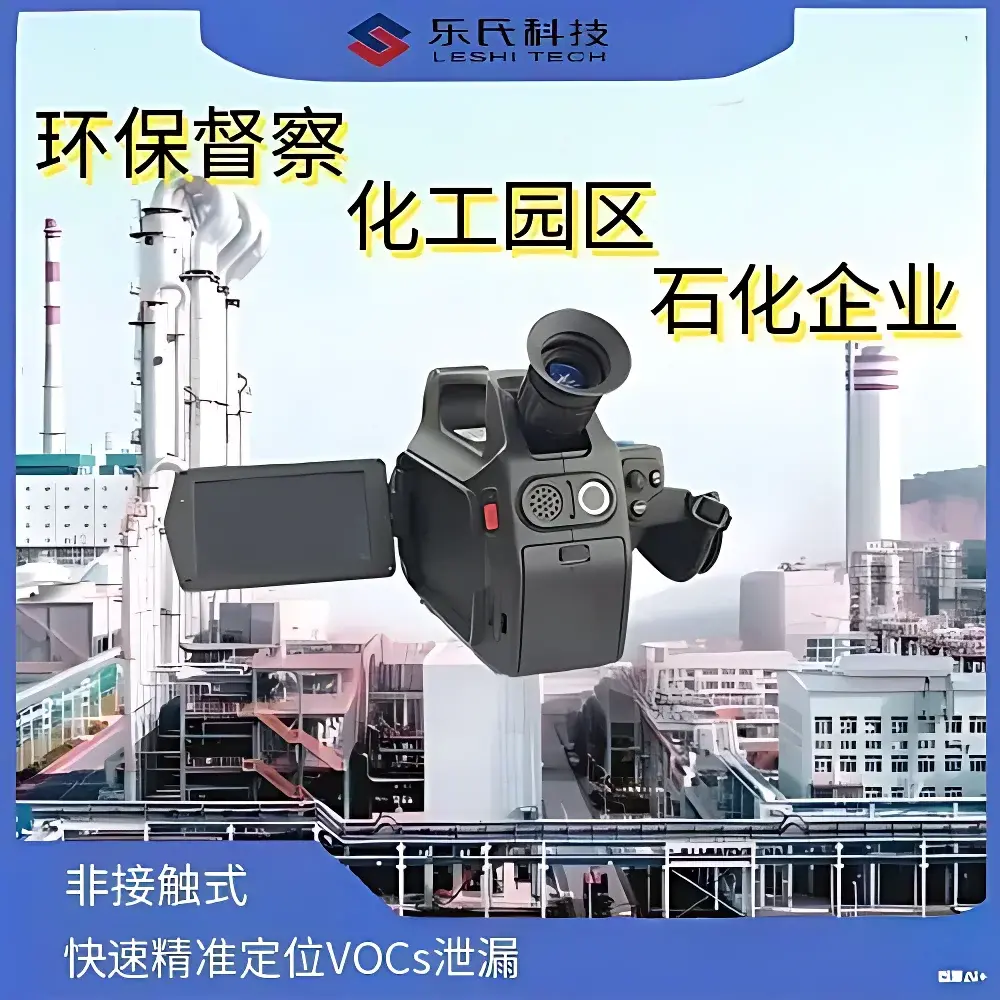
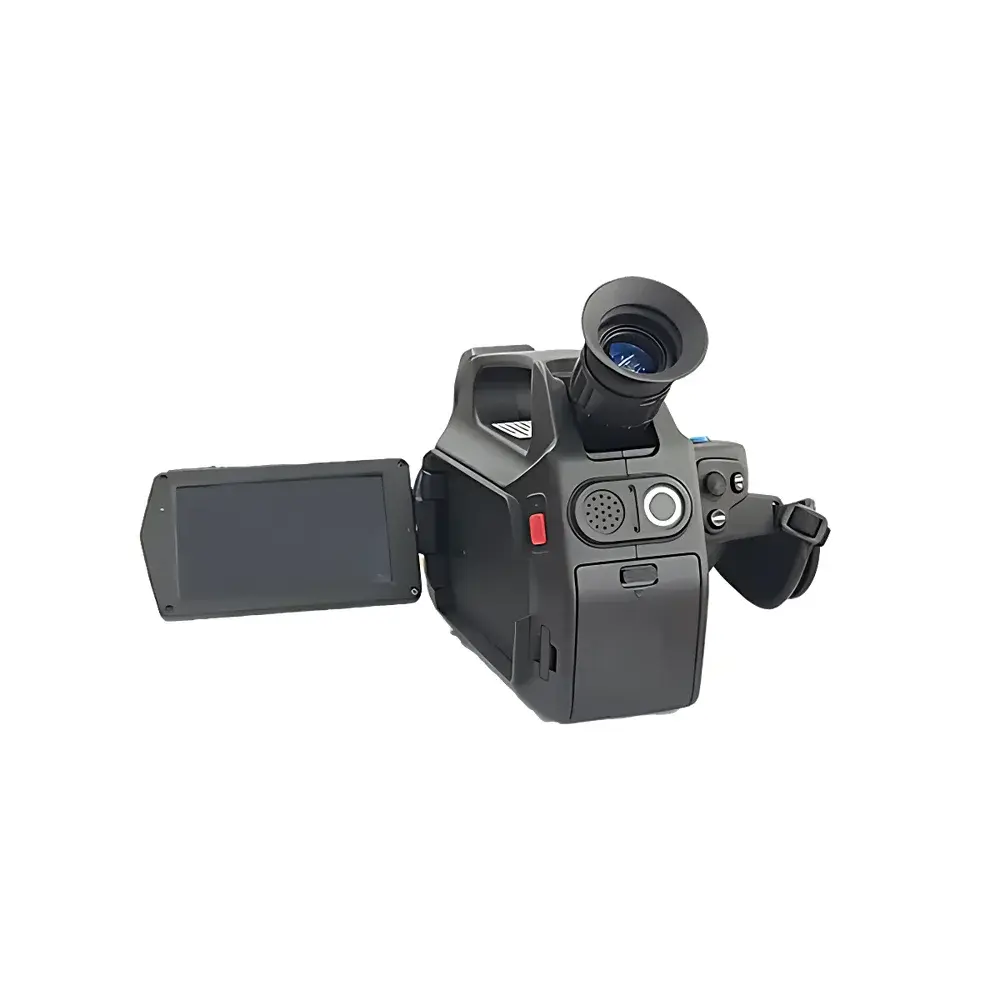
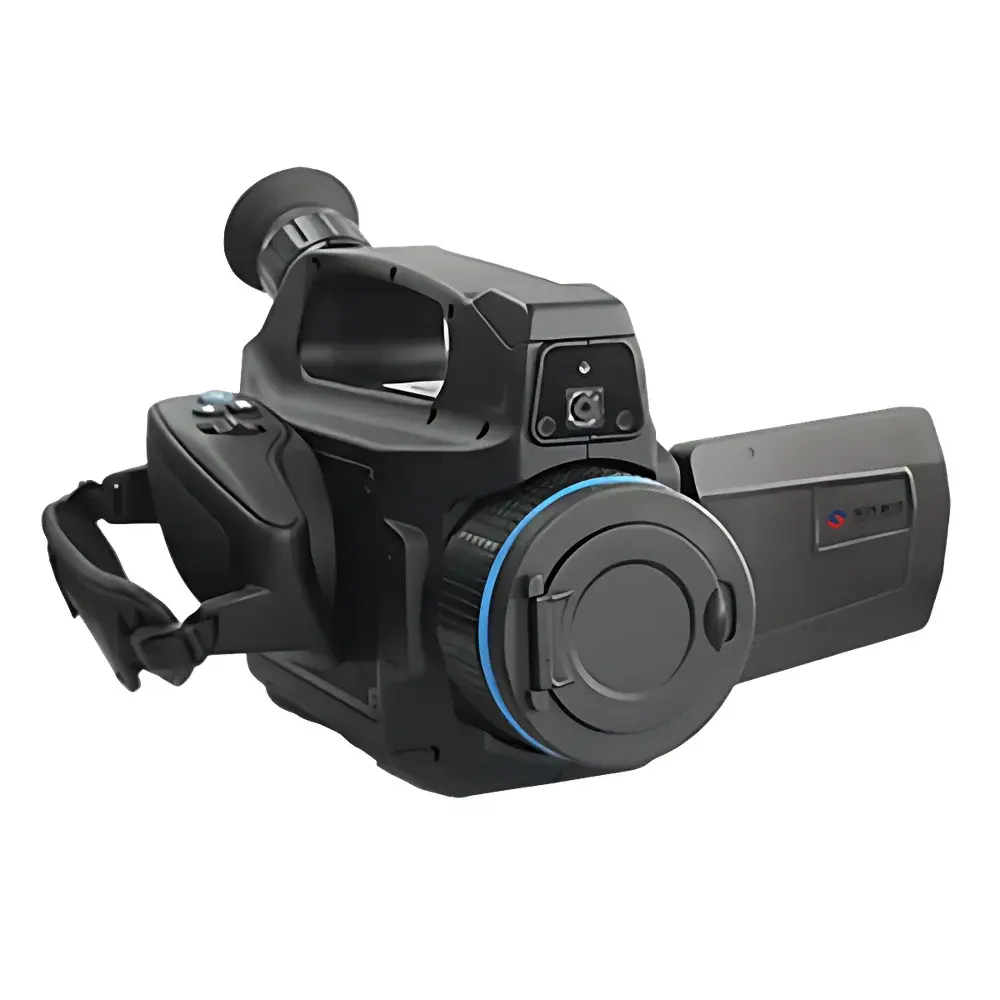
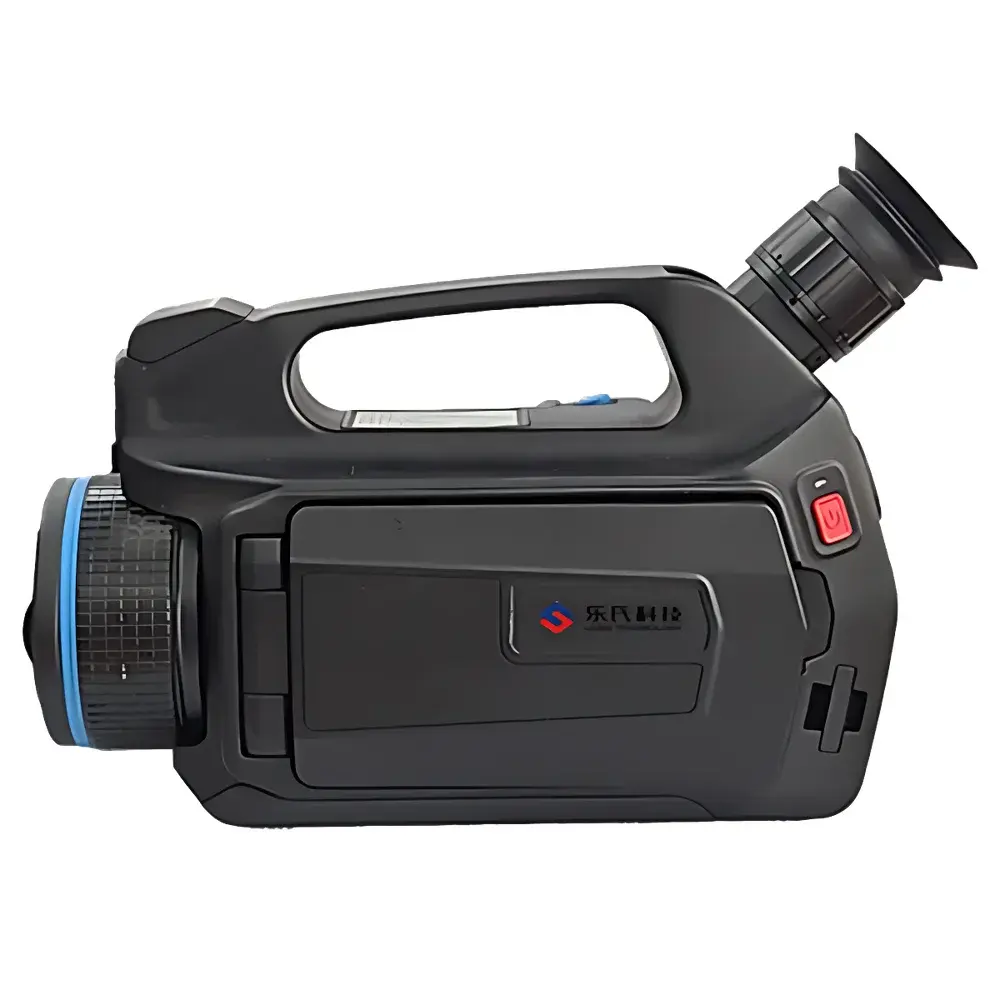
LESHI GIR320Plus Portable Optical Gas Imaging (OGI) Camera for VOC and Methane Leak Detection
| Brand | Leshi |
|---|---|
| Model | GIR320-Plus |
| Type | Portable Optical Gas Imaging (OGI) Camera |
| Detection Principle | Passive Mid-Wave Infrared (MWIR) Absorption Imaging |
| Temperature Range | −40 °C to 350 °C |
| Spatial Resolution | Adjustable (typical NETD < 30 mK) |
| Accuracy | Temperature-dependent, calibrated per ASTM E1934 and ISO 18434-1 |
| Response Time | < 60 s (alarm), 1–60 min (quantitative plume visualization) |
| Compliance | ATEX/IECEx Certified Intrinsically Safe (Zone 1/21), IP54 |
| Sensor | Cooled MWIR FPA detector (3.2–3.4 µm spectral band optimized for C–H bond absorption) |
| Onboard Storage | ≥64 GB SSD |
| Display | 3.2″ high-brightness color LCD (1280 × 720), rotatable electronic viewfinder |
| Battery Life | ≥3.5 h continuous operation (hot-swappable dual Li-ion packs) |
| Software Compatibility | Leshi OGI Suite v4.2 (supports ASTM D7520-compliant reporting, GLP audit trail, FDA 21 CFR Part 11 optional module) |
Overview
The Leshi GIR320Plus is a certified intrinsically safe, portable optical gas imaging (OGI) camera engineered for real-time, non-contact detection and visualization of volatile organic compounds (VOCs) and methane emissions. It operates on the principle of passive mid-wave infrared (MWIR) absorption spectroscopy—exploiting the characteristic vibrational–rotational absorption bands of C–H bonds in hydrocarbon gases (e.g., CH4, C2H6, C3H8, benzene, toluene, xylene) within the 3.2–3.4 µm spectral window. Unlike active laser-based or point-sensor methods, the GIR320Plus requires no external illumination or sampling probe; it detects thermal contrast between ambient air and escaping gas plumes by measuring differential radiance attenuation across its cooled focal plane array. This enables rapid scanning of large industrial assets—including pipe racks, flanges, valves, storage tanks, and loading arms—at standoff distances up to 50 meters, fully compliant with EPA OOOOa Method 21 alternatives and LDAR program requirements.
Key Features
- Cooled MWIR indium antimonide (InSb) detector with spectral bandpass filtering centered at 3.28 µm—optimized for high-sensitivity hydrocarbon gas imaging under ambient thermal conditions.
- Ergonomic magnesium alloy chassis (weight: 2.4 kg), single-hand operable with tactile, glove-compatible controls and low-center-of-gravity balance for extended field use.
- Dual-mode imaging engine: Standard IR mode for thermographic surveying and proprietary Gas Enhancement Mode (GEM)—an adaptive image processing algorithm that suppresses background emissivity variation while amplifying dynamic gas plume signatures via temporal differencing and spectral contrast normalization.
- High-fidelity 1280 × 720 color LCD with anti-reflective coating and 1000 cd/m² peak brightness—ensuring legibility under direct sunlight or low-light refinery environments.
- Rotatable 0.39″ OLED electronic viewfinder with diopter adjustment—reducing ocular strain during prolonged inspections and enabling flexible viewing angles without repositioning the instrument.
- Onboard data management: Full HD video recording (H.264), still capture (12-bit RAW + JPEG), customizable palettes (ironbow, high-contrast, gas-specific), and in-camera annotation (timestamp, GPS, operator ID, facility tag).
- Hot-swappable dual 7.4 V / 12,000 mAh Li-ion battery system delivering ≥3.5 h runtime per charge—validated per IEC 60079-0 and UL 913 for hazardous locations.
Sample Compatibility & Compliance
The GIR320Plus is validated for qualitative and semi-quantitative detection of over 400 VOCs and hydrocarbon gases exhibiting strong absorption in the MWIR band, including but not limited to methane, ethane, propane, butane, ethylene, propylene, benzene, chloromethane, and methyl tert-butyl ether (MTBE). It meets intrinsic safety certification standards IEC 60079-0:2018, IEC 60079-11:2011 (Ex ia IIC T4 Ga), and ATEX 2014/34/EU (II 1G Ex ia IIC T4 Ga). Environmental protection compliance includes adherence to EPA Method 21 Appendix A (as an approved OGI alternative), ASTM D7520-22 (Standard Practice for Optical Gas Imaging), and ISO 18434-1:2008 (Condition monitoring — Thermography). The device supports GLP/GMP-aligned workflows through optional 21 CFR Part 11-compliant software modules with electronic signature, audit trail, and user access control.
Software & Data Management
Leshi OGI Suite v4.2 provides post-processing, reporting, and fleet management capabilities. Users can perform frame-by-frame plume quantification using built-in correlation algorithms aligned with EPA OTM-33A methodology, generate PDF inspection reports with embedded geotagged imagery and annotated leak severity scoring (Level 1–4 per API RP 540), and export time-synchronized thermal/video metadata to CMMS platforms (e.g., SAP PM, IBM Maximo) via CSV/XML. All raw data files include embedded calibration coefficients, detector temperature logs, and environmental metadata (ambient T/RH/barometric pressure) required for regulatory traceability. Audit trails record operator login/logout, parameter changes, image edits, and report generation events—fully compliant with FDA 21 CFR Part 11 when enabled.
Applications
- Leak Detection and Repair (LDAR) programs across petrochemical refineries, LNG terminals, and offshore platforms.
- Regulatory compliance audits for EPA OOOOa, EU Industrial Emissions Directive (IED), and China’s GB 31570–2015.
- Pre-commissioning and turnaround verification of flare stacks, relief valves, and compressor seals.
- Environmental monitoring at biogas upgrading facilities, landfill gas collection systems, and wastewater treatment plants.
- Emergency response screening for fugitive emissions following process upsets or natural disasters.
- Engineering validation of vapor recovery units (VRUs), closed-loop sampling systems, and floating roof seal integrity.
FAQ
Does the GIR320Plus require gas-specific calibration for each VOC?
No. Its passive MWIR design relies on inherent molecular absorption physics—not concentration-dependent calibration curves. Sensitivity varies by gas species due to absorption cross-section and plume temperature differential, but no field recalibration is needed.
Can it detect gases in windy or rainy conditions?
Yes—though wind disperses plumes and rain attenuates IR transmission. Optimal detection occurs at wind speeds 500 m. The GEM algorithm improves robustness under moderate turbulence.
Is training required to operate the instrument?
Yes. Leshi provides certified OGI operator training aligned with ASTM E2847 and ISO 18436-7, covering thermographic fundamentals, gas plume interpretation, regulatory documentation, and safety protocols for Zone 1 environments.
What is the minimum detectable leak rate?
Under controlled conditions (20°C, 2 m/s wind, 10 m distance), typical minimum detectable mass flow rates range from 0.1 g/h (methane) to 1.5 g/h (larger VOCs), consistent with EPA OOOOa performance thresholds.
Does the device support remote connectivity or live streaming?
Yes—via optional Wi-Fi 5 (802.11ac) and Ethernet interfaces, enabling real-time video feed to command centers and integration with plant-wide IIoT infrastructure using RTSP/ONVIF protocols.
Related Products







