
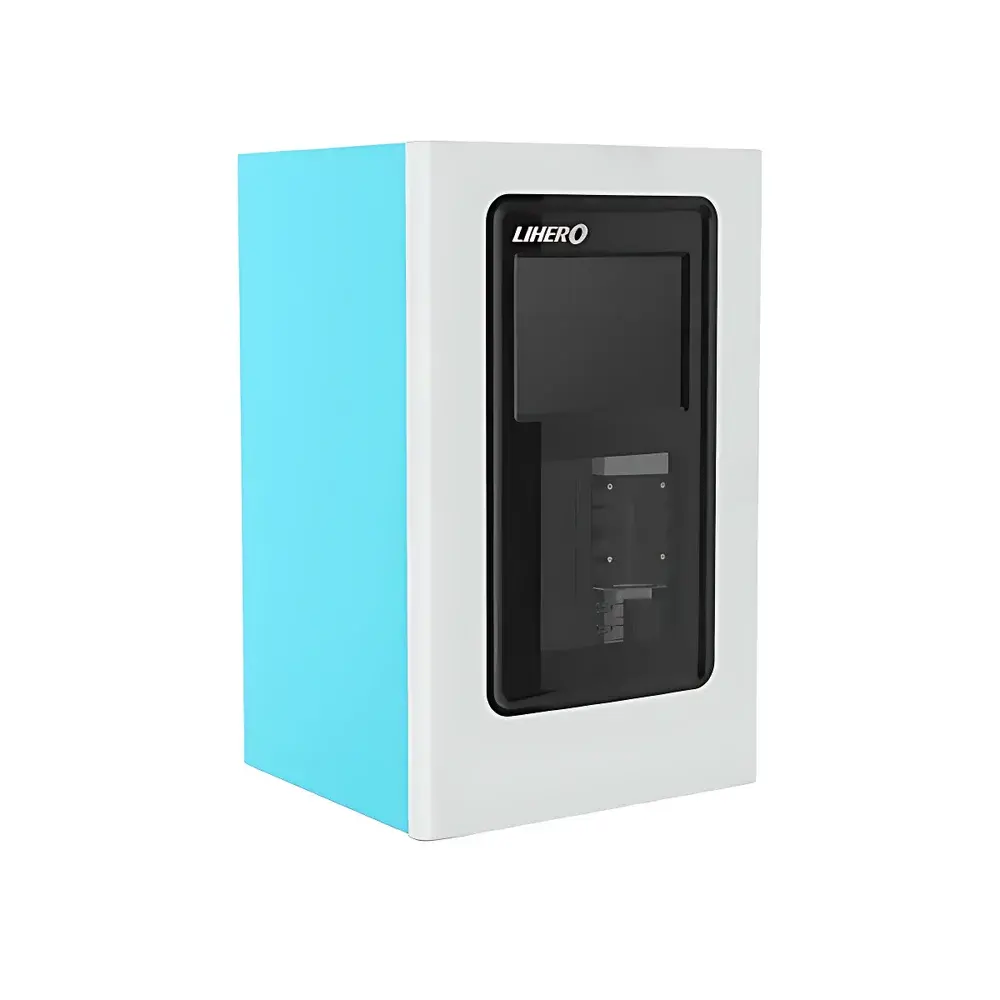
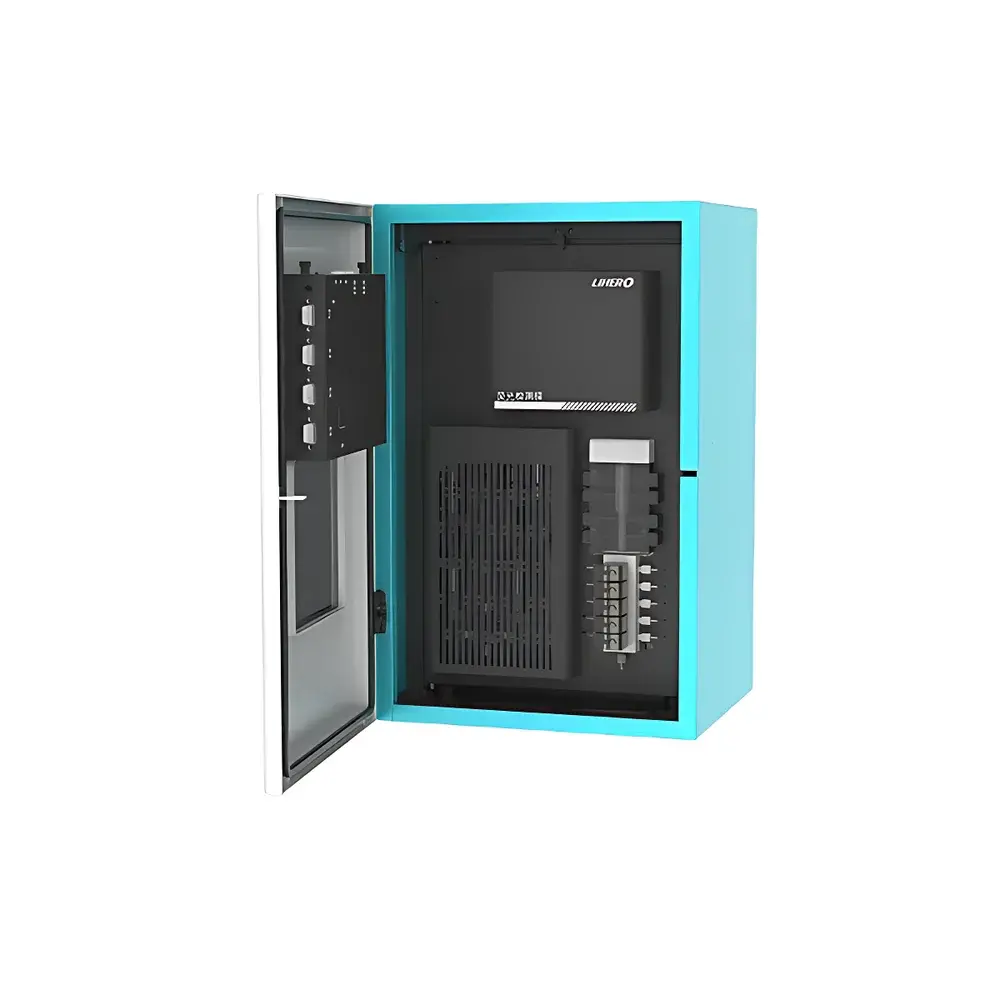
Lihero LFAF-2016 Online Atomic Fluorescence Spectrometer for Heavy Metals in Water
| Brand | Lihero |
|---|---|
| Model | LFAF-2016 |
| Detection Principle | Hydride Generation–Atomic Fluorescence Spectrometry (HG-AFS) |
| Measurement Elements | As, Se, Hg, Cd, Zn, Bi, Te, Sb, Ge, Pb (≥10 elements) |
| Configuration | Multi-channel simultaneous analysis |
| Atomizer | Shielded low-temperature quartz furnace atomizer |
| Light Source | Element-specific coded hollow cathode lamps with automatic recognition and lifetime monitoring |
| Gas Control | Digital pressure-sensing argon flow regulation with intelligent gas-saving module |
| System Diagnostics | Power-on self-test, real-time fault diagnosis, and audible/visual alarm |
| Compliance | Designed to support ISO 17294-2, EPA Method 1631/200.9, and GB/T 5750.6–2023 workflows |
| Installation Type | Rack-mounted online analyzer for continuous or scheduled water intake |
Overview
The Lihero LFAF-2016 is an online atomic fluorescence spectrometer engineered for continuous, unattended quantification of trace heavy metals in aqueous environmental matrices. It operates on the principle of hydride generation–atomic fluorescence spectrometry (HG-AFS), a well-established technique recognized for its exceptional sensitivity toward hydride-forming elements—including arsenic (As), selenium (Se), mercury (Hg), antimony (Sb), bismuth (Bi), tellurium (Te), cadmium (Cd), lead (Pb), zinc (Zn), and germanium (Ge). In this method, target analytes are chemically reduced to volatile hydride species in acidic medium, swept into a shielded quartz furnace atomizer where thermal dissociation generates ground-state free atoms. These atoms are then excited by element-specific hollow cathode lamp radiation, and the resulting atomic fluorescence intensity—measured at right angles to the excitation beam—is linearly proportional to analyte concentration over a broad dynamic range (typically 3–4 orders of magnitude). The LFAF-2016 integrates this core analytical chemistry into a robust, rack-mountable platform suitable for integration into municipal drinking water treatment plants, industrial effluent monitoring stations, and watershed surveillance networks.
Key Features
- Multi-channel simultaneous detection architecture enables concurrent quantification of up to ten heavy metal species without sequential reconfiguration—reducing cycle time and improving data density for time-critical applications.
- Coded hollow cathode lamps with embedded identification chips allow automatic element recognition, spectral alignment verification, and real-time lamp usage tracking—ensuring consistent excitation energy and minimizing operator intervention.
- A shielded low-temperature quartz furnace atomizer minimizes collisional quenching and vapor-phase interferences, enhancing fluorescence quantum yield and long-term signal stability under continuous operation.
- Integrated digital pressure-sensing argon mass flow control system maintains precise carrier gas delivery across variable ambient conditions; combined with an adaptive gas-saving algorithm, it reduces average argon consumption by ≥35% compared to conventional AFS systems.
- Comprehensive onboard diagnostics include automated optical path alignment checks, lamp intensity validation, reaction coil integrity assessment, and fluidic pressure profiling—each logged with timestamps and accessible via local display or remote interface.
Sample Compatibility & Compliance
The LFAF-2016 accepts raw or pre-filtered water samples (0.45 µm filtration recommended) directly from continuous intake lines or discrete grab-sample autosamplers. It accommodates pH-adjusted, acid-preserved, or chelation-stabilized matrices typical of surface water, groundwater, wastewater effluents, and potable water distribution systems. Analytical performance aligns with internationally referenced methods: calibration linearity, detection limits, and precision meet the requirements of ISO 17294-2 (water quality — elemental specifications by ICP-MS and AFS), EPA Methods 1631E (mercury) and 200.9 (trace metals), and China’s national standard GB/T 5750.6–2023 (Standard Examination Methods for Drinking Water — Metal Parameters). Instrument firmware supports audit-trail-enabled operation per GLP/GMP-aligned data integrity frameworks.
Software & Data Management
The embedded control software provides intuitive web-based configuration, method scheduling, and real-time chromatogram-like fluorescence response visualization. All measurement events—including calibration curves, QC sample results, maintenance logs, and diagnostic alerts—are timestamped and stored locally on encrypted internal flash memory. Data export conforms to CSV and XML formats compatible with LIMS integration. Remote access via HTTPS enables secure firmware updates, parameter adjustment, and historical trend review without on-site presence. Optional 21 CFR Part 11-compliant software add-on provides electronic signatures, role-based access control, and immutable audit trails for regulated environments.
Applications
- Real-time monitoring of arsenic and mercury in source water intakes upstream of drinking water treatment facilities.
- Compliance verification for industrial discharge permits requiring reporting of Sb, Cd, Pb, and Te at sub-pptr levels.
- Long-term trend analysis of geochemical metal mobilization in groundwater wells near mining or agricultural zones.
- Automated QC checks during membrane filtration or ion exchange regeneration cycles in advanced water reuse systems.
- Support for research-grade speciation studies when coupled with pre-column hydride separation modules (external configuration).
FAQ
What sample preparation is required prior to online analysis?
Minimal pretreatment is needed: samples should be filtered (0.45 µm) and maintained at pH ≤2 with nitric acid to prevent adsorption losses. No digestion is required for dissolved hydride-forming metals.
Can the LFAF-2016 operate unattended for extended periods?
Yes—the system supports 7×24 operation with automated daily calibration, multi-point QC checks, and self-recovering fluidic sequences. Scheduled maintenance intervals are configurable between 7–30 days based on sample matrix complexity.
Is method validation documentation available for regulatory submissions?
Lihero provides a complete validation package including system suitability tests, MDL/IDL verification reports, spike recovery data across representative water matrices, and instrument-specific uncertainty budgets aligned with ISO/IEC 17025 guidelines.
How is interference from transition metals mitigated?
The HG-AFS methodology inherently suppresses most non-hydride-forming cations. For high-Cu/Co/Ni matrices, optional chelating resin pre-concentration or masking agents (e.g., thiourea, L-cysteine) can be introduced via programmable reagent addition modules.
What communication protocols does the analyzer support for SCADA integration?
Modbus TCP/IP and OPC UA are natively supported; analog 4–20 mA outputs and dry-contact alarm relays are provided for legacy PLC interfacing.
Related Products







